Friends in High Places

(Originally posted on May 2, 2013. View the original here.)*

I walked in the church, scanned the pews for a place to sit, and found tears in my eyes.

You know that story in the Bible where God opens the servant’s eyes to see the army of horses and flaming chariots surrounding him? His eyes were opened to see what had been all around him all the time—and suddenly he didn’t feel so alone anymore (2 Kings 6:14-17).

Well, God opened my eyes last weekend. For several months I’d been ruminating on how alone I felt. And it seems I never miss an opportunity to tell my readers that I’m 1,000 miles from home. Indeed, writing to my roots has revealed that I often feel displaced in my new home, and I feel even more that way when visiting my old home.

Being in a hiatus from work and school has also laid some things bare: I don’t know who I am without my work. Sometimes I don’t know how to relate to people outside of the most functional of activities: I can be a teacher, a sister-in-law, a communications secretary and music leader for church, a Bible study leader for friends.

But what about just a friend?

I can tell you right now, friendship—hanging out, relaxing, shooting the breeze—none of these have been my strengths.

Yet despite all the off-putting, prickly parts of me, God has drawn friends to me. And at the church that day, I saw them.

There was Tasha sitting in the back left pew of the church. Her friendship was a carryover from the small group Bible study my hubby and I had for a year and a half. We still get together often, for fun things like spa days, iced tea, and girl talk.

Image
Me and Tasha–on our cruise to Cozumel in December. The hubbies came, too.

Then, a few rows up, was Tammy, a new-ish fixture in our church, who responded to the call I made in October to start a choir. Now she has taken the reins, much relieving me, and also become a fun girlfriend.

Image
My friend Tammy directing a mean choir in December! They sounded great. I’m at the piano to the left (you can’t see me).

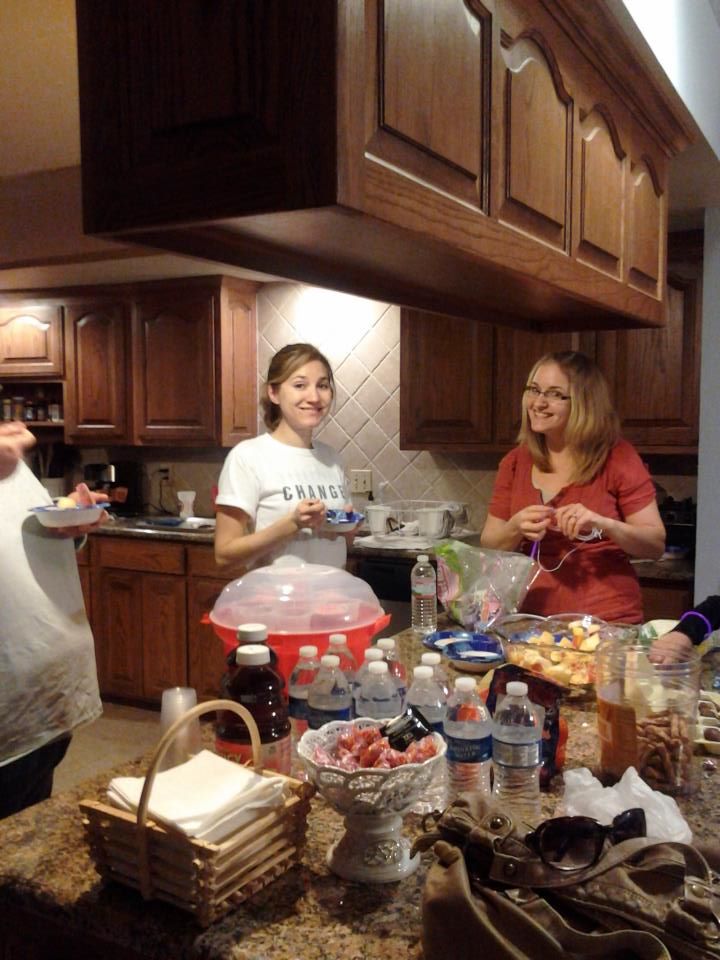
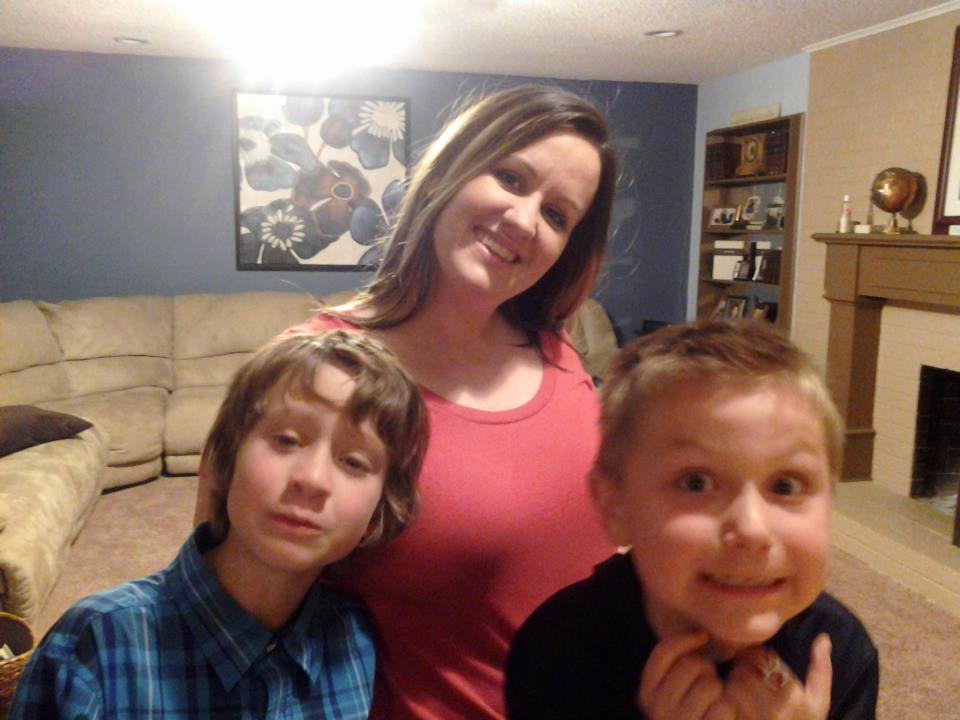
Across the aisle were Ashley and Christina, two young moms whom I’d only recently come to know from our Tuesday night prayer group. They’d been in the congregation for many months before their lovely personalities were uncovered for me. Both sincere and searching for the Lord, they responded to the opportunity to pray with Amanda and me, who had recently been trained in prayer ministry.
Image
Me and Ashley at my house for a late night Easter egg hunt. It was for the kids…really!
Image
Christina with her two strapping boys–also at my house for that late night Easter egg hunt.

And behind them was Amanda. I had known Amanda the longest of any of these ladies, yet until our prayer training, I’d hardly known her all–had not seen the beauty of her personality beneath her quiet exterior. Now we are prayer partners and buddies in ministry.

Image
That’s Amanda chuckling on the left–we had a great time at our 2012 New Year’s party. The life-sized Barbie was my husband’s surprise in our informal gift exchange.

How did it come to be that I was so blessed with all these friends?

Last summer when Amanda and I joined the prayer ministry Straight 2 the Heart to lay our hearts bare before God and our small group—I saw that we had a lot in common. A lot of hurt, a lot of self-protections, and a lot of desire to serve the Lord if we could only know how to channel our pain into something positive.

Looking back, I think it must have been the laying bare of my heart before God and a trusted small group that allowed me to be more authentic with these others that have decided they like my company. Sure, I’m still detail-oriented and serious when I talk church business. But over the past year, I’ve had more frank and open conversations with ladies in my church than I’ve had in eight years combined.

Sharing my heart in a prayerful, supportive environment has bound me together with Amanda, and now Ashley and Christina, in a way that mere biblical instruction can’t. And as a result, I have been able to relate more authentically to others like Tammy and Tasha, and even my music committee in meetings, where we have finally started talking openly and corporately about issues our church has had for a number of years.

Showing some vulnerability not only to my prayer partners but also to my acquaintances has opened the door for conversation that goes beyond surface level…and finally, friendship.

Since deciding to be more honest with others, it’s been a relief not to have to hide my feelings—to be able to speak up when something’s on my heart—to get it out in the open and deal with it sooner rather than later. And saying things that have gone unspoken before—such as on music committee—has actually gotten people thanking me for my honesty and openness.

Do people prefer pretenses, or plainness?

While being honest can open up some uncomfortable cans of worms, in my experience, that’s not any worse than tiptoeing through church—and through life—not knowing and not being known by anyone. Being honest is no worse than feeling alone—wondering if I’m the only one who ever suffers.

As I’ve learned, the sooner we share our stories with someone and listen to theirs in return, the sooner we are brought out of our self-centered misery. The sooner our eyes are opened to the fact that we are not alone.

I’m so thankful for my friends in high places, the old no less than the new (although this post just happened to be inspired by the new). Much love to all! Here’s to many more great memories!

*I am resurrecting an old post today to meet my weekly goal of posting, but it sort of says what I’m feeling today, anyway. We are visiting Texas again on business, and I am revisiting many old friends on this trip (part of the reason I’m not finding much blogging time!). I want to praise God again for the many friends he’s blessed me with in just a few short years–and this post doesn’t even cover them all!

Stupid in Love

Image created at Canva.com

I’m thirty years old with a ten-year-old marriage and a one-year-old son, and I’ve realized I’m stupid in love.

Not stupid in dreamy, teenage girl love, or romantic young woman love. Those are some of the false notions of love paraded in media and in our culture, and I know all about those. Those are the kinds of love that get you into trouble with teenage boys, and that get your foot through the door of marriage, but rarely any farther.

No, I’m stupid in agape love. God’s love. The love that chooses to love when someone is unlovely, when someone is angry, when someone needs you all the time and can’t return a favor. How did it come to my attention that I’m stupid in love?

Largely, The Love Dare, which I first blogged about here.

The opposite of agape love, says Love Dare author Alex Kendrick, is selfishness. And sadly, I know all about selfishness.

Boy, do I.

I had some holes in my growing up years that went unfilled—not to make excuses, just to provide some background if you’re new to this blog–and I spent my twenties first trying to survive, then crawling out of my hole of depression, and then working to further improve my newly non-depressed self.

I sought degrees, careers, publishing credits, and pats on the back from friends, church members, and family—because these investments weren’t risky…I knew I could keep them, no matter what.

One of my accomplishments was co-writing a book called The Hidden Half of the Gospel. It’s a book about how Jesus can heal our suffering, because he went through everything we did. And through the writing of that book, and through participating in the accompanying prayer ministry, I did largely heal from my suffering.

I began to open up to people like never before. I began to seek relationships. I began to spread the healing message I had learned in prayer groups and women’s ministry. My social life became the fullest it’s ever been. And I even decided to take the risk of having a child.

I thought I was pretty well equipped for this new job of motherhood and homemaking, what with all the healing I’d done.

Well, I wasn’t.

Yes, I had experienced the love of Jesus pouring into my heart—that’s what healed me from my own childhood wounds. But over the past year-ish of parenting—and especially since we’ve moved to St. Louis, where I mostly sit at home with my husband and son, stripped of outside relationships, accomplishments, and recognition—I’ve realized I’m not well equipped at all. I’m bad at putting my husband and son ahead of myself. I’m stupid in love.

It shows up in my short temper with Buc for not helping clean our new, tiny, easily dirtied kitchen. It shows up in my irritation at Sam for waking at “inconvenient times,” or for taking up “my” writing time. It shows up in my resistance to embracing the fact that THIS IS MY CALLING; THIS IS MY LIFE’S WORK RIGHT NOW.

The Love Dare has honestly helped me more than any self-help book I’ve read—and I’ve read a lot—because it is getting my mind off myself. For most of my twenties, I thought the best thing I could do was to focus on improving myself, because I was a miserable creature. But while “self-directed self-improvement” is sometimes called for, too much of it can ruin your heart for others. I think this is where I was before The Love Dare.

There’s not much room on my bookshelf these days for novels, memoirs, or light reading. Cookbooks, parenting books, and “others-directed” self-help books are what I’m into right now.

Before the dare, I was still too focused on developing myself and my career that I forgot my roles also include homemaking, wifehood, and motherhood—because God created women for these roles. I’m not saying he created us for these things exclusively, but when we have husbands and children—as I do—they should definitely be top priorities.

Yes, I needed The Love Dare to challenge me, to move me out of my prideful high place, and to put me back in the driver’s seat of God’s callings for me of wife, homemaker, and mom. I needed a “self-improvement program” that judges my progress within the context of how much time and effort I am putting into others—because where we spend our time (and money, if we have it) shows what we really love.

At this point, I’d say I’m still “stupid” in love. But I am learning. Day by day, and dare by dare. Slowly, my life is beginning to look more others-centered. 

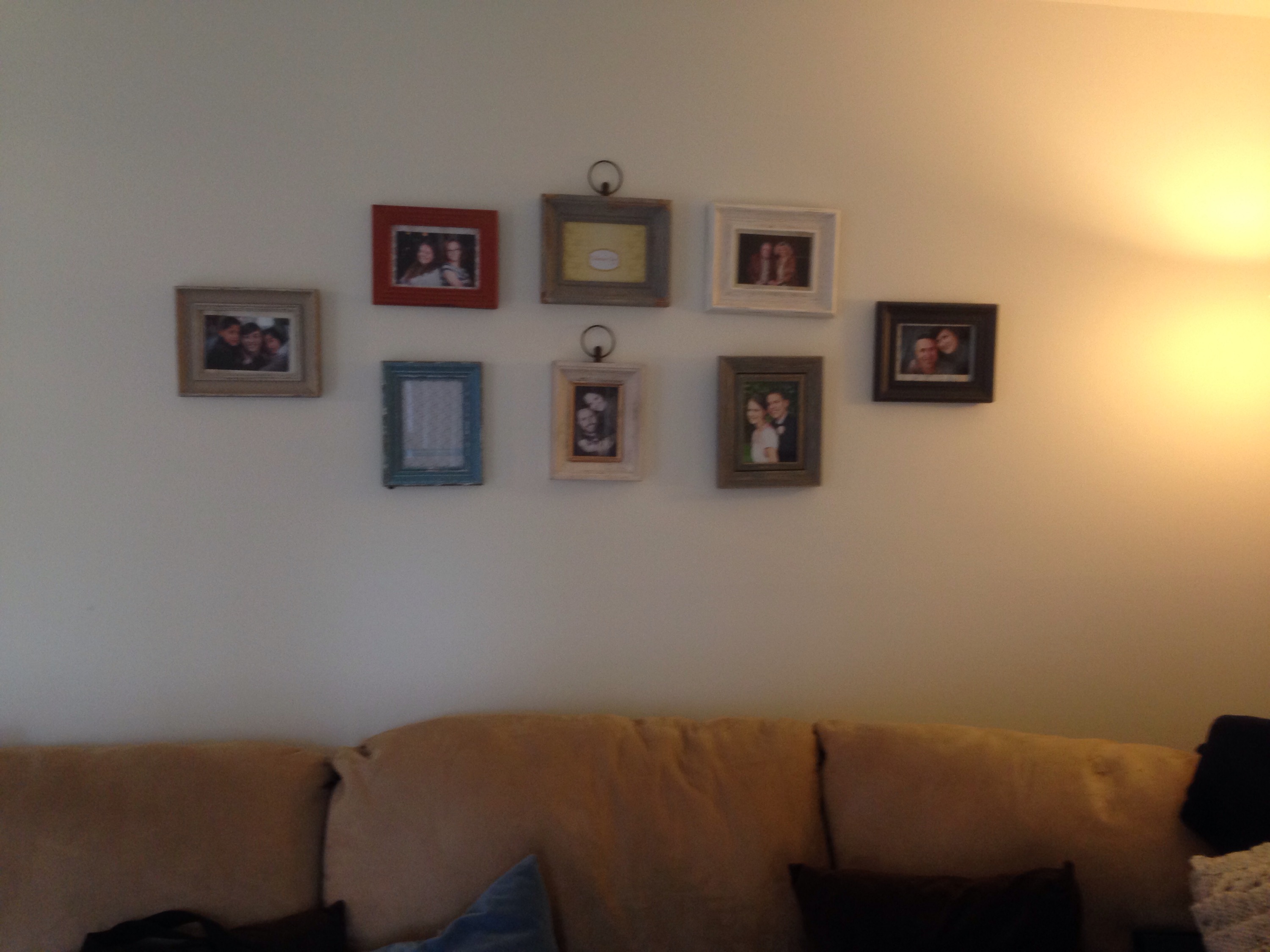
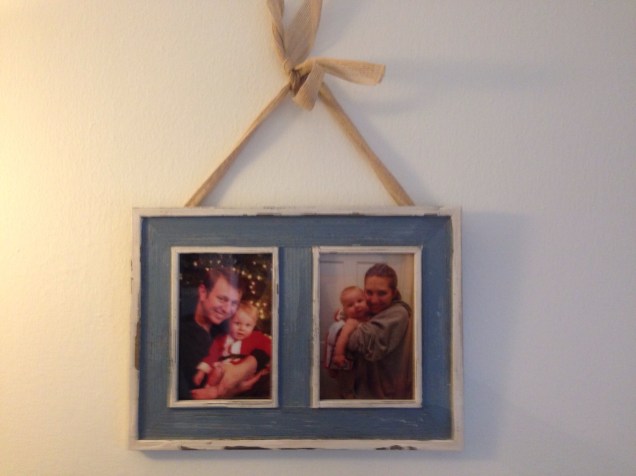
It’s amazing the time I’ve found to take care of my home and family now that I’m putting them first. Here is a “family wall” I’m working on so that Sam won’t forget his relatives.
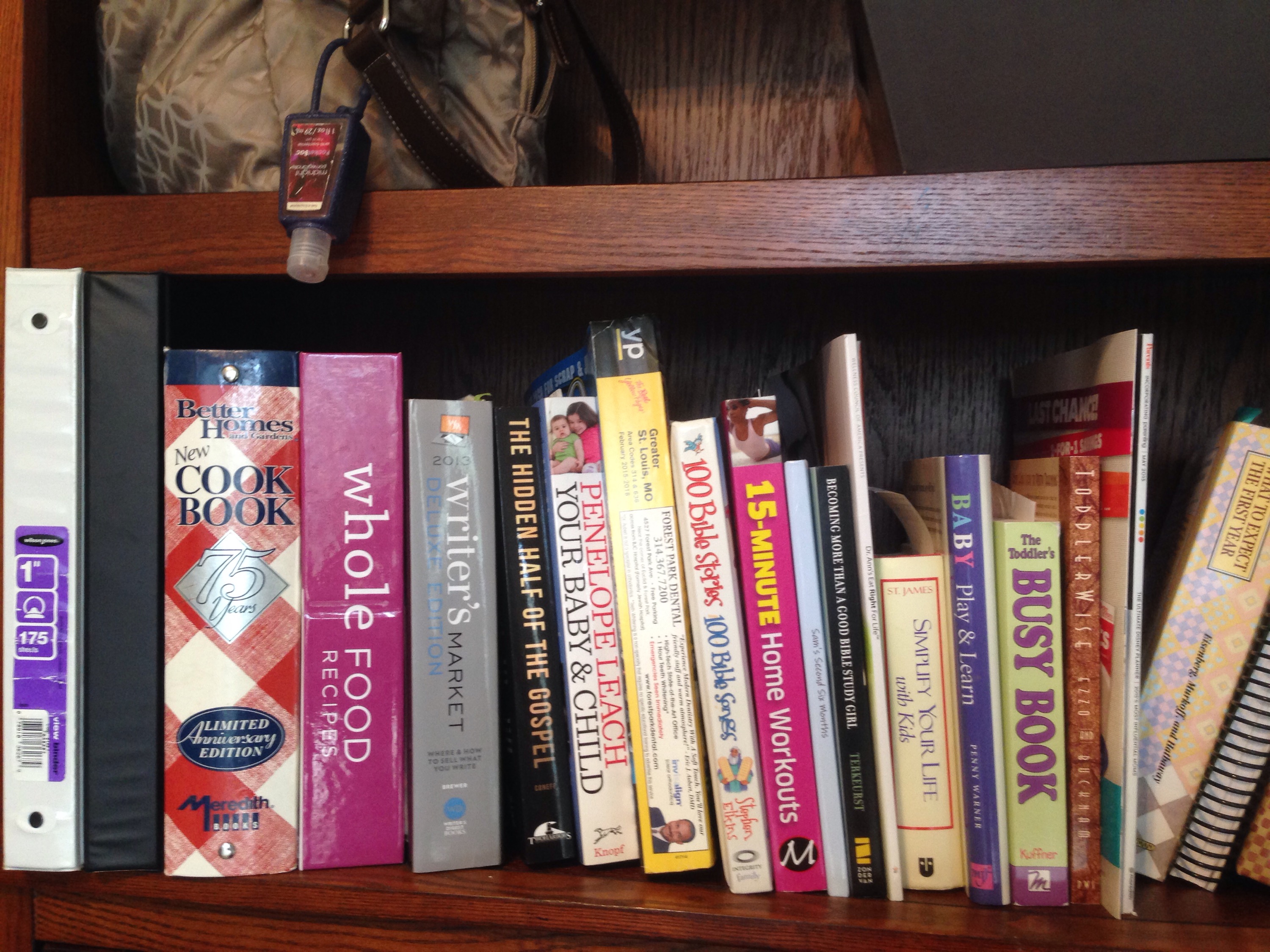
The second best “others-directed self-help” book I’ve read recently is Desperate: Hope for the Mom Who Needs to Breathe. The coauthors Sarah Mae and Sally Clarkson have pointed my attention to the importance of small details in the home, like straightening a bookshelf, lighting a candle, or playing music to create a pleasant home atmosphere. (This bookshelf still needs work, but it’s better than it was!)


This was my to-do list one day last week, and I had to stop and laugh, and take a picture, as I considered how my to-do lists have changed in such a short time. (Wipe out sticky areas of the cupboard? Really? I bothered to put this on the list because I didn’t want to forget this nagging thing during Sam’s nap time. Free times in short supply make one really prioritize daily goals!)
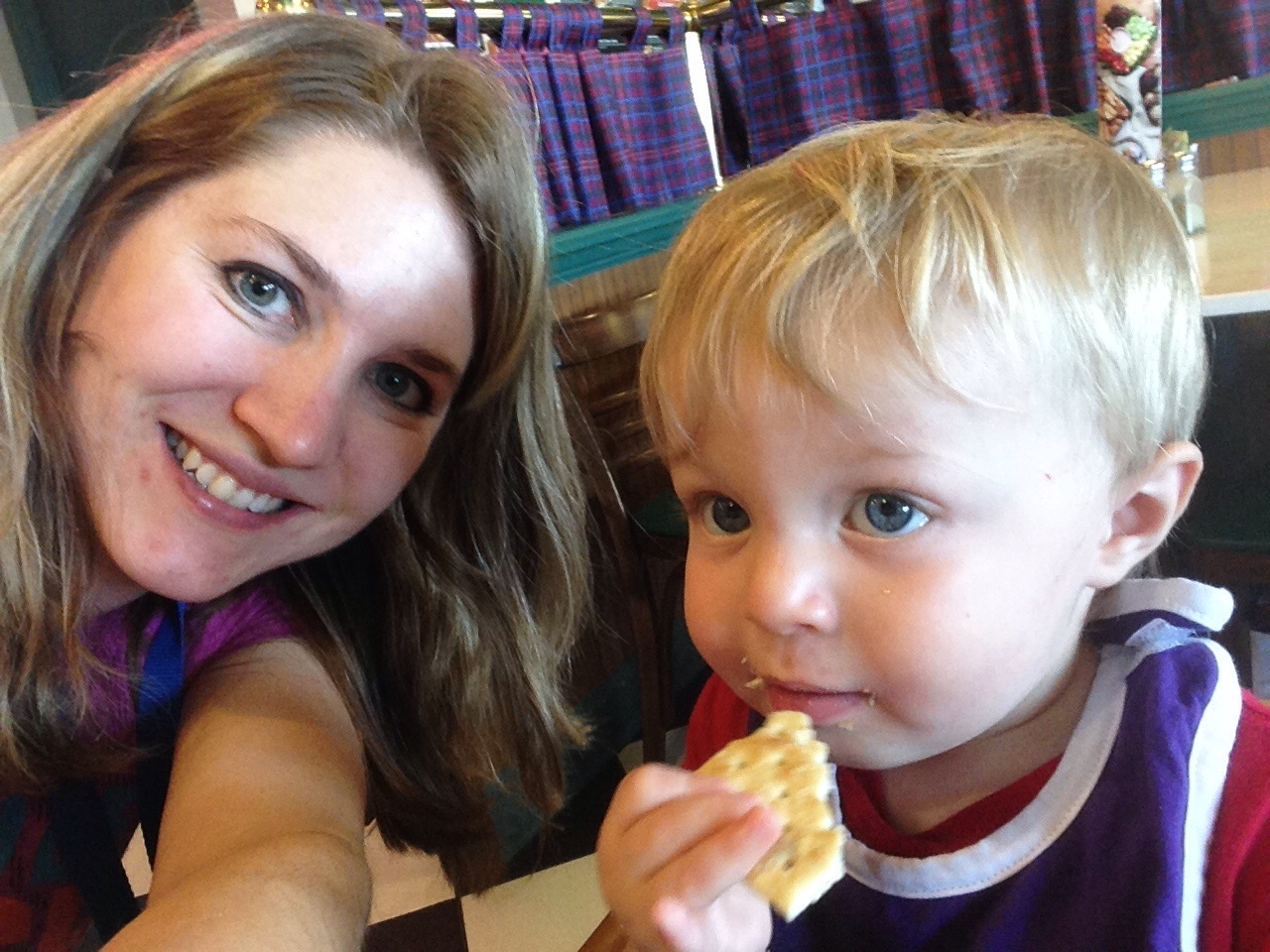
Enjoying lunch out yesterday with my sweet boy, after his fifteen-month appointment.

Rejected…and Resting

Rejected
Photo by sundesigns

My heart is a bit heavy today. I got news that the publisher who had been evaluating my manuscript for the past seven months–and who gave me reason to believe they wanted it–doesn’t actually want it.

My heart is not heavy because this specific publisher rejected me. It’s heavy because I got my hopes up…and because I don’t have anything left to give this project right now.

I know the typical course of action would be to reread, revise, and re-submit. And I’m sure I’ll do that eventually. But right now, as a stay-at-home mom of a very active toddler, that thought exhausts me. Physically. Emotionally. Spiritually.

There are also a number of signs telling me my time for a published memoir has not yet come. Chief most, I’ve realized I’m “stupid in love”–stupid in motherhood and wifehood and homemaking (I will post on that next time–and maybe write a second memoir about that one day)–and I don’t have the time and energy both to correct those faults and to build a platform, an audience, a website, and otherwise handle the activity that a published book demands.

Did I mention that we’re trying for a second baby?

Yes, my cup runneth over with good and challenging things right now; I don’t need a published memoir to add more to-do’s.

I just have to get over the disappointment of this rejection, which was a very nice rejection, by the way. (The editor who notified me said the editorial board liked my manuscript, but they just weren’t sure it would sell.)

So, given my exhaustion and my full plate, my strategy right now is not to rush revisions, but to rest and pray until I next feel God telling me to move. In the meantime, I will tend to other good things on my plate, like The Love Dare, a planned family picture wall (so Sam doesn’t forget his relatives), and a stack of books on raising toddlers. But first, if you’ll excuse me, I might just cry for awhile.

Daring to Love: The Ultimate “Self-Help” Project

love dare
by Author Alex Kendrick

This week I wrote on my Facebook page that I’m addicted to self-help books. But that’s softening the problem. Really, I’m just addicted to myself (that’s the human condition, you know). But this week, and for the next month, I’m working to change that through reading and performing The Love Dare, which you might remember from the movie Fireproof.

I’m one week into “The Love Dare,” or the forty-day challenge of doing something specific for my spouse every day; and already I feel that it’s is changing me. From my words to my actions to my thoughts, I am being challenged to be kind to my husband, give him the benefit of the doubt, and extend grace. Oh, and to be the first to initiate these loving traits, even if and when he doesn’t deserve them. It sounds kind of hard. But it hasn’t been, not really.

I’m a nerdy sort of a girl who likes to learn things from books, who likes step-by-step instructions. The Bible gives me the core principles on love (God is love, love keeps no record of wrongs, I should forgive seventy times seven times, etc.), and it also give me the perfect example in the life of Jesus (because Jesus is God in the flesh)…but The Love Dare, with its day-by-day steps, has given me a format that my personality loves.

As a Melancholy wife, I’ve always felt I needed to keep some kind of record of Buc’s wrongs; it was my job to correct him and perfect him (sound familiar, women?). In fact, trying not to nag Buc has been my biggest challenge during our ten years of marriage. Want to know what the first dare was? (Did author Alex Kendrick have me in mind when he wrote this?)

“Speak only positive words to your spouse,” and “if you can’t be positive, don’t say anything at all.”

Even if I had stopped there, I think I would still feel a change at home.

It’s actually a relief to be told that, for today, and for the next thirty-nine days, my task is not to say anything negative to Buc. (I even have a place to check off each dare, and a page and a half to journal about my thoughts each day!) As I’ve continued to implement my daily dares, it’s been a relief to know that my words will not cause any arguments for the day; it’s a relief to have decided beforehand that any negative thoughts I will “take captive” to Christ–I will not say them to Buc.

I can’t say I’ve done a perfect job in my first week of dares, but I can say my home is more peaceful; many petty arguments have been eliminated; and my new thoughtfulness is often being returned. All in all, The Love Dare is positively impacting my home environment, and it’s probably doing as much to refine my character as any self-help book I’ve read. Who knew that putting others above yourself (in a healthy, Christlike way–not in a martyr-like, self-effacing way–of course) was actually a form of self-help, too?

And now, dear [Lindsey], I am not writing you a new command but one we have had from the beginning. I ask that we love one another. (2 John 1:5)

Dear friends, let us love one another, for love comes from God. Everyone who loves has been born of God and knows God.. (1 John 4:7)
God knew, that’s who. I’m so glad to serve such a wise God, and I look forward to learning more about his character as I practice loving my husband better.

Hamster Wheel Days

It’s 7:30 a.m. I’ve just tucked my fourteen-month-old, Sam, in for his first nap. Yeah, I know. That’s early for a nap. But we’ve been awake since 4:30. “It’s another hamster wheel day,” a voice tries to tell me, after a series of events like teething, traveling, and sickness that just won’t let us get back into our sleep routine. But then another voice replies, “Maybe not. You don’t have to live constantly struggling to catch up and never getting anywhere. You have choices.”

I have choices.

I’m not blogging this morning to complain. Well, maybe a little. But I’m making a big effort not to complain to my husband this week, or ever again…and I also have a need to express my feelings in order to work them out. I have expressed my feelings to God numerous times, and I am trying to make him my foremost confidant. But a blog audience is a nice audience to complain to, if you need to complain. I can talk about my struggles without being tempted to attack—like I am tempted to do with my husband—and I usually get some encouraging comments from my sweet readers. If nothing else, pounding the keys of the keyboard does something good for the anger inside me.

God is doing a work in me. He continues to do a work. Through this motherhood gig, he is pointing out sins that I wasn’t previously ready to confront.

Hello, selfishness.

I can keep blaming other people and circumstances for my frustration—there are always plenty of excuses. Or I can take responsibility for my actions and my attitude.

The fact is, I’m not (mainly) frustrated because Sam’s sleep is erratic, or my babysitter cancelled again, or my husband doesn’t help with meal cleanup. I’m mainly frustrated because I am selfish, and I have not planned for “interruptions” in my plans.

I am selfish, and I struggle to see motherhood (and wifehood) as my first duty and calling. I am selfish, and I have tried to neatly portion out blocks of time that are “mommy hours,” and blocks of time that are “me hours.” I am selfish, and I have not lived as Jesus Christ, giving my whole self—my body, my time, my attitude–as a living sacrifice. I am selfish, and I have wanted motherhood to happen on my own terms, not on God’s terms.

I have been deeply convicted that my failure to love and appreciate my husband and son in the midst of inconveniences or upsets in schedule are rooted in selfishness. So I am putting my eyes back on Christ—because I need his supernatural patience and love to get me through these “hamster wheel days.”

I have choices.

I can’t right now choose the time of day I want to study my Bible, or choose how long, or even totally choose what hours I want to sleep. (While I am doing what I can to sleep train, factors outside of my control like teething, sickness, and travel back and forth from Texas are legitimate struggles that cause regression and necessitate some babying.) But I still have choices.

I can choose to own this stage of early mornings and night wakings not as a tragedy, but as an opportunity to grow patience and self-sacrifice. Practically, I can also choose to nap with Sam on the really hard days, and realize that the world won’t end if I don’t post a blog or cook homemade food on those days.

I can choose to get my eyes off myself and focus on others who are going through struggles much worse than mine. I can look to mentors and good influences to lift me up. And I can celebrate all the good around me, like the fact that my friend just gave birth to a new baby.

Getting off the hamster wheel means simultaneously lifting up my eyes and lowering my expectations. I must do this—I will do this—so I can stop running on empty and be still sometimes…at flexible times, at whatever times Sam takes his naps. I don’t know what kind of a day you’d call that, but it sure beats the hamster wheel.

Idol Writing

2015/03/img_1958.jpgA few months ago when I blogged about scaling back my writing efforts in favor of motherhood, a faithful reader asked in the comments, “Do you think your writing desire might be an idol?”
After giving her question plenty of thought and prayer, along with hunkering down with the Bible and other sacred writings, I can answer that question. The answer is yes.

It’s a complicated issue, because I’m also quite certain writing is a calling from God. It’s part of my mission and ministry. So, on the one hand, my writing is a calling from God. On the other hand, it is an idol. How can two such opposite things get confused in the same activity?

God has impressed me with lots of thoughts about this as I seek to put him back at the center of my life. (If it seems like I have to wrestle with the task often, it’s true—I do. Satan is always warring within me to take my focus off Jesus.)

Worshiping Gifts, instead of the Gift-Giver

Isaiah and Jeremiah teach me much about my tendency to confuse the gift with the Gift-Giver. Isaiah 44 strikes to the heart of the matter by describing how people use part of a tree to make an idol, and then burn the rest of it as firewood (see especially verses 9-11 and verse 15). The firewood is the proper use for the wood, because the wood is only a tool given by God for sustaining and improving life.

It’s the same with any “tool” or gift God gives us. Our gifts, like firewood, are meant to be spent for the spread of the gospel. We should not try to conserve them, because they were given to be used. When God gives us a talent, it is wrong to worship it, to look to it to bring us satisfaction. No, we should always and only look to God for satisfaction, and salvation. The talent, gift, or tool, is just that: a tool that should be used, even exhausted, in the service of God and others. It is nothing to take pride in; on the contrary, it should help us humble ourselves before God.

I am on track when I focus my writing on God and the message he wants me to share with others. I get off track when I focus on what my writing can bring me: as in fame, success, or recognition.

I also get off track when I focus on the writing of others, even Christian writers, as something to aspire to so that I can have similar success.

My Distorted Relationship with Reading

On that note, here’s something that surprised me in my recent inventory of my heart: I’ve been reading “good, Christian books” with the wrong motives. I’ve been reading lots of self-help books, but not receiving any help—because I’m reading for craft, not content.

What do I mean?

Four of five years ago, when I first starting seriously researching how to publish my writing, I read that writing is a business, and writers need to study writing that sells. At the time, I was also getting to know the Lord better and working at beating depression, so I had the noble goal of writing and publishing uplifting books. To feed these parallel goals—publishing, growing spiritually—I started reading writing/publishing books in tandem with Christian/self-help books; at the time, the writing books were to help me write better, the Christian books were to make me a better Christian.

But at some point, all my reading, even my Christian reading, became too much about the publishing. I found myself reading popular Christian authors not just for spiritual feeding, but for research.

I wanted to know what topics these best-selling authors were writing about that were selling so well, and I wanted to know how good they were at the craft, to see if my writing could stand up to theirs—or, more particularly, to see if my writing was of publishable quality.

When I judged that my writing was, in some cases, of higher quality, I became prideful.

And when I read that I must immerse myself in “good writing” in order to produce “good writing” (grammatically and aesthetically speaking) I became a reading snob. I started to choose my reading based on the quality of the writer’s writing—and not so much on the quality of the writer’s Christianity.

I won’t name drop here. I’ll just say I’ve read some “Christian writers” who write beautifully, but who, in their writings, exalt a spirit of selfishness and prideful-ness, and a resistance to yield to God’s hand of correction, should it conflict with their inner desires. Some of these Christian writers are heavily influenced by the world and popular culture’s “follow your heart” mentality—a mentality that must, if I believe God’s word, come from Satan.

I know some of my own writing bears out this struggle between Christ and Satan—and I am sorry. I am not sorry for representing the struggle, because the struggle is real, and we must name it to overcome it. But I am sorry for the times I have let Satan win. And I repent of it. I want to give my gift of writing to the Lord once again, to be used to uplift him, and not myself.

Getting Back to Truth

So I am getting back to truth. I am reading some hard-hitting stuff that doesn’t really feed my literary side, but feeds my soul. And I am asking the Lord to make the “soul impact” of my writing my greatest concern—not it’s literary quality, or it’s salability (if salability would mean it is out of alignment with God’s truth). I am letting go of “idol writing”—writing for myself, and for my own gain—in favor of writing for love of God and for my fellow humans—the two greatest commandments.

Lord, help me to stay true to you in all I do—especially in this gift you’ve given me.

It’s Weird…and It’s Good (Thoughts on Our Move to St. Louis and First Visit Back to Texas)

2015/03/img_1902.jpg
A view of our new apartment building in St. Louis.

Sam was a different baby when we moved away from Texas. Not yet one, not yet walking. When we returned to our Texas house a few weeks ago, he was one and walking, and this made the house a different house.

I took Sam into the backyard, now that he could walk and explore. I watched as he poked a stick in the dirt, toddled through leaves, pulled up soft green grass, and listened to dogs barking down the street. What a playground for my sweet little boy: It was open, fenced in, and ours…but not ours anymore, because we moved away from this house and this yard, and we were only visiting them, and visiting my in-laws, who are renting from us until we can move back.

2015/03/img_1895.jpg

I didn’t yet mention on this blog that Buc’s new job requires him to visit TX often—every one or two months. He is now a regional manager for a St. Louis based company (hence the move), but the region he manages is in Texas (hence our visits “home”). We accepted the position ready for a new adventure, but hoping to move back to Texas at some point, when Buc could work in the field and we could again be close to friends and family.

Until we move back (fingers crossed), Sam and I get to join Buc on business trips and stay in our old house with my in-laws. After our first visit back, I’m having lots of thoughts about our move to Missouri, and our visits to Texas, and the benefits and drawbacks of both. I’ve concluded this arrangement is good, and it’s also weird.

It’s good to be back in a one-level house, where Sam is not at risk of falling down stairs, and where my knee is not taxed by carrying Sam up and down those stairs twenty times a day. And it’s good to have a backyard that is fenced in where Sam can play.

2015/03/img_1880.jpg
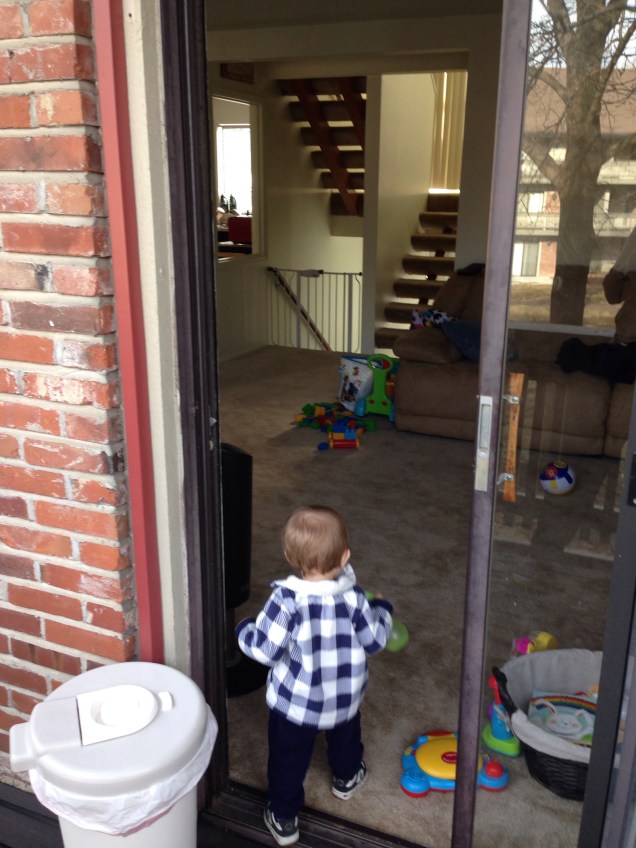
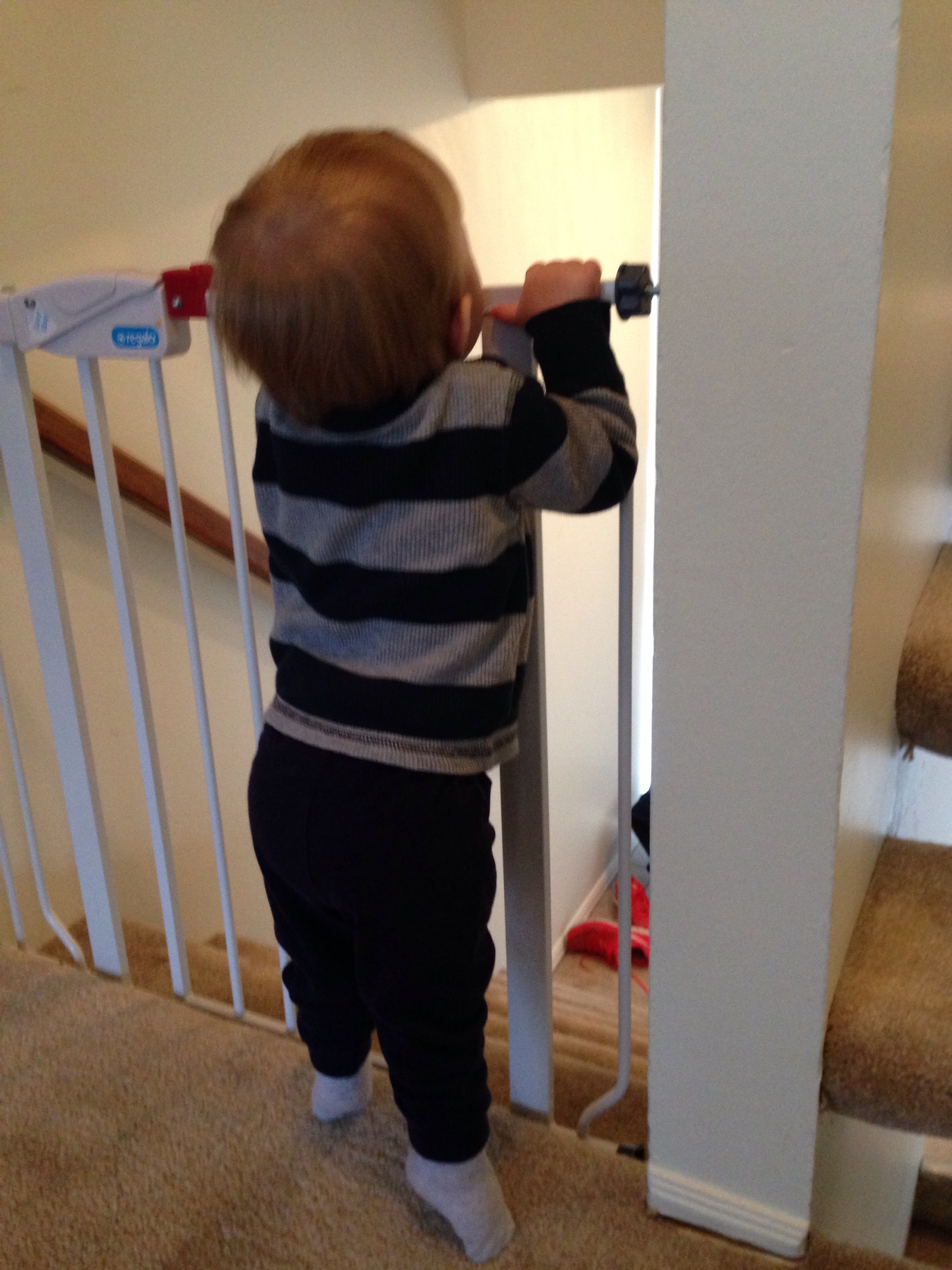
Sam peering over the very necessary baby gate in our new apartment.

But it’s weird, too. It’s weird to come back to a house that’s ours, but not really ours. It’s weird to stay in the guest room when once we stayed in the master. It’s weird to not have a vehicle of my own to take out at leisure. It’s weird to get out of the routine I set up in St. Louis, being so efficient with naptimes and evenings, to spend time with other people, because there are people around to spend time with.

Still, it’s good to have another person in the house during the day besides Sam and me. It’s good to have my father-in-law joke with Sam and make funny voices at him, as Sam toddles into the TV room for the fourteenth time that day and growls, “Papa!” (How Sam loves his Papa!)

It’s good to have my mother-in-law’s helping hands when she gets home from teaching in the afternoons. It’s good for Buc and me to get out by ourselves for a bit, when she’s watching Sam. It’s good to see Sam laughing his head off with his “Nana,” who is a Kindergarten teacher and so good at physical play.

It’s good to be able to help my in-laws just a little, by cooking healthy food for them.

2015/03/img_1904.jpg

This arrangement is weird, and it’s good. It also makes me wonder: What did we do, moving to St. Louis, away from friends and family and our beautiful, baby-friendly house that we just finished renovating? (But we didn’t realize how much we would appreciate an open, one-story house while our baby was yet a crawler, not a walker. And I didn’t know that all these stairs would damage my knee—well, it could be partly due to Jillian Michael’s Thirty Day Shred, too, which I have given up indefinitely.

Satan is so good at planting doubts, isn’t he?

I’m not sad we moved. But I see the limitations now. I see the new struggles that have come from this move, and they muddy the gloss of our new adventure a bit. But just a bit.

2015/03/img_19051.jpg

God gave me a blessed peace in the days after returning from our bittersweet trip. Sam didn’t sleep well and neither did I, especially because we were all trying to recover from sickness, but it’s like a voice spoke into my frazzledness.

Rest. (I napped during Sam’s morning naps for the next two days, rather than trying to push forward on my writing.) Take care of your family. (I chose to keep up with my healthy cooking plan by grocery shopping and making two big meals for the week. I have learned that good nutrition is a priority; we all feel better when we eat better.) Find joy in the mundane. (I am learning to involve Sam in the daily tasks I have to do; I am trying to see him as the little person he is, a person to involve in life and teach about life, rather than a weight I must lug around.) Laugh with your son. (When I pay attention to Sam, I can catch extraordinary moments of fun and laughter; and baby laughs do more for the soul than almost anything else on earth can.)

And then the sun came out. Spring is here.

2015/03/img_1886.jpg
This is the playground down just one block from our apartment.

While strolling Sam in seventy-degree weather, Buc and I talked about the limitations of our current living situation, and decided we will need to move into a house (preferably one-story) at the end of our year lease if we are not able to go back to Texas…especially if there is a new baby on the way. I don’t know how my knee and I could handle a newborn and a toddler in our apartment with all its steps.

There is the regret of not visiting St. Louis before we rented this apartment, but there is the peace that we are here for this year for a reason. Maybe it’s so Buc and I can focus on our marriage, and not yard work, this year. Maybe it’s just to hear the birds singing off our balcony. Whatever the reason, I’m okay with this situation. It’s weird, and it’s uncertain, but it’s good.

2015/03/img_1896.jpg
Another view of the apartments, with our covered parking in the distance.

Life-Saving Routines

"Soap" by mimwickett
“Soap” by mimwickett

Living without routines can make life clumsy; but living without purpose can make life seem impossible. In my last post I wrote about how my lack of purpose and routine as a freshman in college brought me to the brink of suicide.

I’m so glad I have a different story now, eleven years later. That story is one of great purpose, and as many routines as life with a one-year-old will allow.

Because my life once lacked purpose, I love to remember my second year of teaching high school English—the year I found purpose, and the year I started observed the most important routine ever. (You can read more about that life-changing year in this post.)

In a nutshell, that year, my morning time with God saved my life. Amidst a backdrop of uncertainty unfolding with my family, I found purpose knowing that God still had a plan for me and for my family members. I couldn’t see the overall plan, but as I surrendered each day to him, I knew that it was enough to do what was in front of me. At that moment, the things within my control were teaching one-hundred high school students and developing my own character through Bible study and prayer. So I focused on excellence and consistency in those things. I had a wonderful school year, and found myself the most happy I had felt for years. And eventually, the stressful home situation resolved itself.

That year was my first memorable spiritual “peak,” and I’ve had many dips and bumps in the five years since. Life is always throwing us new realities, and these challenge our routines and often necessitate change (a new baby being a prime example.) That’s why it’s good to periodically re-examine our routines, assess what is and isn’t helping move us toward our goals, and change accordingly.

But what happens when life challenges routines that, for our best health, should never change?

Here are a few tips that could apply to not only new parents, but anyone in a schedule-upsetting situation.

Don’t Give Up

It’s an understatement to say that a baby complicates daily time with God—which I’ve argued is my life-saver. Same for daily showers. But that doesn’t mean we stop taking showers, right? Realize that showers, God times, and other important things may not be as frequent, long, or luxurious as they used to be. But don’t give up. If you can find five minutes to shower, you can find five minutes to talk to God and read a couple words.

Abbreviate Your Routine

If you have to shorten the time, so be it. Reading one Bible verse is better than reading none. Oftentimes I get more out of meditating on a single verse all day long than I get out of reading five chapters of the Bible in thirty minutes or an hour.

Move Your Routine to Another Time of Day

For months off and on, Sam woke at or before 5 a.m.—this after waking multiple times in the night. You can bet that a 4:30 Bible study wouldn’t result in much holiness. So when we went through those spurts, I moved my worship time to right before my bedtime—and I moved my bedtime earlier, too. If it doesn’t work to meet with God in the morning, find a time that does.

Don’t Confuse Routines with Schedules

Be careful not to confuse a schedule with a routine. Schedules tie activities to exact times and days. Routines have to do with the order in which you do things; but exact times can change if needed. For a mother of young children, a routine is an achievable goal, but a schedule may not be. If you’re in a season where life is predictably unpredictable, forget schedules; they will set you up for disappointment. But do establish some routines.

For the time being, Sam takes a pretty reliable two naps a day: one in the morning, one in the afternoon. The naptimes change based on when he wakes up for the day, so instead of planning to write at 10 a.m., or to prep supper at 2 p.m., I plan to write “during Sam’s morning nap,” and cook “during his afternoon nap.”

I don’t always accomplish what I hope to in a day, but I can relax knowing I made some progress toward my goals. If a daily worship is all I manage to get done, then that’s okay too, because I can honestly tell God I kept first things first. God tells me that if I seek him first, all my other needs (I include writing for my sanity in that list) will be added to me. Sooner or later. Either today’s nap or tomorrow’s, or next Tuesday’s.

Now, as soon as I post this, Sam will probably change his habits again. And I will have to adapt again, too. That’s the life of a mother. Can you tell how counterintuitive this is to me? I don’t like having to adapt all the time, but I didn’t like having to suffer depression and other bad things, either.

One thing I do know about struggles: they make us grow. We do best when we don’t resist being stretched; if we resist, we might break. If we can stretch a little along with our circumstances—adapting our routines as needed to fit our core purpose to glorify God—we recover faster, and can thrive sooner.

What routines have saved your life?

Why People Need Plans

ID-10016416
“Future” by graur razvan ionut

I believe humans thrive on patterns and plans, because we were created for them. When we don’t plan how to spend our time, we open a door for Satan to run amuck in our lives. Like when I went off to college, failed to implement a study schedule, and found myself floundering in all areas of life. (More on that in a minute.)

The Bible says God is not a God of disorder, but of peace (1 Cor. 14:33).

He created a six-day workweek and commanded us to rest on the seventh day (Gen. 2:2, 3; Ex. 20:8-11). Through the example of Jesus, God showed us that it is good to start our day with solitude and prayer (Mark 1:35). Proverbs gives us many principles about using our time wisely, including these:

“Work brings profit, but mere talk leads to poverty”  (14:23, NLT).

[A wife of noble character] “works with eager hands,” “gets up while it is still night,” “provides food for her family,” “sets about her work vigorously,” and “does not eat the bread of idleness” (31:15, NIV).

Indeed, one of the most important lessons we can learn in life, and teach our children, is to use our time wisely.

“Teach us to number our days aright, that we may gain a heart of wisdom” (Ps. 90:12).

Here’s a personal example that shows the dire effects of not having a plan in place.

College Flop

For years before I got to college my home life was falling apart, yet I was able to hold myself together enough to maintain straight A’s and participate in sports, music, and drama. The rhythm of high school and a part-time job and scheduled activities gave me predictability, a pattern to follow. They gave me something to count on when everything else was up in the air.

But when I was loosed on the college scene, with huge chunks of free time gaping at me each day, I fell apart. I needed to set up a study routine, and times to practice my music each day (I was pursuing piano at the time), but instead I found myself sleeping away my afternoons. It didn’t help that I was recently off depression meds.

Before three months of my freshman year had elapsed, I dropped out, suicidal. Now, having routines and schedules may not have fixed my depression, but I think they could have kept me from the drastic actions I took.

The Need for Routines

flylady“Fly Lady” and organizational expert Marla Cilley maintains that routines are lifelines. Before she got super organized, she suffered depression and rock bottom self-esteem.

Now she encourages other women to get up and put on shoes every morning, get dressed, and put makeup on or whatever you do to get ready. Doing these simple actions start your day with intention. Then she gives ideas for routines to houseclean a little every day until it becomes second nature. One of her readers gave a testimonial to this effect (I’m paraphrasing to the best of my memory, as I’ve returned Cilley’s book to my friend):

After my hubby died I wouldn’t have known what to do with myself if I hadn’t had my cleaning routines in place. They gave me something to do. They gave me purpose in my day.

Purpose is key. Setting routines forces us to define a purpose–no matter how lofty or low. It’s possible to have “routines” that don’t buoy us in the long run—TV time, drinking—but those are addictions, not routines, because they control us, we don’t control them.

College Comeback

Flash forward a few years to my third try at college. I was married now, and we lived in married student housing, and my hubby worked nights. I was still covertly battling depression, but the stability of being married to a working man who very much likes his routines finally helped me implement some routines of my own.

My days had structure once again. When I was not in class, I was at work, cashiering or stocking shelves at a nutrition center. In the evenings Buc was gone, so I studied. I had little time for much else. To be sure, I didn’t really have hobbies at that time, and I didn’t really want them. I didn’t enjoy my life then, but I was feeling some stability. And that stability is largely what kept me from self-harm.

This was a better way to live, but still not a good way to live. With those routines during that period, I can truthfully say my purpose was to keep so busy I wouldn’t have time to be actively depressed, or rather, to act on my depression.

The Need for Purpose

Routines with a dismal purpose like this can only last so long. Humans need a better ultimate purpose than “to stay alive because I’m supposed to.” That purpose is to give glory to God.

But it takes time to get there. My journey to this point was slow and painful. It wouldn’t be until two years after completing my college degree that I would actually claim the purpose of glorifying God in my life. And then I would actually take joy in my days. My purpose would become not just to survive the day, but to thrive so that others might see something in me that pointed them to God.

As I wrote my memoir in 2012 and 2013, I had the insight that God gave me stability in my early twenties so I could learn to trust him again. Through the writing of that project, I realized that sometimes it takes having your physical needs met, and perhaps one person you are safe with (for me, my hubby), to free your mind of some temporal concerns so you can seek God.

When we come to that point, or when God enters our lives in a significant way, it’s time to set new routines: routines that are even more life-giving than basic routines that merely keep us moving.

I’ll write more about that in my next post.

Learning to Wait on the Lord

Lady and Clock
Photo Credit: FreeDigitalPhotos.net

Here are two big lessons my first year of motherhood taught me: Number one: I am impatient. Number two: if I wait on the Lord, asking for his help where I am weak, he will answer.

No Rest for Mommy

Nowhere was my impatience more evident than when I was waiting for Sam to sleep through the night. Throughout Sam’s first year, I was not the loving, adoring mother so often pictured in movies. No. I was resentful, frustrated, anxious, and impatient. But not just impatient with Sam and his erratic sleeping. I was impatient with God.

Night after night of interrupted sleep, and day after day of droopy eyes, I moped; I complained; I acted like God wouldn’t ever work this out. I said things to friends and family, like, “Oh, Sam’ll eventually get there,” and “God is helping me.” But more often, I grumbled. I spoke words of despair. I acted like I didn’t really trust God.

Finally, Sam’s sleep improved, and I got some rest. And, surprise surprise, that’s when I looked back at the past nine months and realized that God had heard my prayers—slow to answer though he seemed.

I learned something then: that even when we feel weak and helpless in our prayers, and even when we keep repeating ourselves with no apparent results, we are doing an important thing. It’s the only thing we can do sometimes, and it’s a thing God commands us to do. We are “waiting on him” (Isa. 40:31). Eventually, he will renew our strength.

But boy, the waiting can be hard. Especially when we are waiting against our wills.

Three Stages of Waiting

In hindsight, I see three levels of waiting I did concerning Sam’s sleep.

First, I waited unwillingly, without peace. This level of waiting happens when you don’t agree to wait, but circumstances force you to. This happened for so many days and nights when I pleaded, bleary-eyed and bedraggled, “God, just let him sleep!” but Sam didn’t sleep (or not when or for as long as I wanted him to).

Second, I waited willingly, but not yet with peace. This level of waiting happens when you give up your plans and choose to trust God on faith, even while results tarry.

At this stage I changed my prayers from “Lord, help him sleep” to “Lord, give me the grace to deal with whatever this night brings.”

During this stage, improvements in Sam’s sleep came; but we had also started the distasteful process of sleep training. (We chose the Ferber method, which had us checking on Sam at ten-minute intervals while he cried–after we had tended to all his known needs, of course.) This stage of waiting was necessary, but it sure wasn’t comfortable, or very peaceful.

During those nights of “Ferberizing,” I had to get on my knees so I wouldn’t go into Sam’s room while he cried. I had to pray for strength to do not what felt right to me (soothing him at the first whimper), but to do what was right for Sam (letting him learn to soothe himself). I cried as Sam cried. It took every ounce of strength in me not to go in to him before ten minutes was up. It was HARD. But improvements came.

And then the third stage of waiting came—the stage where the situation wasn’t quite sewn up yet, but I could see God working—and I could feel his peace.

One evening during this stage, I realized I had come to a place of calm about the whole sleep situation. I remember putting down a fussy and crying Sam (a now fairly uncommon state at bedtime), and then calmly walking to the kitchen to begin my nightly cleanup routine.

“Lord, please help him to settle down,” I prayed, hands submerged in soapsuds. “But thank you that you are here to help me even if he doesn’t settle quickly. I know that eventually he will sleep, and I will survive. Even if I have to get up with him in the night.”

As we went through our sleep training program, Sam progressed from going down peacefully for naps, to crying less in the night, to consistently sleeping through the night—hallelujah! And as I saw God working, slowly moving Sam to more consistent sleep patterns, I found more and more peace. Now, on the occasional nights when he woke, I could handle the situation with thanksgiving.

If I were write a memoir of my first year of motherhood, this milestone would be the turning point in the book—the climax, the major lesson. Not a lesson on surviving a baby’s erratic sleep, but a lesson about waiting on the Lord. A lesson about how, if we get on our knees and petition him, and surrender our wills, and ask for his to be done, and ask for his help where we are weak (like I was weak in carrying out a consistent sleep routine), he will answer. Maybe not as quickly or in the way we want him to, but he will answer.

Here We Go Again

As a funny coda (funny only in hindsight), Sam’s sleep derailed once again after our move to St. Louis; and I, sleep deprived and stressed from the move, derailed again, too…for a few days. But then I started the stages of waiting again…and Sam started sleeping better again…and I found some peace again. Sam’s sleep is not quite back to where it was before the move, but I am at the waiting stage where I believe we will get there.

It helps to realize that this cycle of waiting on the Lord repeats itself. Though it’s hard passing through the first two stages, it’s a relief to realize stage three will eventually come. And so we head into the next year, the next stage, the next growth opportunity.

But those who wait on the Lord
Shall renew their strength;
They shall mount up with wings like eagles,
They shall run and not be weary,
They shall walk and not faint. (Isa. 40:31)

Wait on the Lord;
Be of good courage,
And He shall strengthen your heart;
Wait, I say, on the Lord! (Ps. 27:14)

Truly my soul silently waits for God; From Him comes my salvation. (Ps. 62:1)

My soul waits for the Lord more than those who watch for the morning— Yes, more than those who watch for the morning. (Ps. 130:6) (How appropriate for new moms!)