
My Ugly, Messy Rebirth Story, Part 3

Photo Credit: "Despair" by Lusi
Photo Credit: “Despair” by Lusi

Read Part 1   Read Part 2

After my family broke up and I stopped going to church, I slipped in and out of depression—sometimes of suicidal proportions. I also started looking for love in all the wrong places. This is where those boyfriends I’m not proud of come in. This period escalated to its worst point the fall after my high school graduation, when I found myself unable to cope with the new structures of college–along with the painful breakups that came with those boys–and promptly made a plan to drop out and kill myself.

The Failed Religious Retreat

In a last-ditch effort to stop the self-harming thoughts that were overwhelming me every day, I accepted an invitation from some upper class Christians to attend a non-denominational weekend revival. Willing to try anything at this point, I even did the suggested three-day fast before the retreat.

But instead of uplifting me, the retreat left me more despondent than ever.

Photo Credit: stuffofwonder.com
Photo Credit: “Worship” at stuffofwonder.com

Here I was, sitting suicidal, in a crowd of Christians with upraised hands who were thanking Jesus for all he had done for them. The speakers were claiming some Bible truths about how God sets us free, how he overturns the lies Satan tells us—lies such as I’m no good; God can’t forgive me; my family has always had a history of mental illness, therefore I will suffer mental illness too, etc. But though I identified with many of the “lies,” I could not denounce them in my life, because they had been truths to me for so long. Whereas these people around me seemed to have come out on the other side of their pain and were now thriving, I was still swimming in it, and I didn’t see a way out. Unfortunately, the speakers didn’t provide one, except to say that Jesus had already set me free.

Clearly, they didn’t know my story.

This was a different type of sermon than I’d been used to hearing growing up. It wasn’t all about doctrine or prophecy—the common fodder for sermons in my religion. It swung the other way: Jesus’ saving grace, Jesus’ free gift. All I had to do was “reach out and accept it,” they said.

Yeah, but how?

How could I do that when I had no goals, no plans, no hope—except for the hope of unconsciousness? And how in the world could one evening of singing, crying, and praying, erase a lifetime of negative thoughts, family dysfunction, and impotent church experiences?

formal-letter-writing
Photo Credit: “Formal Letter Writing” at http://www.goodletterwriting.com

As college students all around me raised their voices in a frenzy of praise songs and hallelujahs, I became angrier and angrier, and more hopeless. The day I returned from the retreat was the day I drafted my suicide note.

Facing the Truth

I wrote that although I had always “called myself a Christian,” maybe I didn’t even know the real meaning of the word. For the first time in my life, I confronted God, cursing him for letting things get so bad, if he even existed. Finally I asked questions I had avoided my entire life: Where was Jesus in my pain? Where had he been when Mom left and Dad turned volcanic? When we’d found ourselves playing church, all the while imploding? When I’d spent so many nights writing and crying to no one but my journal? When I’d spent days hiding the truth about my “clean, Christian family”? And later, after my family dissolved, where was Jesus in my despair? For that matter, where had he been when the men I’d trusted with my heart betrayed me?

Photo Credit: "Cross--Christian Symbol" by Xmonau
Photo Credit: “Cross–Christian Symbol” by Xmonau

Being reminded that Jesus had died on the cross for my sins only seemed to mock the pain I felt at having been sinned against. So what? I wondered. What did Jesus’ death offer me now, in the moments of my suffering, when I couldn’t muster a reason or a will to live?

After witnessing once again how disconnected Jesus seemed from my life in the here and now, I knew what I had to do. Without a Savior for my suffering, I had no hope but to end it all.

In my memoir I describe at length what happened the night I tried to end it, how I failed, and the sorry state I found myself in four months later, during my discharge from the second of two mental hospitals. Here’s a paragraph from my memoir to sum up:

Now that my plans [for suicide]  had failed, I felt lost. Four months removed from the making those fervid plans, the numbness I felt was strangely akin to that which I’d felt while making them—only without the accompanying peace. After battling hopelessness for so long, there was a calm that came with knowing it would all end soon. But now, without that assurance that life was going to end, I didn’t know how to feel, or what to do, except to concentrate on the immediate steps in front of me.

This is the period where I moved into my own apartment, began hiding away from everyone except people I couldn’t avoid (like coworkers), and began my nasty habit of bulimia. There were nights I almost tried to end it again—I certainly thought about it enough—but the thought of hurting my family was usually the reason I mustered for staying around. I just figured I’d have to deal with the depression, or numb it, for the rest of my life. I resolved to live with the pain, doing whatever I had to do (overeat, cut, offer up my body if it meant not being lonely, write death wishes in my journal) to distract myself from it.

Turning Point?

During this time I was introduced to a nice Texas boy named Buc, who lived a whopping 1,000 miles away. And this is when I came back to church by default. Not to say God wasn’t leading, but that I didn’t really go back by choice.

A few months before I met Buc, I found myself occasionally back at church because my mom was attending again. Then, when my best friend, Samantha, introduced me to Buc and he was a Seventh-day Adventist Christian, and I moved to Texas within four months and we married within another two months, I naturally followed suit. (My memoir has the rest of the details of my move and marriage—the point here is my faith journey.)

If not for these “coincidences,” I’m not sure I would have returned to church.

Photo Credit: Billy.com

So, I moved to Texas when I was twenty, my husband and I married, and I joined his church. No one there knew about me or my past. Within a few months, they knew about as much of me as my old church in Minnesota had known: that I could play the piano and I seemed to be a high achiever who could write. (At this point, my method of coping with depression became keeping myself so busy I couldn’t think. Hey, I figured it was better than putting a gun to my head.)

These new church members, like my former ones, didn’t know of my persistent depressive/bordering on suicidal thoughts, or my bulimia. Again, plastic smiles became my shield at church. But again, the hypocrisy of it all started to bother me. As a self-professed Christian, I knew something wasn’t quite right. I felt my life should be different from how it was somehow.  So I started doing the only things I knew to do:

I began reading my Bible sometimes, and other religious books. My journal turned into a prayer journal. But oh! When I read back over the prayers! How defeated, how negative! I didn’t realize that true conversion, true Christianity, was not just about directing my words to God (whatever they may be) and logging some Bible time each day. Somehow I’d picked up the idea (at church?) that this was all Christianity was: You have to read some Bible every day, and you have to go to church. You have to take church offices. You really should pray, too, but heck if I knew how. Yes, I was looking for a change in my life, but I’m not sure I was looking for a real spiritual rebirth—an inner re-creation, or makeover—because I just didn’t know this kind of thing was possible.

I was in the church trying my best to be a Christian. But while my fellow church members were telling me what a blessing I was, how glad they were to have me, what a good girl I was—they had no idea how bad I really was on the inside. Of course, it wasn’t the “plotting evil” or “planning sin” kind of bad. Rather, my “badness” was the depressed, forlorn, hopeless, heartsick kind. Mine was not a born-again existence. This was survival mode existence. What would it take for me to finally fall on my knees and give God all my pain and hurt and heartsickness? What would it take for me to finally find that “new life,” or that “rebirth,” the Bible promises? The answer begins in part 4.

Read Part 1   Read Part 2

My Ugly, Messy Rebirth Story, Part 2

Read Part 1

green and red apple
Photo Credit: “Red and Green Apple” by Just4you

What does it mean to be a born-again Christian? To read the New Testament, you’d think it means getting a whole new perspective on life, a new heart, and new behaviors along with it. Galatians chapter 5 gives a nice, quick contrast between the life controlled by the flesh, and the life controlled by the Holy Spirit. The former produces bad fruit like sexual immorality, impure thoughts, idolatry, hostility, quarreling, outbursts of anger, selfish ambition, divisions, and much more. But the latter produces those famous “fruits of the Spirit”: love, joy, peace, patience, kindness, goodness, faithfulness, gentleness, and self-control (see vss. 16-26). To make it more personal, living a Spirit-filled, or “born-again,” life would mean new thoughts for the depressive (formerly me) who keeps repeating, “I just want to die” (Eph. 4:21-24; Col. 3: 1-3).

If an entire household were born-again, I suppose that would mean no more yelling at one another—no more anger and bitterness and malice. Parents would love each other and kids would respect their parents. Sabbath mornings would be joyful, not hate-filled. My parents would have stayed together—and our family would not have ended in an affair, an illegitimate child (or my beloved younger brother), a divorce, and possibly not the two older children (my brother and me) moving far, far away from a home that we came to know as a battleground. In a family that called itself Christian, how could we have gone so wrong?I believe it was because my family was not living a Spirit-filled life: we were not truly “born again.” (To read how Jesus explained rebirth and the Spirit-filled life, see John chapter 3).

Becoming “Adventist”

I know my parents were taught doctrine (a set of biblical beliefs) before joining the Seventh-day Adventist church, but were they taught about how to have a personal relationship with Jesus Christ? Were they taught how important it is to “be renewed in their minds”—and not just by learning information, but by internalizing God’s love for them and Jesus’ suffering and death and resurrection? When they were baptized, were they really taught what it meant to be buried with Christ—to put on love—and to die to self (Rom. 6:3-4)?

While I am tempted to blame the church for not teaching my parents these things—because the fruit in their marriage and in our family points to a “non-born-again” existence—I don’t know the answer to these questions.

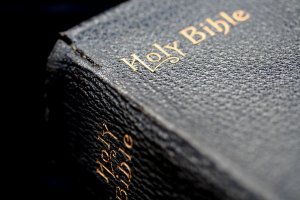
Bible
Photo Credit: “Black Bible” by Tacluda

Before I go any further, I should note that my dad grew up Lutheran and my mom, Catholic, so if a church or denomination is to blame for missing the “born-again boat,” several are to blame. I don’t know much about my parents’ formative experiences with church, except that Dad’s didn’t leave any notable impression on him, and Mom’s left her wanting more and better answers. She finally started to read the Bible for herself in college, only to realize that the Catholic church strayed pretty far from its teachings sometimes. (One example would be their changing of the ten commandments—deleting the second one and splitting the tenth into two.)

I know my parents, when they were newly married, came into the Seventh-day Adventist church through a Revelation Seminar, or a series of meetings that teaches esoteric prophecies in Daniel and Revelation, along with other defining doctrines of the Seventh-day Adventist church (the seventh-day Sabbath, the state of the dead, the truth about hell, the health message, etc.). I know my parents latched on to the logical presentation they saw; they couldn’t argue with the Adventists, because these people proved everything they taught straight from the Bible. I know these convincing proofs were enough to get my parents baptized.

kids-in-church
Photo Credit: gritintheoyster.wordpress.com

And then my parents started doing what the Adventists did. They took my brother and me to church on Saturday and restricted what we could do on the Sabbath: no TV, no sports, no shopping or eating out from Friday night sundown to Saturday night sundown. They stopped eating unclean meats, such as pork and seafood, per instructions in Leviticus. And as I grew up, these outward markers, to me, became what it was to be a Seventh-day Adventist Christian—only I didn’t think much about myself being a Christian, or a follower of Christ. I mostly thought of myself as an “Adventist,” because, it came to my attention, being “Adventist” separated me from my peers who were busy eating bacon, playing sports on Sabbath, and attending other fun events that I couldn’t. 

My Fallout from Church

When I was sixteen, after Mom left with my baby brother and Dad and my older brother were angry and I was depressed, I started blatantly breaking the fourth commandment (“Thou shalt keep the Sabbath holy”) by working on Saturdays. Suddenly I didn’t care about breaking the Sabbath, because, well, why should I? I had been attending church all my life, but church hadn’t helped me any. It hadn’t saved my family.

I can’t remember if anyone tried to tell me about what it really meant to be born again: in this case, being renewed in my now-suicidal mind—or finding peace amidst the storm. Perhaps some caring adult tried to tell me, and their words fell on deaf and hurting ears. All I know is I didn’t see the Spirit-filled life, or love and joy and peace, demonstrated at home. And this brings up another crucial point.

Fruit of the Non-Born-Again Family—Plus, the Christian Pretending Game

happy-family-leaving-church
Photo Credit: “Happy Family Leaving Church” by iamachild.wordpress.com –

I remember many kind church members who I think would have intervened had they known what was really going on in my home. But my parents were good at something many other Christians are: They hid our problems from the public eye. After they split up, my parents admitted that they’d always planned to divorce—but they were trying to wait until my brother and I graduated high school. When it hit the fan, not only our fellow church members, but also my brother and I, were flabbergasted that things were really that bad. Mom and Dad had played the game well.

Going back to the born-again discussion—because I think the true root of my family’s demise was that we were not born-again—my parents today admit that they entered marriage unprepared and unconverted in their hearts. I don’t ever remember Mom and Dad modeling for my brother and me daily prayer, except that we prayed before meals and sometimes before bedtime. Family devotions were non-existent. Our lifestyle, filled with sports and fiction and media and rock and country music, was very secular, except for one day a week when we put all that away to “keep the Sabbath.” So we were “Adventists.” But we were not really Christians (not really living like Christ). Which means we were really nothing but posers, because you can’t be a true Seventh-day Adventist without being a Christian, too.

Roots of a Blow-up

Learning doctrine is great, if it is biblical. I believe that Seventh-day Adventist doctrine is biblical. But if doctrine is all you have, in the end you really have nothing, as my family’s story shows. Along with doctrine, you need to have relationship—relationship with God and Jesus that transforms the way you think and live and relate to others every single day of the week. This is what I mean by being born-again.

family-fighting
Photo Credit: Peacefulparenting.com

Before shouting matches occurred in my home, we should have been dropping to our knees as a family. Before my depressive thoughts took root, I should have been planting scripture in my mind.

“We do not wage war with mere human plans or methods. But we use God’s mighty weapons, not merely worldly weapons…with these, we take captive every thought to Christ” (2 Cor. 10:3-5). What if my parents had learned, and I had learned, to take every thought captive to Christ?

Oh, what a much happier story I’d have to tell.

Instead, we went to church angry, put on plastic smiles, and then, when everything blew up, we kept those things out of sight, too. I learned to keep my depression out of sight. Then, when the façade became too farcical for me, I disappeared from church altogether.

The good news is that when your spiritual leaders fail you (possibly because they don’t know what you need, if they even know what they need), God can still get to your heart. He eventually got to mine. Sadly, it’s also true that the sins of the parents reach into the third and fourth generations—so sometimes even as we are coming back to God, it’s a murky, uphill battle. There are consequences to living opposed to God’s laws, and it can take a long time for life to smooth out again (hence my “ugly, messy” rebirth story).

RootsToFruits_1080-1024x576
Photo Credit: “From Roots to Fruits” on faithstudentministries.com

Before I can tell you about the good fruit God eventually produced in me, in part three, I will expand on the lingering effects of growing up in a (church) culture where I thought it was “not okay” to ask for help—as well as the idea that there wasn’t anything inherently life-changing about Jesus, his Word, or prayer.

Read Part 1

A Memoir for Disillusioned Christians: Addie Zierman’s When We Were on Fire

when we were on fireSometimes when you have grown up in a certain discourse community, or a group of people who share a common “language,” you learn to spout off sayings without even thinking about them. In the Christian world, some of these sayings include “born again,” “saved,” “lost.” You forget that outsiders don’t really know what these things mean. You yourself become desensitized to their real meaning. You can lose your faith when you realize that fellow church goers aren’t interested in probing for deeper meaning, or for deep relationships. Such was the case with Addie Zierman, who has recorded her experiences for curious readers.

Summary

Addie’s memoir, When We Were on Fire, shares the experience of someone who was steeped in evangelical culture from birth, thought she was on fire for God…and then fizzled out, realizing that what she’d always believed in was a lot of clichés that didn’t personally ring true.

Addie goes through a period of disillusionment, in which she starts to see that many of the Christians she knows don’t really care to get to know her and her problems; they want to gloss over the messiness of life with quick fixes, like “You will never be lonely with Jesus.”

“Yeah, but that thing about never being lonely? Sometimes I am,” Addie tells her Bible study group, and the leader responds, “Thanks for the feedback, Addie, we’re not really going there today. Now, let’s move on to question five” (a paraphrase).

Never being “heard” in Christian circles leads Addie to her rebellious-slash-depressed period, in which she tries to drown her sorrows in alcohol and an “almost” affair.

A turning point, if there is one, comes when Addie finds out she is pregnant. She decides she doesn’t want to be bitter for her son’s sake; plus, it feels like time to get over the past.

It’s sad to me that she’s still sort of cynical at the end; although the place she leaves the book might be just right for making her point that faith isn’t simple. A testimony can’t be broken into before and after, black and white, dark and light (and this is a point I’ve made on my blog, too).

Analysis

I really appreciate Zierman’s honest look at how her faith hurt her. Particularly well done were her scenes dealing with her ex boyfriends, paragons of virtue she aspired to imitate. She makes the point that a heart can be broken even if one “saves herself for marriage”; this happened to her by her boyfriend Chris, who, in trying to be a model missionary, exploited Addie’s innocence and broke her heart.

I also was affected by the theme of Christian clichés throughout the book—or Addie’s point that certain “evangelical-words-turned-weapons” “have grown so heavy; they groan, now, under the weight of all their baggage.” Some of her examples:

Like when you say, Sorry, I’m dating Jesus right now in order to terminate the possibility of a relationship with all its messiness, all of its complexity, all of its potential for breaking your heart.

You say, I’m saving myself for marriage, as if the heart can only be broken by the act of sex…

You tell the Church People you are lonely, and they say, Let God be your friend or they say, What a friend we have in Jesus! And what you hear is that you don’t have the right to be lonely, that if your faith was stronger than this, bigger than this, you would be happy.

And then, the main point of her book (to me):

And it occurs to you that the real work of faith has nothing to do with saying the right words. It has to do with redefining them, chipping away at the calcified outer crust until you find the simple truth at the heart of it all. Jesus.

I read through this book ravenously, because it spoke to some of the same issues I am lately unearthing by writing to my roots. I feel Addie’s rage at being fed cliché after cliché without equally experiencing practical demonstrations of Christ’s love. The thing is, as she writes in her author’s interview, people like her ex, Chris, are so steeped in the language, the clichés of Christianity, that they don’t even realize that, in following a God-appointed “mission,” they are hurting others directly in their path—doing “what Jesus would never do.”

It’s not entirely fair to blame other Christians. As Addie admitted, and as I will admit, we are guilty of also being the “Super Christian, bowling over others’ feelings with [our] passion. [We] have been unkind and careless more times than [we] care to admit. [We’ve] missed the loneliness of others simply because [we weren’t] really looking.” Yes. I know I’ve done that. And I repent of it, and after reading someone else’s experience of being on the other end, I pray God helps me to stop it!

Dislikes 

The F-bomb (along with lots of alcohol) starts showing up in the latter parts, when Addie enters her “rebellious” stage (warning, for you sensitive souls). Though it hurt my sensibilities, too, I did have to chuckle when she wrote, post-rebellion: “Though I’m trying to watch my language, sometimes fuck is just the right word” (paraphrased again). I see in Addie aspects of myself that I’m not proud of, but that are nonetheless there. She’s right; sometimes it is (the right word). Though I don’t condone swearing, I have to admit I do it sometimes; moreover, I think Addie’s done an important work  in being real on the page so we imperfect Christians can finally relate.

I would have liked to see Addie delve deeper into why she fell so low. As my book consultant wrote in her review of this same work, it seems Addie didn’t quite reach as deeply as she could have to describe what plummeted her into depression. It seemed to come too quickly, without enough explanation. Maybe the excellent foregoing chapters of her childhood/adolescence were the explanation, though. I can testify that a long build-up of factors can suddenly mushroom into catastrophe; after a lot of disappointment in life, you don’t need a cataclysmic rainstorm to wash you out—maybe just a little sprinkle.

Recommendation

I highly recommend this book if you have issues with your faith or want to understand evangelical culture better. For me, the book has been inspiring on multiple levels: I feel both validated as a disillusioned Christian, and energized to write about my similar, yet different, experience. My memoir (currently in revision stages) ends in a better place than hers: that is, I don’t leave my church, and I discover a real answer for the clichés, which is The Hidden Half of the Gospel, or the message of my first co-written book, expected to come out in January. Maybe when the book comes out, I’ll send Addie a copy. I feel we could be good friends.

Knowing When to Quit

exhausted
Photo Credit: “Exhausted,” posted on Thayer Memorial Library’s Website

I can talk a good game about living proactively, being productive, and striving for new heights; however, I’ve also found there’s a time to back off. The time is when you’ve made commitments that are not needful, helpful, or healthy for you to keep.

For a few weeks I’d been feeling stressed because I wasn’t finding enough time in my day to work on my memoir. I entered the fall planning to work on my book at least twenty-five hours per week. As I looked at my records for the past month, I saw that I was logging closer to ten. And because my baby’s due date was approaching, this was making me nervous. Could I still get my manuscript done by the time Baby Sam came?

My hubby has often said I tend to keep my plate full to the brim; he’s always known me to be stressed over what I’m not getting done. But since my unexpected breakdown, I had been trying to pare down the helpings on my plate. What had gone wrong?

As I’ve been learning to do when I get in a pickle, I prayed. But this time as I started to pray, my brain felt too scattered to even stay on track (this is a good sign you’ve got too much on your plate, or you’re pregnant, or both). So in my prayer journal, I began with a list of my current commitments, hoping to see a pattern or pick out something I was unnecessarily stressing over.


Let me fill in the background for you about the housecleaning item. In the past two months, thinking I needed to become a better homemaker for the baby, I picked up two books on housecleaning (three, if you count The Happiness Project), and started to try to drastically change my habits, per the books’ suggestions. I had started to feel positively weighted down by the thought of keeping my kitchen sink clean, de-cluttering a little bit every day, and deep-cleaning my kitchen.

When I made the list in my prayer journal and saw the housecleaning item mixed in with everything else, though, I realized something: Cleaning/organizaing my home doesn’t have to be a top priority right now. Especially since I’m not a dangerously messy person (i.e., my dust bunnies are not causing us physical health problems or my clutter creating safety hazards, like some people referenced in my cleaning books).

I asked the Lord to help me set some goals for what I actually needed to do for the time being. He told me, “You can stop reading the housecleaning books right now. If you want to focus on your own book [and I do], read stuff that inspires you to write [books on writing, or memoirs].

“Continue the habits of keeping your sink clean and purging your clutter when you can. But you don’t need to add anything else.”

This was making me feel lighter already. I was next able to list out some new, more manageable goals for my writing each week; although I had to admit it wouldn’t amount to twenty-five hours. This was because my unexpected teaching job had come up at the last minute, and it takes time to create curriculum when you’re teaching a brand new class. This was an item that was not negotiable.

The baby registry and choir cantata were pretty easy to resolve: I’d let them become overwhelming when I saw I couldn’t get the registry done in three sittings (but one more should do it), and the cantata piano music learned in two weeks (hopefully four more will do it—but if not, I have the out of purchasing the performance CD).

While my hubby had told me I shouldn’t feel bad about cutting back on my memoir work, I did feel bad, because this was the single most important thing I’d identified to get done before the baby came. I knew I wouldn’t cut back anymore than I had to, but God did help me see that I was worrying too much about getting the book done in my projected time frame. He helped me resolve this by reminding me that if I got the first section revised and a proposal written, I could start shopping the manuscript to agents/editors even if it was unfinished. This is how non-fiction publishing works, anyway.

Then, God gave me this list of do’s for my guilt:

  • Lighten up
  • Lessen your expectations
  • Give yourself a break. Unpredictable things (like the class and the puppies) have happened lately.

Finally, I realized that God would accomplish his work in his time. I didn’t need to worry about what wasn’t getting done, because he was seeing to it that everything that needed to get done was getting done.

When we are walking in God’s will, or doing our very best according to the light we have (based on reading his word and listening to his voice), we can “quit” certain good things with a clear conscience—and sometimes, to continue walking in his will, we must.

Are Your “Roots” Showing?

tree roots
Photo Credit: “Exposed Tree Roots” by Colin Brough

I’m not talking about your hair color, though we often get hung up on the outward appearance. I’m talking about what’s on the inside: or those beliefs you hold at the core of your being.

Last weekend I hosted about ten women at my house for a mini women’s prayer retreat, and we talked and prayed about how the negative beliefs we hold are responsible for the negative behaviors in our lives. In other words, your problem of overeating, undereating, cutting, criticizing, worrying, etc. is the “fruit” of a deeper “root.”

As Jesus said, “No good tree bears bad fruit, nor does a bad tree bear good fruit. Each tree is recognized by its own fruit. People do not pick figs from thornbushes, or grapes from briers. A good man brings good things out of the good stored up in his heart, and an evil man brings evil things out of the evil stored up in his heart. For the mouth speaks what the heart is full of” (Luke 6:43-45). He’s saying that any fruit cannot grow without a root first in place, because the one flows from the other.

My co-author, Paul Coneff, likes to further explain this concept with the “toothpaste test,” which stipulates that if a tube of toothpaste is strawberry, well, when it gets squeezed, nothing can come out but strawberry paste. In other words, whatever beliefs are rooted in our hearts—whether positive or negative—will eventually come out.

To see an example of the “fruit/root” principle, or to watch the “toothpaste test” in action, just get close to someone for a little while, settle in, and watch. Listen to what inadvertently pops out of their mouths when they get stressed. I’ve observed that even if people aren’t trying to be confessional, they end up confessing a lot more than they think (and this includes myself).

Recognizing Common Roots in Women

Writer Patricia Garey, in her book Beautiful Woman, talks about how mothers inadvertently send negative messages to their daughters about beauty and self-esteem when they make passing comments like, “Oh, I can’t go out without my makeup,” “I have to get rid of this extra flab,” or, “I wouldn’t be caught dead without [fill-in-the-blank].” What do these seemingly trite remarks say about the beliefs rooted in their hearts?

I know a lovely woman who will not go out in public until she has “put on her face.”

“I can’t be seen like this,” she chirps to her husband if he ever asks her to run to the store on a Sunday morning—even if just for a quick “in and out” errand where she will only be seen by the cashier. To go out for that sixty-second errand first must entail an hour’s preparation.

After I learned about the fruit/root principle, I asked myself: “Is this behavior just a quirk, or is it the symptom of a deeply seeded negative belief, perhaps, ‘I’m not acceptable just the way I am’? or ‘I need to hide who I really am’?”

I know another woman, well respected in her teaching job, who clearly has some insidious negative beliefs rooted in her heart. Because she doesn’t have a college degree, she feels inadequate, or “less worthy” in some way. Clearly, by the passing or side comments she makes under her breath, such as, “I’m so dumb,” or “Well, you’re better qualified for that,” or “I just wish I could really do something that would make a difference,” she believes in her heart that she is not good enough. Usually these comments come in the context of talking or hearing about someone else’s achievements, whether in the area of career, health, or other. I’ve heard many people say she is the best teacher they’ve ever seen, but sadly she won’t believe it.

I wonder how many of us have that problem. How many of us have deeply rooted negative beliefs about ourselves that everyone around us would disagree with? Sometimes no matter how many times we hear truths about ourselves, we refuse to believe them. But how quick we are to blow one negative comment into the gospel truth. If that’s so, then we can know we have some negative beliefs rooted in our hearts.

Recognizing My Own Roots

Tonight begins a thirteen-week women’s prayer group with a few good women who are willing to honestly examine those false beliefs in their hearts and let Jesus uproot them, replacing them with His truth. I’ve been through this process twice in the last year, and each time God reveals more roots I need to deal with.

Some of the easiest roots to recognize when I started a year ago were those depressive thoughts that used to define me: thoughts like “Life sucks,” “I’m a loser,” and “I will always be this way.” I have now recognized those thoughts as lies and renounced them in my life.

uprooted tree
Photo Credit: “Toppled–Uprooted” by Tacluda

Next, I faced the following slew of lies—and these, I realized, were protections I had developed to try to fend off any more depression (or my old roots): “I have to try harder and do more,” “I have to control things,” “I am responsible for making my life into something meaningful.” After prayerfully asking God to search my heart and try my thoughts (Ps. 139:23-24), I realized these, too, were lies from the enemy. I still battle some of these lies, especially when I slack in my prayer life, but this battle is getting easier.

As I begin a new prayer group, the new lies I am battling sound something like this: “I have worked through my issues, and therefore, I have arrived.” “I am better than others.” “I don’t need to spend so much time in prayer anymore.” Wouldn’t you know it, even when we reach a spiritual high, Satan can use that to slam us some more—usually this is when the “pride” lies begin.

So today I am praying about pride, and asking the Lord make me feel my desperate need for him once again. I have confidence that as I spend time with him every day, he will once again reveal his truth. In the meantime, before I can feel it for myself, I am taking him at his word that I can do nothing without him—I am choosing to believe that to remain fruitful for him, I must remain in him—I must remain in the Vine (John 15). That’s because I never want to be ashamed for my roots to show; and I always want my life to produce positive fruit (Gal. 5:22).

What fruits and roots are showing up in your life today?


(Note: If you liked this post, check out the preview of the book Paul and I wrote, and sign up to follow this blog so you can read more about fruits and roots when our book is published.)

Professing—My Unexpected Blessing

With my manuscript deadline at hand, I knew this week would be busy. Before I got the job offer last Thursday, I didn’t know how busy. Suddenly, in addition to finishing my book manuscript in one week, I am becoming an adjunct professor, too!

I got the call last Thursday (six days before my first class—yikes!), and five days later, I am still in awe at God’s goodness. This past year has been all about me learning that when I humble myself in the sight of the Lord, He lifts me up (James 4:10). Repeatedly broken to knee-point this past year, I have found peace in the surrender to Jesus and His plans for me. I gave up certain plans I thought would not pan out (such as a PhD and professing at my alma mater) to follow new directions in which I felt called: authorship and parenthood. (By the way, we are supposedly finding out the baby’s sex this week, too!)

It was when I surrendered the professing idea that we got pregnant and the book really started taking shape. I thought: “This is okay; God’s really got this.” I haven’t been making any serious money for two years, but I’ve been faithfully sowing seeds in hopes that they will grow into a money tree (er, some kind of career), however small.

By sowing seeds I mean writing my memoir, which goes out to a professional author/editor this week for a consultation. The book is not in its final form, by any means, but at 256 pages, it is a complete draft that says, more or less, what I want it to say. There’s a part of me that wants to keep polishing it, but mostly, especially after faced with having to prepare a semester’s syllabus in a couple days, I think it wise to give the book (and my brain) a break while other eyes ponder it. It will be good to focus on something else for awhile and then come back refreshed to revise in a month or so.

The one-class professing gig on Mondays, Wednesdays, and Fridays (which happens to be right down the road) will be the perfect vehicle for me to do just that.

And I was just starting to miss the classroom a bit.

Today I can only shake my head and marvel at the wisdom of God’s plans and His timing. Maybe this turn of events doesn’t sound like that big of a deal, but for me, it is. I used to have such issues with needing to be in control of my future. I didn’t handle unknowns well. I got physically sick from anxiety. But since learning to let go (and please know that sometimes I still need remediation), life has become a joy, full of surprises and good gifts from the hand of God. Now, instead of being just a professor, or just a writer, or just a parent, I am suddenly all three! Daily I am reminded that God “is able to do immeasurably more than all we ask or imagine, according to his power that is at work within us” (Eph. 3:20).

If you’re struggling today over the plans for your future, or if you feel physically or emotionally sick from not knowing what’s to come, why not ask God to take the reigns and pave the path for you? He might not make things clear right away, but if you earnestly pray, you can rest in the knowledge that even when we don’t know what to pray for, “the Spirit himself intercedes for us through wordless groans.…And we know that in all things God works for the good of those who love him, who have been called according to his purpose” (Rom. 8:26, 28). Finally, when we put God first, we can rest in the promises that “there is no want to those who fear the Lord” (Ps. 34:9), and God shall supply “all” our needs “according to the riches of His glory in Christ Jesus” (Phil. 4:19). Amen!

For some inspiration today, check out the song “When I Let It Go” by Sierra. This is a throwback to one of my dad’s favorite Christian groups from the 90s, and lately it has brought me to tears (in a good way!).

This time I’ve got to trust You
I’ve got to accept Your plan
I have tried to guide my circumstance
But there’s just no way I can
When will I learn this lesson
Your ways are not like mine
Lord, help me to surrender
The control I try to have on my life
When I let it go
You take my hand and gently lead me
Then You let me know
Just how peaceful my life can be
When I let it go
Your never-ending blessings
Like a river start to flow
When I let it go
Too many times I’m searching
For the things I think I need
When I try to look for more
I always seem to give You less of me
Lord, help me gain this wisdom
My foolish mind still lacks
‘Til I find a way to let go
Of the part of me I’m holding back

Choosing the Write Path


2013-03-13 02.48.54

After breaking down from ministry overload, I started really questioning my priorities, and over the past few months I’ve had some definite impressions: Maybe God wants to fulfill me in ways I never dreamed, not only by making my love my life’s work, but also my mode of ministry. I’m talking about writing, of course.

You see, something I’ve been struggling with since I’ve been staying home to write is balancing my “work” life with my ministry life. I’ve tried setting goals for myself, such as writing twenty-five hours a week…and I can’t explain why accomplishing this has been so hard when I don’t technically hold another “job.”

As I’ve been praying about this, God has suggested some reasons for the difficulty: I’ve been too controlling of others, I’ve taken it upon myself to provide for others, and I’ve allowed myself to get pulled from my writing to do jobs that I really shouldn’t be doing. This ranges from using my daily writing time for ministry emails or phone calls to saying yes every time friends suggest an outing. Lately I’ve also recognized a danger of losing all focus on my work because I get too involved with other people.

I have struggled to place my work time above “people” time—it’s become hard to sort out when to say no and when to say yes. My hubby always encourages me to go for the people time: “Take a break!” he says to his chronically busy wife. But after several months of frequent “breaks,” I feel I’m too often setting aside work. I’ve been documenting my writing hours each week, and sometimes I’m struggling to even reach ten or fifteen. Lately I have the added challenge of being short on energy due to pregnancy—so my “usable” hours have shrunk. I literally don’t have energy to do as much as I used to.

So, I am forced to choose.

The things I do are all “good” things. Building ministries, building relationships, writing an inspirational book. But I can’t do it all. What should I do?

I have some other impressions, I think, telling me I have to focus on my work right now. Because it might be my calling. It might be the single most significant way I’m meant to minister to others. If this is true, therein lies the answer to my work/ministry balance. My work is my ministry.

Right now while I’m still unpublished (bookwise) it’s hard to see it. The fruits of my labor are not yet tangible, as they are in my prayer ministry, church choir, and former Bible study. I see no immediate return. This is where faith comes in. What if Noah had given up on building the ark during the 120 years before its use?

For now, I am praying for God to give me more faith. I need clarity and insight, too, in case I am misguided about what God really wants me to do. I need to know for certain if these impressions about writing are my true calling—and then, if they are, I need to resolve to walk in the path God has placed in front of me. That is, if God has appointed me to write for my life’s work and my ministry, I need to stop being distracted by other “good” things, and let him bring forth fruit where I’m most fertile.

“Look straight ahead, and fix your eyes on what lies before you. Mark out a straight path for your feet; stay on the safe path. Don’t get sidetracked; keep your feet from following evil.”

(Proverbs 4:25-27, NLT)

Some Keys to Being Freshly Pressed

key
Photo credit: “Key” by debsch

After achieving the feat of being Freshly Pressed, a sort of fear can set in, along with  negative thoughts like these: “I’m going to screw up!” “My next effort won’t be as good!” “I’ll disappoint all these new readers!” Happily, I’ve only had these feelings mildly, and they’re not sticking around. Instead of fear, I mostly feel hope. Rather than daunting me, the Freshly Pressed Status has buoyed my confidence as a writer (a writer whose work people want to read!), and it has encouraged me.

The Surface Answer

So, you want to know how to get Freshly Pressed? (Before last Tuesday, I wondered that, too.) The easy answer is that you just have to keep writing and hope one of your posts gets picked. On the day produced my “pressed” post, I was just doing my regular thing. I was praying and reading the Bible like I do every morning, then I started scribbling about the issues my prayer time had revealed to me. I let the writing sit for a weekend, and then on a busy Tuesday when I almost didn’t think I’d post, I tweaked a bit, paired it with a picture, and posted. It was one of the easiest pieces I’ve published, in fact, because I didn’t expect much out of it—not like some past posts I’d edited into mincemeat (hoping to be “pressed”).

It was a complete and total surprise when, three hours later, my inbox greeted me with: “Congratulations! You’ve been Freshly Pressed!” For the next few days I soaked up the extra comments, likes, and follows—and thanked God for blessing me when I wasn’t even asking.

The Deep Answer

Maybe that’s a key to receiving blessings: to stop trying to force them.

I think back to the small string of writing successes I’ve had so far. (You can liken my writing to whatever dream you’ve carried for most of your life.) In all honesty, when I’ve succeeded in writing, I wasn’t much expecting it. Conversely, when I’ve most expected to succeed, often I’ve actually flopped.

I know I’ve talked to God a lot over the years about my dreams. Heck, he was aware of these goals even before my birth. But when I started chasing them in the beginning, it was like I wanted God on call, ready to answer at the moment I asked. I was selfish (not that I’m a saint today, but I’m slowly learning patience). I wanted to be published, and I wanted it when I wanted it, in the way I wanted it.

Some Instructive “Flops”

In 2010 I prepared a manuscript based on my “oh-so-interesting” teenage journals and figured this just had to be my first book. After a pause in the project, during which time I encountered some pushback from one of the main “characters” in the memoir, I realized maybe this sensitive material wasn’t yet “book-ready.”

In 2011, when I was re-entering graduate school with the dual goals of professing and writing, I identified a PhD in Creative Writing program one hour away from me that I thought would be “so much better” than the bland rhetoric program I was currently in. So I fretted my way through months of manuscript and application preparation, then lay awake at night with knots, willing and wanting so badly for this to work out—only to be rejected a few months later.

In 2012 I tried again, this time a distance MFA program that specifically catered to writers of faith. This, I was sure, was the vehicle through which I would make my plans—my plans—happen. Only, I didn’t get in.

Today I’m not sorry I attempted that now-dead manuscript and those fruitless applications. I think it was good for me to try, especially since I felt God nudging me toward writing and I didn’t sense him expressly forbidding those things. Where I went wrong was becoming too bull-headed to recognize that God had other, better ways to make my dreams come true besides those few paths I could see.

Doing Our Part, Letting God Do His

So it is with any endeavor. Maybe we don’t exactly know if the thing we want is the same thing God wants, but we feel it might be. In that case, I believe our part is to work faithfully—do our homework, hone our craft, practice it, and perform it to the best of our ability (so we are not presuming on God)—but after we’ve done that, we should let go and let God.

When we live our lives like that, quietly and diligently doing those things that (to the best of our knowledge) God has appointed us to do, we might just be pleasantly surprised one day when our faithful efforts pay off. Since I’ve made writing a part of my daily routine (and dropped those arbitrary, self-imposed expectations, such as “the writing has to result in X”), I’ve had a few of those pleasant surprises, including three published (and paying!) magazine articles, a co-book project, and most recently a Freshly Pressed blog post.

It’s fun to get good news when you’re not expecting it. That’s not to say we shouldn’t expect good things from the hand of God. We should.  But we shouldn’t try to dictate what those things will be. As I’ve learned, God has a vast storehouse of blessings for me that I’m not able to see—and it’s bigger and better than anything I could ever come up with.

Today my prayer is that I will faithfully do the task God has given me while letting God be God, trusting that he will reward me according to his promises and for the purpose of his glory. If you need to get re-centered on what really matters today, I recommend reading Psalm 119 in its entirety, as I did this morning.

Dear Lord, “Turn my heart toward your statutes and not toward selfish gain. Turn my eyes away from worthless things; preserve my life according to your word. Fulfill your promise to your servant, that you may be feared.” (Psalm 119: 36-38)

My Unexpected Breakdown

Cry for Help by gesinek
Photo Credit: “Cry for Help” by gesinek

There have been times in my life when a breakdown seemed imminent, and lo and behold, I had one. After those incidents, people in my life—like parents, counselors, and doctors—looked back on the circumstances surrounding the breakdown and agreed, “Yeah, it’s no wonder.” I, too, understood where those meltdowns came from.

But about six months ago when I short-circuited (not to the point of self-harm or anything, just had an incapacitating freak-out for a few days), it didn’t seem imminent. It was unexpected. And people around me would have said the same thing. Today I’m writing to try figure out: What was up with that? And is there a bigger issue (a hidden root) I need to deal with?

Most people when they look at my life wouldn’t say I’ve got a problem: They’d probably say I’m really organized and driven—not breakdown material. I’m a leader in my church and have labored for the past two years to bring others to Christ, because I was so excited when I finally found him. So, in 2011, I started a small group Bible study with the intent of providing a place for my “Christian” friends to talk about Christ. Prior to that, I noticed we didn’t really talk about him together. Go figure.

Then, I got involved with a prayer ministry called Straight 2 the Heart. I took a three-month training, co-wrote a book with the program’s mastermind, and several months later my prayer partner and I started praying with two other friends to help them experience the freedom and joy we had found.

Concurrent with my prayer training, I took on the position of music leader at church and drummed up all kinds of “great” ideas to bring our fragmented church back together. One of them was starting a choir, and another was putting song leaders into teams to create community.

Last fall, 2012, I was on a roll, doing just everything in my little power to “revive” my church, which, I thought, had grown stale. I was proud when my older brother, now a missionary, visited us and observed that our home, with its two Bible study/prayer meetings a week had become an outreach center. I basked in the glow of his approval: if you haven’t guessed, I thrive on such accolades.

Breaking Point

Then, December came, and I had ten musical programs to line up, including the music all that month for church, and five vespers programs. Halfway through the month an out-of-state choir was to come perform, and I thought I had it all under control. I arrived at the church a safe thirty-five minutes early, or so I thought, only to be met by a disgruntled choir director who informed me I was supposed to have opened the church for them an hour in advance for set-up. She swore we’d discussed this detail on the phone, but I had absolutely no recall of it. Between setting up meetings, making phone calls, sending group emails to my Bible study and prayer groups, and coordinating choir things, my mind was too full to accommodate the memory.

It was then that I excused myself for the bathroom and broke down. In the farthest stall from the entrance, I sat and I cried and cried and cried. I started hyperventilating and couldn’t catch my breath. I called my hubby to ask what I should do. I was supposed to go out and introduce the choir in a few minutes, and I couldn’t stop crying.

Someone else ended up introducing them for me. Meanwhile, I missed almost all of Handel’s Messiah while I huddled in that bathroom stall trying to compose myself.

After December was done and I’d met my immediate commitments, I stayed home from church most of January, and I cancelled our home Bible study. People didn’t understand why I’d just quit cold turkey, and I couldn’t explain.

Making Sense of Things

Six months later, I know I had taken on too much. Not only did I take on too many jobs, but I took on the burden of other people’s salvation, and the burden of our church’s brokenness. Under the guise of “doing the Lord’s work,” I committed the sin of trying to play God himself, as if I could “save” my friends’ souls and fix my church’s issues.

I know I had the best of intentions, but now I also know I had a big problem. You see, after you’ve had a mountaintop spiritual experience, as I’d had during the prayer ministry, Satan swoops in with new wiles to trap you. After receiving so much healing, I felt on top of the world. And that’s when Satan must’ve suggested that I could make this healing happen for others. And do it in my own strength.

This week I’ve been praying about the same problem. After a bit of a ministry hiatus, I’ve been dipping back into outreach. As the church’s newly elected prayer coordinator, I’ve initiated a new prayer group at church, and as the communications secretary, I’m already dreaming big dreams for connecting our church in some new ways.

If I don’t watch out, I’ll end up barreling headfirst into another breakdown. How do I counter this good, yet bad, tendency?

Avoiding Future Breakdowns

Not long after said breakdown, I heard a sermon on Elijah’s “mountaintop” experience, after which he promptly sank into a despondent state (sounded familiar; see 1 Kings 18 and 19). The speaker said it’s common to fall low after experiencing a high, because we are worn out, and we let our guard down. Then he talked about how God actually commanded Elijah to rest for awhile, take care of himself, and then delegate work to someone else (shortly thereafter, he passed his prophetic mantle to Elisha).

This idea about resting after a strenuous effort was advice I needed to hear. So was the part about delegating. And it also reminded me of some other Bible passages I’d already read on this subject.

As I pondered this topic, God brought to mind the story in Exodus where he actually commanded Moses to dole out his work to seventy elders. I also remembered how the early apostles doled out food preparation duties when their numbers were growing rapidly so they could devote themselves to prayer and ministry of the word (Acts 6:3, 4). I also stumbled on other verses that encouraged me, such as Matthew 9:38 and Ephesians 4:11-13, which tell me God has a specific, special work for me—and it doesn’t include doing everything I theoretically and possibly could do for the Lord, or the church.

So how do I avoid future breakdowns?

Now I know that answer has something to do with delegating, taking some pressure off myself. And I know it also entails homing in on my specific appointed work from God and not getting sidetracked by any and every possible thing I could do for God, because then I’d never get a break (except when I break down!).

I also need to keep praying, to uproot the false beliefs that keep telling me I have to do it all. And I have to keep praying for God to reveal why I feel the need to control things—and I have to let him release me. Like every growing and healing experience, this one will take time.


The Pregnant Post

photo-1
This is the picture we sent to our family members to break the news, but it took our seventeen-year-old niece to get it. Everyone else thought we were making a statement about what we were cooking that night!

I myself don’t like pregnant posts—which is why I won’t keep you in suspense. Yes. I am. A post about pregnancy is okay, as long as it doesn’t resort to clichés, so I’ll opt away from discussing the obvious facts of my developing condition.

I do like irony, so I’ll point out that just a few weeks ago when I posted I May Be Childless (At Least my House is Messy), I really wasn’t. But best of all, I love answered prayers, so I’ll give you these lines from my prayer journal on March 31st:

“I know I should be happy in whatever circumstance I’m in—but I guess I’d like to ask for a breakthrough of some sort: a pregnancy, a job, an acceptance letter. I feel like you work through breakthroughs, and events. You also work through hard times and drought. So any of the above could happen, or not.”

When I wrote that, I was just getting back from my Minnesota visit, and my mother-in-law had asked me if I was glad to be back, and I had lied and said yes.

Truth was, I wasn’t excited about coming back to a house that was empty most hours of the day.

I also wrote that I’d figured out why I was having such an aversion to doing housework lately: It was added “alone time” to my “already lone occupation of writing.” It used to be “alone time after people time.” Now it was “more alone time after alone time.”

At the end of that entry, I recorded that I’d gotten on my knees and heard God say, “You are worried and troubled about many things, but only one thing is needful.” So I decided to rededicate myself to the Lord, again (you’ll notice I have to do that a lot—like, daily), trusting that He’d work out the rest of the details.

Over the next few weeks, I recorded hearing God direct me to write…to write about some frustrations I’d been having in certain relationships…write to be an agent of change…use my swirling emotions as fuel…and I did…until I discovered I had a solid draft of that book I’ve been wanting to publish before thirty.

As to my hatred of housework, I heard God telling me I needed an attitude adjustment. He told me I needed to “plan to stay,” as in Jeremiah 23. I needed to trust that God had put me here, to nest, with or without children. Needed to get over my looking backwards to my past. If there wasn’t going to be children, I still needed to get my house ready…for friends and others we can minister to in our home.

Next to family time, the best memories I have in my home are those times when we held our small group Bible study and our Straight 2 the Heart prayer group. God reminded me that my ministry to others (and the growing of relationships) wasn’t done. I’d been blessed with a beautiful home, and no matter the status of our fertility, the house would be used, if I didn’t get in the way.

In a nutshell, God told me, “Write, and be at home. Get comfortable at home.”

That was also the period when He opened my eyes to see all the Friends in High Places I’ve had all along.

When I realized, on May 4, that I was guilty of the sin of ungratefulness (and a bad attitude), I prayed this verse I found in Micah 7:9—“I will be patient as the Lord punishes me, for I have sinned against Him. [My punishment, I felt, was extreme feelings of guilt and uncertainty that were literally upsetting my stomach—maybe it had something to do with pregnancy, too.] But after that He will take up my case and punish my enemies for all the evil they have done to me. The Lord will bring me out of my darkness into the light, and I will see His righteousness.”

I did write. I did get more comfortable at home during those weeks. I decided, “I can do this.” And then, when I wasn’t even looking for it, last week I got the unexpected news: “You’re pregnant.”

Yes, God works both through breakthroughs, and through wilderness experiences. And even though it’s easy to say when things are going well, I’d still like to quote the Apostle Paul to say this: “I have learned in whatever situation I am to be content” (Phil. 4:11). If you’re going through a dark situation today, remember it’s temporary—and the morning light may be just about to break!