Role Confusion and the Modern Woman

Image

My friend looked at me with a puzzled expression on her face.

“What do you mean, ‘work’ on your marriage?”

We were sitting over two rabbit plates at a home-style restaurant, and I was telling her about my current aspirations. They are the same ones I initially listed on my “about” page: write my memoir and become a better wife.

My friend was confused at the pledge to work on the marriage because, in her eyes, she didn’t see a point.

“I mean, I told *Bill what you said about working on your marriage, and we wondered what that meant. We’re both happy with the way things are, and putting ‘work’ into the marriage just seems like too much, well, work.”

It was my turn to be surprised. Who wouldn’t want to work on their marriage? Isn’t that a societal value?

Not necessarily. But I thought it was one of mine. Why, then, do I find myself annoyed at having to cook and clean? Perturbed when 6 a.m. comes and it’s time to make breakfast? Indignant that he should expect me to help with the garden? Angry when he says I’m too caught up in my writing, not attentive enough to him?

Why do I resent all these duties so much?

At first I was going to blame it on the role confusion that modern women have faced ever since the woman’s movement. And perhaps it does have something to do with what the feminist journalist Anne Taylor Fleming called “the two out of three rule”—where “a woman can have only two out of three big pieces of life: love, work, children” (from her book Motherhood Deferred, p. 84). (For my perfectionist personality, though, some days it seems I’m running more at a one in three rule.)

Probably due to feminist conditioning, I’ve said before that it’s just not enough for a woman to stay at home and be a housewife. She needs a career, too, doesn’t she?

But even though I’m not immune to it, this line of thought bugs me. Along with Anne Taylor Fleming, I agree with Doctor Laura (in her book Parenthood by Proxy) that much of the modern family breakdown is due to women working—who’s standing ready at the door to smooth the rough edges of everyone’s day? And let me just say that I think either man or woman could do it—the thing is, simply, someone needs to. And I think this is noble work. For other women.

So why not for myself?

 The Real Problem Isn’t Feminism

When I step back to observe my excuses to hubby about why I hate housework, here’s what I hear myself saying, over and over again.

  • I’m afraid to put time into our home, because what if something happens to us? What if you die on me? (He says I’m always trying to “kill him off”—I say I’m just being a realist.)
  • If you died, I’d be left with a big house I’d want to sell, a garden I wouldn’t want to tend—all stuff that would have amounted to nothing.
  • If you die, I need to have skills to fall back on. I need to be able to get a job to support myself. That’s why I needed to get a BA and an MA, and boy I’m glad I got some teaching experience, too.
  • I’m afraid I’ll put all this time into our home, and then it will crumble. And then I’ll have nothing to show for it.
  • The only investment I feel safe making is an investment in myself—because people die and leave and let you down, but you always have yourself. I need to have a plan if things go south.
  • I’m just afraid, okay?

Wow. Those are some deep roots. It came to me as a huge revelation the day I wrote down “trust issues” in my prayer journal. The days I connected all my over-planning and uptightness and performance to trust issues. Fear issues. Self-protection issues.

I know what it feels like to be helpless. Alone. Out of options. And I don’t want to go there again.

That’s why, after so many gains, I still find myself hoarding my time, my energy, my resources (which could otherwise be spent housecleaning), for self-improvement. Apparently I anticipate being left to fend for myself again someday.

I find it sad that after walking with the Lord for several years, I still don’t trust Him enough to give of myself fully to others. I wish I were more open and loving and warm. But honestly, most of the time, that feels too vulnerable of a position to be in.

I wonder if my girlfriend has some of these same roots, too. Is fear the reason why she resists “working” on her marriage? Fear that it will divert precious energy from building a fortress of self-sufficiency to sustain her when (she must unconsciously think) one day, she will be left out in the cold?

Stepping back for the bigger picture, I wonder, is this the reason that women in our society collectively have renounced housewifery, and largely motherhood, as their sole profession and duty in life?

Have we all been so hurt that we feel this need to gird ourselves about with skills and experience and knowledge for the impersonal workplace, where we don’t have to lay our hearts on the line, only our time—and though the workplace may not fulfill our deepest longings for companionship and family, they at least recompense our time with money—the means by which to sustain our physical necessities and our plastic smiles?

Readers, do you think I’m on to something, or is it just me I’m describing? Or, if you’re not excited to analyze this trend, what do you see yourself (or the women in your life) working toward: family, or career? Please leave me a comment and let me know!

Reviving Relationships—Rethinking Goals

Image


 “The hopes of the godly result in happiness, but the expectations of the wicked are all in vain.” (Proverbs 10:28, NLT)

When I read this verse today, two questions immediately sprang to mind.

1) First, am I godly?

2) Secondly, what are my hopes—in other words, my goals? I have the sense that they have changed in just a few short years—and I’m not sure I’ve really defined them.

You should understand something about me. A few years ago, after my older brother recommended the book The Seven Habits of Highly Effective People, I got a little obsessive about my life’s goals. Looking for ways to improve my abysmally ineffective first year of teaching, I lapped up those seven habits, even making my second-year students endure a three-week unit on said habits.

During my third year of teaching, on my own I completed some exercises found in the back of my new 2011 Covey planner. These entailed writing out my roles and goals, my values, and my bucket list. You can find that list here.

On paper, my goals look good, but in retrospect, I think I’ve done badly—at least on the relationship points.

A Few of My Failures

“Conscious steps toward building or maintaining my relationships.” Maybe a few. We did start a weekly small group Bible study after I left teaching. But it took my new Bible-study-buddy, Tasha, to get me out of my comfort zone for social outings–sporadic spa days.

“Avoid overcommitting myself in areas that do not desperately require my attention.” My hubby’s feedback heavily suggests otherwise. In fact, just now I am kicking myself for getting too involved at church, yet again, this year.

“Don’t forget to make and take time for friends.” I’ve forgotten often. I have plenty of relationships that have fallen by the wayside, a topic for another time, but the biggest relationship I’ve neglected by far is my marriage.

This is hard to admit. Suddenly I see that all these years I’ve tried to blame him for our shortcomings as a couple. I’ve deluded myself into thinking I was the one doing most of the giving…he most of the taking…but now I’ll put the question to myself: What have I really done for our marriage?

As I think back on the eight years we’ve been in this union, all I see is a panorama of achievements I’ve chased—degrees and jobs and dreams—that were all selfishly motivated. To this day, I can list lots of things I’ve done for myself, but it’s hard to say what I’ve done for our marriage.

The Undefined Emptiness

Lately, with plenty of quiet time on my hands, I can’t help but reexamine my life, and what keeps coming up is that I have an emptiness inside. None of the degrees or achievements have filled it. God and my husband have done much to soothe it, but after much time on my knees, I feel it will not be enough to keep to myself—just me and my God and my husband and my writing.

There is something else I’m supposed to be doing. I know I need to be less selfish in my marriage, yes–and I’m working on it–but to deal with this maddening quiet when he’s not here—when it’s just me and my writing and my restlessness—is there something else?

So this morning I prayed: “Lord, please: I’d like a breakthrough of some sort. A pregnancy. A job. An acceptance letter [from my MFA program]. Some other place to belong, some other place to get my mind off myself.”

And you know what I heard?

“Lindsey, you are troubled about many things. But only one thing is needful.”

In his sequel to The Seven Habits, entitled First Things First, Stephen Covey uses an illustration involving a ladder and a wall, saying it will do no good to climb a ladder if it is leaning against the wrong wall. He’s right, of course, but only because it was God’s principle, first.

So says God and Stephen Covey: Lindsey, you better focus on question 1) Am I godly? Before you (re)tackle 2) What are my goals (and Where should I go, What should I do)? Because without getting number 1 right, number 2 is a moot point.

“Seek ye first the kingdom of God, and His righteousness, and all these things [whatever they are] shall be added unto you.”

Well, okay then. Back to my knees it is.

My Mission and Goals from 2011

Values Clarification

God: God is my Redeemer; he is the reason for my existence and my ultimate destination

  • I put God first every day
  • I use God’s word as my compass for all my life’s decisions
  • I strive to be Christlike and to be a witness to others in the way I conduct myself and live my life
  • I do what is right even in the face of opposition

Family and Friends: My family members and friends are the most precious gifts from God I have on this earth, therefore:

  • I take conscious steps toward building or maintaining my relationships with family members, such as family Bible study or spending quality time with them
  • I avoid doing things that would harm my family relationships, especially with my husband, such as over-committing myself in areas that do not desperately require my attention
  • I don’t forget to make and take time for friends; I keep my friendships in good standing; I do not “hoard” or limit my friendship; I am open to making new friends

Workmanship/Artistry: I have been endowed with specific gifts from my creator which I strive to develop to his glory

  • I write to share the story of what God’s done for me and to bring others to Christ
  • I play to be a service to others (such as in church, at funerals, etc.)
  • I use my talents not to uplift myself but to uplift God

Education: God has given me a wonderful mind to be filled with all that is lovely, pure, and true

  • I continue to learn constructive new things everyday that will benefit my own or others’ quality of life
  • I share what I learn with others
  • I obtain greater education for the purpose of  bettering my life or the lives of others
  • I avoid that which is emotionally harmful, mentally dwarfing, depressing or vulgar

Health and Fitness: My body is the temple of God, to be cared for accordingly

  • I choose to eat as healthily as is possible and realistic in my current lifestyle
  • I learn and implement new healthy recipes as often as I can
  • I exercise regularly to keep my body in good physical shape and to keep my mind clear
  • I choose to be happy with the body God has given me and my own personal “best”
  • I do not measure myself by unrealistic, worldly standards of beauty

Stewardship: I use all that I have to the best of my knowledge and ability to glorify God

  • I use my time constructively
  • I spend my money wisely
  • I treat my body as a vehicle of service for God and input accordingly

Roles

Christian

See Item 1 above

I read and learn what the Bible says, first, to prepare myself to witness, then, to know what and how to share with others

Wife

  • I am supportive
  • I think before speaking
  • I choose my battles wisely
  • I use my energy to encourage rather than nag
  • I find meaningful ways to show and reinforce my love for him everyday

Daughter/Sister

  • I am learning to have normal relationships with my parents and brothers
  • I call on a more regular basis

Teacher

  • To the best of my abilities, I teach the kids what will be most necessary, useful and uplifting to them
  • I am a positive role model
  • I maintain an active interest in their wellbeing and salvation
  • I discipline them when needed, even if it is hard for me to do so

Artist

  • I spend a significant amount of time (or that which is feasible) each week developing or practicing my talents, especially writing
  • I use my writing for a healthy emotional outlet
  • I use my talents to benefit others

What one thing could you accomplish in your professional life that would have the most positive impact?

Get my doctorate

What one thing could you accomplish in your personal life that would have the most positive impact?

I don’t know…

  • Start a small-group Bible study?
  • Have a child and learn how to have a normal, healthy family life?

The kind of person I want to be:

  • Self-confident
  • Loving
  • Wise/Discerning
  • Spiritual

All the things I would like to do (Bucket List):

  • Read through the entire Bible
  • Get my masters
  • Get my doctorate
  • Be an English Professor
  • Publish my writing for significant pay and in the venue that will impact as many people as possible
  • Take aerobics or Pilates classes for fun!
  • Be an aerobics instructor
  • Live in MN again, even if just in the summers
  • Lead a group Bible study for young adults
  • Find and participate in a ministry or service activity that both my husband and I are interested in and can do together
  • Compose music in a preserve-able form (learn how to use a music program to write electronic sheet music)
  • Achieve financial freedom so that money is never an obstacle, say, in taking trips to visit my family
  • Maybe adopt kids or do some kind of foster care or service for children
  • Get over my issues with technology; embrace that technology which is good
  • Become a Women’s Ministries Leader after my children have grown or I decide I’m not having children
  • Learn to see the best in people; never facilitate or further gossip

All the things I would like to have during my lifetime

  • Continual assurance of salvation; every day an open connection with God
  • A healthy, happy marriage every day
  • Maybe kids; don’t know yet
  • A lake house in Minnesota
  • My own study or writing room
  • A grand piano
  • A maid

Note: These prompts and questions come from my Stephen Covey planner from 2011. They spring from the principles of The Seven Habits of Highly Effective People, and I include my responses from 2011 here to help readers make sense of my next blog post, Reviving Relationships–Rethinking Goals.

I’d love to read any goals or bucket list items my readers would like to share! I look forward to your comments!

Playing the Stranger

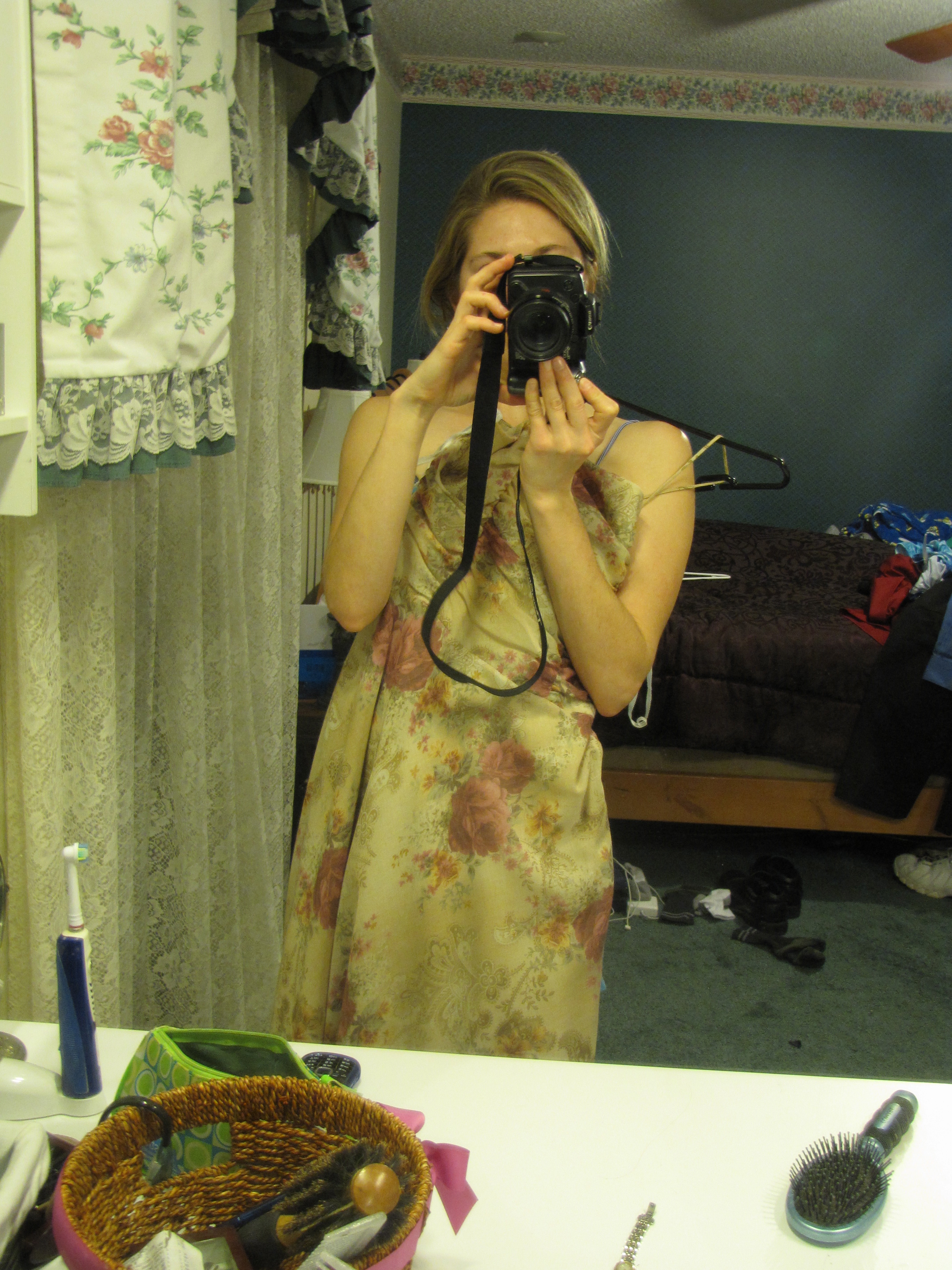
I found this old dress, a relic from high school senior pics, a few days before traveling to Minnesota for my cousin's wedding. Though more than ten years old, it seemed appropriate to wear. The posture of this photo is one I took at the wedding: background.
I found this old dress, a relic from high school senior pics, a few days before traveling to Minnesota for my cousin’s wedding. Though more than ten years old, it seemed appropriate to wear. The posture of this photo is one I feel I took at the wedding: a faceless photographer–capable of participating only as outside observer.

I should have brought Kleenex. I always cry at weddings; I knew this. But I was not prepared for the emotions unleashed at my cousin’s wedding Saturday.

Not only the customary tears for a budding union, but I cried regretful tears for all that I had missed over the years. You see, I moved 1,000 miles away from all of this, and all of them, eight years ago.

Faces from my past swarming around me, coming at me in waves, breaking through some icy barrier I’d built. There were old classmates, old classmates’ parents, and even a former teacher. I wanted to cry just for seeing them. I did.

In the past, what had I imagined of such a reunion? In my teen years I was very conscious of at first having to hide things. Later on, when it would have been okay to share, I still mostly hid, out of habit. To the point that I disappeared from people’s lives.

Standing with two former friends at the wedding and hearing them banter like they were not just past, but present, friends, hit me in the gut.

“Yeah, next time on the fishing trip you’ll have to come with–and bring your brother, too.”

“Billy* couldn’t come to the wedding—we’ll have to see him next weekend.”

“So, there’s no alcohol at this wedding? You must have a flask stashed in your tux, huh?”

Soon I wasn’t even standing there. And I realized I had done it. I had erased myself from memory.

I excused myself for the bathroom. But then, selfishly, wondered if maybe, just maybe, they were talking about me.

Sad to say, I’m just beginning to realize how self-centered I’ve been all these years. Always thinking about my feelings—protecting myself.

The fewer people I’m close to, the fewer who can hurt me—was my unwritten, unspoken motto.

What have I done?

As I see faces from my past swimming at me, I now feel it was all a lie.

The face of an old teacher’s aide—from my first grade classroom, nonetheless—exclaiming, “Is this Lindsey?! She’s turned into such a beautiful young woman!” A mother of a classmate, gasping, exclaiming my name, and enfolding me in a hug.

My sixth grade teacher’s face lighting up as she asks, “Are you writing?” Yes. “Oh good; I always thought you should!” An ex-boyfriend’s mom even engaging in friendly talk as she never did while I dated her son.

My cousin’s, the groom’s, exclamation: “Lindsey, what an awesome surprise!” My old friends, C and T, who married each other, taking time to talk with me over an hour as if they had nothing better to do. “It’s so good to see you!” they say (and mean it, I think). It has been about eight years.

Another old friend looking in my eyes and, to my small talk, saying, “Being away from home must be the hardest part.” Understanding for the words I could not speak.

What have I done?

Desperately I snap pictures of my young cousins and their spouses and children, laughing and talking at neighboring reception tables. They too are familiar, comfortable, with one another. And like my classmates, they have passed through many of the same coming-of-age events as I, only together.

There’s something comforting about a shared heritage.

But I have refused to be comforted.

This visit has once again touched me where it hurts…still, thankfully, it has been different. Like the Minnesota snow I left behind last night, something in me is thawing.

As much as is possible from 1,000 miles away, in the future I’ll try to be less of a stranger.

The Lonely Vegetarian

Image
So apparently in India, you can get a Mcveggie burger. We vegetarians in the states are still waiting.

Oddly enough, today again I find myself sitting in Mcdonalds, writing. Why would a vegetarian go to Mcdonalds, you ask?

Over the past few months of being homebound, I have discovered that Mcdonalds is actually a nice place to come and write. That’s true, of course, except when you sit down in an empty play area only to have it fill up with screaming kids (which happened to me a few weeks ago.)

ImageBut seriously. At Mcdonald’s, coffee is just a buck, and you get free refills.

And this was a pleasant surprise: Mcdonalds has renovated to make itself more modern and coffee-shop like. A poor man’s Starbucks, really.

Right now, in fact, I’m sitting on a cushy couch-like thing in front of a fake fireplace, with a flat-screen TV just to my upper left. It’s 10:18 a.m., with few people here except for some good-natured seniors in the corner over my right shoulder, smiling over their senior-sized coffees and chatting. (Once I interrupted a high-spirited Bingo game in the Playroom on a Friday. Kindly, the Bingo players let me sit quietly in the corner and blog.)Image

There are four Mcdonalds relatively close to where I live, so I have rotated among them, trying not to look like that loser who has nothing better to do than go sit solo in the same place day after day. So far I think I’ve remained relatively anonymous. I mean, I don’t go every day. Just when the house feels too empty.

Well, actually, that’s kind of the point. Why would a vegetarian go sit at Mcdonalds, you ask? And why am I drinking coffee, anyway? Health conscious Christian that I am, I’ve tried to quit several times. I was successful for a few weeks in 2010 when I had my heart conversion and found myself cutting out lots of old, icky stuff from my life.

But for the most part, I’ve been a steady drinker for almost ten years, ever since I dropped out of college and entered the most lonely phase of my life.

This is kind of embarrassing to admit, because in my particular church, caffeine use is seen as a bad thing. We focus lots on good physical health. That’s why I’m a vegetarian, in fact. And good physical health is a lovely thing.

But what happens when your bad physical habits are a result of bad mental health? Bad emotional health?

As I’ve learned in the past year, all bad behaviors stem from negative beliefs we have developed. Our negative patterns are reactions to negative thoughts and feelings implanted by Satan, the father of lies (see John 8:44), such as I’m alone, I have to protect myself, or I deserve to reward myself.

This is one of two “pillars” in The Hidden Half of the Gospel, the book I’m co-writing with Paul Coneff of Straight 2 the Heart ministries.

Image
This is the gist of what our book cover will look like. Currently, we are in round two of a three-round editing process. Thanks to Paul for letting me use this image.

And for me, it’s not just some high falutin’ theory. Nope. It’s what my own introspection keeps confirming. Day after day. Mcdonalds visit after Mcdonalds visit.

So I order my Egg McMuffin without meat. So I’m a healthy weight and I exercise pretty regularly.

So what?

I’m still here today—the lonely vegetarian—sipping joe with seniors. (Is that sad?)

At least I’m not sipping deadly medicinal cocktails.

“You’ve come a long way, baby.”

Is that God’s voice I hear?

Well, maybe someone else said that.

Anyway, I think God understands that recovery is slow. And egg McMuffins are good. Not vegan, but I think He understands: heart health is more than meat or drink.

“We’ll keep working on it,” He says.

And for that, I’m lovin’ ‘im.

The Illusion of the Abyss

Image

This week has been a tough one so far. I don’t like to admit it, but I’ve battled some depression—at least, some depressive feelings. (But don’t mistake me—these are nothing like the suicidal thoughts of yesteryear). I finished my part on round two of my co-writing book project, handed it back to my co-writer, and then sank into a bit of an abyss that looks kinda like so:

The Rough Morning

Scene: Morning comes, time for hubby to wake up. It’s 6 a.m. and dark.

Crap. [my thoughts—bad angel]

“I should get up and make him breakfast.” [my other thoughts—good angel]

But why? He gobbles it down in five minutes, then leaves. [bad angel again]

“But when we decided on this arrangement, it was understood: This was part of my job.” [good angel—you get the point]

Exposition: Then I feel guilt because I’ve been sleeping in more and more lately. [Not sure which angel.]

What is there to get up for? I have ten hours of aloneness stretching in front of me. And I can’t even stand to write for more than five.

“I could clean the house.”

Who even cares anymore? We stopped our Bible study at our house a couple months back. And it doesn’t make a difference to hubby. All he needs is a clear spot on the couch, where he will come home to sit all evening barely talking to me anyway… [definitely bad angel—I understand that my hubby is just tired at the end of the day; I would be, too.]

…And my family is all 1,000 miles or more out of reach. Can’t go visit mom or dad down the street. Can’t see little bro, and big bro is halfway around the world in a mission field. [stupid bad angel won’t shut up]

So why get up?

(I’d like to thank my blogging friend, Harper Faulkner, for inspiring this bit of internal dialogue, although it’s not what I had in mind when I told him I’d try to be more humorous in my posts, like he is. Oh well. Baby steps.)

Starting the Day

At 7 a.m., or 7:30, or 8, or 8:30, the day is brighter, and I can finally stand to face it. So I hoist myself out of bed, trying to brush away the cobwebs in my brain.

I debate how to start the day.

I will pray. I always pray. But maybe I will try to exercise first, because I’m still not thinking too clearly. Maybe exercise will clear out some of the cobwebs.

So I pop in P90X and accomplish thirty minutes of a sixty-minute-long DVD—I didn’t know when I selected it that Plyo-X was the “mother” of all P90X videos—before exclaiming, “You’ve got to be kidding me!”

There’s no way I can do another set of these squats.

Click.

Fast forward through a shower and breakfast.

Now it’s 9:30 or 10. I sit down at my dining room table-slash-workspace, and try to pray.

The Prayer Session

“Lord, I’ll just be honest. I don’t wanna face this day. I know you are big and great and all powerful. I know that you offer me “glorious, unlimited resources” [says the New Living Translation of Ephesians]. I just don’t feel them right now. I feel depressed, and I think I shouldn’t, because you have been so good to me this past year. And I am so thankful I’m able to write instead of teach bratty high school kids this year (oh, am I thankful!).

But I’m so lonely.

And I don’t know why, if I’m so blessed, I’m having these feelings.

Lord, do you have anything to say to me?”

Image

Asking God actual questions that I expect Him to answer is a new thing for me. It’s all due to Paul Coneff and Straight 2 the Heart, or the prayer ministry I have been working with since last July, both learning to pray for myself and with others, and helping to write The Hidden Half of the Gospel with Paul.

Silence.

“Lord, what’s up? I’d like to hear from you right now, because I feel a bit lost. It’s like I’m starting over again.”

I mean lost in my career at the moment. I recognize this feeling from January, right after I finished my master’s degree and before starting this blog. Around that time, I applied to an MFA and a PhD program, and currently [in March] I am still waiting to hear from both. I canceled my birth control in January, too, and am still waiting to see if we’re fertile. I’m almost done helping Paul with his book, and am now waiting to see if he wants to really make me part of his ministry (which I love), or if I’m just to be on call when he has a writing project. I also have this “Before Thirty Project”—my memoir—roughly handwritten in about three notebooks, but the task of polishing and marketing it seems too huge when my life could take a drastic turn any day. And then I have this blog, which I can easily pour all my time into, but I don’t feel that would be very wise.

Notice my mind—see how it races! It does this a lot. I get to thinking about things so frenetically that I can hardly choose one single activity to start my “work” day. Like on a day like today.

“Lord, I don’t even know where to start. What to work on? Can you help me? What should I even blog about? I can’t even decide that.

Since learning to pray dialogically (yep, that’s another grad school word [meaning two-way]), usually I do hear from God. Usually the answers materialize almost as soon as I formulate the question, or I get an impression.

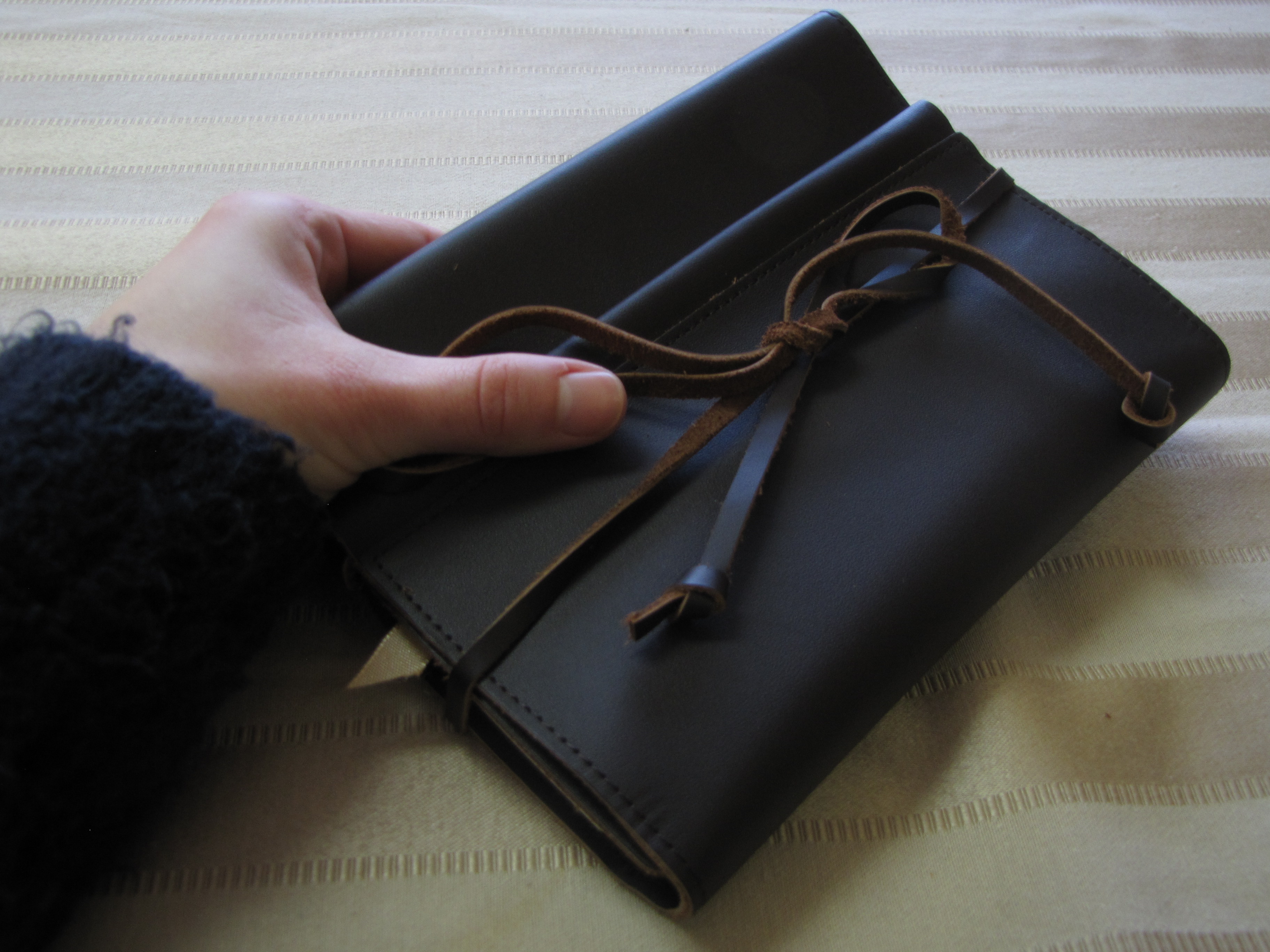
Now, I don’t hear words, but I feel my eyes gliding to rest on my prayer journal.

It occurs to me (and let’s not discount Who is making it occur) that I have been trying so hard to make something happen today, to reinvent the wheel, to even figure out what to pray for—and I’m probably repeating myself. I’ve forgotten something.

Maybe all I need to do is look again at what God’s already told me. (This is the benefit of keeping a prayer journal).

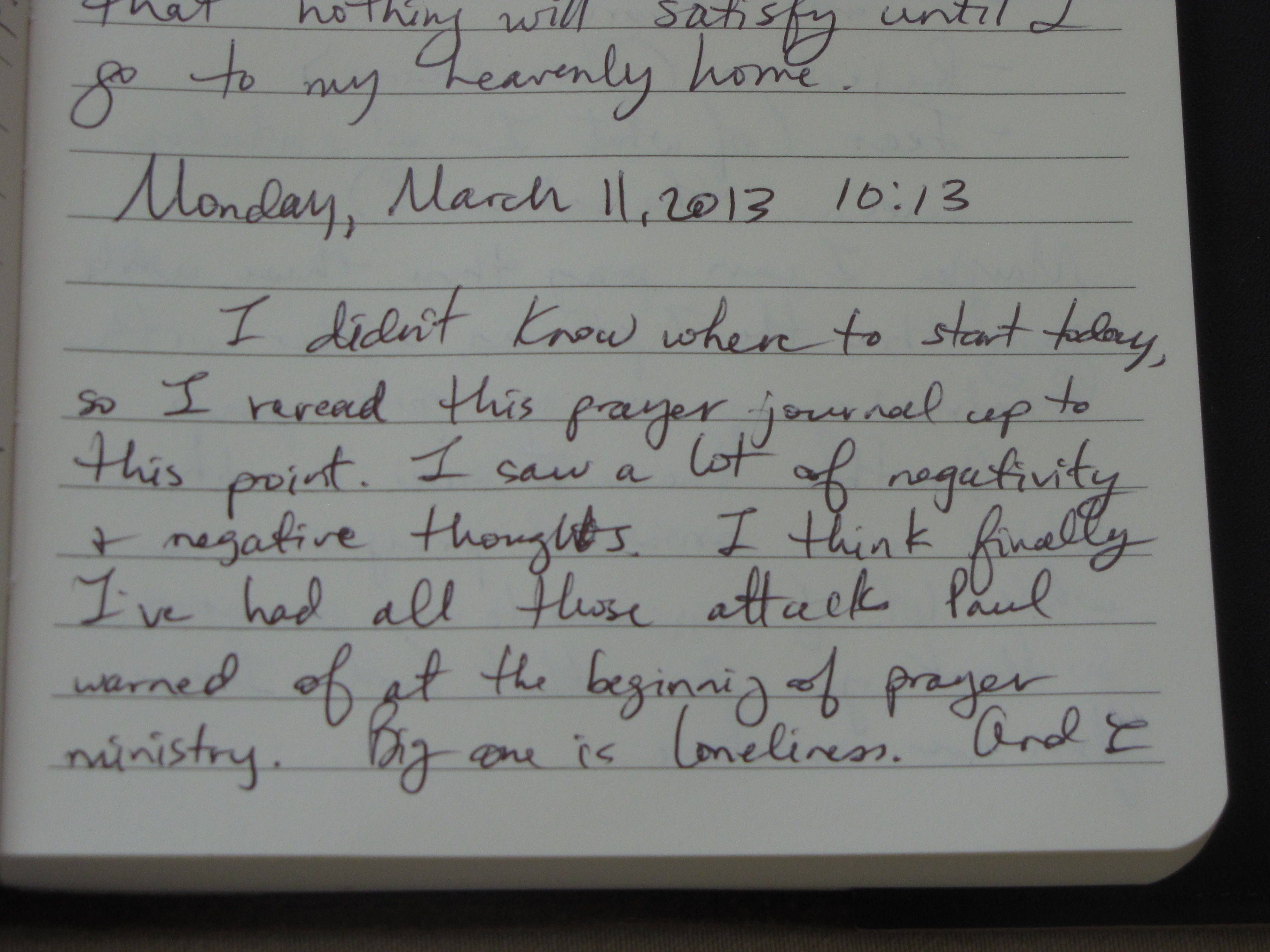
So I open it up and read what I’ve written for the past three months.

Image

Lessons from Prayers Past

Surprise, surprise. I’ve already prayed about all this stuff and more. Common themes in my prayers since January:

  • Loneliness, the sense of loneliness from being alone in this big house all day.
  • Anger that I’m alone. [This usually comes around Christmastime, where I see it in my journal now, and I know it was exacerbated this year because I didn’t get to see my family for the holidays, and I haven’t seen them now since last June.]
  • A sense of being Overwhelmed. [I ended last year at a sprint, having gotten super-involved in ministry for the past year, including this prayer ministry I love, and starting a church choir, and running an in-home Bible study with my husband.]
  • Resentment that I was doing so much for others and yet feeling so little being done for me. My blog readers have a better idea of my feelings than most of my friends, because I hide them (my feelings, I mean).

Image

As I reread these woes, I feel discouraged at first. Gosh darn, and I thought I’d done so much growing over the past year with Straight 2 the Heart!

But as I read, I also see another pattern emerging. For each whiny problem, God’s booming voice answers. I’m alone, angry, overwhelmed, and resentful, but through it all, represented in my messy scrawl, is God’s much bigger voice—His promises, His care.

And to that end, I see something else in these journal entries.

I couldn’t see them while going through the past few months, but now that I look back, I read the following string of answered prayers:

  • For my stress in ministry, God has brought more people to help, such as a new friend at church who has taken the choir idea and run with it. He has also taken away the burden of our Bible study by moving it to a young adult class at our church, which our church desperately needed!
  • For my loneliness, God has added some people to my life, like a niece who comes over sometimes to get tutoring during the week; a Groupon-shopping friend who invites me for spa days periodically; and this blog, where I am meeting more like-minded people all the time.
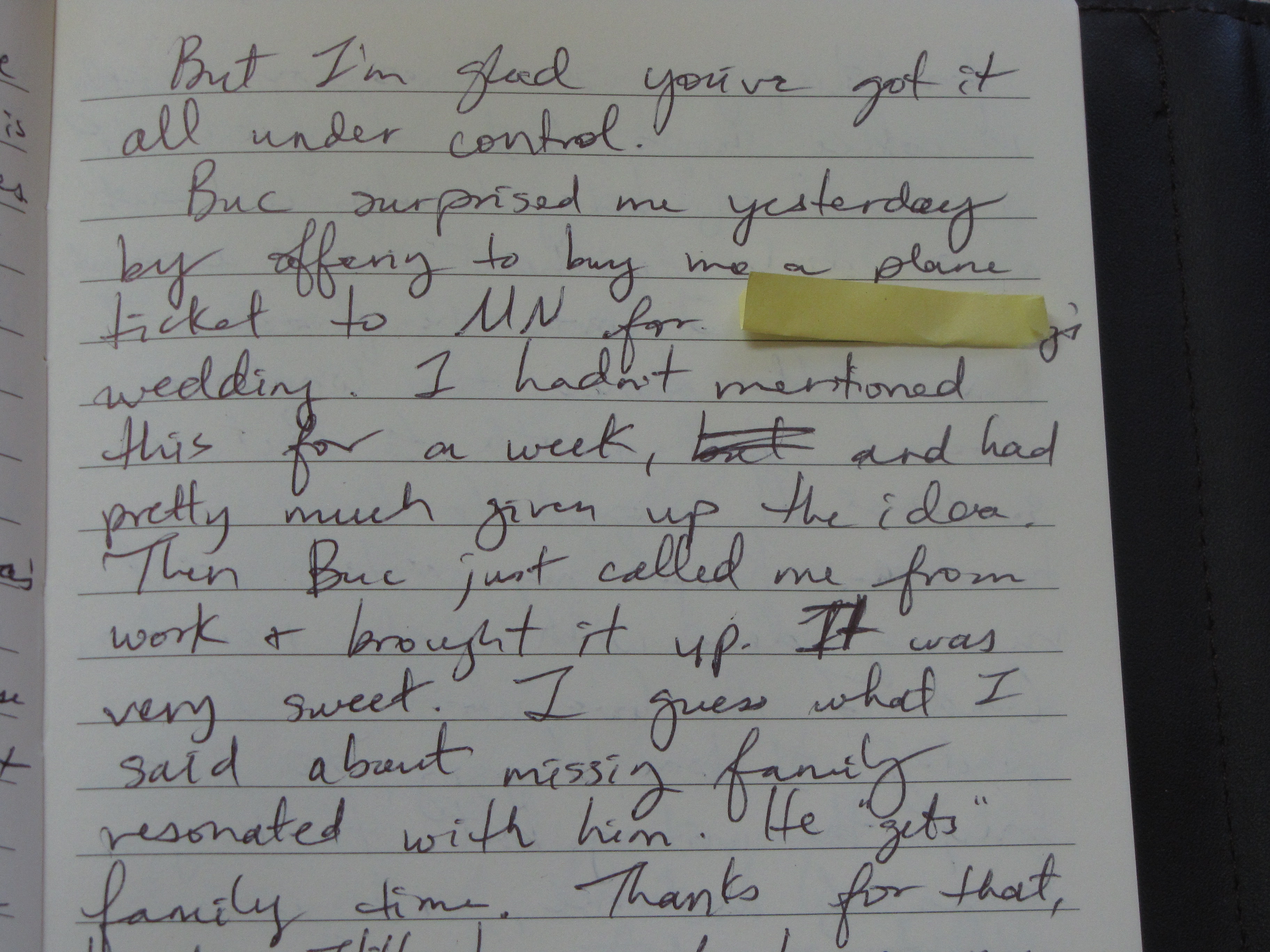
  • For my loss of family time, God moved my hubby just a week ago to decide (on his own) to buy me a plane ticket so I can take part in a cousin’s wedding in Minnesota next week. Oh, thank you, Lord—how I have missed family!

Image

As I look at all these blessings, I am again overwhelmed, but now in a good way.

“Wow God. Thanks. I know you’re here. And you’ve been here. I just can’t really hear you very well right now, for whatever reason.”

And now I remember something else that Paul told my prayer group and me when we began our training last July:

“When you really start giving your life to God and praying for victory, expect Satan’s attacks to increase. Now that he sees you’re going with God, he will try to stop you any way he can.”

Huh. Actually, for the first few months of prayer ministry, I felt great. Wondered where Satan was. Thought I was getting off easy when all my group mates reported greater attacks from the enemy.

Oh, but he is a master deceiver. And maybe he was just waiting…waiting…to throw me off his trail. So that I wouldn’t recognize his attacks for what they were when they finally came.

Well, they’ve arrived. And each morning this week I’ve had to fend them off on my knees. And I’m still not hearing God like I want to. But I also remember that lots of God’s people went through wilderness experiences. And it didn’t mean God wasn’t there (remember the poem “Footprints”?).

I know he’s here. Though it may take me a little extra time to get out of bed these days, I won’t give up praying. I will hold on—knowing God and I will ride out this storm together—knowing this abyss is just one of Satan’s many illusions—and it, too, shall pass.

This week I will also remember that God has a plan, and that I don’t have to have all the particulars right now. When I look back in a few months or years, hindsight will be clear enough.

Image

When Writers Retreat

The writer’s retreat is a common trope in writing circles. Often this term is used to refer to a place remote from the world where writers sequester themselves away to do their lonely work. Annie Dillard, in The Writing Life, describes some such places in her own writer’s journey. One is a pine shed on Cape Cod, another a room in a dark library, and still another a deserted faculty lounge where she spreads out the pages of her manuscript on the table.

2013-02-23 23.51.21

Often “retreat” is used as a noun, but for me, who doesn’t have a remote cabin in the woods or a breezy bungalow on a beach, the verb is the thing.

When I get deep into a project, like I am now with the book, I find myself pulling back from the rest of the world. Almost unconsciously, I become inaccessible. I pull away from Facebook. I resist my phone. The blog slides to beyond necessity and rests uneasily on some guilty mental to-do list.

Whether this is just a characteristic of writers in general or just certain personality types, I’m not sure, because I have the sense I used to do this as a college student. As a teacher. I pulled away from the world to sit and think and work. The current paper, or project, or unit, became all consuming, always looming in my brain.

These days this mass consumption of my mind means I become flaky in all else. I don’t like  feeling that I won’t be able to read my Bible again until this book is out of my head. But frankly, my brain is just too full, too busy chewing on lately manifested manuscript problems, to hold another thought.

Sometimes I feel guilty for going light on my devotions, but I still pray every day, sometimes spending up to twenty minutes on my knees.

When I remember that the Bible says Jesus rose early to pray—it doesn’t say He got up early to read His scrolls—I think maybe this is okay.

It’s a kind of retreat even Jesus needed. In these times of prayer, when my head is full with work and my mind can’t accommodate whole chapters of the Bible, sometimes I can latch on to just one Bible verse and meditate on that, such as “Jesus is the Word of life.”

I’ve liked that one lately, because I’m struggling to find words. But knowing I can rest my cares on Him who created words—who is the Word (even if I don’t fully understand that) gives me peace.

As a Christian writer, I get a special kind of retreat that other writers don’t. And best of all, it doesn’t cost a thing. Today I’m thankful for the Word of life—I’m thankful that God doesn’t need my words to get the job done.

Image
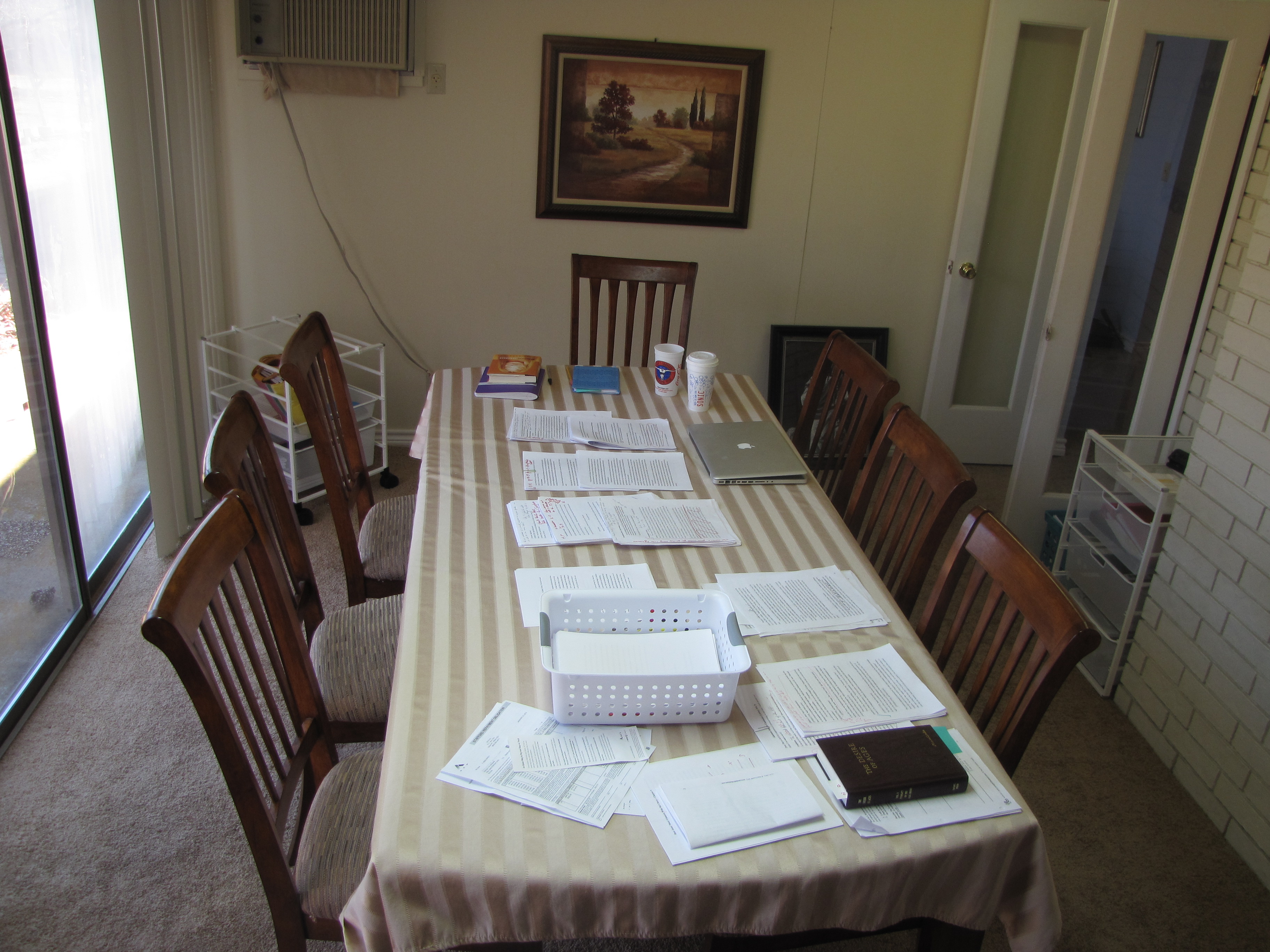
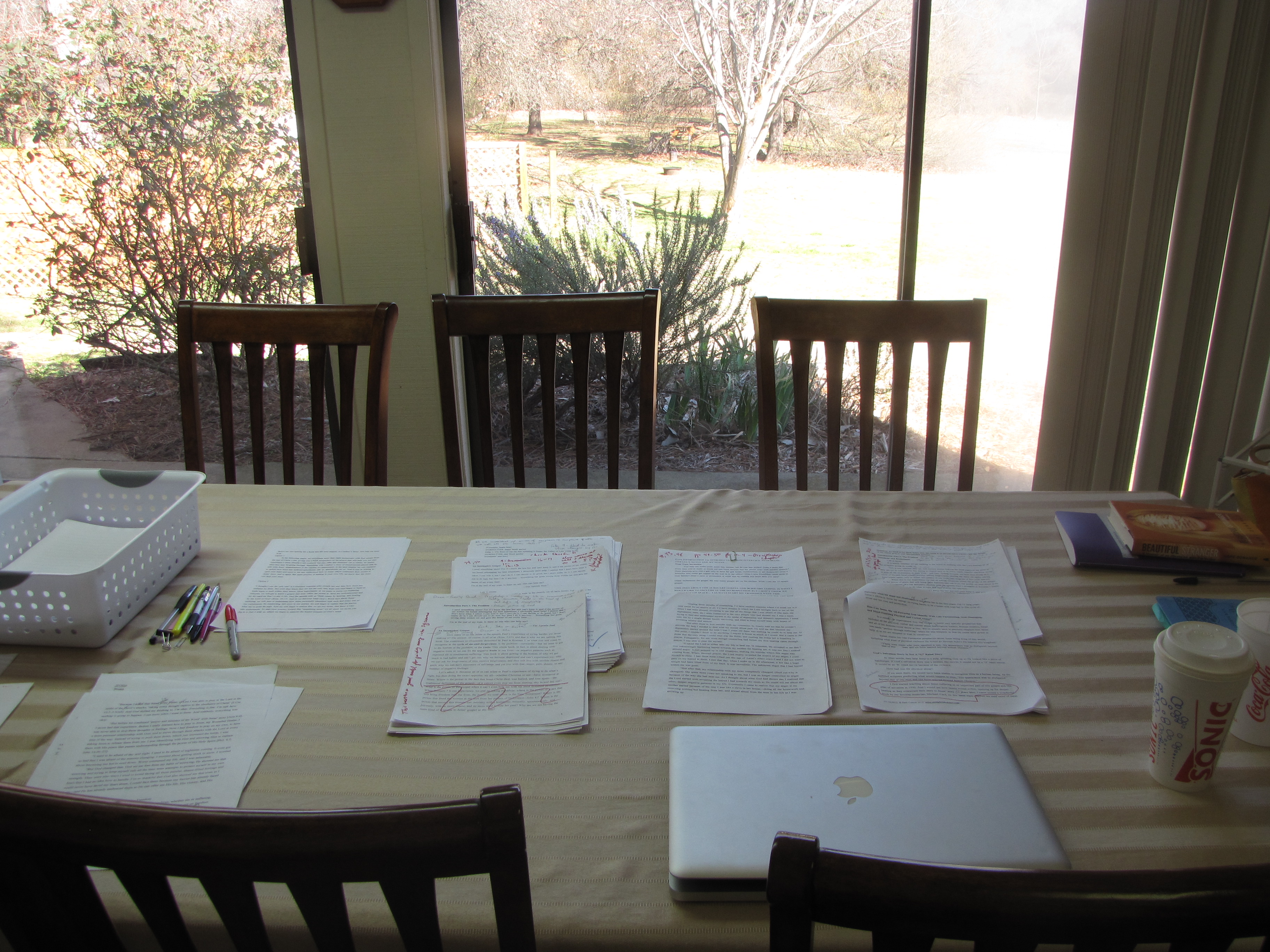
When I look at my dining room table these days, I am reminded of these lines from Annie Dillard:
“How appalled I was to discover that, in order to write so much as a sonnet, you need a warehouse. You can easily get so confused writing a thirty-page chapter that in order to make an outline for the second draft, you have to rent a hall. I have often ‘written’ with the mechanical aid of a twenty-foot conference table. You lay your pages along the table’s edge and pace out the work. You walk along the rows; you weed bits, move bits, and dig out bits, bent over the rows with full hands like a gardener. After a couple hours, you have taken an exceedingly dull nine-mile hike. You go home and soak your feet.”
–Annie Dillard, The Writing Life

Is My Writer Seeping Through?

Image

Since deciding to be a “real” writer, I’ve kept a low profile. Not wanting people to know I’ve embarked on a low-paying (sometimes no-paying) job, I’ve hidden my true profession behind a façade of graduate student and teacher.

I haven’t been a teacher since May 2011, but until last December, I really was a graduate student, putting the finishing touches on my one-hundred-page master’s thesis. Mostly I was done by October, but I still let my classmates offer condolences for “how hard” the writing must be.

It wasn’t hard, really, because my advisor let me write the way I wanted to write: creatively and personally (with a little academic jargon sprinkled in). I guess this “practical” approach worked because the topic was practical: best practices for teaching writing.

When a few of my fellow students heard about my personal [slash] creative [slash] academic project, they seemed intrigued.

“I’d never have thought of that,” some said.

As they scrambled to turn up sources on the databases, scouring search engines and library shelves, giving themselves ulcers looking for an original angle, I just sat back and wrote. I started from the inside—I knew what I wanted to say, and I didn’t much care about citing the scholarly conversation that had come before me, or that would come after.

I know this sounds sort of pompous, and it wouldn’t work in some of the disciplines where original voice is not prized. But thankfully, English departments operate on this truth: If a voice is engaging enough it doesn’t really matter what it’s saying—people will read it for the good writing.

And that’s the truth in the real world, isn’t it?

People who don’t care a lick about golf will watch Tiger Woods because he excels in his sport. Same for most Olympians and Olympic sports. Who watches bobsledding or curling on a regular basis?

But millions watch the Olympics because it’s fun to watch pros do what they do best.

Funny, then, that I feel I’m still hiding in the wings, waiting for permission to “come out” to do what I do best.

Well, not so funny, I guess. I have no doubt that the hiding is due to the overwhelming personal content of my writing. (It’s not really about the money.)

In order for me to write about the things I write about (mental illness, family dysfunction, deepest fears) and be respected, I feel I have to be either a mental health professional or a pastor, or some other authority who can talk on these things at a close, yet safe, distance. That, or I have to make the writing itself attractive. Because the topics just aren’t.

Still, I am convinced that these topics are worth discussion. Worth a master’s thesis, a doctoral dissertation, and many book series. I am convinced that all this painful self-reflection is what more people ought to be doing, but aren’t. But if it’s so worthwhile, why aren’t more people doing it?

Because: Like graduate students fumbling for research topics, we are afraid of ourselves, and we are afraid of what self-examination might reveal. So we look for other voices to latch onto. Let someone else be the guinea pig—or the “straw man,” to use an academic term. Then, if our life thesis fails, we can partially blame the voices on whom we’ve built our own.

Well, I’ll stand behind my own work. To the thesis examiner who said my work got uncomfortably personal at times, I would remind her that everyone else who read it said it was the most memorable thesis they’d ever seen. She was more comfortable in the theoretical realm, and that’s where she encouraged me to return. Toward the end of the defense, we had a more informal discussion about how we felt about publishing—how we felt about others reading our work—and this professor said she felt terrified thinking others would read her academic writing (not to mention any personal stuff).

Just like she couldn’t understand me being so personal in writing, I couldn’t understand her being so guarded (about dry academic prose). Perhaps she is worried that others will smell a rat—that of inauthenticity. And I guess if I were not being true to myself, I might worry about the same thing.

But after denying myself public expression for so long, I think having to live in hiding is far worse than living exposed. After spending time in a theoretically constipated English department, I think living vulnerable is better than living jealous of writers whose real-world topics you only dare poke with a critical stick.

Perhaps my guarded professor would even agree. At the end of the day, she passed my thesis unconditionally. Call my writing what she will, that day she called me a master.


On Pulling Weeds and Planting Seeds (My Life as a Metaphor)

Image
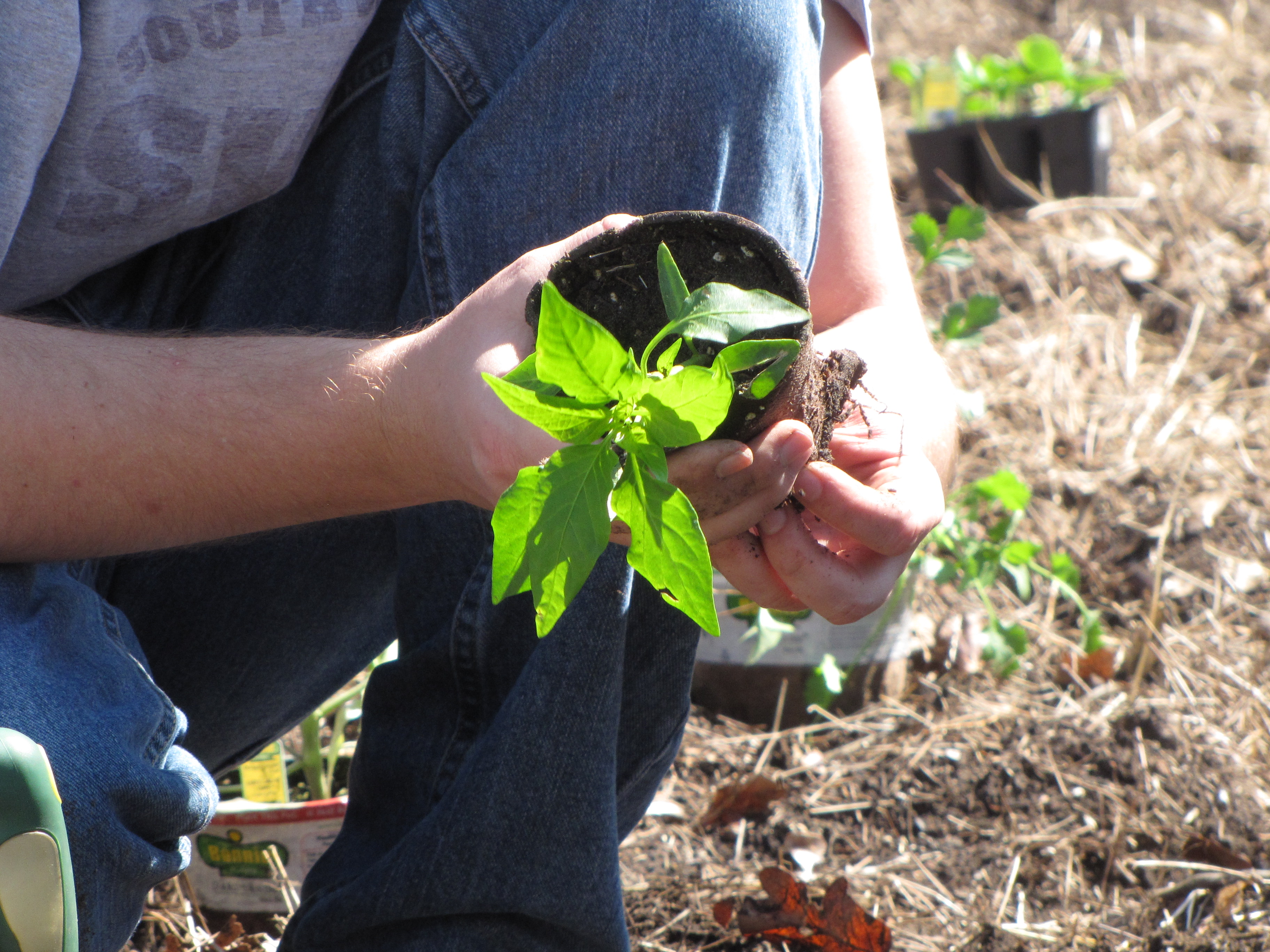
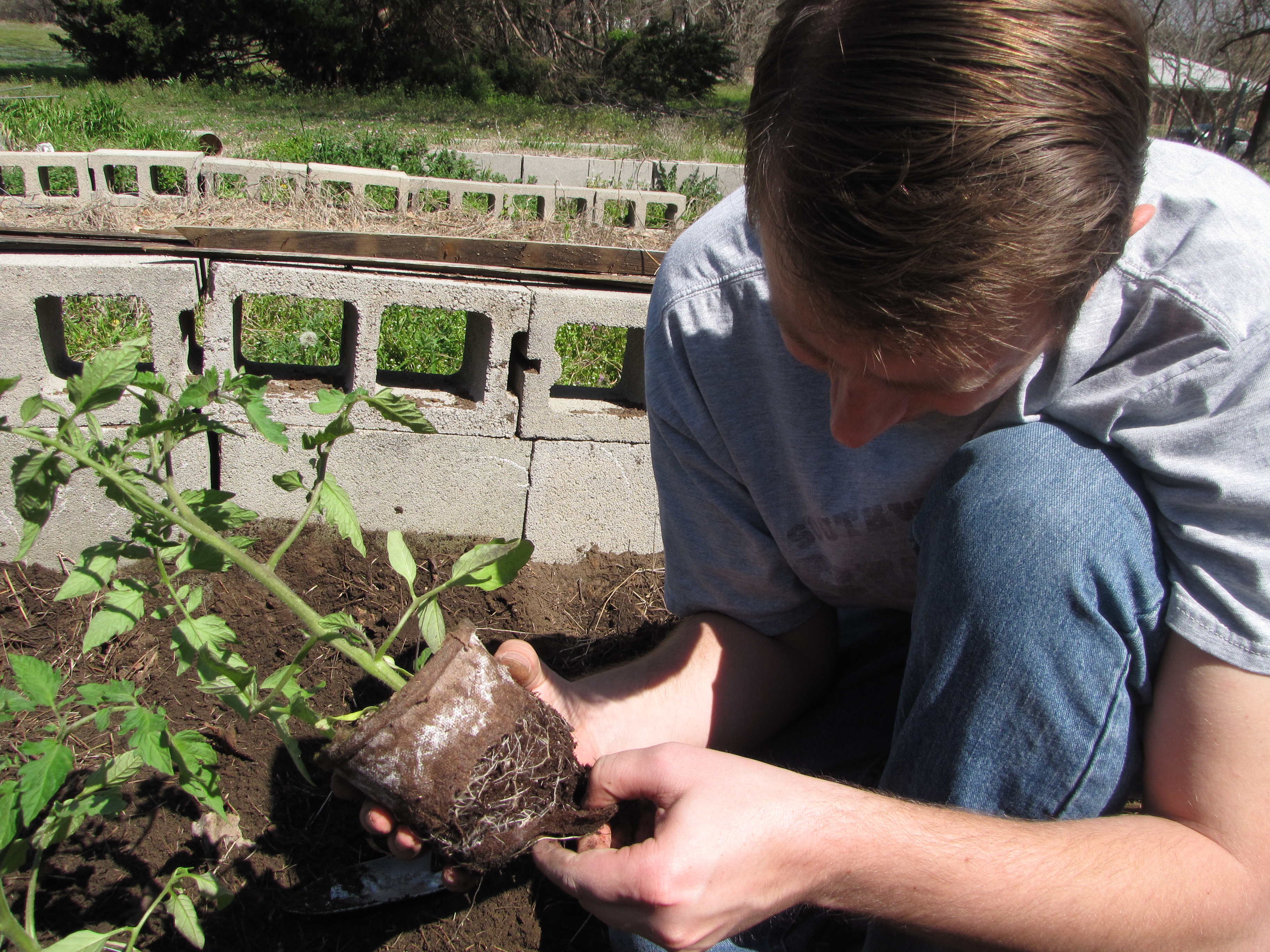
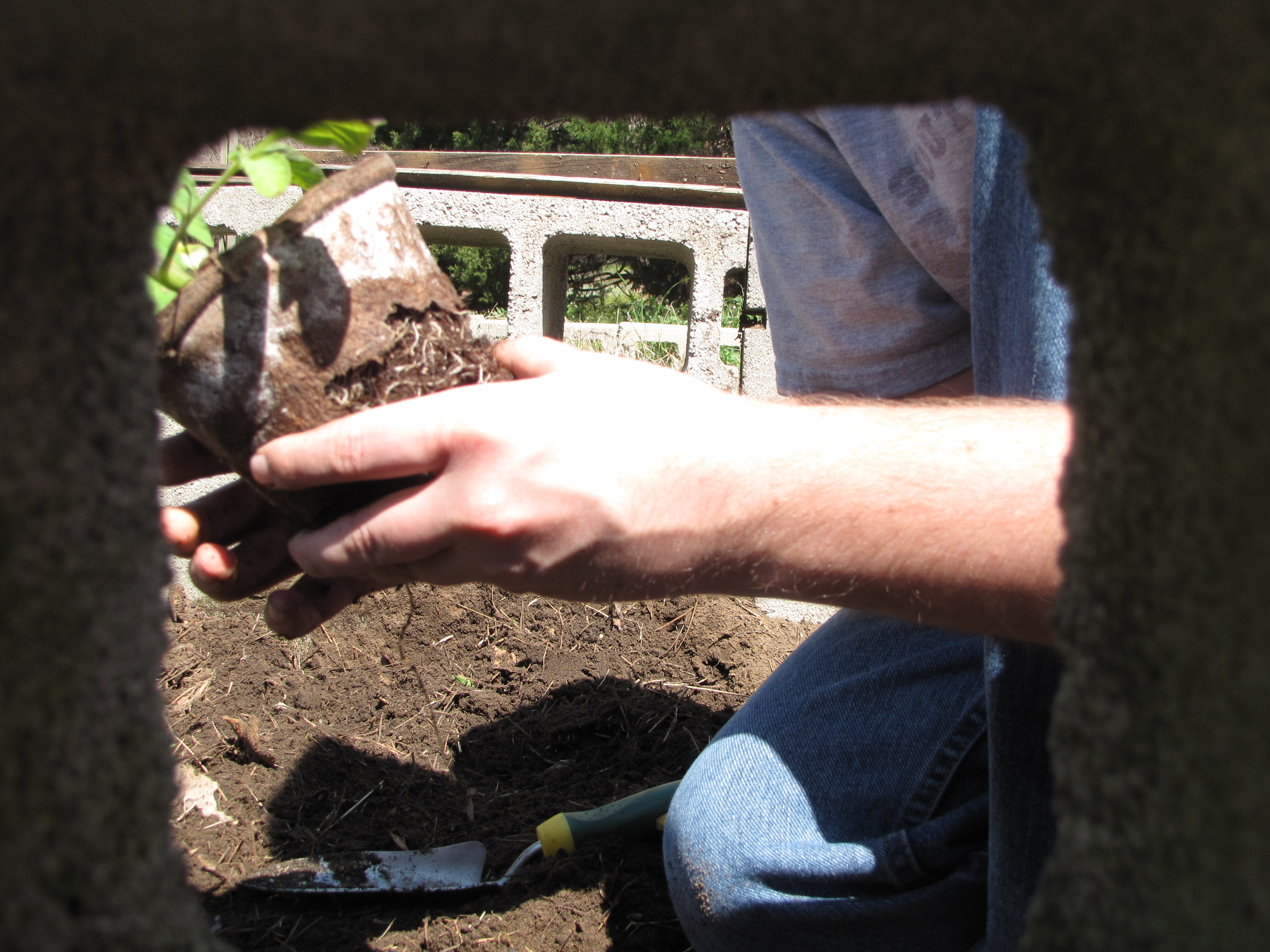
My husband planting our garden in 2011 (the same time I was working on photography techniques for the journalism class I taught). Of the family, he’s always been the gardener. But this year I seem to be coming around.

I like writing to my roots, or the metaphor I’ve chosen to guide my blog, because it suggests a narrative that deepens as I go. It means that I don’t have to start with all the deep stuff first, but that I can move more gently to the sources of pain, and the sources of me.

Who says I have to go deep, you may ask? Well, definitely not pop culture or social media, which is oh so surface level.

It’s me (“It is I,” for my fellow English majors) who has chosen to go deep, because I write to heal myself and to help others. I choose to work gradually to my roots of pain and self-protection, because that’s how healing has to happen, and after healing, recovery. Recovery of our dreams, goals, and our true identities. We must take gradual steps.

As we do, we can unmask lies we’ve had about ourselves to finally embrace who we are meant to be. And that’s the point of the blog.

But before I chose Writing to my Roots, I planned to call this endeavor The Before Thirty Project, because that’s how it started. Originally this “project” included two goals in the last months before I turned thirty. Little did I know that these goals would expand as my writing took me deeper, little by little, to my roots—both pleasant and painful. Today I finish a series of three posts on a topic that I used to shun like the unwanted appendage I imagined it to be. Then, back to other topics I’m more comfortable with. I promise.

Image

When I first vaguely conceived of my project at age twenty-five, I had two goals in mind: earning my master’s degree and publishing a book. It was probably my incessant talking about these grandiose goals, in fact, that had my high school students so frequently asking, “Are you ever going to have kids?”

The junior and senior girls would look at me in disbelief when I shrugged, “Probably not.”

For some of them, having kids was the goal of life.

But when they said things like this, I was the one fighting back disbelief.

Really girls? I thought. What was so glamorous and good about having babies?

Of course, being in a high school environment where numerous girls got pregnant each year, it was easy to disparage their dreamy looks and words. Terrible! We teachers said. Teenage girls getting pregnant! What a waste! What unnecessary hardship!

For a teenage mom, of course, it is an unnecessary hardship. To this day I would never advocate teen girls—or any female who is not married—getting pregnant.

But once a girl finishes high school…once she gets married…

Until recently, I still couldn’t advocate it. Not for myself. And honestly, not for anyone else. As my twenty-something girlfriends got pregnant one by one, it felt as if they were betraying me, one by one. How selfish, I know.

Because I couldn’t have this happiness (rather, couldn’t understand it as happiness), they shouldn’t either. Really, I would be doing us all a favor to save us from the inevitable heartache that must come with kids.

For seven years I told myself I didn’t want kids. Too much risk. Too much time that could be better spent elsewhere. Why risk such a hefty investment when you didn’t know what you were going to get? Never mind potential birth defects. What about angry children who decided to write you off because you screwed up their lives?

Today I can look back at sentiments like these more objectively. They don’t seem normal, or rational, or healthy, like I once stubbornly insisted they were. (My husband would just give me that same look I got from my girl students: You’re messed up.)

Image

Maybe it was a problem with the kind of kid I had become over the years. Bitter. Angry. Sad. Detached.

I was not bringing any particular blessings to my parents’ lives. I had moved so far away from them that it was not strange to go almost a year between visits. At various points, I had barricaded myself from contact. Didn’t want a lot of contact, because contact hurt. It just all hurt so much—family visits, photo albums, phantom memories—that why would I ever want to perpetuate it?

Through writing and other miracles, God has taken me to a place where I’ve realized none of my self-protections can keep me safe or healthy. More than indicating a kind of logic, all my excuses, denials, and exercises in becoming numb indicate a sad existence. The guardedness (to the degree that I’ve had it) is not laudable; it’s lamentable. Would that we women could be smart about our choices—with healthy boundaries that keep us from getting pregnant when we shouldn’t (right, Kim Kardashian?)—but that allow us to be open to any possibility, should God suggest it to us.

Image

After eight years of marriage, He has suggested it. And now I’m open. At this point, a baby could definitely be part of the “before thirty project,” if God wants it to be. That is to say, I’ve removed the barriers. I can conceive of getting pregnant. It’s up to God if I really will conceive. But if not, I’m okay with that, too. My being open to the possibility is the real growth—more meaningful than a baby bump could ever be.

Whew. Now that I’ve made some real progress with this root, I’m putting it to rest for awhile. (I’ll let you know if anything develops.)

Image


The Question Every Young Couple Must Answer

Image

“When are you having kids?” my high school students always used to ask. Why they were so interested in this detail of my life I never understood—much like I didn’t understand when family members or anyone else asked. The question used to come frequently when we were first married, and then, as year after year slid by with no child, but only new feats such as a bachelor’s degree, teaching job, and master’s degree, the question all but went away, and with it, my child consciousness.

But when I got to my first semester of grad school in 2010, I had an epiphany. Sitting in class at that time as both student and teacher, I was to finally understand why students and so many others wonder that question.           

It happened one night in literary theory class, when my professor, trying to explain the infant stages of Freudian development admitted, “Well, the research says this [insert windy explanation of anal and oral stages]; but I don’t have kids, so I don’t really know firsthand.” That’s all. One comment. Then he continued his lecture on Freud. But I was stopped.

Before that night, he’d been Mr. Know-It-All.

Now, he was just a man out of touch with reality…who, perhaps, had never changed a diaper.

Image


(Photo from giftsfordadtobe.com)

What did my professor have? He had his books and his scholarly journals and his research (and with those, late night library visits while bedecked in baseball caps [to blend with students, he’d told us]), but what, beyond that? He didn’t have a wife. Or kids. Or religion. (Lots of grad students and professors end up losing their religion, I was also to find out.) The closest relationships he had seemed to be with us, his students. And he was great with us, very gentle and caring, and genuinely concerned for our welfare.

But in general…in general, I had to ask myself that night: Is this really the life? And more importantly, is this the life I want for myself? Do I want to be like this professor someday, standing before a class of adults (or high school kids, for that matter), in my forties or above, with no life experience to share with them, besides what I had read in books?

Image

This was a profound moment for me. I journaled at length about it the very next day. And I talked to my husband. Was I missing something here? Was I about to embark on the wrong path, this path to the PhD? What did it mean that I was having all of these questions?

Mind you, I was hardly ready to toss the birth control, quit teaching, and/or withdraw from my graduate classes. Just then I wouldn’t admit that I wanted kids. Because I wasn’t actually sure I wanted them.

But one thing I now understood: If I had kids, I would become a more interesting professor…and a more interesting person. I would become more credible. More human. And that alone was something worth considering.