Living without routines can make life clumsy; but living without purpose can make life seem impossible. In my last post I wrote about how my lack of purpose and routine as a freshman in college brought me to the brink of suicide.
I’m so glad I have a different story now, eleven years later. That story is one of great purpose, and as many routines as life with a one-year-old will allow.
Because my life once lacked purpose, I love to remember my second year of teaching high school English—the year I found purpose, and the year I started observed the most important routine ever. (You can read more about that life-changing year in this post.)
In a nutshell, that year, my morning time with God saved my life. Amidst a backdrop of uncertainty unfolding with my family, I found purpose knowing that God still had a plan for me and for my family members. I couldn’t see the overall plan, but as I surrendered each day to him, I knew that it was enough to do what was in front of me. At that moment, the things within my control were teaching one-hundred high school students and developing my own character through Bible study and prayer. So I focused on excellence and consistency in those things. I had a wonderful school year, and found myself the most happy I had felt for years. And eventually, the stressful home situation resolved itself.
That year was my first memorable spiritual “peak,” and I’ve had many dips and bumps in the five years since. Life is always throwing us new realities, and these challenge our routines and often necessitate change (a new baby being a prime example.) That’s why it’s good to periodically re-examine our routines, assess what is and isn’t helping move us toward our goals, and change accordingly.
But what happens when life challenges routines that, for our best health, should never change?
Here are a few tips that could apply to not only new parents, but anyone in a schedule-upsetting situation.
Don’t Give Up
It’s an understatement to say that a baby complicates daily time with God—which I’ve argued is my life-saver. Same for daily showers. But that doesn’t mean we stop taking showers, right? Realize that showers, God times, and other important things may not be as frequent, long, or luxurious as they used to be. But don’t give up. If you can find five minutes to shower, you can find five minutes to talk to God and read a couple words.
Abbreviate Your Routine
If you have to shorten the time, so be it. Reading one Bible verse is better than reading none. Oftentimes I get more out of meditating on a single verse all day long than I get out of reading five chapters of the Bible in thirty minutes or an hour.
Move Your Routine to Another Time of Day
For months off and on, Sam woke at or before 5 a.m.—this after waking multiple times in the night. You can bet that a 4:30 Bible study wouldn’t result in much holiness. So when we went through those spurts, I moved my worship time to right before my bedtime—and I moved my bedtime earlier, too. If it doesn’t work to meet with God in the morning, find a time that does.
Don’t Confuse Routines with Schedules
Be careful not to confuse a schedule with a routine. Schedules tie activities to exact times and days. Routines have to do with the order in which you do things; but exact times can change if needed. For a mother of young children, a routine is an achievable goal, but a schedule may not be. If you’re in a season where life is predictably unpredictable, forget schedules; they will set you up for disappointment. But do establish some routines.
For the time being, Sam takes a pretty reliable two naps a day: one in the morning, one in the afternoon. The naptimes change based on when he wakes up for the day, so instead of planning to write at 10 a.m., or to prep supper at 2 p.m., I plan to write “during Sam’s morning nap,” and cook “during his afternoon nap.”
I don’t always accomplish what I hope to in a day, but I can relax knowing I made some progress toward my goals. If a daily worship is all I manage to get done, then that’s okay too, because I can honestly tell God I kept first things first. God tells me that if I seek him first, all my other needs (I include writing for my sanity in that list) will be added to me. Sooner or later. Either today’s nap or tomorrow’s, or next Tuesday’s.
Now, as soon as I post this, Sam will probably change his habits again. And I will have to adapt again, too. That’s the life of a mother. Can you tell how counterintuitive this is to me? I don’t like having to adapt all the time, but I didn’t like having to suffer depression and other bad things, either.
One thing I do know about struggles: they make us grow. We do best when we don’t resist being stretched; if we resist, we might break. If we can stretch a little along with our circumstances—adapting our routines as needed to fit our core purpose to glorify God—we recover faster, and can thrive sooner.
I believe humans thrive on patterns and plans, because we were created for them. When we don’t plan how to spend our time, we open a door for Satan to run amuck in our lives. Like when I went off to college, failed to implement a study schedule, and found myself floundering in all areas of life. (More on that in a minute.)
The Bible says God is not a God of disorder, but of peace (1 Cor. 14:33).
He created a six-day workweek and commanded us to rest on the seventh day (Gen. 2:2, 3; Ex. 20:8-11). Through the example of Jesus, God showed us that it is good to start our day with solitude and prayer (Mark 1:35). Proverbs gives us many principles about using our time wisely, including these:
“Work brings profit, but mere talk leads to poverty” (14:23, NLT).
[A wife of noble character] “works with eager hands,” “gets up while it is still night,” “provides food for her family,” “sets about her work vigorously,” and “does not eat the bread of idleness” (31:15, NIV).
Indeed, one of the most important lessons we can learn in life, and teach our children, is to use our time wisely.
“Teach us to number our days aright, that we may gain a heart of wisdom” (Ps. 90:12).
Here’s a personal example that shows the dire effects of not having a plan in place.
College Flop
For years before I got to college my home life was falling apart, yet I was able to hold myself together enough to maintain straight A’s and participate in sports, music, and drama. The rhythm of high school and a part-time job and scheduled activities gave me predictability, a pattern to follow. They gave me something to count on when everything else was up in the air.
But when I was loosed on the college scene, with huge chunks of free time gaping at me each day, I fell apart. I needed to set up a study routine, and times to practice my music each day (I was pursuing piano at the time), but instead I found myself sleeping away my afternoons. It didn’t help that I was recently off depression meds.
Before three months of my freshman year had elapsed, I dropped out, suicidal. Now, having routines and schedules may not have fixed my depression, but I think they could have kept me from the drastic actions I took.
The Need for Routines
“Fly Lady” and organizational expert Marla Cilley maintains that routines are lifelines. Before she got super organized, she suffered depression and rock bottom self-esteem.
Now she encourages other women to get up and put on shoes every morning, get dressed, and put makeup on or whatever you do to get ready. Doing these simple actions start your day with intention. Then she gives ideas for routines to houseclean a little every day until it becomes second nature. One of her readers gave a testimonial to this effect (I’m paraphrasing to the best of my memory, as I’ve returned Cilley’s book to my friend):
After my hubby died I wouldn’t have known what to do with myself if I hadn’t had my cleaning routines in place. They gave me something to do. They gave me purpose in my day.
Purpose is key. Setting routines forces us to define a purpose–no matter how lofty or low. It’s possible to have “routines” that don’t buoy us in the long run—TV time, drinking—but those are addictions, not routines, because they control us, we don’t control them.
College Comeback
Flash forward a few years to my third try at college. I was married now, and we lived in married student housing, and my hubby worked nights. I was still covertly battling depression, but the stability of being married to a working man who very much likes his routines finally helped me implement some routines of my own.
My days had structure once again. When I was not in class, I was at work, cashiering or stocking shelves at a nutrition center. In the evenings Buc was gone, so I studied. I had little time for much else. To be sure, I didn’t really have hobbies at that time, and I didn’t really want them. I didn’t enjoy my life then, but I was feeling some stability. And that stability is largely what kept me from self-harm.
This was a better way to live, but still not a good way to live. With those routines during that period, I can truthfully say my purpose was to keep so busy I wouldn’t have time to be actively depressed, or rather, to act on my depression.
The Need for Purpose
Routines with a dismal purpose like this can only last so long. Humans need a better ultimate purpose than “to stay alive because I’m supposed to.” That purpose is to give glory to God.
But it takes time to get there. My journey to this point was slow and painful. It wouldn’t be until two years after completing my college degree that I would actually claim the purpose of glorifying God in my life. And then I would actually take joy in my days. My purpose would become not just to survive the day, but to thrive so that others might see something in me that pointed them to God.
As I wrote my memoir in 2012 and 2013, I had the insight that God gave me stability in my early twenties so I could learn to trust him again. Through the writing of that project, I realized that sometimes it takes having your physical needs met, and perhaps one person you are safe with (for me, my hubby), to free your mind of some temporal concerns so you can seek God.
When we come to that point, or when God enters our lives in a significant way, it’s time to set new routines: routines that are even more life-giving than basic routines that merely keep us moving.
Here are two big lessons my first year of motherhood taught me: Number one: I am impatient. Number two: if I wait on the Lord, asking for his help where I am weak, he will answer.
No Rest for Mommy
Nowhere was my impatience more evident than when I was waiting for Sam to sleep through the night. Throughout Sam’s first year, I was not the loving, adoring mother so often pictured in movies. No. I was resentful, frustrated, anxious, and impatient. But not just impatient with Sam and his erratic sleeping. I was impatient with God.
Night after night of interrupted sleep, and day after day of droopy eyes, I moped; I complained; I acted like God wouldn’t ever work this out. I said things to friends and family, like, “Oh, Sam’ll eventually get there,” and “God is helping me.” But more often, I grumbled. I spoke words of despair. I acted like I didn’t really trust God.
Finally, Sam’s sleep improved, and I got some rest. And, surprise surprise, that’s when I looked back at the past nine months and realized that God had heard my prayers—slow to answer though he seemed.
I learned something then: that even when we feel weak and helpless in our prayers, and even when we keep repeating ourselves with no apparent results, we are doing an important thing. It’s the only thing we can do sometimes, and it’s a thing God commands us to do. We are “waiting on him” (Isa. 40:31). Eventually, he will renew our strength.
But boy, the waiting can be hard. Especially when we are waiting against our wills.
Three Stages of Waiting
In hindsight, I see three levels of waiting I did concerning Sam’s sleep.
First, I waited unwillingly, without peace. This level of waiting happens when you don’t agree to wait, but circumstances force you to. This happened for so many days and nights when I pleaded, bleary-eyed and bedraggled, “God, just let him sleep!” but Sam didn’t sleep (or not when or for as long as I wanted him to).
Second, I waited willingly, but not yet with peace. This level of waiting happens when you give up your plans and choose to trust God on faith, even while results tarry.
At this stage I changed my prayers from “Lord, help him sleep” to “Lord, give me the grace to deal with whatever this night brings.”
During this stage, improvements in Sam’s sleep came; but we had also started the distasteful process of sleep training. (We chose the Ferber method, which had us checking on Sam at ten-minute intervals while he cried–after we had tended to all his known needs, of course.) This stage of waiting was necessary, but it sure wasn’t comfortable, or very peaceful.
During those nights of “Ferberizing,” I had to get on my knees so I wouldn’t go into Sam’s room while he cried. I had to pray for strength to do not what felt right to me (soothing him at the first whimper), but to do what was right for Sam (letting him learn to soothe himself). I cried as Sam cried. It took every ounce of strength in me not to go in to him before ten minutes was up. It was HARD. But improvements came.
And then the third stage of waiting came—the stage where the situation wasn’t quite sewn up yet, but I could see God working—and I could feel his peace.
One evening during this stage, I realized I had come to a place of calm about the whole sleep situation. I remember putting down a fussy and crying Sam (a now fairly uncommon state at bedtime), and then calmly walking to the kitchen to begin my nightly cleanup routine.
“Lord, please help him to settle down,” I prayed, hands submerged in soapsuds. “But thank you that you are here to help me even if he doesn’t settle quickly. I know that eventually he will sleep, and I will survive. Even if I have to get up with him in the night.”
As we went through our sleep training program, Sam progressed from going down peacefully for naps, to crying less in the night, to consistently sleeping through the night—hallelujah! And as I saw God working, slowly moving Sam to more consistent sleep patterns, I found more and more peace. Now, on the occasional nights when he woke, I could handle the situation with thanksgiving.
If I were write a memoir of my first year of motherhood, this milestone would be the turning point in the book—the climax, the major lesson. Not a lesson on surviving a baby’s erratic sleep, but a lesson about waiting on the Lord. A lesson about how, if we get on our knees and petition him, and surrender our wills, and ask for his to be done, and ask for his help where we are weak (like I was weak in carrying out a consistent sleep routine), he will answer. Maybe not as quickly or in the way we want him to, but he will answer.
Here We Go Again
As a funny coda (funny only in hindsight), Sam’s sleep derailed once again after our move to St. Louis; and I, sleep deprived and stressed from the move, derailed again, too…for a few days. But then I started the stages of waiting again…and Sam started sleeping better again…and I found some peace again. Sam’s sleep is not quite back to where it was before the move, but I am at the waiting stage where I believe we will get there.
It helps to realize that this cycle of waiting on the Lord repeats itself. Though it’s hard passing through the first two stages, it’s a relief to realize stage three will eventually come. And so we head into the next year, the next stage, the next growth opportunity.
But those who wait on the Lord Shall renew their strength; They shall mount up with wings like eagles, They shall run and not be weary, They shall walk and not faint. (Isa. 40:31)
Wait on the Lord; Be of good courage, And He shall strengthen your heart; Wait, I say, on the Lord! (Ps. 27:14)
Truly my soul silently waits for God; From Him comes my salvation. (Ps. 62:1)
My soul waits for the Lord more than those who watch for the morning— Yes, more than those who watch for the morning. (Ps. 130:6) (How appropriate for new moms!)
We memoirists might look like gluttons for punishment, because writing about real life hurts, and no one makes us write but ourselves. But for many of us, writing about real life is just an extension of our “Perfect Melancholy” personalities; we write about our lives because we have to do something with all that self-analysis happening in our heads.
I’ve been reading Personality Plus by Florence Littauer, and the author’s description of my Melancholy personality hits home more than other personality tests or training I’ve taken. Other tests labeled my personality in less negative terms— Analyzer or Empathizer, for instance. But Melancholy cuts right to the chase. It describes me to an M.
The evidence is overwhelming—I am introspective, moody, artistic, and depression prone—and the personality test was indisputable. I am Melancholy through and through. True to Littauer’s description, I have been saddened by a small thing to which other personalities wouldn’t give a thought (the label of my personality); and more introspection is the result. I want another personality. I don’t want to have to work so hard to be happy. I don’t want to be Melancholy.
People who study personalities have long observed that artists and writers are commonly Melancholies, as opposed to Sanguines, Cholerics, or Phlegmatics, and this could be good or bad, depending on where you stand.
If you’re the one consuming the art, Perfect Melancholy is great: its existence enriches our culture by providing life-enriching and thought-provoking art.
If you’re the one providing the art, or struggling with “genius” tendencies (Littauer’s word, not mine) that you have trouble harnessing, Perfect Melancholy can be excruciating. Littauer notes that while Melancholies have the highest potential for achievement, they also experience the “highest highs and the lowest lows.” To my Melancholy-colored glasses, this data forces me into a dilemma that’s definitely false, but that seems so real: Would I rather be a “genius” (in writing), or be happy?
The Misery of Memoir
For much of my life, pursuing my art meant misery. All I could write about was my life; and my life, for a good chunk, was sad. Why didn’t I pick another topic, a happier topic, to write about? I go back to the personalities. Melancholy couldn’t get its mind off itself. I was trying to process hard things in my life, and as a writer, I naturally processed through writing.
Because it didn’t yet feel safe to talk about some of those sad things, I especially needed writing as an outlet. I had a strange relationship with writing, though. On the one hand, I felt like I needed to write to survive. On the other hand, what came out of my pen felt like it might kill me.
For almost ten years I would waffle on writing my story—I mean writing it for an audience as opposed to venting in journals. Typically here’s how it would go: I get the desire to write, I pull out old journals for inspiration, I spend a few hours working with the material, and I end up in a pool of tears because it hurts so much, followed by a crumpled heap in my husband’s arms because I am not ready to confront all the emotions these memories bring up. Then, I stuff the emotions, the memories, and my writing aspirations for another few months or years, only to repeat the process again and again.
Melancholies Can Write Happy Endings Too
This blog has borne witness to some of the healing process that finally got me writing again…and writing not only with sadness, but with gladness. God gave my story a happy ending. He not only redirected some of my worst circumstances, but he redirected my mind.
Now, even when more bad circumstances arise—which they inevitably do from time to time—I don’t have to give in to Melancholy. I don’t have to collapse in despair because “that’s just the way things are, and that’s just the way I am.”
God’s Word gives me a more accurate measure of how things really are, and how I really am. You might say he gives me a better personality test, or the ultimate Truth meter:
Though outwardly I am wasting away, yet inwardly I am being renewed day by day (2 Cor. 4:16).
The sufferings of the present time are not worthy to be compared with the glory which shall be revealed in me (Rom. 8:18).
If I wait on the Lord, he will strengthen me (Ps. 27:14); Isa. 40:31).
I can learn to be content in whatever state I’m in, knowing that God will supply all my needs according to his riches in Christ Jesus (Phil. 4:11, 19).
He will keep me in perfect peace if my mind is fixed on him (Isa. 26:3).
I can remember that weeping may endure for a night, but joy comes in the morning (Ps. 30:5).
And I can be confident that, even when progress seems slow, he who began a good work in me will keep working on me until Jesus comes back (Phil. 1:6).
Yes, this world is sad and often hard to navigate—especially, I think, for us over-analytical Melancholies. But this world is not the end, it is temporary and passing away, and that is life-giving knowledge I can cling to.
Yes, I am sinful and fallible and moody and depression prone. But Jesus didn’t come to this world to suffer and die to leave me that way. He came to pull me out of the pits, physical and mental; to retrain my mind on him; and to change me, from glory glory to glory, as I behold him.
And so the story continues. Many mornings I wake feeling unhappy by default. My Melancholy personality (and Satan) doesn’t want me to be happy. But as I make the choice, day by day, to seek God’s face, he gives me strength for what’s in front of me. So I keep praying through it, keep writing through it, and keep moving forward, little by little. A lot of my days end better than they start, because throughout the day I exercise my faith and allow God to smooth out the bumps. These are small rewards, little happy endings, that point me on to the day when Jesus comes to take me home, and give me my ultimate happy ending.
Most people agree that “Honesty is the best policy.” But as a writer and ministry leader who has made honesty her central message and MO, I wonder if it’s possible to sometimes be “too honest.” Not a few times as I’ve posted unflattering, embarrassing, content, I’ve wondered: am I hurting my influence by being so raw and real? After people read this, will they still look up to me?
I’ve found that honesty, at the level I go, can be hard to find in Christian writers, teachers, and leaders. Many I’ve observed in this group like to use honest illustrations and anecdotes…of other people’s struggles. Or, if the stories are first-person, they tend to remain on a safe, surface level. I once read an article by a Christian who used the analogy of scrubbing her floor to illustrate the filthiness in her heart. But she made no mention of what, exactly, was in her heart. “Scrubbing my dirty floor made me think of how God has to scrub my heart clean of sin. I thought, how much better if I kept it clean daily, instead of letting it all pile up?”
Illustrations of the gospel like this one don’t resonate with me. It’s not that they’re bad or untrue, it’s just that they’re so general, so vague so b-o-o-o-o-ring. Worst of all, illustrations like these are generally unhelpful when it comes to making real changes to behavior.
At the risk of assuming other humans think like I do, I would submit that humans long for authenticity. Especially when we’re talking about faith. If our sources of inspiration don’t hit close to home, addressing real issues we battle daily, they will be perceived as impotent, laughable, and even painful (because they minimize our struggles)—and they will be quickly abandoned.
That’s why I chose to be vulnerable in the memoir I wrote about discovering my new life in Christ.
It’s why I choose to be vulnerable almost every time I post on this blog.
I believe people are hungry for other people to relate to them—to say “I’ve been there, too. Look how screwed up I used to be, and how I still struggle sometimes. And yet, look what God was able to do with that mess!” I believe messages like this bring hope.
But what if I’m wrong? What if messages like this do the opposite? What if brutal honesty breeds distrust in God and disaffection for his “honest, messed-up followers?”
When leaders decide to be honest, this is a very real risk we take—the risk of our followers unsubscribing because we are not perfect.
I am willing to take this risk, not only for the reasons I listed above, but because a genuine Christian faith should not hinge on the words and deeds of any human being. (In other words, no one’s faith should hinge on me.) It should hinge on the person and words of Christ.
When Leaders Disappoint
A few years ago I was deeply disappointed when I learned that one of my spiritual heroes, Leo Schreven, committed suicide. Honestly, I felt betrayed and somewhat deceived by this man who previously appeared to “have it all together.” But I was able to weather this bad news by clinging to the truth that God is not, and never will be, totally represented by those claiming to be his followers. When we see good in Christians, that is from God. But when we see bad, that is from the enemy. We can’t lay every quality at Christ’s doorstep, because not every quality is from him.
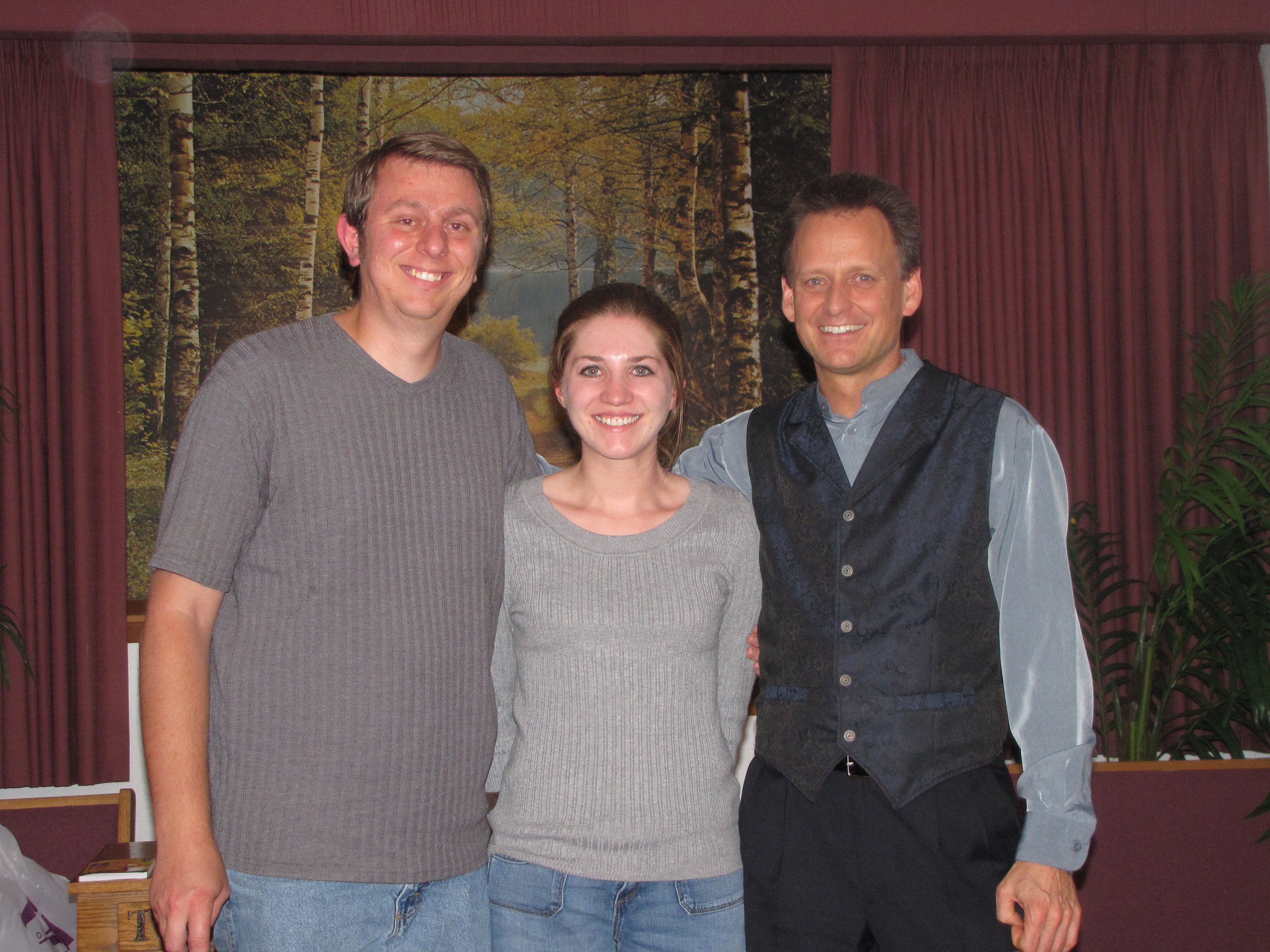
I had the privilege of meeting Leo Schreven in 2010 when he conducted a seminar at my church. My husband (left) had met him many years before and introduced me to Leo’s preaching through a set of seminar tapes that made me eager to meet him.
One quality I do believe is of God is the quality of honestly engaging our struggles as we seek His healing. I think I would have still respected my deceased spiritual hero if, in life, he had openly admitted his struggles. Perhaps I would have respected him even more for choosing bravery, rather than bravado—even though his brave sharing would have painted him as a fallible, sinful, wounded human being.
I have to add something here, to be fair. A family member of Leo Schreven’s contacted me after reading my blog post about Leo’s suicide, to tell me that my “hero” had struggled with psychological problems the public knew nothing about. This family member wanted me to have a fair, truthful view of Leo. The truth included mental illness, and as a former sufferer of mental illness, I empathized with that. I understood that I had put Leo on a pedestal. I also understood that his mental state may have precluded him from the type of honesty to which I am calling spiritual leaders.
Given the state of Leo’s mental health, it’s actually amazing that he enjoyed the long and successful career as evangelist and motivational speaker that he did. I have had similar thoughts, of course, about the late Robin Williams. Leo and Robin show us that there are exceptions to the standard of honesty I am putting forth. The exception applies to those who are not able to help themselves, or not able to let God help them, because of mental illness, or a genuine medical problem. Maybe they keep up the façade for the public for awhile, but in the end, we find out they are not the leaders we wished them to be. But then again, no one in whom we place our trust is immune to struggles, and to sin.
The Bible says that all have sinned and fallen short of the glory of God, so we know every person, Christian or non, ministry leader or not, has a mix of good and bad.
No matter what we know to be true about our leaders, hopefully we can sift the good from the bad, and remember and respect them for their good qualities. Hopefully we can go on learning from them, no matter what their lives reveal. Sometimes we may observe the right course, other times the non-example. As long as we are looking up to human beings, we should expect both. And if we are the ones being looked up to, we must trust Christ to be the one shining example our audiences need; we must be okay with being imperfect representations of him.
That said, I believe that we in positions of trust—ministry leaders, Christian writers, etc.—should do our best to represent Christ, and this includes being honest about how God is working in our lives and transforming our sinful patterns. We should also be honest about “wilderness” times, times when we struggle with our faith…but we should do it wisely.
Guidelines for Christian Leaders
Here are two guidelines I’ve found helpful in my own writing and ministry that can help Christian leaders determine when, where, and how much to share.
freedigitalphotos.net
1) First, we should consider timing. You can read various sins and struggles of mine on this blog that occurred at various stages in my life. I blog about problems long past and problems of last week.
The safer type of post is the one about problems past. These problems are ones I have likely had victory over. They are problems that have yielded personal lessons I can use to teach others. These types of posts, and this type of sharing, should be an absolute “yes” for all ministry leaders. Why wouldn’t we use our stories of redemption as teaching tools? What better examples of the gospel could we present than the ones that have played out in our own lives?
The murky area is problems of the present. How much should Christian leaders share about present problems? Here, we have to be wise about audience.
2) Audience is the second consideration. Consider who will be reading or hearing your message. If you are a preacher and it is your job to inspire hope, then it may not be the best time to insert a struggle that you do not have victory over, or at least cannot yet talk about in a positive way.
Sure, there are times when you are on the upside of a struggle—you can see the end in sight, and you are pressing through for victory. That might be material for an inspiring message, and if you are comfortable exposing that yet-unresolved pain, go ahead.
But other times, pain and sin is too raw to project to a large, or public, audience. That’s when you need a small, confidential audience. I’m talking a few trusted friends or advisors who can help talk and pray you through your problems. When you have worked through those problems, then they may become appropriate large-group material. But don’t rush it. Getting outside voices mixed up in your current personal problems could hurt the healing process, and you need to get healthy first so you can go back to being your motivational self.
One caveat for leaders working through personal problems: if your challenge handicaps your ability to do ministry, whether because the emotions involved take too much energy, or because a sin you are fighting “disqualifies” you to be a role model at the time, then it’s probably the right time to step out of ministry, at least for awhile. In the case of Leo Schreven, I would have much preferred hearing the news that he had stepped out of leadership for awhile to tackle some personal problems to hearing that he had committed suicide. We are ultimately the most helpful to others when we get the help we need, first.
On This Blog, What You See Is What You Get
To apply my guidelines to myself, I routinely post about my current struggles, but many times I have chosen to remain silent until I have prayed over them and exposed them to Scripture and the wisdom and counsel of a few trusted others. By the time I post on an issue, I want it to be, if not totally resolved, at least on the path to resolution. I want others to look up to me, yes, but I am happy to admit that sometimes the best example I can give is: “Look, I’m broken here, but I’m looking to Christ. And if you feel the same way, you need to do the same.”
By posting my struggles, past or present, I risk losing my readers’ respect, but I also keep myself accountable to Christ for resolution. I put a problem out there (such as my sleep-deprived, desperate, witchy state), and I say, “Okay, this is the mess this sinful world, or sinful me, has created today. But now, how am I going to find Christ in the middle of it?” My mission is to find out how Christ will come through for me, and then to share my victory with my readers.
Indeed, if “Superwoman Christian” is the role model you want, look somewhere else. Because on this blog you’ll just encounter a broken girl trying to depend on Christ, and trying to work out her faith, in all things big and little. After all, as so many examples in the Bible show (Kind David and the 51st Psalm come right to mind), a Christian leader worth listening to is not someone who claims to be above sins and struggles, but someone who fully admits their weaknesses; has learned how to let Christ lead in the hard times; and can discern which, of all their life experiences, will be helpful for lifting others up.
One surefire way to tell you’ve been “reborn” is the desire to share your faith with others. On the other hand, if the idea of “sharing your faith” turns you off or even terrifies you, that’s a good sign you haven’t been reborn. For most of my life, born “Christian” though I was, that was my experience: I didn’t know what to share, and I didn’t know how.
After my “Damascus Road Year” (see part 5), for the first time in my adult life, I had abiding joy and peace, which led to faith. Finally, I had something to share. Now, I just had to figure out how to share it.
In the four years since my conversion, I’ve decided we born-again Christians can share our faith in two ways: implicitly, and explicitly.
Sharing Faith Implicitly
First, we can share our faith implicitly by living out our new identities in Christ. If we’ve truly been reborn, then our daily lives—our habits, our behaviors, our interactions with others—will naturally witness to Jesus Christ, because we will be emulating him. If we are following Jesus, we will not be living like the rest of the world, and people will take notice.
For example, after my conversion, my public high school students started to ask me questions about my faith, even advice about faith-related matters: “Why don’t you drink?” “Why do you go to church on Saturday?” “What do you think about marriage?” “How can I make my boyfriend see that prayer is an important part of the Christian life?” These questions came without me explicitly stating my beliefs—but I didn’t need to, because my behavior showed me to be different from most of the other teachers.
Sharing Faith Explicitly
Second, we can share our faith explicitly in a variety of ways, depending on our personalities. Note: This form of sharing does not come in a “one-size-fits-all” box. Unfortunately, some churches, preachers, and Bible teachers, try to make us feel like witnessing should look the same for everyone, thereby making some of us (i.e., those of us who don’t fit the traditional mold) feel like failures before we’ve even begun.
Two years prior to my conversion, I was the victim of one such discipleship training that was intended to prepare me to give Bible studies at the end of eight weeks. But after eight weeks, I was no more ready to give Bible studies than I’d been at the beginning, for two reasons. One: I hadn’t yet met the Lord personally (though I was active in my church and looked “good” on the outside), and two: the type of ministry wasn’t right for me.
The first fatal flaw of the training was that it didn’t show me how to have a personal experience with Christ before asking me to spread that experience to others. To its credit, the training frontloaded the concept of preparing our hearts for ministry. The speaker said we should deal with our own baggage before we try to minister to others—but she didn’t really explain or model how, exactly, I was supposed to rid myself of that “old man”—AKA my baggage. When I began the training, I was still depressed and self-centered, and it’s pretty hard to testify to Jesus’ redemptive power in that state of mind. Unfortunately, after the first night, it was assumed we were ready to learn how to “share our faith” with others. And that brings me to the second fatal flaw.
Photo Credit: “Hands on West Africa” from imbstudents.org
This training only presented one way of how to share my faith, as if that were the only way. I don’t want to unduly pick on my religion, but since it’s the one I know, it gets to be the example. In the Seventh-day Adventist tradition, the ol’ standby for sharing faith is knocking on doors and offering Bible studies. For Adventists, and probably a lot of other Christian religions, Bible studies equate to a series of topical handouts that progress through our beliefs by way of Q and A—with plentiful Bible verses listed to help answer the Q’s.
Let me be clear: I don’t think these studies are bad. I think they definitely have their place, especially for those who are completely new to the Bible. But when it comes to sharing my faith, these studies do not appeal to me. That’s because I did not personally or experientially come to know Jesus through these types of studies, and I find it hard to believe that others could, either (though I’m sure it’s happened).
When it comes to explicitly sharing our faith, we should choose a method we can be passionate about; it’s important that we honor our personalities, choosing and using a method that speaks to us. If you’ve found the Lord and are excited to share him, yet you’re still not sure how to do that explicitly, learn from my experience. Perhaps you just haven’t stumbled upon the right method yet.
Bible Study Bummer
When it came time to start my “explicit” phase of ministry, I knew who I wanted to reach out to—my friends and peers from church—but I didn’t know how. After a lifetime in the Adventist church, the only thing I could think was traditional Bible studies…so that’s basically what I did.
Now, I didn’t start with our prefabricated lesson studies, which usually progress through a series of doctrines. I wanted to focus more on the heart, because I believed that, more than head knowledge, my friends and peers needed a heart experience with the Lord—or what I’d recently found. So, I picked a book about having a heart experience, John Dybdahl’s Hunger: Satisfying the Longing of Your Soul, and made study guides for our meetings. My heart was in the right place, but my approach was wrong.
Photo Credit: “Small Group Bible Study” from manuscriptBiblestudy.com
I had designed the studies similar to my high school handouts, complete with fill-in-the-blank answers. That’s a good way to short circuit good discussion and sometimes independent thought. As for prayer? By now I had somewhat of a vibrant personal prayer life (it involved a lot of writing to God in my journal), but I didn’t know how to facilitate really effective public prayer. So I duplicated the format we used at church: I asked for praises and then prayer requests. We went around the circle, said our praises and prayer requests, and then one person prayed, thanking God for the praises, listing the requests, and asking God to guide the study. It was a fine prayer, but it wasn’t going to result in hearts being transformed.
Despite my ineptitude, our Bible study consistently drew a crowd. I could tell my friends enjoyed coming (was it because I fed them?); and I even made some new, dear friends. I wasn’t running a particularly great study, but God brought blessings out of it (and therein is a lesson). However, after a year and half, I wanted something better. I’d read Trish Ryan’s Christian memoir, He Loves Me, He Love Me Not, and her small group was, as I read it, much more effective than mine. She wrote of things like group intercessory prayer that resulted in many heart conversions. It was then that I began to feel like a failure in ministry—and had my “Unexpected Breakdown” (check out what happened in this post that got me freshly pressed).
After two years of being on fire for the Lord, I burned out. After giving so much to my friends and to the church, I felt bankrupt myself.
Now about to finish a master’s degree and no longer sure I wanted to pursue a doctorate (would spending so much time in grad school be to bypass another calling the Lord had for me?) I needed to find strength again. I also needed (but didn’t know it) more healing for the roots of my former depression.
In the conclusion, learn about the prayer ministry that not only helped me heal, decide to have children, and decide to change career courses, but also taught me how to witness “straight to the heart.” It is the same prayer ministry that laid the groundwork for Writing to my Roots.
Photo Credit: “Exposed Tree Roots” by Colin Brough
I’m not talking about your hair color, though we often get hung up on the outward appearance. I’m talking about what’s on the inside: or those beliefs you hold at the core of your being.
Last weekend I hosted about ten women at my house for a mini women’s prayer retreat, and we talked and prayed about how the negative beliefs we hold are responsible for the negative behaviors in our lives. In other words, your problem of overeating, undereating, cutting, criticizing, worrying, etc. is the “fruit” of a deeper “root.”
As Jesus said, “No good tree bears bad fruit, nor does a bad tree bear good fruit. Each tree is recognized by its own fruit. People do not pick figs from thornbushes, or grapes from briers. A good man brings good things out of the good stored up in his heart, and an evil man brings evil things out of the evil stored up in his heart. For the mouth speaks what the heart is full of” (Luke 6:43-45). He’s saying that any fruit cannot grow without a root first in place, because the one flows from the other.
My co-author, Paul Coneff, likes to further explain this concept with the “toothpaste test,” which stipulates that if a tube of toothpaste is strawberry, well, when it gets squeezed, nothing can come out but strawberry paste. In other words, whatever beliefs are rooted in our hearts—whether positive or negative—will eventually come out.
To see an example of the “fruit/root” principle, or to watch the “toothpaste test” in action, just get close to someone for a little while, settle in, and watch. Listen to what inadvertently pops out of their mouths when they get stressed. I’ve observed that even if people aren’t trying to be confessional, they end up confessing a lot more than they think (and this includes myself).
Recognizing Common Roots in Women
Writer Patricia Garey, in her book Beautiful Woman,talks about how mothers inadvertently send negative messages to their daughters about beauty and self-esteem when they make passing comments like, “Oh, I can’t go out without my makeup,” “I have to get rid of this extra flab,” or, “I wouldn’t be caught dead without [fill-in-the-blank].” What do these seemingly trite remarks say about the beliefs rooted in their hearts?
I know a lovely woman who will not go out in public until she has “put on her face.”
“I can’t be seen like this,” she chirps to her husband if he ever asks her to run to the store on a Sunday morning—even if just for a quick “in and out” errand where she will only be seen by the cashier. To go out for that sixty-second errand first must entail an hour’s preparation.
After I learned about the fruit/root principle, I asked myself: “Is this behavior just a quirk, or is it the symptom of a deeply seeded negative belief, perhaps, ‘I’m not acceptable just the way I am’? or ‘I need to hide who I really am’?”
I know another woman, well respected in her teaching job, who clearly has some insidious negative beliefs rooted in her heart. Because she doesn’t have a college degree, she feels inadequate, or “less worthy” in some way. Clearly, by the passing or side comments she makes under her breath, such as, “I’m so dumb,” or “Well, you’re better qualified for that,” or “I just wish I could really do something that would make a difference,” she believes in her heart that she is not good enough. Usually these comments come in the context of talking or hearing about someone else’s achievements, whether in the area of career, health, or other. I’ve heard many people say she is the best teacher they’ve ever seen, but sadly she won’t believe it.
I wonder how many of us have that problem. How many of us have deeply rooted negative beliefs about ourselves that everyone around us would disagree with? Sometimes no matter how many times we hear truths about ourselves, we refuse to believe them. But how quick we are to blow one negative comment into the gospel truth. If that’s so, then we can know we have some negative beliefs rooted in our hearts.
Recognizing My Own Roots
Tonight begins a thirteen-week women’s prayer group with a few good women who are willing to honestly examine those false beliefs in their hearts and let Jesus uproot them, replacing them with His truth. I’ve been through this process twice in the last year, and each time God reveals more roots I need to deal with.
Some of the easiest roots to recognize when I started a year ago were those depressive thoughts that used to define me: thoughts like “Life sucks,” “I’m a loser,” and “I will always be this way.” I have now recognized those thoughts as lies and renounced them in my life.
Photo Credit: “Toppled–Uprooted” by Tacluda
Next, I faced the following slew of lies—and these, I realized, were protections I had developed to try to fend off any more depression (or my old roots): “I have to try harder and do more,” “I have to control things,” “I am responsible for making my life into something meaningful.” After prayerfully asking God to search my heart and try my thoughts (Ps. 139:23-24), I realized these, too, were lies from the enemy. I still battle some of these lies, especially when I slack in my prayer life, but this battle is getting easier.
As I begin a new prayer group, the new lies I am battling sound something like this: “I have worked through my issues, and therefore, I have arrived.” “I am better than others.” “I don’t need to spend so much time in prayer anymore.” Wouldn’t you know it, even when we reach a spiritual high, Satan can use that to slam us some more—usually this is when the “pride” lies begin.
So today I am praying about pride, and asking the Lord make me feel my desperate need for him once again. I have confidence that as I spend time with him every day, he will once again reveal his truth. In the meantime, before I can feel it for myself, I am taking him at his word that I can do nothing without him—I am choosing to believe that to remain fruitful for him, I must remain in him—I must remain in the Vine (John 15). That’s because I never want to be ashamed for my roots to show; and I always want my life to produce positive fruit (Gal. 5:22).
What fruits and roots are showing up in your life today?
(Note: If you liked this post, check out the preview of the book Paul and I wrote, and sign up to follow this blog so you can read more about fruits and roots when our book is published.)
After achieving the feat of being Freshly Pressed, a sort of fear can set in, along with negative thoughts like these: “I’m going to screw up!” “My next effort won’t be as good!” “I’ll disappoint all these new readers!” Happily, I’ve only had these feelings mildly, and they’re not sticking around. Instead of fear, I mostly feel hope. Rather than daunting me, the Freshly Pressed Status has buoyed my confidence as a writer (a writer whose work people want to read!), and it has encouraged me.
The Surface Answer
So, you want to know how to get Freshly Pressed? (Before last Tuesday, I wondered that, too.) The easy answer is that you just have to keep writing and hope one of your posts gets picked. On the day I produced my “pressed” post, I was just doing my regular thing. I was praying and reading the Bible like I do every morning, then I started scribbling about the issues my prayer time had revealed to me. I let the writing sit for a weekend, and then on a busy Tuesday when I almost didn’t think I’d post, I tweaked a bit, paired it with a picture, and posted. It was one of the easiest pieces I’ve published, in fact, because I didn’t expect much out of it—not like some past posts I’d edited into mincemeat (hoping to be “pressed”).
It was a complete and total surprise when, three hours later, my inbox greeted me with: “Congratulations! You’ve been Freshly Pressed!” For the next few days I soaked up the extra comments, likes, and follows—and thanked God for blessing me when I wasn’t even asking.
The Deep Answer
Maybe that’s a key to receiving blessings: to stop trying to force them.
I think back to the small string of writing successes I’ve had so far. (You can liken my writing to whatever dream you’ve carried for most of your life.) In all honesty, when I’ve succeeded in writing, I wasn’t much expecting it. Conversely, when I’ve most expected to succeed, often I’ve actually flopped.
I know I’ve talked to God a lot over the years about my dreams. Heck, he was aware of these goals even before my birth. But when I started chasing them in the beginning, it was like I wanted God on call, ready to answer at the moment I asked. I was selfish (not that I’m a saint today, but I’m slowly learning patience). I wanted to be published, and I wanted it when I wanted it, in the way I wanted it.
Some Instructive “Flops”
In 2010 I prepared a manuscript based on my “oh-so-interesting” teenage journals and figured this just had to be my first book. After a pause in the project, during which time I encountered some pushback from one of the main “characters” in the memoir, I realized maybe this sensitive material wasn’t yet “book-ready.”
In 2011, when I was re-entering graduate school with the dual goals of professing and writing, I identified a PhD in Creative Writing program one hour away from me that I thought would be “so much better” than the bland rhetoric program I was currently in. So I fretted my way through months of manuscript and application preparation, then lay awake at night with knots, willing and wanting so badly for this to work out—only to be rejected a few months later.
In 2012 I tried again, this time a distance MFA program that specifically catered to writers of faith. This, I was sure, was the vehicle through which I would make my plans—my plans—happen. Only, I didn’t get in.
Today I’m not sorry I attempted that now-dead manuscript and those fruitless applications. I think it was good for me to try, especially since I felt God nudging me toward writing and I didn’t sense him expressly forbidding those things. Where I went wrong was becoming too bull-headed to recognize that God had other, better ways to make my dreams come true besides those few paths I could see.
Doing Our Part, Letting God Do His
So it is with any endeavor. Maybe we don’t exactly know if the thing we want is the same thing God wants, but we feel it might be. In that case, I believe our part is to work faithfully—do our homework, hone our craft, practice it, and perform it to the best of our ability (so we are not presuming on God)—but after we’ve done that, we should let go and let God.
When we live our lives like that, quietly and diligently doing those things that (to the best of our knowledge) God has appointed us to do, we might just be pleasantly surprised one day when our faithful efforts pay off. Since I’ve made writing a part of my daily routine (and dropped those arbitrary, self-imposed expectations, such as “the writing has to result in X”), I’ve had a few of those pleasant surprises, including three published (and paying!) magazine articles, a co-book project, and most recently a Freshly Pressed blog post.
It’s fun to get good news when you’re not expecting it. That’s not to say we shouldn’t expect good things from the hand of God. We should. But we shouldn’t try to dictate what those things will be. As I’ve learned, God has a vast storehouse of blessings for me that I’m not able to see—and it’s bigger and better than anything I could ever come up with.
Today my prayer is that I will faithfully do the task God has given me while letting God be God, trusting that he will reward me according to his promises and for the purpose of his glory. If you need to get re-centered on what really matters today, I recommend reading Psalm 119 in its entirety, as I did this morning.
Dear Lord, “Turn my heart toward your statutes and not toward selfish gain. Turn my eyes away from worthless things; preserve my life according to your word. Fulfill your promise to your servant, that you may be feared.” (Psalm 119: 36-38)













 Lindsey Gendke