Book Review: The Glass Castle

Glass_Castle

Here’s a little memoir writing inspiration for you today, or just a great read (if you’re looking for either): Jeannette Walls’s The Glass Castle. After skipping past it several times in Half Price Books, I had to finally read it when both a comrade in my writers’ group and my editor suggested it.

Here are three reasons why you should read it:

1)    The story. The story of two genius, yet crazy parents and how their eccentricities drag their four kids down, it’s wacky enough to the point of being unbelievable; but I’m taking Walls at her word that this is what she remembers of her childhood. Imagine an engineer dad and an artist mom who are too freethinking to be shackled to regular jobs, who do the “skedaddle” whenever they get in trouble with the law. Imagine parents who would rather have their family live in shacks, ditches, or inside their van than have air conditioning and heating and plumbing and food—all in the name of chasing their dreams. It’s particularly fascinating watching young Jeannette and her siblings come of age amidst the chaos of their parents’ childishness (mental illness? I still can’t decide what would possess parents to act like this) and note the strength they muster because, well, they must. A fascinating psychological portrait of a dysfunctional family, as well as an amusing, and at times, heartbreaking, read.

2)    The writing. Vivid, fast-moving, and clear, Walls sucks the reader in on the first page and doesn’t let go until the end. As my editor put it, note the detachment with which Walls describes the “wacky and terrible things her parents did to her.” Walls writes details that a child would notice with the diction of a well-trained writer—and she doesn’t get overly analytical. Instead, she lets the reader point to her family in horror and amusement and disbelief and disgust. As my editor also said, children aren’t able to process what certain things mean; all they know is, “Here’s what happened.” Reading about the horrors of living in such a dysfunctional family from the perspective of a speaker who can only report, not analyze, is fascinating. Just fascinating.

3)    The reassurance that your own family isn’t that bad. After reading about Walls’s family, I felt a lot better about my own. If you can’t say the same, I am truly sorry for you, but at least you have the makings of a great memoir in your head!

glass-castle
The book’s title comes from Jeannette’s dad’s grand plan to build the family a “glass castle” in which to live someday. This image becomes increasingly ironic and heartbreaking as the book progresses and the family slides deeper into a squalor from which, the children slowly realize (and readers much sooner understand), they will never emerge.

The one criticism I would levy at the book is this: I feel there is no way an adult could remember in such clear detail (as Walls seems to) what happened in childhood. Though I ate up every scene with each painstakingly stinky or ugly detail, I found myself disbelieving that she could really remember what she said at three years of age, or what her home looked like at four, or the fight her parents had when she was five, etc.

I voiced this to my editor, saying, “I could never write about my childhood so vividly,” to which she replied, “It’s amazing what children with dysfunctional backgrounds can remember.” I’ll have to research that, but for the sake of a great story, I was willing to suspend my disbelief and grant that Walls reported to the best of her ability (without needlessly embellishing) a story that was real and true, as far as she could remember. In the end I have to grant that, for a memoir writer, memories, however we filter them, are truth. So hats off to Jeannette Walls for letting us in on the horrors of her memory. Today I go back to my own memories feeling strengthened to report.

Writing for an Audience

audience
Photo Credit: Auditorium by Ayla87

I started blogging because I needed an audience. After journaling for no one but myself for fourteen years, I needed to start thinking about writing for others, especially since I wanted to write and publish my memoir. I realized I had been self-centered, or writer-based, all those years. What’s more, I realized my previous education (even though I have bachelor’s and master’s degrees in English), had not helped me with the transition to writing for meaningful audiences. But now that I was serious about publishing a book, I had to become more reader-based.

If you’ve done any research on the publishing market, you know that being reader-based is essential to (traditional) publishing. If you’ve done that same research and you had an English education like mine, you might have concluded that many English teachers must not be writers—in the sense of trying to publish their writing.

Most of my English teachers gave me dead assignments, or what my thesis advisor called “orphaned texts” to write: papers that were not meant to go anywhere beyond their desk. My advisor also termed these assignments “autonomous texts”—texts that had no communicative element, no audience, and no purpose. This was in opposition to a superior type of writing situation: the rhetorical situation.

Last week I introduced my composition students to the rhetorical triangle—a way of thinking about writing that places a text in context of a specific speaker, audience, and topic. The major lesson is that if any element of the triangle changes, the text must also change.

Learning to think of writing this way—as a communicative act—has been changing my own writing dramatically. And it has tested me. First, on this blog, I have been forced to confront the self-pitying nature of so much of my past writing—and with that, the uselessness and counter-productivity of said writing. Considering my writing through the lens of a prospective audience has forced me to look in a mirror, as it were, and has helped me clear away the dross of my thoughts for current and future projects. The benefits of blogging have included even more healing for myself while looking in that “mirror,” and a push toward meeting my real goal of book publication.

Incidentally, I’ve just received my editor comments back on my memoir manuscript, which are further propelling me to write for an audience. I’m glad I had the training of eight months of blogging to prepare me to think about meeting the needs of book readers.

Trish Ryan’s assessment was great, pushing me to make some difficult changes I sensed I might need to make, but that I wasn’t emotionally ready to make earlier. I hope I am ready now. Time will tell as I enter the revision stage. Providentially, Trish told me I sent her the manuscript at just the right time to get feedback and intervention. I was glad to read that. I knew I wasn’t done with this project at first draft’s end, but I was at a point where I needed an experienced reader and writer to coach me to stretch limits for my intended audience.

Some of her best advice relating to audience was to lay out my story chronologically. Touché, as I had tried to bury or bypass some hard emotional scenes. I needed her to tell me that the audience needs more facts of my background to understand all the feelings I divulge throughout. She also urged me to err on the side of action versus reflection to keep things moving for readers. She said setting up a more complete background to my story in the beginning would help diminish the need for so much reflection later—readers would better understand my actions with the appropriate lead-up.

With her feedback, I am better equipped to revise my book for my audience, which will mean cutting out some material that was personally revelatory but not globally relevant. Though this may be hard, having  had an audience of one see and validate those parts of my story has heartened me to the task of cutting them from the final draft. (The tougher job now will be revisiting and writing those difficult parts of my past that need to be in the book).

So the final takeaway for this post? We writers, if we want to be published, and even if we just need to heal, need various audiences to push us to self-reflect on what we’re really accomplishing with our writing—and push us to take sometimes difficult steps. In the end, I believe writing for an audience is making me both a better person and a better writer, and it can do the same for you.

Ready or Not…Bring on the Baby!

IMG_2625
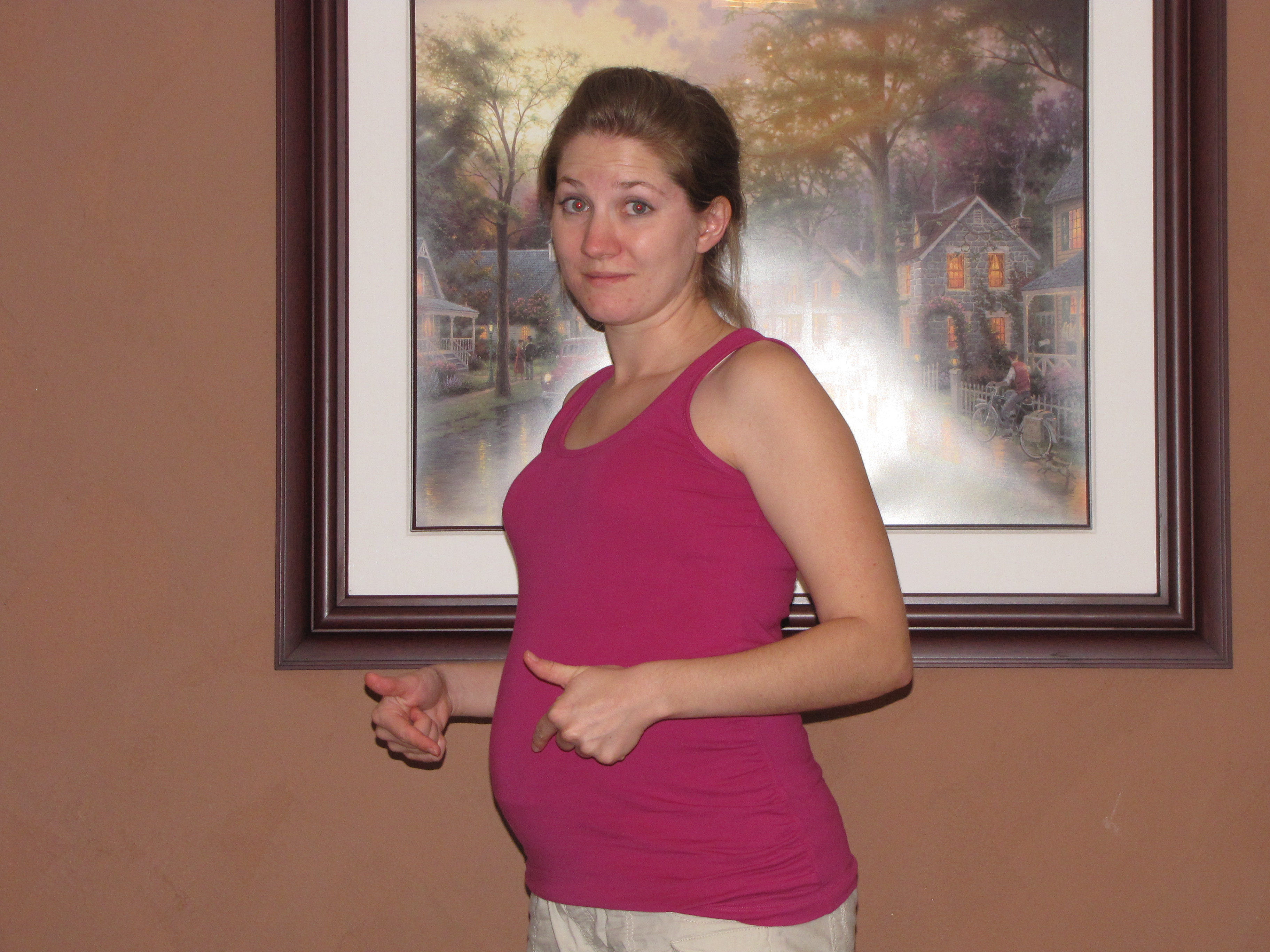
5 1/2 months along

It’s finally starting to hit me: my baby is going to be here in just a few months. And I’m starting to feel a little panicky.

I thought I was doing well, keeping emotions in check. At least, it didn’t feel like I was any more emotional than usual. I’ve always been one to cry easily at a movie scene, or even a melody. So when I find tears welling up these days, I don’t necessarily blame pregnancy.

The exhaustion, though. That has to be pregnancy’s fault, right? Or maybe just an incidental collision of events piling up all at once?

Two Thursdays ago, life went haywire. It started with my doctor’s appointment, where I learned I was having a baby boy! It progressed to the ICU, where my father-in-law was having high-risk emergency surgery. Then it opened onto the waiting room, where I was furiously typing up last changes to my first memoir draft because, wouldn’t you know it, that day was also my deadline with my editor. Later that day found me trekking up to the airport to pick up my mom, who was spending the weekend with us.

During that visit, I was still trying to piece together my syllabus and assignments for the new class I was hired to teach just one week prior. And to top it off, that same weekend I hosted a women’s prayer retreat at my house to launch the last three-month Straight 2 the Heart prayer group before baby comes.

Mix in some family problems that arose after the weekend, which took my focus completely away from the class I had to teach and the writing I should have been doing, and you have the makings of a very edgy pregnant lady.

This week some friends kindly dropped off some baby things, and now I find the guest bedroom (where my college-age niece stays on Tuesday nights) being dismantled by my hubby, who suddenly got the crawl to work on the nursery. His “crawls” come in spurts, though, so he typically tears up something only to leave it in disarray for days, weeks, or months.

Today I came home from my writers’ group to find him laid up with a headache, the baby room/guest room in no better shape than before I left, and all of a sudden, I’m on the brink of tears because I don’t know where to sit down and just do some of the personal writing I haven’t had energy to do for several weeks. Suddenly there is no room in my house that can accommodate me because every room has a problem we’ve put off fixing for all the years we’ve lived here. The baby room has just put me over the top.

Suddenly I’m feeling like I’ll never have a room to myself again. I just want one room, darn it, that I can control. But the mess created by living human beings constantly intrudes on my desired place of sanctuary. My office, for instance, doubles as the dining room, and any time we have company, I have to interrupt my creative process to clear space.

Woe is me, right? What a problem. It’s hardly a problem. We have a very large house, and with some reorganization, we can figure this out. (As you know from previous posts like this one, and this one, I just happen to detest things like cleaning and organization.) What is the real problem, then?

Maybe I feel life surging too suddenly out of control, and I fear that, after baby, there will be no going back. He will be a wonderful, blessed addition to our lives. Just…how will I handle it all?

Like I’ve handled everything else, I will handle it with my Father’s help. I will handle it by letting Him handle it. I’m sure everything will be fine.

After such a crazy couple of weeks, maybe I just needed to get a little emotional. I needed to remember I don’t always have to hold it together as if these emotions are not ransacking my body and mind. I needed to pray, and write, and even cry a little.

Tonight I came to the library to find a clear desk space on which to clear my head, and now I feel better already.

Ready or not, I say, “Bring on the baby!”


Are Your “Roots” Showing?

tree roots
Photo Credit: “Exposed Tree Roots” by Colin Brough

I’m not talking about your hair color, though we often get hung up on the outward appearance. I’m talking about what’s on the inside: or those beliefs you hold at the core of your being.

Last weekend I hosted about ten women at my house for a mini women’s prayer retreat, and we talked and prayed about how the negative beliefs we hold are responsible for the negative behaviors in our lives. In other words, your problem of overeating, undereating, cutting, criticizing, worrying, etc. is the “fruit” of a deeper “root.”

As Jesus said, “No good tree bears bad fruit, nor does a bad tree bear good fruit. Each tree is recognized by its own fruit. People do not pick figs from thornbushes, or grapes from briers. A good man brings good things out of the good stored up in his heart, and an evil man brings evil things out of the evil stored up in his heart. For the mouth speaks what the heart is full of” (Luke 6:43-45). He’s saying that any fruit cannot grow without a root first in place, because the one flows from the other.

My co-author, Paul Coneff, likes to further explain this concept with the “toothpaste test,” which stipulates that if a tube of toothpaste is strawberry, well, when it gets squeezed, nothing can come out but strawberry paste. In other words, whatever beliefs are rooted in our hearts—whether positive or negative—will eventually come out.

To see an example of the “fruit/root” principle, or to watch the “toothpaste test” in action, just get close to someone for a little while, settle in, and watch. Listen to what inadvertently pops out of their mouths when they get stressed. I’ve observed that even if people aren’t trying to be confessional, they end up confessing a lot more than they think (and this includes myself).

Recognizing Common Roots in Women

Writer Patricia Garey, in her book Beautiful Woman, talks about how mothers inadvertently send negative messages to their daughters about beauty and self-esteem when they make passing comments like, “Oh, I can’t go out without my makeup,” “I have to get rid of this extra flab,” or, “I wouldn’t be caught dead without [fill-in-the-blank].” What do these seemingly trite remarks say about the beliefs rooted in their hearts?

I know a lovely woman who will not go out in public until she has “put on her face.”

“I can’t be seen like this,” she chirps to her husband if he ever asks her to run to the store on a Sunday morning—even if just for a quick “in and out” errand where she will only be seen by the cashier. To go out for that sixty-second errand first must entail an hour’s preparation.

After I learned about the fruit/root principle, I asked myself: “Is this behavior just a quirk, or is it the symptom of a deeply seeded negative belief, perhaps, ‘I’m not acceptable just the way I am’? or ‘I need to hide who I really am’?”

I know another woman, well respected in her teaching job, who clearly has some insidious negative beliefs rooted in her heart. Because she doesn’t have a college degree, she feels inadequate, or “less worthy” in some way. Clearly, by the passing or side comments she makes under her breath, such as, “I’m so dumb,” or “Well, you’re better qualified for that,” or “I just wish I could really do something that would make a difference,” she believes in her heart that she is not good enough. Usually these comments come in the context of talking or hearing about someone else’s achievements, whether in the area of career, health, or other. I’ve heard many people say she is the best teacher they’ve ever seen, but sadly she won’t believe it.

I wonder how many of us have that problem. How many of us have deeply rooted negative beliefs about ourselves that everyone around us would disagree with? Sometimes no matter how many times we hear truths about ourselves, we refuse to believe them. But how quick we are to blow one negative comment into the gospel truth. If that’s so, then we can know we have some negative beliefs rooted in our hearts.

Recognizing My Own Roots

Tonight begins a thirteen-week women’s prayer group with a few good women who are willing to honestly examine those false beliefs in their hearts and let Jesus uproot them, replacing them with His truth. I’ve been through this process twice in the last year, and each time God reveals more roots I need to deal with.

Some of the easiest roots to recognize when I started a year ago were those depressive thoughts that used to define me: thoughts like “Life sucks,” “I’m a loser,” and “I will always be this way.” I have now recognized those thoughts as lies and renounced them in my life.

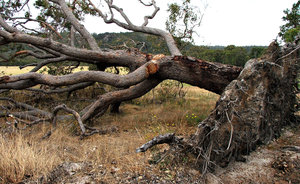
uprooted tree
Photo Credit: “Toppled–Uprooted” by Tacluda

Next, I faced the following slew of lies—and these, I realized, were protections I had developed to try to fend off any more depression (or my old roots): “I have to try harder and do more,” “I have to control things,” “I am responsible for making my life into something meaningful.” After prayerfully asking God to search my heart and try my thoughts (Ps. 139:23-24), I realized these, too, were lies from the enemy. I still battle some of these lies, especially when I slack in my prayer life, but this battle is getting easier.

As I begin a new prayer group, the new lies I am battling sound something like this: “I have worked through my issues, and therefore, I have arrived.” “I am better than others.” “I don’t need to spend so much time in prayer anymore.” Wouldn’t you know it, even when we reach a spiritual high, Satan can use that to slam us some more—usually this is when the “pride” lies begin.

So today I am praying about pride, and asking the Lord make me feel my desperate need for him once again. I have confidence that as I spend time with him every day, he will once again reveal his truth. In the meantime, before I can feel it for myself, I am taking him at his word that I can do nothing without him—I am choosing to believe that to remain fruitful for him, I must remain in him—I must remain in the Vine (John 15). That’s because I never want to be ashamed for my roots to show; and I always want my life to produce positive fruit (Gal. 5:22).

What fruits and roots are showing up in your life today?


(Note: If you liked this post, check out the preview of the book Paul and I wrote, and sign up to follow this blog so you can read more about fruits and roots when our book is published.)

Professing—My Unexpected Blessing

With my manuscript deadline at hand, I knew this week would be busy. Before I got the job offer last Thursday, I didn’t know how busy. Suddenly, in addition to finishing my book manuscript in one week, I am becoming an adjunct professor, too!

I got the call last Thursday (six days before my first class—yikes!), and five days later, I am still in awe at God’s goodness. This past year has been all about me learning that when I humble myself in the sight of the Lord, He lifts me up (James 4:10). Repeatedly broken to knee-point this past year, I have found peace in the surrender to Jesus and His plans for me. I gave up certain plans I thought would not pan out (such as a PhD and professing at my alma mater) to follow new directions in which I felt called: authorship and parenthood. (By the way, we are supposedly finding out the baby’s sex this week, too!)

It was when I surrendered the professing idea that we got pregnant and the book really started taking shape. I thought: “This is okay; God’s really got this.” I haven’t been making any serious money for two years, but I’ve been faithfully sowing seeds in hopes that they will grow into a money tree (er, some kind of career), however small.

By sowing seeds I mean writing my memoir, which goes out to a professional author/editor this week for a consultation. The book is not in its final form, by any means, but at 256 pages, it is a complete draft that says, more or less, what I want it to say. There’s a part of me that wants to keep polishing it, but mostly, especially after faced with having to prepare a semester’s syllabus in a couple days, I think it wise to give the book (and my brain) a break while other eyes ponder it. It will be good to focus on something else for awhile and then come back refreshed to revise in a month or so.

The one-class professing gig on Mondays, Wednesdays, and Fridays (which happens to be right down the road) will be the perfect vehicle for me to do just that.

And I was just starting to miss the classroom a bit.

Today I can only shake my head and marvel at the wisdom of God’s plans and His timing. Maybe this turn of events doesn’t sound like that big of a deal, but for me, it is. I used to have such issues with needing to be in control of my future. I didn’t handle unknowns well. I got physically sick from anxiety. But since learning to let go (and please know that sometimes I still need remediation), life has become a joy, full of surprises and good gifts from the hand of God. Now, instead of being just a professor, or just a writer, or just a parent, I am suddenly all three! Daily I am reminded that God “is able to do immeasurably more than all we ask or imagine, according to his power that is at work within us” (Eph. 3:20).

If you’re struggling today over the plans for your future, or if you feel physically or emotionally sick from not knowing what’s to come, why not ask God to take the reigns and pave the path for you? He might not make things clear right away, but if you earnestly pray, you can rest in the knowledge that even when we don’t know what to pray for, “the Spirit himself intercedes for us through wordless groans.…And we know that in all things God works for the good of those who love him, who have been called according to his purpose” (Rom. 8:26, 28). Finally, when we put God first, we can rest in the promises that “there is no want to those who fear the Lord” (Ps. 34:9), and God shall supply “all” our needs “according to the riches of His glory in Christ Jesus” (Phil. 4:19). Amen!

For some inspiration today, check out the song “When I Let It Go” by Sierra. This is a throwback to one of my dad’s favorite Christian groups from the 90s, and lately it has brought me to tears (in a good way!).

This time I’ve got to trust You
I’ve got to accept Your plan
I have tried to guide my circumstance
But there’s just no way I can
When will I learn this lesson
Your ways are not like mine
Lord, help me to surrender
The control I try to have on my life
When I let it go
You take my hand and gently lead me
Then You let me know
Just how peaceful my life can be
When I let it go
Your never-ending blessings
Like a river start to flow
When I let it go
Too many times I’m searching
For the things I think I need
When I try to look for more
I always seem to give You less of me
Lord, help me gain this wisdom
My foolish mind still lacks
‘Til I find a way to let go
Of the part of me I’m holding back

A Joy Restored

girl 2
Photo Credit: “Jump” by Jana_Koll

I’ve said my dream was to be a writer. I developed this dream in childhood—I don’t know exactly when, but it was early. I read profusely from age eight on, and I’m guessing my writing dreams developed as my reading list grew.

At that age it was enough to have a foggy notion, a sort of affinity, a general inclination or tendency to writing. Writing was fun! I did it without overly thinking about it. I jotted silly stories and poems, and when I started playing the piano at age eight, also penning song lyrics. Back then I never thought about the practicalities of getting published, the imminent necessity of earning a living, the eventuality of needing a schedule to keep oneself on track to produce enough, often enough, to survive. No, back then my dream was a hobby, a thing I did at whimsy with no outside provocation. I did it because I enjoyed it. It brought me joy. It was fun.

How wonderful to be a child, to be innocent of worldly and societal expectations, or implications of adulthood. How I wish, as I write this, that I could go back.

Is that impossible?

It seemed impossible when life threw me its first really traumatic curveball at fourteen, when tragedy struck so quickly it seemed childhood was snatched away overnight. Then it was, I have to think, that Satan really went in for the kill on my identity. And with it, my dreams.

Suddenly I was no longer a capable, positive, promising child. I was an incapacitated, negative, doomed child. My world as far as I could see had collapsed around me. I couldn’t see beyond the walls of my home, now torn apart by dissension and hatred and despair.

Though a family breakup may not be our fault, it has everything to do with us. It has everything to do with how we see and understand our place in the world, everything to do with how we define ourselves. I’m not saying this is how it should be, or even that it’s logical, just that this is how it is.

This family event affected everything about me. It redefined me in negative, defeated ways. I became, in my eyes, a pitiable child, one who couldn’t speak up or have needs, either at home or at school.

Instead of being an empowered writer, I became a closet writer. That dream of writing got shoved in a closet, shoved under cover—literally, under the covers of journals—as I took to writing about my family plight and my own plight for no one’s eyes but my own. I guarded my writing, and with it, my pain, like I guarded the family secret. This was not healthy. And yet, by God’s grace, he even used that period of writing to myself for good. Even though the subject matter was bad, it kept me growing at least as far as a writer.  The writing kept my joints oiled, kept me in practice. The practice was being perverted, but it was leading to something only God could see.

happy life
Photo Credit: “Happy Life” by Lusi

Today I feel I have regained the joy of writing–maybe I’m even embarking on my second childhood! Gone are the dark days and the need to hide who I am, because God has restored to me my value and my worth. I rejoice because my identity is not defined by what was done TO me, but by what God has done FOR me. He saved me. He restored me. And He has returned me to the joy of my youth. Thanks for sharing my journey!

Why I “Took Out” My Ex-Boyfriends

scissors
Photo Credit: “Cutting” by Lusi

This title’s a little misleading. I’m not talking about violence here, or the raging emotions of a woman scorned; rather, I mean making cuts to my memoir. You see, last week I inadvertently axed my ex-boyfriends from my manuscript when I deleted a chapter by mistake. Oops. While I was initially ticked, turns out this was one of the best things that could’ve happened.

You see, I was falling into that writer’s trap of wanting to put every “interesting” detail about my life into my story—but not every “interesting” detail belongs there.

At first it’s a hard reality to swallow. You’ve heard that analogy that likens cutting one’s writing to severing a limb. It’s true. But I’ve got good news: the more time and distance you put between yourself and your writing, the easier it gets. After awhile it becomes easier to see what really stinks and what doesn’t, or what actually fits and what are merely rabbit trails.

Accidentally cutting out my boyfriends, whom I’d slapped into a “junk” chapter that wasn’t quite fitting anywhere, freed me up to clarify the real players in my story: that’d be myself (obviously), my hubby, my family, and my immediate in-laws (I’m not sure they know this yet!). The story I’m telling is far advanced beyond the twenty-year-old version I imagined, when I was still hurting from love gone wrong with those unsuspecting exes. It picks up with my wedding day and the violent emotions that ceremony stirred up, and follows me through my twenties to unravel just what was so traumatizing about entering marriage.

The story’s not about my past dating failures; it’s about finding peace within myself, with, God, and with family. The only relevance the exes have to this story is that they became unfortunate pitfalls on my way to searching for the right kind of love, which I eventually found in my hubby, then in God, and finally, with other loved ones around me. Now I realize, thankfully, that a couple paragraphs is more than sufficient to treat those unfortunate detours in this journey.

However, that doesn’t mean I’m not saving those memories for a future story, or maybe even a piece of fiction! As I explained these manuscript developments to my hubby last night, along with how a memoirist sometimes must rearrange or compress events for narrative efficacy, we had fun laughing over what a composite of my past lovers would look like. Ready for this? I think I can protect identities here by squeezing them all into one. Macho, yet effeminate, hunter under house arrest for drug possession and Dad of three who likes to collage…who ultimately turns out to be gay. See? Interesting. But way too distracting for the story I’m trying to tell!

If you’re working on your memoirs, remember: focus, focus, focus! Keep the main story the main story, and don’t let yourself get distracted by every “interesting” detail. And now I’m back to work, excited to see what today’s writing session reveals!


Of Bibs, Cribs, and Big Kid Things

Photo Credit: “Pregnancy Portrait” by MeiTeng

(Or “Why I Hate Baby Shopping”)

I am four months pregnant, and when asked questions like “How are you going to decorate your nursery?” I have no answer. When my friend sent me her daughter’s birth story, I felt guilty that so much of the terminology she used was Greek to me. When another friend offered to go maternity shopping over a month ago, I brushed her off. When my other friend loaned me a tub of maternity clothes, I was relieved that this was one detail I wouldn’t have to worry about. When my lovely sister-in-law pumped me for my preferences on a baby shower, I also thanked God that she would be taking the burden of planning that off me.

See, when people comment on how excited they are for me to be a parent, I glow with pride. But when it comes to planning the details of actually having a baby—both the birthing and care of—I find myself resisting at every turn.

What gives? Aren’t new mothers supposed to be able to think of nothing else? Shouldn’t they be excited to decorate, and shouldn’t they be drooling over bibs, cribs, and everything baby related?

Whether or not that’s the case—though I think it’s silly to lump all new mothers into one category as I’ve just flippantly done to make a rhetorical point—I’m not. You see, I feel it’s better to focus on the intangibles, rather than the tangibles, and I guess this comes from my personality (and maybe some academic training), as well as my Christian beliefs.

While I realize I will eventually have to deal with a nursery and birthing options and formula and diapers and spit-up and poo, I don’t see the point in getting all worked up over that now. Soon enough my life will be turned upside down, filled with feedings and changings and all kinds of extra housework that doesn’t excite me. Does this make me a bad mother? I don’t think so. Unrealistic, maybe, but not bad.

husband-and-wife
Photo Credit: Church Leader Gazette

Like some in the academic community, I sometimes find myself wanting to pretend that the material world doesn’t exist—that the best life is had by sitting in a room somewhere discussing ideas, or writing them down. I have idealistic notions about just communing with my husband over ideas and discussion without the daily intrusion of dishes and dirty floors. Can’t we just eat out every meal? Why do we have to waste our precious energy on preparing food and cleaning up and making messes that also need cleaning? I want to ask (but I don’t because he already thinks I’m too pampered—and I am).

This isn’t productive, this train of thought I’m on. It’s me fighting reality, is what it is, and maybe me thumbing my nose at people who only seem to live for the here and now. I’m talking about the people who are always preoccupied with the current fashions, or the next vacation they can take, or what new movies they’ve seen or the most recent Facebook statuses or their last (most recent, I mean) meal.

When people only bring up to me the material details of my baby’s life, I feel annoyed, wishing they would instead engage me in a discussion of how I plan to raise the child—what values I plan to instill, how I will instruct him or her as to God’s word.

I know kids and teens who have every material need they could ever dream of—a vehicle, a new dress to wear to church each week, money to burn at the theater for each new release—and yet these kids struggle with depression, anger (usually at their parents), and belief in God. And I find myself wanting to ask the parents: “When do you make time to really listen to these precious kids of yours?” “How have you ensured that they are learning to rely on God’s word, and not the world’s?” Aren’t these more important questions than: “Where did you find that cute outfit?” “What changes are you planning to make to your child’s room?” “What kind of car will your teen get?”

gifts
Photo Credit: “Go Shopping 2” by Lusi

I have to be careful here. I don’t want to belittle parents or other who show their love through gifts or acts of service. I have fond memories of one aunt who, in the midst of some of my toughest teen years, brightened my life with some special outward touches, such as a manicure and a set of highlights (at age seventeen, I had never had either). Let me not discount the good we can do unto others by gifts or acts of service. In fact, without these, it would be really hard to know we were loved. I am also writing from a privileged position; if I had to worry where my next meal was coming from or whether the bills would get paid, I’d probably have a different take on this topic.

I guess what I’m saying, then, is that while we don’t need to totally give up attention to material things, we should strive to keep our priorities straight. Sure, go ahead and give your kids good gifts. Have fun shopping for a crib for your baby and clothes for your teen girls and vehicles for your teen boys. But don’t do those things without also taking care of the more important matters. For me, these are a relationship with God, relationship with my spouse, and fulfillment at the work of my hands. (I guess if your work is in making material products, my argument falls somewhat apart.) I find meaning in quality time and good conversation, Bible study and prayer, good music and good books (yes, I mark my own hypocrisy).

Because I know there’s no point in trying to totally write off the realities of material living, my suggestion to myself is this: as much as I can, I’m going to make my daily, material activities meaningful through doing them with others. I want to view my upcoming life changes (like feeding and changing) not as detestable tasks, but as opportunities to bond. Housework, when my child gets older, can become an opportunity to teach him or her about responsibility. Clothes shopping? A chance to teach about thrift (oh, what a fuddy duddy I am! I can just see the eyes rolling!). Decorating projects (how I hate decorating my house!) I can choose to see as chances to collaborate creatively with my family.

I’m going to work at not being so opposed to (or snooty towards) the daily activities of life, 1) because I know I can’t avoid them, and 2) because if I don’t, I will have no common ground upon which to connect with most of the people in my life. The caveat is this: I don’t want to forget that these things are just means to the end of creating real meaning in life–real relationships and real purpose. If you have a suggestion for my baby’s nursery, or clothing, or belongings, I merely ask you to keep the same thing in mind.

baby bottle
Photo Credit: “Mother and Child” by Lusi


Birthday Blessings

flowers
Photo Credit: Flowers by Just4You

Today is my 29th birthday, and I can’t think of a better way to spend it than sitting here at my favorite breakfast place writing, reflecting, and thanking God for the blessings of the past year. Here’s a recap of how my personal and professional lives have converged (and diverged) over the past twelve months—showing me how God takes a very personal interest in the mundane details of my life.

Last Summer

I was fretting over what I saw as conflicting desires, including the desire to write, teach, and (though I didn’t much tell anyone), have a baby. God started to drop things into place when Paul Coneff of Straight 2 the Heart ministries asked me to help him write his first book, The Hidden Half of the Gospel. During July of last year, I was also starting to write my master’s thesis (eventually 100 pages), which was a perfect warm-up for the book-length project I was taking on. Now busy with writing, I tabled my internal baby discussion for the time being.

2012-11-08 22.27.41

Last Fall

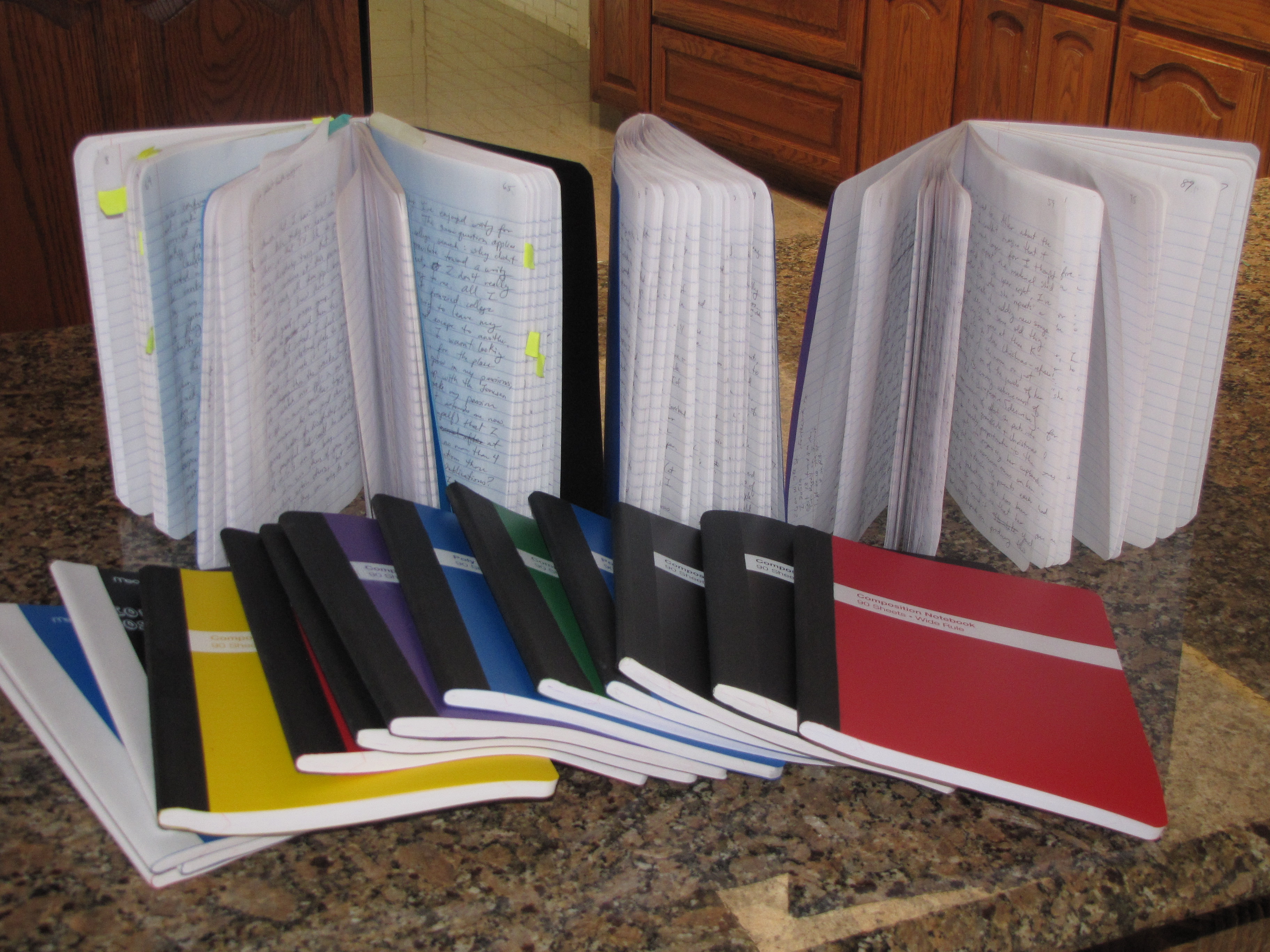
I was still working fervently on my two writing projects, but there came pausing points in both works, during which time I was left with nothing to do but finally start writing what was in my heart. Four notebooks and one month later, I had the rough draft of my memoir and the beginnings of this blog down on paper—both would wait for January for further development.

I looked around one day on campus and asked myself if this student life was what I wanted for five to eight more years. I didn’t see how that life would allow me to be the parent I knew I’d want to be—if we decided to have kids.

One day in October, while writing a paper for my last graduate class, I broke down at my computer and finally faced the truth: I was tired of this solitary student life; I wanted something more. I called my husband in tears and he came home early that day to take me on a walk-and-talk through the local state park. As I unknowingly acquired poison ivy, it was a relief to hear myself finally saying words I had been repressing for a long time: I want to have kids (this was a fun scene to write for my memoir).

In December I completed my master’s program and sent out two graduate applications—one MFA, and one PhD—just in case we didn’t conceive, and just in case God still wanted me in graduate school.

girl on bench

Last Winter

I did not get into either of the grad programs I applied to, which told me that was not God’s plan for me right now. I went off birth control in January, began this blog, and started officially calling myself a writer.

I spent the early months of the year feeling lonely and a bit depressed—now I was alone in our big house all day long, getting to write, yes, but without the promise of much people time during my days. I started really missing my family in Minnesota, whom I hadn’t seen since the previous June. I also realized I had been taking my husband for granted for most of our eight years of marriage—putting him on the back burner as I worked on emotional issues, self-improvement, and career development. I decided to be more family oriented.

Around the same time, God also brought many friends into my life to help alleviate my loneliness. This told me that God could meet my need for people contact with or without a baby.

Amanda and me

Last Spring

In May, when I wasn’t expecting it, I found out I was five weeks pregnant. Yay! We had a fun time surprising our family with the announcement, as most hadn’t been reading this blog and didn’t know we were trying. I rededicated my efforts to finishing my memoir “before thirty,” and now I also vowed to try to finish before baby.

2013-01-09 23.52.05

Currently

I have just returned from two weeks in Minnesota—probably my last trip to see my family before baby comes in January (I am four months along today). While in Minnesota I attended my ten-year class reunion and felt additional closure about God’s plans for my life. Though visiting Minnesota always makes me wistful, I clearly saw God’s wisdom in moving me away almost nine years ago. Visits back home used to be hard—brought painful memories—but more and more they bring happiness. Now, my husband and I are talking about getting a summer house in MN in a few years—which prospect fills my heart with joy.

My memoir is going well, and I have made contact with a favorite author of mine, Trish Ryan, who has agreed to consult on my book in late August to help me prepare it for publication (my hubby is giving me a “loan” because I told him it would be a good investment!). This fall I will be searching for an agent and/or publisher as I prepare for this baby’s arrival—and hopefully this winter I will have both a healthy baby and a manuscript headed for publication. The healthy baby is more important, of course—the book would just be a bonus. Regardless of how long it takes to get the memoir published, The Hidden Half of the Gospel will be published long before my next birthday—showing me that God heard my “before thirty” prayer six months ago.

It is 10:10 as I finish writing this, and my dentist’s office just texted, “Happy Birthday, I hope you have many reasons to smile today!” I am happy to say, “Yes, I do!” Today, I am smiling about my immediate future that will consist largely of family time, writing time, and more Minnesota time—and that doesn’t even compare to my eternal future!

Thank you, Lord, for taking such a personal interest in the mundane details of my life. Today I praise you for how you care about my heart’s desires and how you’ve led, not just for the past year, but for the past twenty-nine years.

Choosing the Write Path


2013-03-13 02.48.54

After breaking down from ministry overload, I started really questioning my priorities, and over the past few months I’ve had some definite impressions: Maybe God wants to fulfill me in ways I never dreamed, not only by making my love my life’s work, but also my mode of ministry. I’m talking about writing, of course.

You see, something I’ve been struggling with since I’ve been staying home to write is balancing my “work” life with my ministry life. I’ve tried setting goals for myself, such as writing twenty-five hours a week…and I can’t explain why accomplishing this has been so hard when I don’t technically hold another “job.”

As I’ve been praying about this, God has suggested some reasons for the difficulty: I’ve been too controlling of others, I’ve taken it upon myself to provide for others, and I’ve allowed myself to get pulled from my writing to do jobs that I really shouldn’t be doing. This ranges from using my daily writing time for ministry emails or phone calls to saying yes every time friends suggest an outing. Lately I’ve also recognized a danger of losing all focus on my work because I get too involved with other people.

I have struggled to place my work time above “people” time—it’s become hard to sort out when to say no and when to say yes. My hubby always encourages me to go for the people time: “Take a break!” he says to his chronically busy wife. But after several months of frequent “breaks,” I feel I’m too often setting aside work. I’ve been documenting my writing hours each week, and sometimes I’m struggling to even reach ten or fifteen. Lately I have the added challenge of being short on energy due to pregnancy—so my “usable” hours have shrunk. I literally don’t have energy to do as much as I used to.

So, I am forced to choose.

The things I do are all “good” things. Building ministries, building relationships, writing an inspirational book. But I can’t do it all. What should I do?

I have some other impressions, I think, telling me I have to focus on my work right now. Because it might be my calling. It might be the single most significant way I’m meant to minister to others. If this is true, therein lies the answer to my work/ministry balance. My work is my ministry.

Right now while I’m still unpublished (bookwise) it’s hard to see it. The fruits of my labor are not yet tangible, as they are in my prayer ministry, church choir, and former Bible study. I see no immediate return. This is where faith comes in. What if Noah had given up on building the ark during the 120 years before its use?

For now, I am praying for God to give me more faith. I need clarity and insight, too, in case I am misguided about what God really wants me to do. I need to know for certain if these impressions about writing are my true calling—and then, if they are, I need to resolve to walk in the path God has placed in front of me. That is, if God has appointed me to write for my life’s work and my ministry, I need to stop being distracted by other “good” things, and let him bring forth fruit where I’m most fertile.

“Look straight ahead, and fix your eyes on what lies before you. Mark out a straight path for your feet; stay on the safe path. Don’t get sidetracked; keep your feet from following evil.”

(Proverbs 4:25-27, NLT)