Choosing the Write Path


2013-03-13 02.48.54

After breaking down from ministry overload, I started really questioning my priorities, and over the past few months I’ve had some definite impressions: Maybe God wants to fulfill me in ways I never dreamed, not only by making my love my life’s work, but also my mode of ministry. I’m talking about writing, of course.

You see, something I’ve been struggling with since I’ve been staying home to write is balancing my “work” life with my ministry life. I’ve tried setting goals for myself, such as writing twenty-five hours a week…and I can’t explain why accomplishing this has been so hard when I don’t technically hold another “job.”

As I’ve been praying about this, God has suggested some reasons for the difficulty: I’ve been too controlling of others, I’ve taken it upon myself to provide for others, and I’ve allowed myself to get pulled from my writing to do jobs that I really shouldn’t be doing. This ranges from using my daily writing time for ministry emails or phone calls to saying yes every time friends suggest an outing. Lately I’ve also recognized a danger of losing all focus on my work because I get too involved with other people.

I have struggled to place my work time above “people” time—it’s become hard to sort out when to say no and when to say yes. My hubby always encourages me to go for the people time: “Take a break!” he says to his chronically busy wife. But after several months of frequent “breaks,” I feel I’m too often setting aside work. I’ve been documenting my writing hours each week, and sometimes I’m struggling to even reach ten or fifteen. Lately I have the added challenge of being short on energy due to pregnancy—so my “usable” hours have shrunk. I literally don’t have energy to do as much as I used to.

So, I am forced to choose.

The things I do are all “good” things. Building ministries, building relationships, writing an inspirational book. But I can’t do it all. What should I do?

I have some other impressions, I think, telling me I have to focus on my work right now. Because it might be my calling. It might be the single most significant way I’m meant to minister to others. If this is true, therein lies the answer to my work/ministry balance. My work is my ministry.

Right now while I’m still unpublished (bookwise) it’s hard to see it. The fruits of my labor are not yet tangible, as they are in my prayer ministry, church choir, and former Bible study. I see no immediate return. This is where faith comes in. What if Noah had given up on building the ark during the 120 years before its use?

For now, I am praying for God to give me more faith. I need clarity and insight, too, in case I am misguided about what God really wants me to do. I need to know for certain if these impressions about writing are my true calling—and then, if they are, I need to resolve to walk in the path God has placed in front of me. That is, if God has appointed me to write for my life’s work and my ministry, I need to stop being distracted by other “good” things, and let him bring forth fruit where I’m most fertile.

“Look straight ahead, and fix your eyes on what lies before you. Mark out a straight path for your feet; stay on the safe path. Don’t get sidetracked; keep your feet from following evil.”

(Proverbs 4:25-27, NLT)

Some Keys to Being Freshly Pressed

key
Photo credit: “Key” by debsch

After achieving the feat of being Freshly Pressed, a sort of fear can set in, along with  negative thoughts like these: “I’m going to screw up!” “My next effort won’t be as good!” “I’ll disappoint all these new readers!” Happily, I’ve only had these feelings mildly, and they’re not sticking around. Instead of fear, I mostly feel hope. Rather than daunting me, the Freshly Pressed Status has buoyed my confidence as a writer (a writer whose work people want to read!), and it has encouraged me.

The Surface Answer

So, you want to know how to get Freshly Pressed? (Before last Tuesday, I wondered that, too.) The easy answer is that you just have to keep writing and hope one of your posts gets picked. On the day produced my “pressed” post, I was just doing my regular thing. I was praying and reading the Bible like I do every morning, then I started scribbling about the issues my prayer time had revealed to me. I let the writing sit for a weekend, and then on a busy Tuesday when I almost didn’t think I’d post, I tweaked a bit, paired it with a picture, and posted. It was one of the easiest pieces I’ve published, in fact, because I didn’t expect much out of it—not like some past posts I’d edited into mincemeat (hoping to be “pressed”).

It was a complete and total surprise when, three hours later, my inbox greeted me with: “Congratulations! You’ve been Freshly Pressed!” For the next few days I soaked up the extra comments, likes, and follows—and thanked God for blessing me when I wasn’t even asking.

The Deep Answer

Maybe that’s a key to receiving blessings: to stop trying to force them.

I think back to the small string of writing successes I’ve had so far. (You can liken my writing to whatever dream you’ve carried for most of your life.) In all honesty, when I’ve succeeded in writing, I wasn’t much expecting it. Conversely, when I’ve most expected to succeed, often I’ve actually flopped.

I know I’ve talked to God a lot over the years about my dreams. Heck, he was aware of these goals even before my birth. But when I started chasing them in the beginning, it was like I wanted God on call, ready to answer at the moment I asked. I was selfish (not that I’m a saint today, but I’m slowly learning patience). I wanted to be published, and I wanted it when I wanted it, in the way I wanted it.

Some Instructive “Flops”

In 2010 I prepared a manuscript based on my “oh-so-interesting” teenage journals and figured this just had to be my first book. After a pause in the project, during which time I encountered some pushback from one of the main “characters” in the memoir, I realized maybe this sensitive material wasn’t yet “book-ready.”

In 2011, when I was re-entering graduate school with the dual goals of professing and writing, I identified a PhD in Creative Writing program one hour away from me that I thought would be “so much better” than the bland rhetoric program I was currently in. So I fretted my way through months of manuscript and application preparation, then lay awake at night with knots, willing and wanting so badly for this to work out—only to be rejected a few months later.

In 2012 I tried again, this time a distance MFA program that specifically catered to writers of faith. This, I was sure, was the vehicle through which I would make my plans—my plans—happen. Only, I didn’t get in.

Today I’m not sorry I attempted that now-dead manuscript and those fruitless applications. I think it was good for me to try, especially since I felt God nudging me toward writing and I didn’t sense him expressly forbidding those things. Where I went wrong was becoming too bull-headed to recognize that God had other, better ways to make my dreams come true besides those few paths I could see.

Doing Our Part, Letting God Do His

So it is with any endeavor. Maybe we don’t exactly know if the thing we want is the same thing God wants, but we feel it might be. In that case, I believe our part is to work faithfully—do our homework, hone our craft, practice it, and perform it to the best of our ability (so we are not presuming on God)—but after we’ve done that, we should let go and let God.

When we live our lives like that, quietly and diligently doing those things that (to the best of our knowledge) God has appointed us to do, we might just be pleasantly surprised one day when our faithful efforts pay off. Since I’ve made writing a part of my daily routine (and dropped those arbitrary, self-imposed expectations, such as “the writing has to result in X”), I’ve had a few of those pleasant surprises, including three published (and paying!) magazine articles, a co-book project, and most recently a Freshly Pressed blog post.

It’s fun to get good news when you’re not expecting it. That’s not to say we shouldn’t expect good things from the hand of God. We should.  But we shouldn’t try to dictate what those things will be. As I’ve learned, God has a vast storehouse of blessings for me that I’m not able to see—and it’s bigger and better than anything I could ever come up with.

Today my prayer is that I will faithfully do the task God has given me while letting God be God, trusting that he will reward me according to his promises and for the purpose of his glory. If you need to get re-centered on what really matters today, I recommend reading Psalm 119 in its entirety, as I did this morning.

Dear Lord, “Turn my heart toward your statutes and not toward selfish gain. Turn my eyes away from worthless things; preserve my life according to your word. Fulfill your promise to your servant, that you may be feared.” (Psalm 119: 36-38)

How to Make Your Dream a Reality

Rule number 1: You have to DO something.

surfing
Photo credit: felipedan

It sounds really obvious, but so is most of the advice in any self-help book you can read. I complained for a lot of years that my dream of publishing a book was not coming true, but, um, it was no wonder. For a lot of years, I wasn’t doing anything about it. So then, one day, I sat down and started to write. And promptly ran into a problem.


Rule number 2: Push through roadblocks, however slowly

road sign
Photo credit: Jazza

It could be a lack of time, a mental block, or a naysayer. For me, my roadblock was not the oft-cited “writer’s block”; rather, every time I tried to sit down and write that book I had in my head, I’d be reduced to tears for the memories the work brought. And then there was the naysayer. Someone told me my book idea wasn’t respectful of my family…and I should reconsider what publishing it would do to them.

No matter which roadblocks you’re facing, there is always a way to keep going. For aspiring writers (or aspiring whatevers) with little time, the best advice I know of is to set a realistic goal for yourself, whether a daily or weekly goal, and stick to it. Maybe you’ve only got fifteen minutes a day. Maybe you’ve only got one hour a week. Whatever you have, build that time into your schedule, and then guard it with your dream.

When I started having those toxic emotional reactions to my work, which literally could incapacitate me from living the rest of my life, well, I shut down for awhile. But in hindsight, I realize that I eventually found other ways to keep moving in the direction of my dream. I came at it from another angle. Although I wasn’t yet ready to write that book in my head, I started reading up on the publishing industry, and I started reading about honing my craft. As I did this, I put the naysayer out of mind, and hoped for a better day to write and publish my book. And this leads to rule number 3.


Rule number 3: Learn from the masters

apprentice
Photo credit: krayker

So, how did you first develop that precious little dream of yours? I’d just bet it was from watching someone else who was doing that very thing, and saying to yourself, “I want to do that someday, too!”

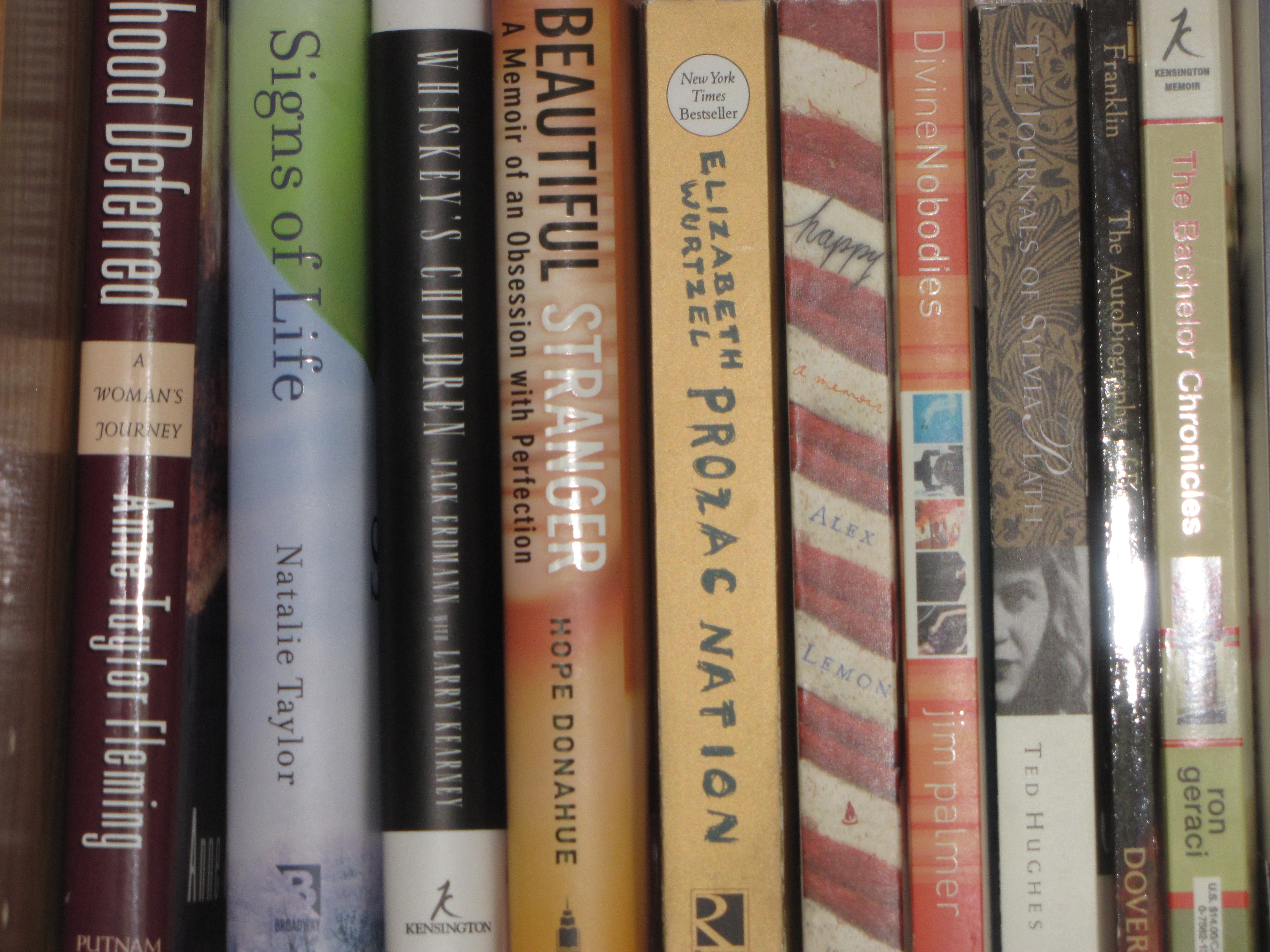
So here’s the deal: the same place you go for inspiration—be it a bookshelf, a rodeo, or a runway—is the same place you should go to apprentice for your craft. Once I identified memoir as my medium, I became a student of the genre. Not only did I read books about how to write memoir, but I read memoirs. These days I have become a sponge for these things, keeping them by my nightstand, on the coffee table, and in my CD player in the car (audio books). Where I once read only for entertainment, now I read for craft and technique, story development and organization. I read with a critical eye, judging a book’s execution and effectiveness, asking myself, is this a technique I could use? Is it one I’d want to use? Whether a memoir is well done or not, I learn from it.


Rule number 4: Work through personal problems to clear room for your dreams

thinking
Photo credit: brainloc

Okay, this is probably the hardest rule to follow, and I can’t tell you how to do it; I can only point you to a blog post describing what worked for me. But if you do have some kind of mental or emotional block impeding your work, there must be something you’ll eventually have to deal with before getting on with your dream. If you have to “take time off” from your project to get your life or emotions in order, by all means, do it! This is not wasted time, because when you come back to your project free from the impediment, you will find that you have a vigor for your dream that you never had before.


Rule number 5: Set a deadline with measurable goals

list
Photo credit: mimwickett

This rule will vary from person to person, and obviously your timelines and deadlines can change. But the thing here is to write down steps, measurable goals, that will move you closer to your dream, bit by bit. If you can give yourself a deadline and stick to it, you will be much helped, as most people operate best with a deadline.

For myself, after I started doing something and I learned how to keep plugging away at it in some form, even when it was hard; after I had started bathing my mind in masterful examples, and after I had worked through my poisonous personal problems…I came up with a schedule for completing my dream that I’m hoping will carry me through to completion. For now, I am trying every day to “move in the direction of my dreams,” even if it means only fifteen minutes of work. I hope you will do the same, and good luck!

A Schedule for Completing My Dream

 The working title of my dream, AKA my memoir, is 1,000 Miles: A Memoir on Recovering Family, God, and Dreams from Depression. Below is the schedule I came up with for myself last week to help me push through to completion.

Note: When I made this schedule, I already had a rough draft of my book, so when I say “finish” a section, that means refining the roughness and filling in the gaps.

2013-01-09 23.52.05

 July 2013

  • Finish sections 3 and 4, and revise sections 1 and 2
  • Locate a professional editor to edit my book (Yes, even though I have a master’s in English, this is a piece of advice I’ve heard too many times to disregard.)

August 2013

  • Finish Sections 5-7
  • Ask 10-15 friends/family members to read my manuscript
  • By Friday, August 30, Send manuscript to editor, and to ten other readers

September 2013

  • Write book proposal/query letter and identify agents/publishers to query
  • Hopefully receive manuscript back by end of month

October 2013

  • Revise Manuscript based on feedback
  • Polish query and book proposal if needed

November 2013

  • Query 10-15 agents and/or publishers beginning of month (first round)

December 2013

  • Query 10-15 more agents/publishers (second round)

January 2014

  • (Baby due!)
  • End of month, follow up with first batch of queries

February 2014

  • Query 10-15 more agents/publishers (third round)
  • End of month, follow up with second batch of queries

You’ll notice I’ve left room for “failure,” by including several rounds of querying agents. Maybe, by God’s grace, I won’t need more than one round. But if I do, I will choose to see it as a learning process, and I will just keep moving forward…until, one day, I either get accepted, or my thirtieth birthday is upon me—at which point I will try another angle, and publish on Amazon (plan B). Blog readers: If you are interested in being one of my manuscript readers after August, please let me know!

The Writing Life, Pregnancy Edition

Yawning_Woman
Photo Credit: AsToldByLisa.com

Seeing as how pregnancy has reduced my life to mainly eating and sleeping these days, my new writing strategy is to divert all remaining energy to my memoir (which means, sadly, fewer, shorter blog posts). Nothing like a taskmaster baby to put a deadline on your project!

Now that I have T minus seven months until D-Day (delivery!), I feel a new urgency to finish what I’ve started. But this is good. I know how demoralizing working on a never-ending book can be, because that process describes my last literary effort. I don’t want to drag out the current project indefinitely, because the feeling that it could go on forever is deadly to my motivation.

If I seem callous toward the new life growing inside me (because I don’t seem to be thinking much about it), please excuse me. It’s just that

  1. I have a hard time yet believing there’s really a baby in there, and
  2. I think I’m doing us all a favor—baby, hubby, and me—by getting this book out of my bones before baby comes.

Not everyone will understand that, but some of you will. I’ve had the dream of book-making for over fifteen years, but the dream of baby-making? Not more than a year. No kidding. The idea of a baby is a brand new concept to me, almost as new as the actual baby (embryo?) inside me. So I am slowly, let me stress slowly, getting used to it all.

Meanwhile, I am doing all I can manage per day–from 2 to 7 hours so far–to clear room for baby in my brain—by getting out all the ideas and emotions I’ve been trying to deliver for half my life. It’s an exciting, blessed time.

The one thing I can say with certainty about this baby-making thing is that it’s giving me less stress than have most other monumental events in my lifetime. You know…marriage, beginning a career, moving, starting up a ministry. What is the difference? To me, one is a spontaneous process, one that nature guides with or without my efforts (ahem, well, after the initial ball is rolling). But the other events all depended on my active, ongoing involvement to keep moving forward.

This baby? It’s growing whether or not I’m thinking about it, whether or not I’m working on a nursery (not even started), or whether or not I’m buying baby clothes (not even a stitch). I realize that once baby is here, he or she will require my undivided attention. Then it will really depend on me to keep it alive. Then my life will change dramatically. Obviously.

For now, though? I am enjoying God’s gifts to me—time to sit back and marvel at how His miracles don’t require any work on my part (there’s a peace in realizing that)—and time to work on creating my other (brain) child. What a blessed mom-to-be I am!

Writing the Hard Stuff

If you’re currently writing your memoir, maybe you’re having some of the same issues I am, so let’s commiserate for a moment on two key ones.

IMG_2230

Writing the Hard Stuff (Content)

It’s inevitable. If you’re writing a memoir that’s remotely honest, you have to touch some stuff that’s quite icky. One tip I have for dealing with this ickiness is to first decide whether the icky topic is a main idea, or a supporting one. Right now, for instance, I’m trying to figure out how to deal with past boyfriends I’m not proud of—and in the least self- and sin-glorifying ways. Since my story is about recovery and rebirth, I’ve decided these guys are not THE story–but supporting actors who can help create backstory and a setup for the main show. For other memoirists who draw out the ickiness in excruciatingly gory detail (almost as if the authors enjoy remembering their lives in darkness), the descent into hell IS the story. Fair enough, except this doesn’t much help those of us going for a more uplifting effect.

Writing Scene Versus Exposition (Form)

Once we’ve decided what and how much of the gory past to include, we memoirists must also decide how to tell the various parts of our stories. Does that ex-boyfriend get a well-developed scene, complete with sensory details and lots of feeling, or should he get a passing glance, a quick summary, only enough to  get us from point A to B?

In many memoirs I’ve read, authors choose to dwell on their descent into depression, addiction, and despair for most of their memoir…and only at the end do we get a glimpse—a chapter or two and/or an afterword at most, and that usually of drab summary—of the upswing.

2013-06-03 23.50.37

So far, my strategy as a Christian/motivational writer is shaping up somewhat differently: I am leaning away from dwelling too, too much on the icky; and trying to trade chapters and chapters of the macabre for a couple well-placed, representative scenes. As Bill Roorbach says in his excellent book Writing Life Stories, “A good scene replaces pages and pages of explaining, of expositional excess, of telling. Instead of a passage about your family’s socioeconomic status, you show your dad pulling up in the brown Ford wagon, muffler dragging. Or does he pull up in a shiny Mercedes? Or does he walk up the hill with his jacket over his shoulder, car traded for shares in a new invention?” (pp. 35-36).

One caveat for me: I’m finding that there are certain parts of my past that I’m just so disgusted by, I cannot bring myself to honor them with fully-fledged scenes. For these moments, I think some succinct summary is sufficient. In contrast with other, better developed scenes, these sparse selections can make their own statement to the reader: This is a part of my past you have to know about, but I’m not proud of it. At least, that’s the message I’m hoping to send.

A Strategy for Separating Scenes—Writing the Hard Stuff

Not that I’m an expert by any stretch, but here is a suggestion that might be helpful—one that I am testing this very week.

If you kept a journal for those years you are currently memoir-izing, sit down in a good chair, at a sturdy table, and reread those journals, along with any pertinent letters or other artifacts, with a notepad handy. As you read, take notes on what’s there, so you can begin to separate out what is important from what’s not—as well as get an idea of the “arc of your story.”

For my own memoir, I’ve divided the ten years I’m writing about into seven sections—three of those focused mostly on the grime of the past, and four dedicated to climbing out.

I decided that each section needs to have an “arc of story”; and therefore, I need to get reacquainted with the key trajectory, and key moments, for each section. My memory is quite bad, so my journals are helping immensely here.

Yesterday, I sat down and reread the journals that would fall into my first section. I did not try to write any new scenes or develop any exposition during this time; I only took notes on each journal entry—a brief line or two to characterize what was going on in each. I highlighted the entries that seemed particularly important—either as potential scenes, or as “scenes” in and of themselves.

2013-06-03 23.52.41

Note that I already have many pages of writing completed for all sections of my book—perhaps I even have most of the pertinent facts—but now I am going back to try to fill in any gaps I’ve left, and develop that which still needs developing.

Today, I’m going to look over the notes I took yesterday and answer some key questions:

  • Where do I want this section of my memoir to start? On what scene, or using bit of exposition?
  • Where do I want it to end? On what scene, or what bit of exposition?
  • What key questions do I need to answer in this section? Or, what facts does my reader need during this section of the book?
  • How will I do that? Or, which questions and facts should be answered with scene, and which should be answered by exposition?
  • How will I order these scenes and snippets of exposition?

Once I have answered these questions, I can assign myself a list of scenes I still need to write up, and the sections of exposition that I’ve not yet covered. If I get stuck, because section one is turning out to be the grimiest, ickiest section of them all, I may hop over to section two for awhile, but now that I have a plan, I feel confident that I can do this…no matter how dirty the job.

Meanwhile, my writer friends, I’m curious to know: What’s tripping you up in your memoir? And what solutions are you finding?

In Debt $20,000—In Love Forever

Yesterday was a dark day in the Gendke household. The unexpected surprise of a $20,000 student loan bill all but put my husband into a depression. Understand: he’s not like me—he doesn’t get depressed easily. But if there’s one subject he’s touchy about, it’s money. Especially since we found out we’re having a baby, he’s been extra vigilant about cutting costs, paying off debt, and restructuring our finances.

2013-05-30 21.49.34
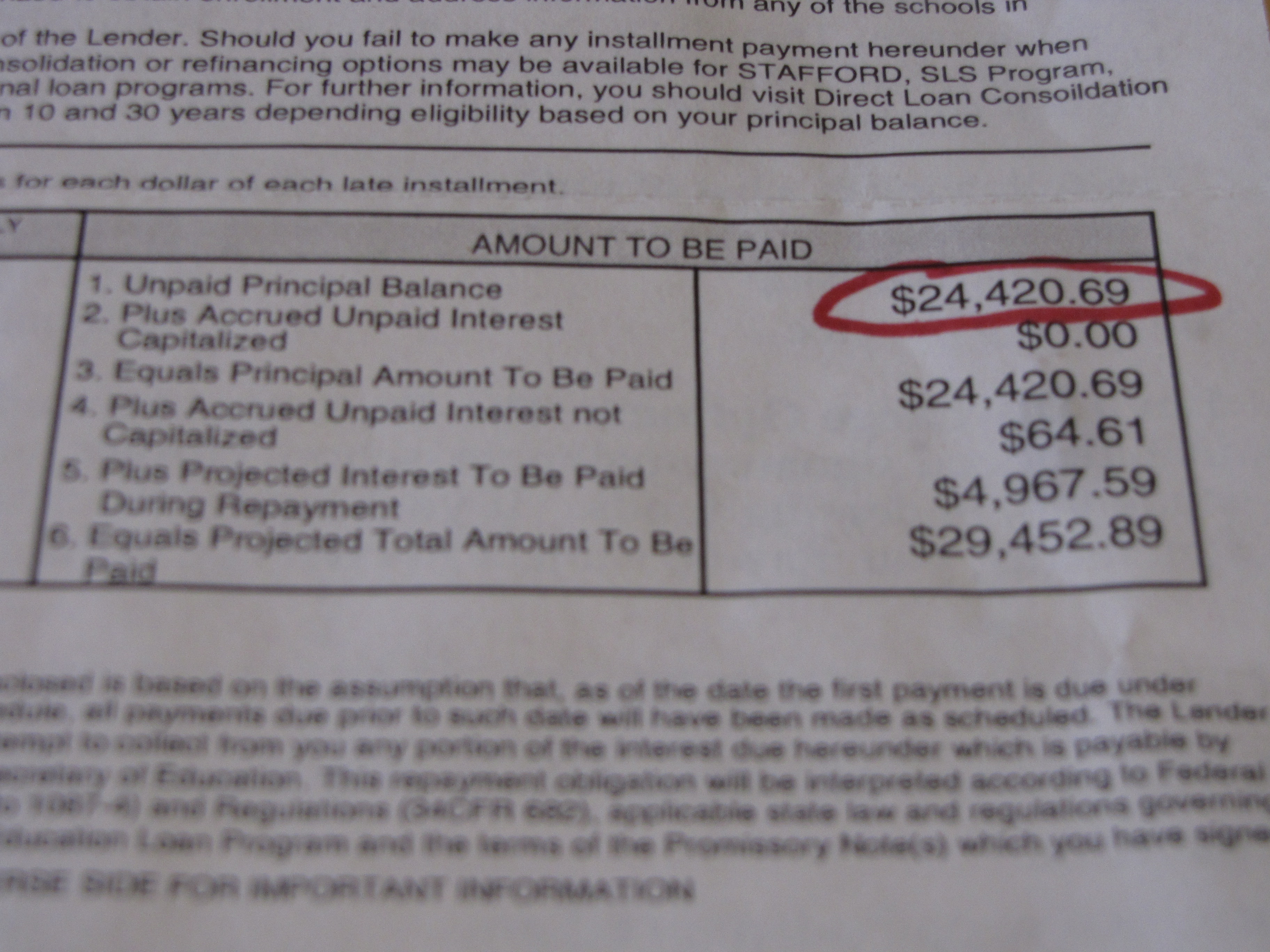
This is the bill for my bachelor’s degree. Since we’d had it deferred until after I finished my master’s, we didn’t realize that when it started up again, it did NOT include both loans.

For two heady weeks, before we got the $20,000 note yesterday, he had it all planned out: pay off my $24,000 student loan (the old one—for my bachelor’s—but we made the mistake of thinking this included my master’s, too), then pay off his car, and finally, our home. By his calculations, he could have all this paid off by December, right before baby came.

Now, that won’t happen.

2013-05-30 21.48.37
This is the bill for my master’s degree. Needless to say, we were not excited to see this amount piled atop my already prodigious bachelor’s debt.

Don’t get me wrong. We’re hardly destitute or living month to month. My hubby’s investing skills and financial expertise have ensured abundance in eight years of marriage—still, we were so close to being out of debt.

For him, achieving financial freedom is about his number-one professional goal. And I love that about him—it makes me feel more secure—but sometimes that goal overshadows other areas of life. He’s not a worrier, but by golly, he does get so preoccupied about finances that he can be hard to talk to about anything else (to be fair, he’s often said the same about me and my writing).

His own family criticizes him for being “cheap”—for not always upgrading to the newest gadgets even though he could—and for giving our niece and nephew ten-year investment accounts, rather than cheap baubles for every birthday. However, what they don’t see is that these money-saving practices are what have allowed him to offer needy friends, family, and church members thousands and thousands (and thousands) of dollars of financial assistance over the years. They are also what will soon, perhaps within a few years, allow him to retire early and spend more than just nights and weekends with his family.

Call me cheap, too, but if you ask me, living frugally is just living smart. And for the comfortable, worry-free lifestyle my husband’s habits have offered me—a lifestyle better than I ever enjoyed before him—I am eternally grateful.

I just wish he didn’t worry so much.

I hate to see him, like I did yesterday, slumped over in his seat, head in hands, seeming bereft, as if all his dreams had been shattered. Worst of all, I hate feeling like I caused this.

Yesterday, seeing him like that I started to feel bad for getting my master’s degree, especially since now I’m not exactly “using” it. Of course, I feel I have used it in writing The Hidden Half of the Gospel—but when we’re talking about paying off a $20,000 bill, that book will only cover one-fourth to one-third of the cost.

I felt so bad I even apologized for being such an expensive wife (even if I don’t fit the usual profile of excessive shopper). All I could do to reassure him was to say, “Honey, look at all the good in our lives. Think of our wonderful marriage, and our baby coming. And even if you don’t see it right now, I do see benefit in the master’s because it gives me more and better job security if something should ever happen.”

He didn’t look convinced.

“Do you want me to look for a job now?” I tried next, clutching at straws.

He looked at me as if I were crazy.

“You’re pregnant. No.” Sigh. “Just keep doing what you’re doing. And write a bestseller.”

When I saw a wry smile playing at the corners of his lips, I sighed, too. With relief. I don’t want to take a typical job, not right now. But I think I would be willing to look if he wanted me to. At least, I hope I love him that much—as much as he obviously loves me.

Now, because of his pristine financial habits—and because he makes things sound worse than they are—I get to travel a mere ten feet to my work desk, and write about how we first met for my memoir—AKA my gestating bestseller:) Today, I’m sort of thankful, actually, that this little $20,000 “setback” has provided the perfect moment for me to remember exactly why I love this man.


Finding “My People”

Do you feel like you’ve found “your people?” Once in graduate school, one of my professors took offense to some writer who had bashed Christians, saying, “Hey, those are my people!”

I heard her use this phrase almost two years ago and didn’t think much of it then (Christians gets bashed all the time in graduate school), but it came back to me this past Sunday as I sat in a circle with five other women, all writers, all of whom were sharing fragments of their memoir with the group.

This was my first time meeting with this particular writers’ group—or any writers’ group, for that matter—but soon it became clear to me that the group was about much more than just moving our careers forward. It was about sharing stories we’d been bottling for years, it was about giving one another permission to be real, and it was about being validated for said scary task.

During those two hours, I listened to one woman’s struggle to make sense of the sexual abuse in her family; another’s decision to move forward with her education after years of being squelched by a verbally abusive parent; still another’s first attempt at writing the “good memories” for a wounded daughter; and another’s chronicle of life after leaving her third husband. The piece I brought that day was the (rough) first scene of my memoir: the day I emerged from the mental hospital, numb to joy, resigned to life, yet stripped of all expectation and desire.

Some of the feedback I got: “I can feel your numbness.” “The stripping of humanity that comes from staying in a place like this is clear.” “Your point about emotional pain and invisibility hits home.” “I can identify.”

I liked the last comment best, because it came from every single woman at the table. As, one by one, the women admitted that they, too, had found themselves at this place in life before (either literally or figuratively), I felt a sense of relief washing over me. Although I’d known these women less than two hours, it was a relief that they already knew more about me than so many of my acquaintances. That day I also gained strength to continue with what is sometimes an emotionally difficult project, and validation that my project actually matters. Best of all, by the end of the session, I felt I could finally say, “I’ve found my people.”

Of course, like my graduate professor, I could certainly say the same of my church family. I could also truthfully say it of my family family. But somehow, connecting with people because of shared religious convictions or shared bloodlines isn’t the same as connecting to people emotionally. Because rather than falling by default into a category, this type of writing, and this type of realness, is a choice we make—even a dream we share.

Why did I ever wait to join a writers’ group?


The Pregnant Post

photo-1
This is the picture we sent to our family members to break the news, but it took our seventeen-year-old niece to get it. Everyone else thought we were making a statement about what we were cooking that night!

I myself don’t like pregnant posts—which is why I won’t keep you in suspense. Yes. I am. A post about pregnancy is okay, as long as it doesn’t resort to clichés, so I’ll opt away from discussing the obvious facts of my developing condition.

I do like irony, so I’ll point out that just a few weeks ago when I posted I May Be Childless (At Least my House is Messy), I really wasn’t. But best of all, I love answered prayers, so I’ll give you these lines from my prayer journal on March 31st:

“I know I should be happy in whatever circumstance I’m in—but I guess I’d like to ask for a breakthrough of some sort: a pregnancy, a job, an acceptance letter. I feel like you work through breakthroughs, and events. You also work through hard times and drought. So any of the above could happen, or not.”

When I wrote that, I was just getting back from my Minnesota visit, and my mother-in-law had asked me if I was glad to be back, and I had lied and said yes.

Truth was, I wasn’t excited about coming back to a house that was empty most hours of the day.

I also wrote that I’d figured out why I was having such an aversion to doing housework lately: It was added “alone time” to my “already lone occupation of writing.” It used to be “alone time after people time.” Now it was “more alone time after alone time.”

At the end of that entry, I recorded that I’d gotten on my knees and heard God say, “You are worried and troubled about many things, but only one thing is needful.” So I decided to rededicate myself to the Lord, again (you’ll notice I have to do that a lot—like, daily), trusting that He’d work out the rest of the details.

Over the next few weeks, I recorded hearing God direct me to write…to write about some frustrations I’d been having in certain relationships…write to be an agent of change…use my swirling emotions as fuel…and I did…until I discovered I had a solid draft of that book I’ve been wanting to publish before thirty.

As to my hatred of housework, I heard God telling me I needed an attitude adjustment. He told me I needed to “plan to stay,” as in Jeremiah 23. I needed to trust that God had put me here, to nest, with or without children. Needed to get over my looking backwards to my past. If there wasn’t going to be children, I still needed to get my house ready…for friends and others we can minister to in our home.

Next to family time, the best memories I have in my home are those times when we held our small group Bible study and our Straight 2 the Heart prayer group. God reminded me that my ministry to others (and the growing of relationships) wasn’t done. I’d been blessed with a beautiful home, and no matter the status of our fertility, the house would be used, if I didn’t get in the way.

In a nutshell, God told me, “Write, and be at home. Get comfortable at home.”

That was also the period when He opened my eyes to see all the Friends in High Places I’ve had all along.

When I realized, on May 4, that I was guilty of the sin of ungratefulness (and a bad attitude), I prayed this verse I found in Micah 7:9—“I will be patient as the Lord punishes me, for I have sinned against Him. [My punishment, I felt, was extreme feelings of guilt and uncertainty that were literally upsetting my stomach—maybe it had something to do with pregnancy, too.] But after that He will take up my case and punish my enemies for all the evil they have done to me. The Lord will bring me out of my darkness into the light, and I will see His righteousness.”

I did write. I did get more comfortable at home during those weeks. I decided, “I can do this.” And then, when I wasn’t even looking for it, last week I got the unexpected news: “You’re pregnant.”

Yes, God works both through breakthroughs, and through wilderness experiences. And even though it’s easy to say when things are going well, I’d still like to quote the Apostle Paul to say this: “I have learned in whatever situation I am to be content” (Phil. 4:11). If you’re going through a dark situation today, remember it’s temporary—and the morning light may be just about to break!

The Writing Life

It’s one thing to tell people you like to write. It’s another thing entirely to tell them you’re a “writer.” To illustrate, recently I’ve listed “freelance writer” on my resume. However, I still have trouble telling people that’s what I am. Apparently I’m somewhat embarrassed admitting to a lifestyle that has historically been the butt of jokes, scorn, and ridicule.

What the Stereotypes Say
snoopytyping

Writers themselves (ourselves?) make fun of the profession and perpetuate the stereotypes. You know, those tropes about sitting in a secluded place drinking coffee, frittering away time, professing to be “doing” something, but not getting much done at all. Sadly, even if we’re doing stuff, a lot of us hardly make enough money at it to pay the bills. (I’m certainly not there yet!)

Why We Do It

We live a life of poverty to continue a craft that may never yield monetary gain. Yes, it’s true: We could make more mowing lawns or babysitting. And yet, writers will tell you, we continue writing because we “love” it.

How We Do It—For “Fun”

A lot of writers have had to sneak writing into their lives by logging late night or early morning hours. Was it William Faulkner, or  Don Delillo (or maybe even Fitzgerald?), who wrote while manning his position as a night guard in a boiler room? I remember that from one of my lit. classes, but regardless of who it was, the point is that writing takes sacrifice. And I love the story of Samuel Johnson writing Rasselas in “one week of evenings” because he had to pay his mother’s health bills. Interesting that he knew he’d make money at his craft—but maybe times were kinder to writers in the eighteenth century.

Indeed, today some professionals advise that the only way to find enough time is to “steal it” from something else in your life (I remember reading this tidbit in Writer’s Market). But maybe this advice is mainly for those who have to support themselves and their families with other means.

How We Do It—For a Job

For my part, when I taught fulltime, I could never take that advice. Summer breaks were about the only time I could devote to writing—because the rest of the time I just didn’t have the energy (I guess starting a Master’s degree didn’t help).

But maybe the reason I couldn’t write while also holding a separate, fulltime job has more to do with my personality than anything else. Unlike other “side” writers, I found I just couldn’t multitask  without going a little crazy. I’m an all “all or nothing” kind of a gal, so writing sandwiched in between fulltime work responsibilities and family time didn’t work.

For me, then, the only solution was to make writing my fulltime job.

Lucky, blessed me! The Lord has made this possible. Sometimes I actually feel guilty that I can stay home and write. That I can sleep in until whenever (though I try to be up by 6:30 or 7). I feel guilty that I can have a leisurely breakfast and devotional—even exercise if I want—before starting “work” for the day. But, not one to make light of a divine gift, that is what I do most days…and I love it!

Some Differences Between Writing and Other Jobs

I don’t hurry through the mornings like I did when working a “real” job. First, I ground myself in Scripture and prayer and quiet time. Then, I’m ready to write. A pretty cushy life, some would say.

Yes, it is. But I think it has to be this way if I, Lindsey Gendke, hope to produce significantly and consistently. My writing, I like to think, is not top-of-the-head, hurried, or flippant. It is reflective. It grows out of being a slow-moving, reflective person, and also from cultivating slow-moving and reflective habits.

For me

Writing is cultivating quiet, and spending time alone.

Writing is thinking and reflecting, moving slowly and deliberately through life, and refusing busyness and activity just for activity’s sake.

Writing is seeing and saying what non-writers miss.

Writing is shaping reality and fueling imagination.

Writing is intimate—asking the reader to listen, without speaking.

Writing says what one could never otherwise say without interruption.

Writing is becoming bold in way that is impossible when speaking.

Writing is a lifestyle.

I know most don’t have the opportunity to live such a life, and that’s okay. My hope is just maybe, through reading my writing, others can begin to slow down and reflect, just a little more. In today’s hyper-fast-paced world, I don’t see how that could be a bad thing.

To the writers out there: Do you find that writing is more like a lifestyle, or a side activity? Can the two ever really be separated?

*Note: I got my title from Annie Dillard’s The Writing Life, in case you’re interested in a good book on this topic.