Today is Sam’s first birthday, so I’m pausing my focus on New Year’s goals to take a look back at one significant way Sam changed my life this past year: my relationships with my in-laws.
This past year I connected with my husband’s family more than I ever have. I think I even started referring to them as my family. And I finally felt at home in Texas. Ironic, right? (If you missed it, we recently moved to Missouri.)
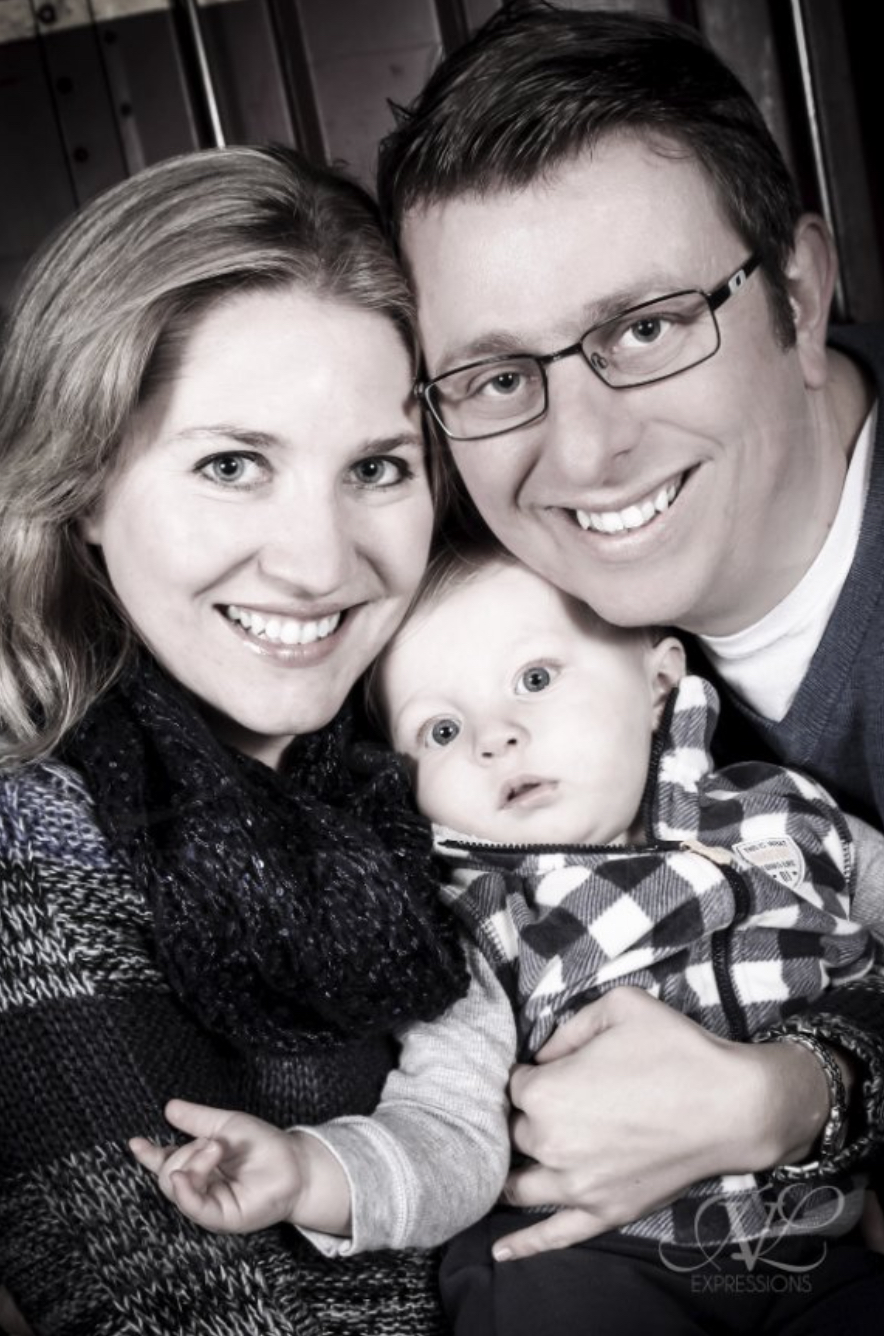
First Attempt at a Family Photo, November 2014
To understand the change, you have to know that I joined my husband’s boisterous, fun-loving family nearly ten years ago…at a time when I was dejected, depressed, and not good at opening up to people. I was sad and quiet, and the Gendkes were happy and loud. At family gatherings, I felt like an outsider. I thought I didn’t belong in this close-knit family where kids were among the top topics of conversation.
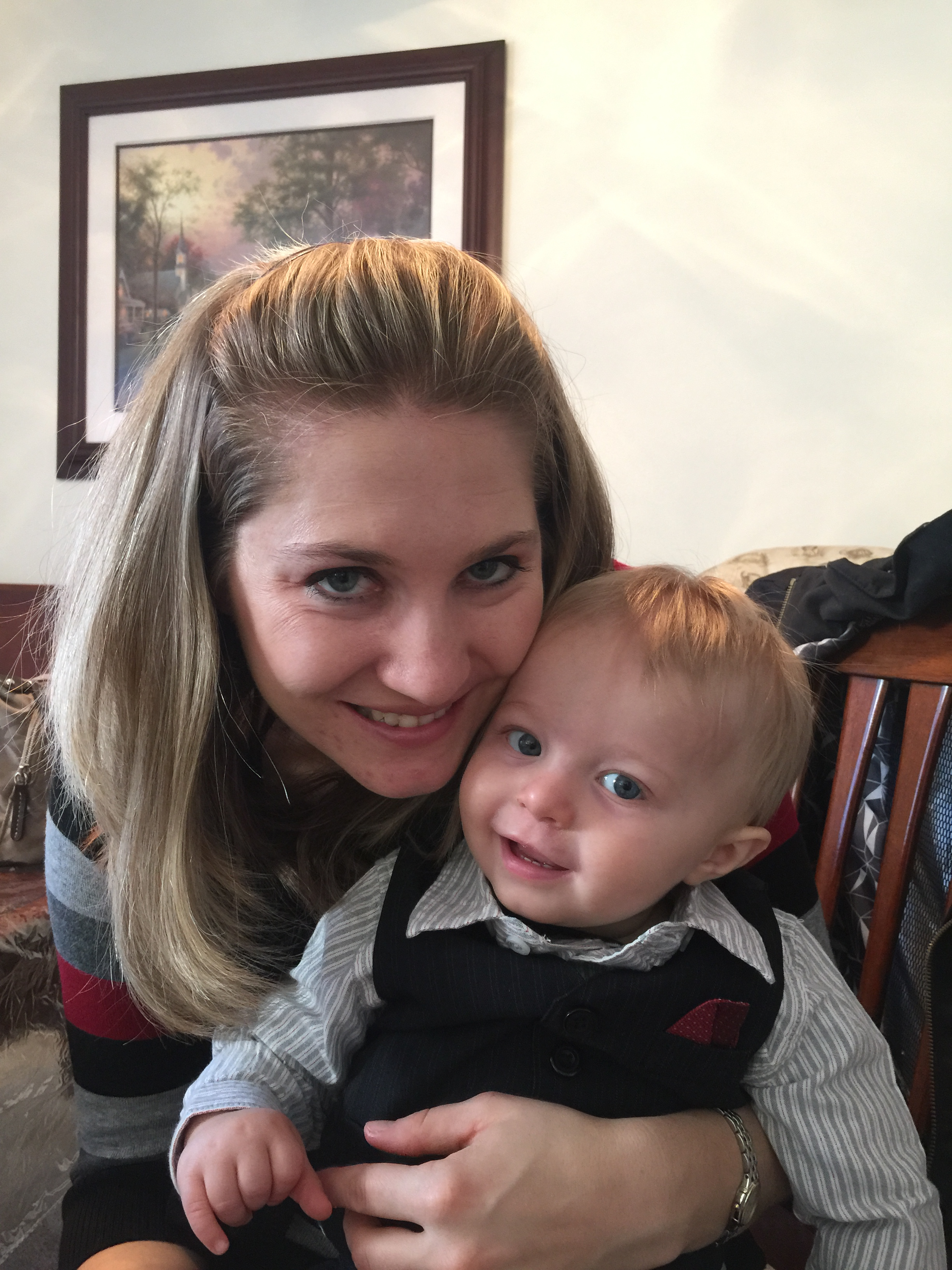
Sam and “Tia” (Auntie Joanna), the night before we left Texas
Over the years as God healed certain parts of my heart, I inserted my voice more, but it wasn’t until I had Sam that I felt I could really join the conversation. When Sam came along, and even as he grew in my womb, I saw my in-laws, especially my mother- and sisters-in law, open up in ways I hadn’t seen before. And this allowed me to open my heart to them.
Sam with Aunt Deb
Sister-in-law Deb orchestrated a beautiful baby shower and lovingly made the only wall decorations that hang in Sam’s room. Mother-in-law Margie dropped off gifts—picture frames, Christmas ornaments, a night-light—in anticipation of our new baby. A few days before my due date, sister-in-law Joanna called to ask if there was anything I needed her to pick up at Target. After Sam’s birth, the aunties alternated gifting baby clothes and toys they “couldn’t resist.”
Sam and “Tio” (Uncle Brady)
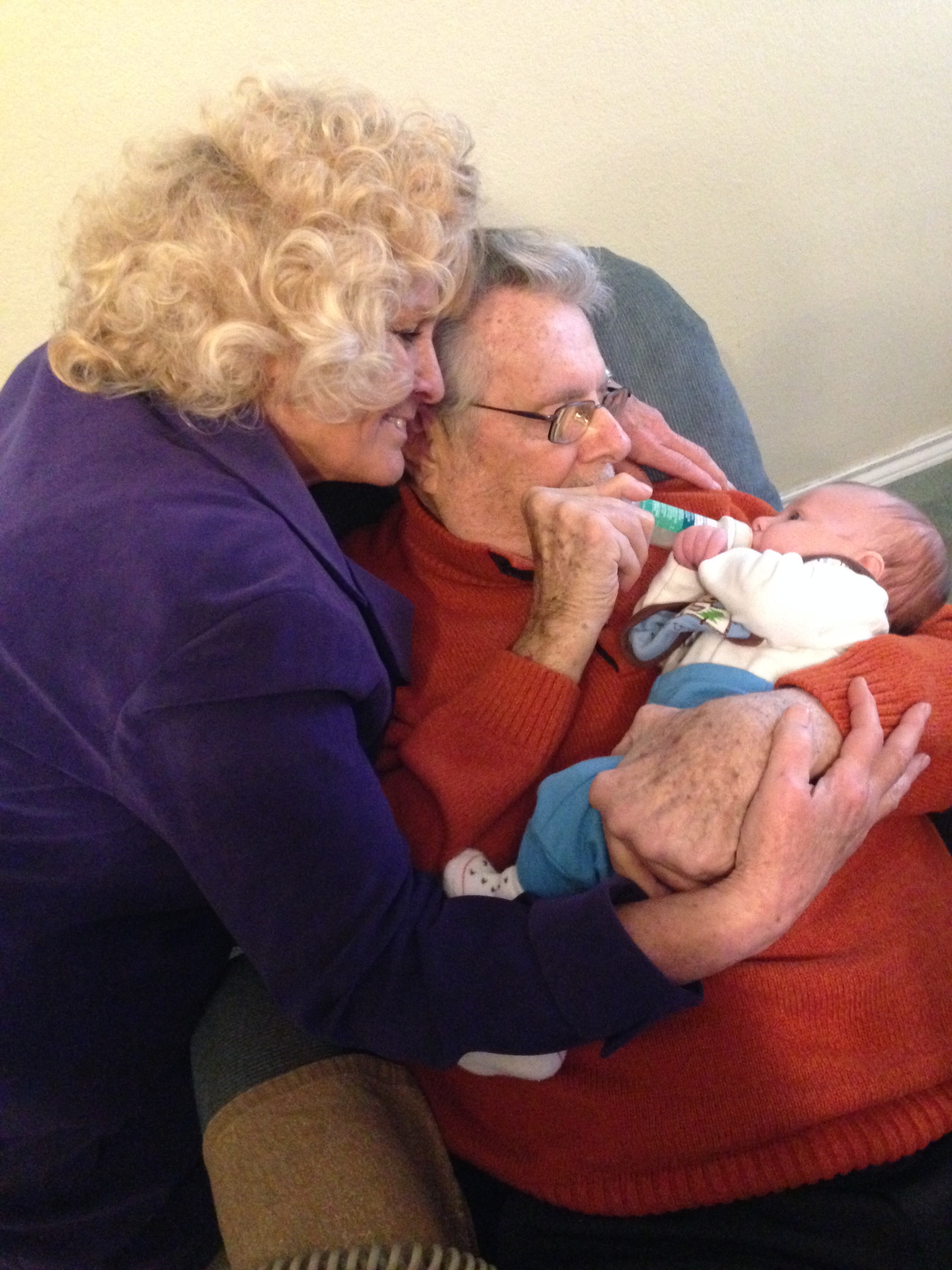
Sam’s uncles, Brady and Bo, even stepped up. When Sam was two months old, pediatric nurse Brady wowed Buc and me with an expert football hold and showed us how to pull the bottle in and out to start a baby sucking again when he’s stopped. Bo would hold Sam for long periods of time in those early months, Sam napping in his arms, until the day Sam decided to cry at the first sight of Bo (sorry, Bo!). Though often chair bound, my father-in-law, “Pop,” even found ways to bond with Sam.
Sam with Uncle “Bo-bo”
I can’t express how these precious memories overwhelm my heart. And that’s to say nothing of all the times Joanna, Margie, or Deb babysat for me. That’s to say nothing of how my nieces and nephew attached to Sam, or the many times a family member stopped over at just the right time—usually Sam’s five’o clock meltdown—so I could make supper and take a few deep breaths. Oh yeah, and I’m not sure this move to Missouri would’ve gone off without their help.
Sam with “Nanny and Poppy” ( Margie and Mike)
I credit my mother- and father in-law, Mike and Margie, for building something beautiful with the Gendke family. Though the Gendkes’ Southern/Italian customs, loud conversations, food choices and pastimes did not always translate to the liking of this quiet Northern girl, the love of this family, and its strong bond, has come through loud and clear. Especially now that I have a child.
(Not to leave out my own side of the family!) Sam with Grandpa Daryl (my dad). My own parents and step-parents have shown the same love to Sam that the Gendkes have each time they’ve had the chance…but living 1,000 miles away for his first year, they had far fewer chances. Ironically, now in St. Louis, we are in the middle of our two families, so we hope to get to see my side more often.
A baby provides a fresh start, a clean slate, for people to grab onto. Maybe adults don’t feel comfortable exposing their true feelings to other adults, who could reject them, or not reciprocate. But a baby is different. A baby needs love, feeds on love, and gives love without restraint (unless you’re currently Uncle Bo. Sorry again, Bo).
Sam with Grandma Su (my mom)
I understand now, like I didn’t before, that to show love to a person’s child is to show love to that person. I regret that I have not been very good about showing love to my nieces, nephew, and siblings in the past. But until Sam, I wasn’t a kid person, I thought. I wasn’t a family person, I thought.
Sam with Grandma Juanita (my step-mom)
During this past year, Sam (along with his uncles, aunts, cousins, and grandparents) has taught me that all human beings have it wired into them to be “baby people,” and “family people.” That doesn’t mean we all need to have babies. Certainly, it is not the best option for all.
Sam and Me, ready to visit a new church
But after my first year of parenting, I’m glad I’ve gotten this chance. Though life has definitely become more complicated, my relationships have been enriched—not only my relationship with my husband (my co-worker in this awesome job), but also my relationships with extended family. And then, there is my precious Sam. Adorable. Irreplaceable. Heaven sent.
“Duck” was Sam’s second word, second only to “Mom.”
Happy one-year, dear Sam! And thank you, Family, for making the first year of Sam’s life great. I’m not sure I would have survived (at least with my sanity intact) without you. Please visit often!
Three things. That’s all. I asked God what he wanted me to focus on this new year, and this week I distinctly felt impressed with three things.
1. Focus on my Family.
2. Make healthy choices for myself and make healthy food for my family.
3. Get pregnant in 2015 with my second, and final, child (God willing).
The first seems easy, the second harder, and the third, terrifying.
Part of the Journey
As you can read in my archives, I’ve been on a journey to embracing motherhood, and the life of self-sacrifice it requires. But this is not an easy journey. I go back and forth in my resolve. I still ask God every day to give me his love and spirit of sacrifice to serve my husband and son in the ways they need me.
It’s discouraging to me that I could want kids and family so much, yet still wish for days of single childlessness. Part of the problem is my selfish nature. But the other part is an attack.
The enemy buffets me with fear about possible ways my family could disintegrate. Investing time in people doesn’t feel as safe as investing time in self-advancement, or career-advancement. I’ve blogged about this before.
But God is helping me to face these fears and combat my selfishness; this year, through three resolutions:
Make my family my mission field.
God is teaching me it is honorable to devote my life (for a season) to raising children, and raising them in the fear of God. He tells me he knows my selfish heart, and teaches me that what the world honors is not what he honors (Luke 16:15). And he assures me that even if something happened to my family, this time of self-sacrifice would not be wasted. Through marriage and parenthood, God is refining my character, teaching me to serve his children (that includes my own, and humanity in general), and helping me develop vital life skills. Like cooking.
Cook healthier food for my family.
I don’t have much patience for cooking. I’m a simple girl who likes a simple life–some blank pages, a pen, and a good book–so I’m glad God has shown me what’s vital and what’s not. Being a Pinterest mom is not vital (though the world might say so). My family can do without scrapbooking. They can do without elaborate home decorating. But they can’t do without good food, because food begets life and health. So, this year, although I don’t feel the need or want for any new hobbies (you should see my stack of unread books), cooking is my new “hobby.” No matter whether I always have family around me or not, I’ll always need to eat, right? But as for having family around me, I really would prefer it, and that’s where resolution 3 comes in.
Get pregnant in 2015.
When we finally decided to have kids eight years into our marriage, we decided on the number two. We didn’t want an only child, and two seemed like plenty: one for each parent to corral. As it turns out, I’d prefer to have the kid/teen/young adult periods without the baby stages. What can I say? I just don’t resonate with the woman who wrote: “I’m afraid to stop having babies.” With that the case, I figure it’s best to get on with the baby-making show, get past these tough years, and then enjoy my children who, as a side benefit, will be close enough in age to play together. This is all God willing, of course. In my limited understanding, this two-kid plan seems best for my family and our situation, but I realize it’s totally up to God whether or not we will conceive again. All we can do is try, wait, and see! (Hold on! We are not trying quite yet. There is a lot of 2015 left to go.)
So there we are. Three things in 2015. The first seems easy, the second harder, and the third, terrifying. Good thing God has recently reminded me of this promise:
Now all glory to God, who is able, through his mighty power at work within us, to accomplish infinitely more than we might ask or think (Eph. 3:20).
I claimed this promise yesterday, while clutching an”impossible” to-do list. But as the day wore on, I checked off thing after thing–phone calls to pediatricians and pharmacies, phone calls to friends, a batch of healthy cookies, minestrone soup, some writing time, a trip to the grocery store, and clean dishes. God delivered on his promise! And I know he will again.
Several months ago I prayed: “Something about our lives and our home feels broken; we need a change.” I haven’t posted for the last month because, in that time, my husband got a job in St. Louis that we could not at first make public; and we have been busy moving. Now that we are here (as of one week), I finally have some room to exhale, rejoice, and explain how this move answered my prayer.
When I prayed my prayer a few months ago, our lives looked pretty perfect. Buc had a good job; we had a nice house, a good church family, and a beautiful baby; and I got to stay home with that baby. But there was definitely a problem: Our family of three wasn’t “gelling” like I knew we should. We weren’t bonding and creating traditions and just “being a family” like I knew God intended.
Details like Buc’s early commute, Sam’s erratic sleep patterns, and Buc’s arrival home around Sam’s bedtime made Daddy-and-Baby time nearly impossible on weekdays. These facts also made it hard for us to eat meals together or have family outings. And for those months when Sam was waking through the night, and waking at 4 and 5 and 6 a.m. for the day, I was plumb exhausted. I had nothing left to give.
As I looked around our home, saw our neglected dogs, overgrown flowerbeds, unused backyard, and the garden Buc had failed to plant, I realized Buc had little left to give either. We were just “getting by.” We didn’t have energy to really enjoy life, and enjoy our baby, together.
You might say there was nothing deeply wrong with our setup; they were just logistical things keeping us from family time. But I would be careful about saying that. A lot of wise people have observed that it’s the little things in life—the daily patterns and routines—that make up the whole life. If we’re not careful about those little patterns that are just a degree or two off target, we will soon find ourselves far from where we originally intended to be.
Originally, we decided to have a baby because we wanted to grow our family; we wanted to create new traditions and spend time together and just be a unit. So the fact that I was doing most of this baby stage by myself, without my husband, was sort of devastating. I found myself growing resentful of my baby and even my husband, and I didn’t want to resent them. So, in addition to complaining at home a whole lot (sorry honey), I prayed.
As I prayed about our brokenness at home, Buc felt things breaking work. Situations pushed him to seek employment with another company. And he started praying too. He set forth a number of conditions that God would have to answer in order for him to move his family over 600 miles from home. Guess what? God answered every single one.
So while our church and Texas family members scratched their heads over why we were leaving such a nice life, I sighed with relief. No more breakfasts alone. No more days of waiting until 6 p.m. to talk to my husband. Perhaps some lunches together (we now live within ten minutes of Buc’s work). Perhaps some suppers out with the baby. No more yard upkeep, at least while we remain in the townhome we’ve rented. No more dogs to take care of, for now (two kind families at our Texas church adopted Bill and Ted). A much needed break from church positions that were gobbling up precious weeknights. Just…a much needed retreat from a life that had grown too busy and clumsy to facilitate a new family learning to “be a family.”
No, I’m not happy to have left all the wonderful family, church members, and friends I’ve gained in Texas over ten years, but I know this is God’s plan for us, for now. And for that, I give thanks. For me, the New Year ushers in an exciting period of growth and change, and hopefully a well maintained blog so I can document what God is doing in our little family of three, and stay connected with my friends and extended family. Happy New Year, dear readers!
In our attempts to be great wives, moms, and friends, many of us women during the holidays stress over gifting, baking, decorating, you name it. But might I suggest we funnel some of that energy into a higher calling?
I’m thinking in a mom role, and an aunt role. The aunt role is really shouting at me this year, because I have three teenage nieces who are entering into some exciting and stressful times. (I’ll be vague, to protect the innocent). I get to hear about their hopes, dreams, likes, dislikes, and problems. A few times I’ve been privileged to hear information not even the parents get. Weighty, honored position.
As one who acutely remembers the tumult of the teen years, I know what these girls need for Christmas: wisdom. “Wisdom is the principal thing,” King Solomon wrote, “therefore get wisdom” (Prov. 4:7), and “How much better to get wisdom than gold, to get insight rather than silver!” (Prov. 16:16). If only wisdom were as easy to wrap as a purse, sweater, or boy band poster!
With the exception of some big-ticket items, I don’t remember what I got for Christmas when I was 16, 17, 18. But I remember feeling lost in those years, wishing for some anchors of truth to hold onto, some guiding light to show me where to step. Okay, maybe that’s not what I was looking for, but hindsight is 20/20, and I see now that that’s what I should have been looking for. Too bad I was full of myself back then and didn’t know what was best for me—as evidenced by my blind, puppy-dog love for the wrong kinds of guys and my choice of a first college because it had a pretty campus (no joke). All of which relationships/college attempts lasted less than four months. Hoo, boy.
How I wish I could’ve seen the long range. But I couldn’t. I could only see what was right in front of me. I didn’t realize feelings should be merely indicators, not dictators (that’s some wisdom from author Lysa Terkeurst), that I should base my decisions on wisdom, not feelings. If only I’d had wisdom back then. I’m not sure anyone has much of it until they leave home, though.
Sometimes it takes being forced out into the world, or blindly stepping out—through marriage, a move, a job—to get our first taste of worldly wisdom, or life experience. At one level, wisdom can only come from life experience. We can try to impart wisdom, but without life experience, our audience may not “get” the wisdom.
I can talk all the wisdom I want to my sweet nieces now, as can their mothers and grandmothers, but the truth is, they might not be ready to listen. They might make bad choices anyway. Then what do we do?
We pray. We love them. We give them all the tools we have, enforcing consequences if it’s our place to do so, and then we must rest in the fact that, at some point—maybe a hasty marriage? A job? A move?—they will get the wisdom of life experience. And hopefully such wisdom will drive them to also seek God’s wisdom.
“Cute Cheerful Child Carrying Stack Of Books” at freedigitalphotos.net
Maybe one day when they have that life experience, they will look back and remember some of what we said to them. More likely, they will remember our actions. Did they see us seeking wisdom? Committing our time to studying God’s word, helping others? Do they remember us sitting down to listen to them? Do they remember a calm assurance because we know God and we can trust him without trying to figure it out ourselves?
Yelling, fretting, worrying, and demanding that others “must do this” doesn’t command much respect for the God we propose to serve. If we have true wisdom, which only starts when we place God in his rightful place in our lives (that’s first place), we can afford to be calm in all situations (save burning buildings, suicide attempts, and the like). We don’t have to try to force anyone to do anything, because we know God’s rightful place, and our rightful place. That is, we know that only God can change a heart, or a life direction. All we can do is plant seeds.
To bring this post back to where it began, why not use the holiday season to plant seeds of wisdom in someone who has shown some trust in you? And if you need wisdom yourself, ask God (James 1:5), and read or reread Proverbs.
In this season and in the upcoming year, I pray that God uses me to plant seeds of wisdom in my sphere of influence—I hope you’ll do the same.
Note: this post was inspired by my reading of the book of Proverbs, recent Family Life Today broadcasts dealing with the topic of Christmas, and talking to my lovely nieces:)
“I don’t watch TV and don’t feel like I waste my time. So why don’t I always have time for God? What can I cut out of my day to spend more time with Him?”
I asked my husband this question last weekend during a heart to heart about putting God back at the center of our lives. Buc admitted he needed to cut down on media use, but I couldn’t put my finger on any “time-wasters” in my day; everything I did seemed useful, even needful.
“I know what your problem is.” Buc answered. “You’re a perfectionist. You might do all good things, but it takes you three times as long as most people. So you do everything well, but you don’t get much done.”
Ugh. He’s told me this before. And I guess I haven’t truly listened. But I’m finally starting to, because God has stepped in to send the message home. Over the last few weeks (during which I haven’t posted because I didn’t have time to write a “good enough” post) God has been teaching me that his idea of perfection is not the same as mine.
My idea of perfection looks something like this:
I should have morning worship every day
I should be a good and responsive mother to Sam (whatever that means while he is without language and can’t tell me what he wants/needs)
I should exercise vigorously every day
I should get to eat at least one meal with my husband (two would be better)
Those meals should be mostly healthy
I should get 8 hours of sleep every night
I should be writing every day
I should be blogging regularly
I should be involved at church
I should be preparing personalized Christmas gifts on Shutterfly (or similar sites) for my family
I should keep in touch with all my friends on a regular basis
I should keep my house clean–or, at the very least, should be able to get the dishes done at the end of every day
I should have clean hair every day
My daily reality is far from my daily “wish list.” And understandably; it’s an impossible list. Over and over in the past weeks God has been talking to me about my impossible standards, trying to redirect them to his standard. He says his “yoke is easy” and his “burden is light” (Matt. 11:28-30). That sounds better than the crushing yoke I’ve created for myself.
So what is God’s definition of perfection? I’m working on piecing together an imperfect definition, based on some verses he has directed me to lately:
“It is God who arms me with strength and makes my way perfect.” (Ps. 18:32, NIV)
“…count it all joy when you fall into various trials, knowing that the testing of your faith produces patience.But let patience have itsperfect work, that you may be perfect and complete, lacking nothing.” (James 1:2-4, NKJV)
“…from a child thou hast known the holy scriptures, which are able to make thee wise unto salvation through faith which is in Christ Jesus. All scripture is given by inspiration of God, and is profitable for doctrine, for reproof, for correction, for instruction in righteousness: That the (wo)man of God may be perfect, thoroughly furnished unto all good works.” (2 Tim. 3:15-17, KJV)
From these verses, I know there is nothing I can do to be “perfect”; it is only through God and his Word that I can aspire to “perfection.” And what is godly perfection? From James I am starting to understand that I can’t measure my “perfection” by my outward appearance; it has to do with my heart and my state of mind. Also, James tells me the road to becoming “perfect” is messy, paved with trials; and Timothy tells me that it may take some “reproof” and “correction” before I get there.
As I ponder and pray over these lessons from God and his Word, I am becoming more okay with days that don’t live up to my expectations. Good rest and good hygiene and healthy meals and quality time with my husband and robust writing production and everything else on my list would be really nice, but we live in an imperfect world–so these things won’t happen every day. So I have to become okay with that; I have to learn to embrace “imperfection” according to how I define imperfection (my shallow, outward definition), and embrace the “process of perfection” God has designed.
My house might be a mess, my hair might be a bit greasy, and it may be a month or more between blog posts…but that’s okay…as long as my connection with God is still intact.
In my imperfect world, maybe all I can do is a five-minute Bible study, or fifty distracted prayers throughout the day while chasing down a runway baby. Maybe I get blessed with an hour of “free” time in which to crack open my Bible commentaries. Maybe I only get to read a few scriptures on my index cards before motherhood calls.
The important thing is to not let the possibility of an “imperfect” Bible study or prayer session keep me from having that Bible study or prayer session. God has told me this recently. He told me, “Lindsey, ALL scripture is profitable for you…so even if you only get five minutes, take them.” And through a new favorite author, Lysa Terkeurst, he has also told me, “Your job is obedience; my job is results” (from Unglued: Making Wise Choices in the Midst of Raw Emotions).
Okay, God. I will embrace imperfection, as long as you keep helping me (and I know you will). As long you keep “perfecting” me according to your will, I will keep loosening my grip on my own imperfect ideas of perfection.
Messy house, greasy hair, and hasty blog post, here I come! This is my day, and that’s okay.
Most people agree that “Honesty is the best policy.” But as a writer and ministry leader who has made honesty her central message and MO, I wonder if it’s possible to sometimes be “too honest.” Not a few times as I’ve posted unflattering, embarrassing, content, I’ve wondered: am I hurting my influence by being so raw and real? After people read this, will they still look up to me?
I’ve found that honesty, at the level I go, can be hard to find in Christian writers, teachers, and leaders. Many I’ve observed in this group like to use honest illustrations and anecdotes…of other people’s struggles. Or, if the stories are first-person, they tend to remain on a safe, surface level. I once read an article by a Christian who used the analogy of scrubbing her floor to illustrate the filthiness in her heart. But she made no mention of what, exactly, was in her heart. “Scrubbing my dirty floor made me think of how God has to scrub my heart clean of sin. I thought, how much better if I kept it clean daily, instead of letting it all pile up?”
Illustrations of the gospel like this one don’t resonate with me. It’s not that they’re bad or untrue, it’s just that they’re so general, so vague so b-o-o-o-o-ring. Worst of all, illustrations like these are generally unhelpful when it comes to making real changes to behavior.
At the risk of assuming other humans think like I do, I would submit that humans long for authenticity. Especially when we’re talking about faith. If our sources of inspiration don’t hit close to home, addressing real issues we battle daily, they will be perceived as impotent, laughable, and even painful (because they minimize our struggles)—and they will be quickly abandoned.
That’s why I chose to be vulnerable in the memoir I wrote about discovering my new life in Christ.
It’s why I choose to be vulnerable almost every time I post on this blog.
I believe people are hungry for other people to relate to them—to say “I’ve been there, too. Look how screwed up I used to be, and how I still struggle sometimes. And yet, look what God was able to do with that mess!” I believe messages like this bring hope.
But what if I’m wrong? What if messages like this do the opposite? What if brutal honesty breeds distrust in God and disaffection for his “honest, messed-up followers?”
When leaders decide to be honest, this is a very real risk we take—the risk of our followers unsubscribing because we are not perfect.
I am willing to take this risk, not only for the reasons I listed above, but because a genuine Christian faith should not hinge on the words and deeds of any human being. (In other words, no one’s faith should hinge on me.) It should hinge on the person and words of Christ.
When Leaders Disappoint
A few years ago I was deeply disappointed when I learned that one of my spiritual heroes, Leo Schreven, committed suicide. Honestly, I felt betrayed and somewhat deceived by this man who previously appeared to “have it all together.” But I was able to weather this bad news by clinging to the truth that God is not, and never will be, totally represented by those claiming to be his followers. When we see good in Christians, that is from God. But when we see bad, that is from the enemy. We can’t lay every quality at Christ’s doorstep, because not every quality is from him.
I had the privilege of meeting Leo Schreven in 2010 when he conducted a seminar at my church. My husband (left) had met him many years before and introduced me to Leo’s preaching through a set of seminar tapes that made me eager to meet him.
One quality I do believe is of God is the quality of honestly engaging our struggles as we seek His healing. I think I would have still respected my deceased spiritual hero if, in life, he had openly admitted his struggles. Perhaps I would have respected him even more for choosing bravery, rather than bravado—even though his brave sharing would have painted him as a fallible, sinful, wounded human being.
I have to add something here, to be fair. A family member of Leo Schreven’s contacted me after reading my blog post about Leo’s suicide, to tell me that my “hero” had struggled with psychological problems the public knew nothing about. This family member wanted me to have a fair, truthful view of Leo. The truth included mental illness, and as a former sufferer of mental illness, I empathized with that. I understood that I had put Leo on a pedestal. I also understood that his mental state may have precluded him from the type of honesty to which I am calling spiritual leaders.
Given the state of Leo’s mental health, it’s actually amazing that he enjoyed the long and successful career as evangelist and motivational speaker that he did. I have had similar thoughts, of course, about the late Robin Williams. Leo and Robin show us that there are exceptions to the standard of honesty I am putting forth. The exception applies to those who are not able to help themselves, or not able to let God help them, because of mental illness, or a genuine medical problem. Maybe they keep up the façade for the public for awhile, but in the end, we find out they are not the leaders we wished them to be. But then again, no one in whom we place our trust is immune to struggles, and to sin.
The Bible says that all have sinned and fallen short of the glory of God, so we know every person, Christian or non, ministry leader or not, has a mix of good and bad.
No matter what we know to be true about our leaders, hopefully we can sift the good from the bad, and remember and respect them for their good qualities. Hopefully we can go on learning from them, no matter what their lives reveal. Sometimes we may observe the right course, other times the non-example. As long as we are looking up to human beings, we should expect both. And if we are the ones being looked up to, we must trust Christ to be the one shining example our audiences need; we must be okay with being imperfect representations of him.
That said, I believe that we in positions of trust—ministry leaders, Christian writers, etc.—should do our best to represent Christ, and this includes being honest about how God is working in our lives and transforming our sinful patterns. We should also be honest about “wilderness” times, times when we struggle with our faith…but we should do it wisely.
Guidelines for Christian Leaders
Here are two guidelines I’ve found helpful in my own writing and ministry that can help Christian leaders determine when, where, and how much to share.
freedigitalphotos.net
1) First, we should consider timing. You can read various sins and struggles of mine on this blog that occurred at various stages in my life. I blog about problems long past and problems of last week.
The safer type of post is the one about problems past. These problems are ones I have likely had victory over. They are problems that have yielded personal lessons I can use to teach others. These types of posts, and this type of sharing, should be an absolute “yes” for all ministry leaders. Why wouldn’t we use our stories of redemption as teaching tools? What better examples of the gospel could we present than the ones that have played out in our own lives?
The murky area is problems of the present. How much should Christian leaders share about present problems? Here, we have to be wise about audience.
2) Audience is the second consideration. Consider who will be reading or hearing your message. If you are a preacher and it is your job to inspire hope, then it may not be the best time to insert a struggle that you do not have victory over, or at least cannot yet talk about in a positive way.
Sure, there are times when you are on the upside of a struggle—you can see the end in sight, and you are pressing through for victory. That might be material for an inspiring message, and if you are comfortable exposing that yet-unresolved pain, go ahead.
But other times, pain and sin is too raw to project to a large, or public, audience. That’s when you need a small, confidential audience. I’m talking a few trusted friends or advisors who can help talk and pray you through your problems. When you have worked through those problems, then they may become appropriate large-group material. But don’t rush it. Getting outside voices mixed up in your current personal problems could hurt the healing process, and you need to get healthy first so you can go back to being your motivational self.
One caveat for leaders working through personal problems: if your challenge handicaps your ability to do ministry, whether because the emotions involved take too much energy, or because a sin you are fighting “disqualifies” you to be a role model at the time, then it’s probably the right time to step out of ministry, at least for awhile. In the case of Leo Schreven, I would have much preferred hearing the news that he had stepped out of leadership for awhile to tackle some personal problems to hearing that he had committed suicide. We are ultimately the most helpful to others when we get the help we need, first.
On This Blog, What You See Is What You Get
To apply my guidelines to myself, I routinely post about my current struggles, but many times I have chosen to remain silent until I have prayed over them and exposed them to Scripture and the wisdom and counsel of a few trusted others. By the time I post on an issue, I want it to be, if not totally resolved, at least on the path to resolution. I want others to look up to me, yes, but I am happy to admit that sometimes the best example I can give is: “Look, I’m broken here, but I’m looking to Christ. And if you feel the same way, you need to do the same.”
By posting my struggles, past or present, I risk losing my readers’ respect, but I also keep myself accountable to Christ for resolution. I put a problem out there (such as my sleep-deprived, desperate, witchy state), and I say, “Okay, this is the mess this sinful world, or sinful me, has created today. But now, how am I going to find Christ in the middle of it?” My mission is to find out how Christ will come through for me, and then to share my victory with my readers.
Indeed, if “Superwoman Christian” is the role model you want, look somewhere else. Because on this blog you’ll just encounter a broken girl trying to depend on Christ, and trying to work out her faith, in all things big and little. After all, as so many examples in the Bible show (Kind David and the 51st Psalm come right to mind), a Christian leader worth listening to is not someone who claims to be above sins and struggles, but someone who fully admits their weaknesses; has learned how to let Christ lead in the hard times; and can discern which, of all their life experiences, will be helpful for lifting others up.
Buc is out of town this week, which has given Sam and me extra bonding time. It has also made me wonder: What would this journey of motherhood look like without the support of a husband?
Pondering this question makes me sad. I have friends who are making this journey, some of them in silence. But I know there must be pain. Any time a baby comes into the world under questionable circumstances, there is the feeling of rejection, non-acceptance, loneliness, abandonment. I grew up in a home where a baby was born under such circumstances.
This event—or more accurately, the negative roots, or bad emotions and feelings (and the misguided marriage), that led up to my baby brother–led to my family members eventually turning against one another and the five of us living far apart, both emotionally and physically. Today we have reconciled to a great extent. Forgiveness, understanding, and grace have been extended, and we have made up for lost time by creating new happy memories. But not all can be restored.
When families come apart, there is un-restorable loss. I have my husband today, and I have Sam, and God has healed much of the childhood wound, but there is still a hole.
Anytime we lose a family member, or a family structure, we have holes. And while God can soothe them, and partially refill them, they will remain until we are restored to our heavenly image and the heavenly blueprint for families. Single parents, and kids with divorced parents, and kids who don’t know their parents, and kids who do not get to see their parents, was not God’s plan for the family. No matter how much family members may bother us at times, we are not complete without them. We miss them when they’re gone.
And yet, sometimes during the daily grind, I have thoughts about my husband like:
If he weren’t here, I could actually keep this house clean.
If I didn’t have to cook and clean for him, I could have more time to myself.
I would eat healthier without him around.
Terrible, right? But it gets worse. I’ve had similar thoughts about my baby. (Oh come on moms, you’ve had them, too.) Christian writer/speaker Lysa Terkuerst admitted to wishing her kids were older so she could finally get something done. A friend of mine has admitted that she often wants her husband out of the house so he will stop messing it up. These are just the kinds of thoughts we have, aren’t they? We are so quick to dismiss the blessings God has given us.
But as I look back at my childhood family, I don’t care about the little inconveniences we caused each other, such as my brother’s pranks on me, Dad’s boring cooking, Mom’s “too helpful” comments on my homework. I don’t much remember them, honestly. I just regret losing the support of a two-parent family, and family unity and harmony. I regret the hurtful words that flew between us and the barriers we erected.
If I were a single mother, I would have cleaner house, sure. I would have a better diet, I think. And I would have more free time to write and do my “own thing.” But these things are poor consolation prizes for what I would lose.
I would lose the joy of seeing Buc make our baby belly laugh. I would lose a warm body to cuddle with at night. I would miss good conversation over dinner (when we are lucky enough to eat dinner together and in quiet). I would miss feeling loved and needed. I would miss relationship.
God created us to exist within relationships, and no matter how full our lives are in other ways, the lack of close, familial relationships leaves us feeling empty at the end of the day. I know. I’ve lived that way. And living that way left me not wanting to live.
I’m glad I’ve gotten these days away from my husband to remember how much I love and need him. This time alone has reminded me to keep the main thing the main thing. If my home is not in order, then it must get my priority attention. There is nothing else more important.
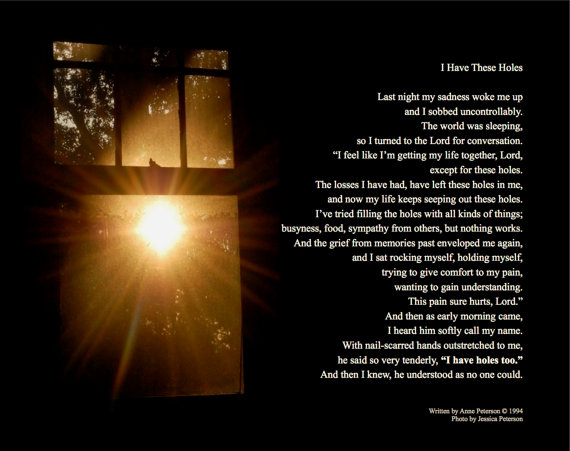
I’m also grateful to remember how Jesus cared so much for me that he addressed my holes…by taking them into his own body and soul. A year ago I was Christmas shopping and came across beautiful poem by Anne Peterson called “I Have These Holes,” framed as wall art. I cried right there in the store as I read it, because it rang so true for me. And I bought two copies. One I gave as a Christmas gift (which I think got forgotten by the owner), but the other hangs just to the left of my writing desk.
This poem still makes me cry because it reminds me how Jesus brought me through the loss of a mother for some of my crucial growing-up years, the loss of a father for a couple more of those years, and the loss of a two-parent family. I can’t say the holes are gone, but they don’t ache like they used to. And they have largely been refilled. And one day they will be completely filled.
If I were a single mother, I would have different holes. But in that case, Jesus would offer different ways to fill me up, to ease the ache, to provide support.
Today, if you are a single mother or dealing with the loss of any family member, Jesus understands. And he has ways to fill you up of which you can’t even dream right now. Just hold on.
I’m not gonna lie. Even though I’ve had what I call an “attitude change” about motherhood, I still have days when I feel like a desperate housewife. And not the sexy, Hollywood kind either. See below for the depressing details, but then keep reading…this post ends well!
Picture me bedraggled and frumpy as I haul myself out of bed at 1:50 a.m. to change a poopy diaper, administer medication, and give a bottle. At 3 a.m. he cries because he doesn’t want to go back to sleep. At 3:30, I cry because now I can’t go back to sleep. Sometime in the 4 or 5:00 hour I fall into an uneasy snooze, but by 6 a.m., the telltale wakeup cry pierces the monitor again.
I roll out of bed scowling and muttering. Buc, my husband, is in the shower and will be gone by 6:30, and it takes every ounce of self-control I have not to blame him for how I feel like a single mother during the workweek. When he emerges from the bathroom, I break my vow to speak peace and instead pounce, listing all that’s wrong with my world. These are the only words he will get from me for the next twelve hours until he returns again. This is his sweet sendoff. Man, I feel terrible. This is where I realize yet again: I am a desperate housewife. Desperate for sleep, yes, but also desperate for wisdom to handle these days when adequate sleep is but a dream.
About four months ago, or half of Sam’s life ago, I made the remark to a fellow parent, “At least the hardest part is over.” He only laughed at me. Now with Sam’s mobility, I know why. Yes, the sleep is better some nights. But not always. And days have gotten 100% harder. Now during waking hours, Sam needs constant supervision, because he will almost certainly hurt himself if I’m not there to catch him, redirect him, or take something away. When does this phase end?
About two months ago when I noticed my attitude consistently lurking in the pits, I recognized a desperate need to get back to the basics. Hence the attitude change I blogged about a few weeks ago. This change happened as I committed to using my “spare time” to uplift my soul, as I paid attention to everything I fed on, from food to books to music and television. I made sure I put good “fuel” in my brain, such as Christian radio programming, the Bible, and other inspirational books. And it helped. Tremendously.
But then Sam started having trouble sleeping again. And it didn’t matter what nuggets of wisdom I found time to gobble up (not many, by the way), not as long as my hunger for sleep went unsatisfied. Despite my prayers and good intentions and promises to myself that I would not be unpleasant, I often woke up a witch.
Things came to a head as this weekend hit. By Friday, not only had Sam strung together several bad nights, but my babysitter for that day got sick and canceled, and then I started to feel sick. I fought to get Sam to nap in the afternoon, but my best efforts only resulted in a half hour siesta for both of us. Late Friday afternoon found me, head buried in hands, moaning, “I’m a failure,” texting Buc at work and asking if he could sneak out of the office early to help me. I was tired, I was sick, and I felt like a failure as a mother.
I had read enough books to know that babies can be trained to sleep well, and I knew several moms whose babies slept well every night, but I had obviously failed in that department. “Lord, help me!” I cried. I was, indeed, a desperate housewife. And until I got Sam’s and my sleep sorted out, I knew the desperation would continue.
To make a long story short, Buc stepped in like a champ this weekend to give me a much-needed break, time to regroup, and time to tune in to the wisdom God has placed all around me. While he and Sam went to church Saturday morning and to my in-laws’ for Saturday lunch, I rested, read the wisdom of Proverbs, and refreshed myself on what the sleep experts in my parenting books said.
The verse that spoke to me in Proverbs was: “Plans go wrong for lack of advice; many counselors bring success” (15:22, NLT). Proverbs has a lot to say about fools, and I faced the fact that I’d been a fool on the sleep issue, too often going with my feelings instead by wise counsel. Ever since Sam’s separation anxiety (and his “mommy” attachment) manifested, I’d become lax on having him fall asleep by himself and instead often allowed him to fall asleep in the stroller, with a bottle, or in my arms. It was no wonder his sleep had gotten worse. I had been coddling him far too much. But being soft on the sleep issue was not kind to him or to me.
So on my sick Saturday morning off, I spent several hours poring over the wise counsel of the sleep experts (whom I’d silently shut away on my bookshelf), and then I wrote out an action plan for what to do at naptimes and bedtimes. I knew myself: if I didn’t have a plan, and if I didn’t rehearse it in my mind before testing time, I would resort to what “felt right” when Sam cried—and we would go on and on in our desperate, sleep-deprived cycle indefinitely. But I needed still more help. When Buc got home Saturday afternoon, I enlisted him as my assistant. I ran the plan by him, we tweaked it a bit, we prayed, and then we implemented it last night at bedtime and this morning at naptime. And guess what? It’s working!
I don’t believe in “crying-it-out” indefinitely, but Sam can go five minutes, then ten, by himself. (I am relying heavily on the method known as “Ferberizing,” for those interested). So far, we haven’t had to wait more than about fifteen minutes for him to go to sleep. Of course, this morning after he went back down at 5:15, I was wide awake. But that’s okay. I had gone to bed early as a preemptive strike, I felt strangely rested, and I got to write in blissful silence for a whole hour and fifteen minutes!
How I have missed this! Not just the writing, but the quiet morning time. The settling, centering time before the day wakes. This is how days were meant to begin. This is what I need to refresh my soul. Quiet time with God and quiet time with my pen and the blank page.
I’m glad I can admit when I’m desperate, because that’s when God can help me the most. He helps me by telling me where to go: sometimes to bed early, sometimes to the writing desk. He helps me by telling me who to talk to: this weekend, my husband. He helps me by telling me what to read: down to specific scriptures, and sometimes specific parenting books.
And he also talks by just whispering to me in his still, small voice: “You’re not a failure, my child. You’re just learning the ropes. And as long as you lean on me, you’re never a desperate housewife.”
So maybe I shouldn’t call myself a desperate housewife. But maybe I should. It made for a good blog title; and honestly, I never want to stop being desperate for wisdom. Because when I ask, God answers (James 1:5).
Last week my sister-in-law babysat Sam (as she is doing now), and I surprised myself by feeling a little sad when he left. I don’t remember feeling this way last spring.
I think I’m finally attaching to Sam because he is attaching to me. We’ve had time to get to know one another, and now he interacts. He registers all kinds of positive emotions in response to my voice, my presence, my touch—joy, delight, contentment. And best of all, he says “mom-mom.” If ever there was a way to melt a mom’s heart, it’s her baby saying her name.
He woke me one night last week in the 1 a.m. region, not really hungry, but just wanting to cuddle. So I held him and I rocked him, and in his sweet little voice he said “mom-mom,” “mom-mom,” against my chest. I wasn’t angry about getting up that night.
A week ago Sunday he stayed with my husband at my in-laws’ for a couple of hours while I did other things. After two hours, Buc texted to say Sam was being “awful,” and they couldn’t figure out what was wrong. But after I got there, Sam was fine. He hardly fussed the rest of the day.
We chalked it up to separation anxiety, and I’ve been thinking about this phenomenon ever since. While separation anxiety makes my job as a mom harder, seeing evidence that he actually needs me, and me specifically, is changing my heart.
I’m starting to feel more of the “mom” feelings I’ve read about, such as that fierce love that puts baby above all else, and that righteous indignation at the thought that someone could ever mistreat or abuse him. I understand better the verse that says “It would be better for them to be thrown into the sea with a millstone tied around their neck than to cause one of these little ones to stumble” (Luke 17:2, NIV).
A God who understands parental love, who created parents and children, and who is a parent himself, authored that. How much he loves us.
I consider that my love for Sam, though it is growing, is still imperfect. I can’t fathom being as loving, giving, and self-sacrificing as Jesus was when he came to this earth, walked with us, suffered like us and for us, and died for us. But with Sam, I begin to see why and how a God could do that. It’s because he is a Father.
The amazing thing is that often we, unlike an eight-month-old baby, ignore our Father, hardly speak his name, and act like we don’t need him. Could I be so giving to my son if he treated me so indifferently? I hope so, but I’m not sure. Would I feel attached to him right now if he hadn’t recently attached to me? But God demonstrated his love for us in this: While we were still sinners, Christ died for us.
I’m so glad God’s love doesn’t depend on my actions—as it seems my love for Sam (sometimes) depends on his. Incidentally, Sam gave me another tough night last night (fewer “moms,” more tears), and today I wasn’t nearly so sad to leave him. I am praying for more of Christ’s love for Sam: namely, an attachment to him that would make me willing to suffer and die for him, if need be.
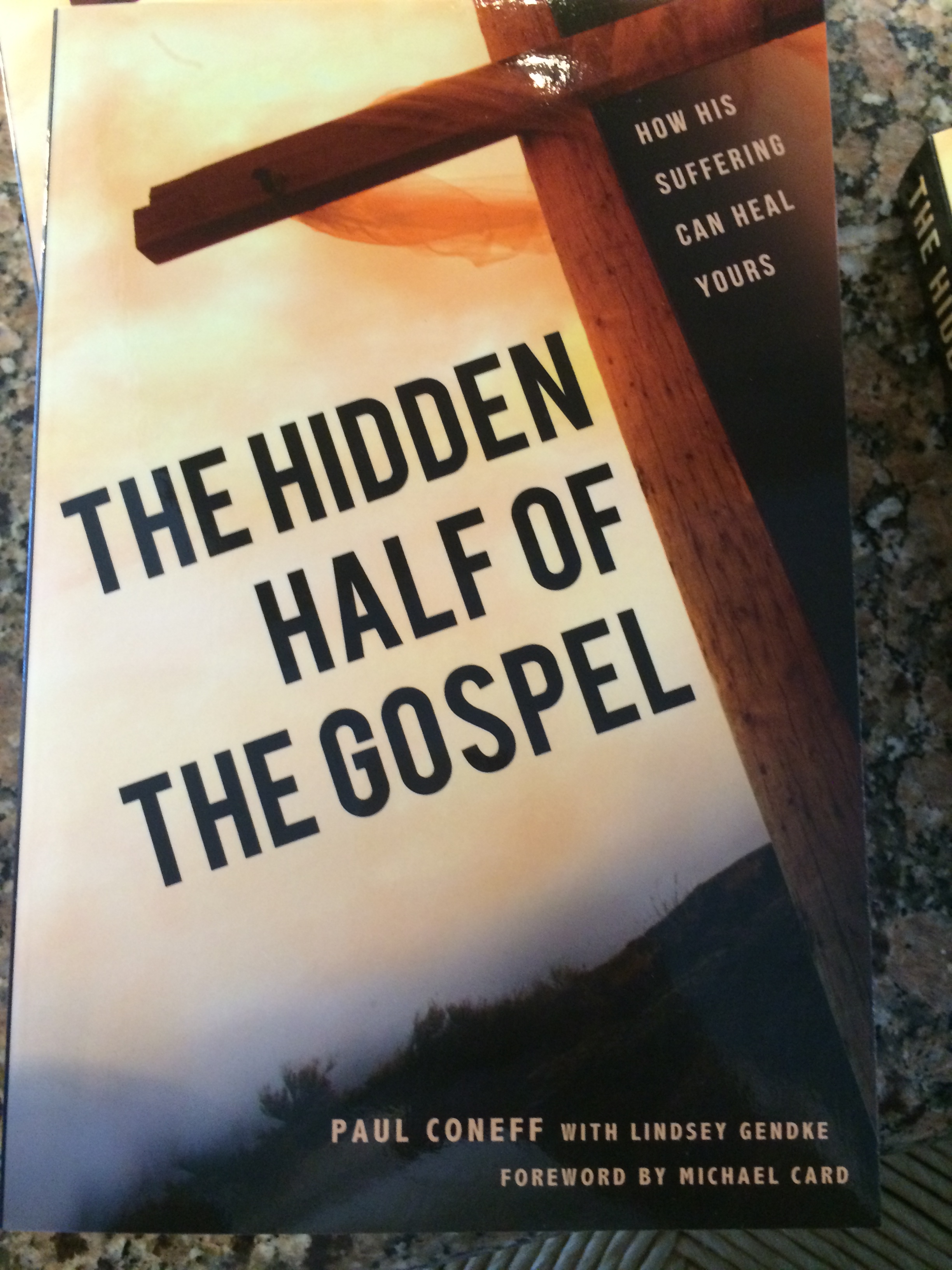
The Hidden Half of the Gospel is now in print, which means it’s time for me to sound promotion bells; but how about I just use a recent, personal example, to tell you why so many people (and maybe you) desperately need this message?
The other day I was listening to a radio show hosted by one of my favorite pastors. People call in with Bible questions, and this pastor answers them, usually with lots of scripture and high caller satisfaction. But one caller on the show did not receive a satisfactory answer.
Essentially, this caller wanted to know how he could get free from his past. He was fifty-two, had been abused as a child, and was still living “in bondage,” even though he went to church and prayed for the peace of the Holy Spirit. How, he wanted to know, could he experience the “new life” Christ promised, and the changes he read about when a person gets the Holy Spirit?
My heart broke for the man as the pastor proceeded to give pat answers that blatantly sidestepped the man’s apparent pain. “Let me ask you a question. Have you ever been to a funeral where the deceased sat up and complained about his past?”
“No.”
“Well, we can’t focus on the past. It’s done. As we drive through life, we can’t keep looking in the rearview mirror. We have to focus on what matters for eternity. We need to give the past to Jesus and then look to the future with him. Our pasts won’t matter in heaven. We need to believe that Jesus forgives us of our past sins and our guilt.”
Here I thought to myself, He totally didn’t address the man’s question: “How do you help someone who is trying, but is not experiencing, the Holy Spirit?” I wished I could contact this man and offer Paul’s and my book, The Hidden Half of the Gospel: How His Suffering Can Heal Yours. I wished I could talk to that pastor and give him our book, too, so next time he got a call like that, he could offer some real help: a complete picture of the gospel that not only addresses healing sin, but also healing suffering.
The Traditional Gospel Doesn’t Help Everyone
Sadly, this pastor was merely presenting the “status quo” gospel that so many Christian pastors, and Christians, promote. That is, “Christ died for our sins and rose again to forgive us and give us a new life.” Sounds nice. It is nice. This gospel has changed millions of lives. But what about those people who have already tried this gospel, who go to church and pray regularly, and who have even accepted Jesus’ forgiveness, and still live in bondage?
Today Christians and non-Christians alike live in bondage to things like divorce, abuse, addiction, depression, and cutting/self-harm (to name a few). More tragically, many Christians live in bondage to the negative thoughts and lies Satan slams us with in the aftermath and in the midst of these problems. Which means we end up living out false identities long after the initial pain of, say, childhood abuse.
I was one of those desperate people only a few years ago (see my seven-part series “My Ugly, Messy Rebirth Story“). But then God taught me what it really means to live a new life. Over a period of several years, I learned about Satan’s lies and how they take root in our minds and handicap our lives.
It’s insulting, and discouraging, when pastors or Christians tell us we should be “over it” just like that. It doesn’t work. And that’s why we need a better gospel, a complete gospel—the gospel that Paul Coneff unearthed as a young pastor in his search to minister to hurting individuals like that fifty-two-year-old Christian caller.
Jesus Preached a Better Gospel
When Jesus said He came to heal the brokenhearted and set the captives free, He didn’t just mean He would heal us when He came back again at His second coming, or set us free from our prisons of darkness when we get to heaven. His promise was for here and now. And that means it includes more than the gospel of forgiveness of sins. It has something for those of us who have been sinned against.
Our book, The Hidden Half of the Gospel, starts right where you are: in the midst of your misery. It doesn’t ask you to deny it or forget it, because that’s stupid; it’s impossible. Correction: by ourselves it’s impossible, but with God all things are possible. Specifically, for those of us who are suffering, healing begins with Jesus Christ’s life of suffering, and the promise that “He suffered in every way we did” so He could offer us his mercy and grace to help in time of need” (Heb. 2:17-18; 4:14-16). In our book, Paul and I flesh out the implications of these promises through stories of real individuals (like myself) who needed a Savior in the midst of suffering, and who found one who understands our pain exactly, because He has been through it.
Jesus was abandoned, betrayed, and abused; He was unfairly tried, convicted, and crucified; and in the midst of all this, he felt forsaken by his Father. As a “man of sorrows, well acquainted with grief,” He knows that we need time to heal, and He doesn’t expect us to do it overnight. He only asks that we look to Him and the victory He accomplished at the cross. As we look to Jesus and allow Him to tell us about the lies and wounds in our hearts, He can uproot them and replace them with a new identity. If this sounds like a message you could use, or one that you’d like to share with others, please visit hiddenhalf.org. There, you can read sample chapters, and if you like what you see, you can order the book. Happy reading!
Get a Discount on the book: When you click “buy the book,” the next page offers a discount box. Type in “HIS-story” to receive a 20% discount through October 31.

















 Picture me bedraggled and frumpy as I haul myself out of bed at 1:50 a.m. to change a poopy diaper, administer medication, and give a bottle. At 3 a.m. he cries because he doesn’t want to go back to sleep. At 3:30, I cry because now I can’t go back to sleep. Sometime in the 4 or 5:00 hour I fall into an uneasy snooze, but by 6 a.m., the telltale wakeup cry pierces the monitor again.
 The verse that spoke to me in Proverbs was: “Plans go wrong for lack of advice; many counselors bring success” (15:22, NLT). Proverbs has a lot to say about fools, and I faced the fact that I’d been a fool on the sleep issue, too often going with my feelings instead by wise counsel. Ever since Sam’s separation anxiety (and his
  I’m glad I can admit when I’m desperate, because that’s when God can help me the most. He helps me by telling me where to go: sometimes to bed early, sometimes to the writing desk. He helps me by telling me who to talk to: this weekend, my husband. He helps me by telling me what to read: down to specific scriptures, and sometimes specific parenting books.
 Lindsey Gendke