Returning to Writing

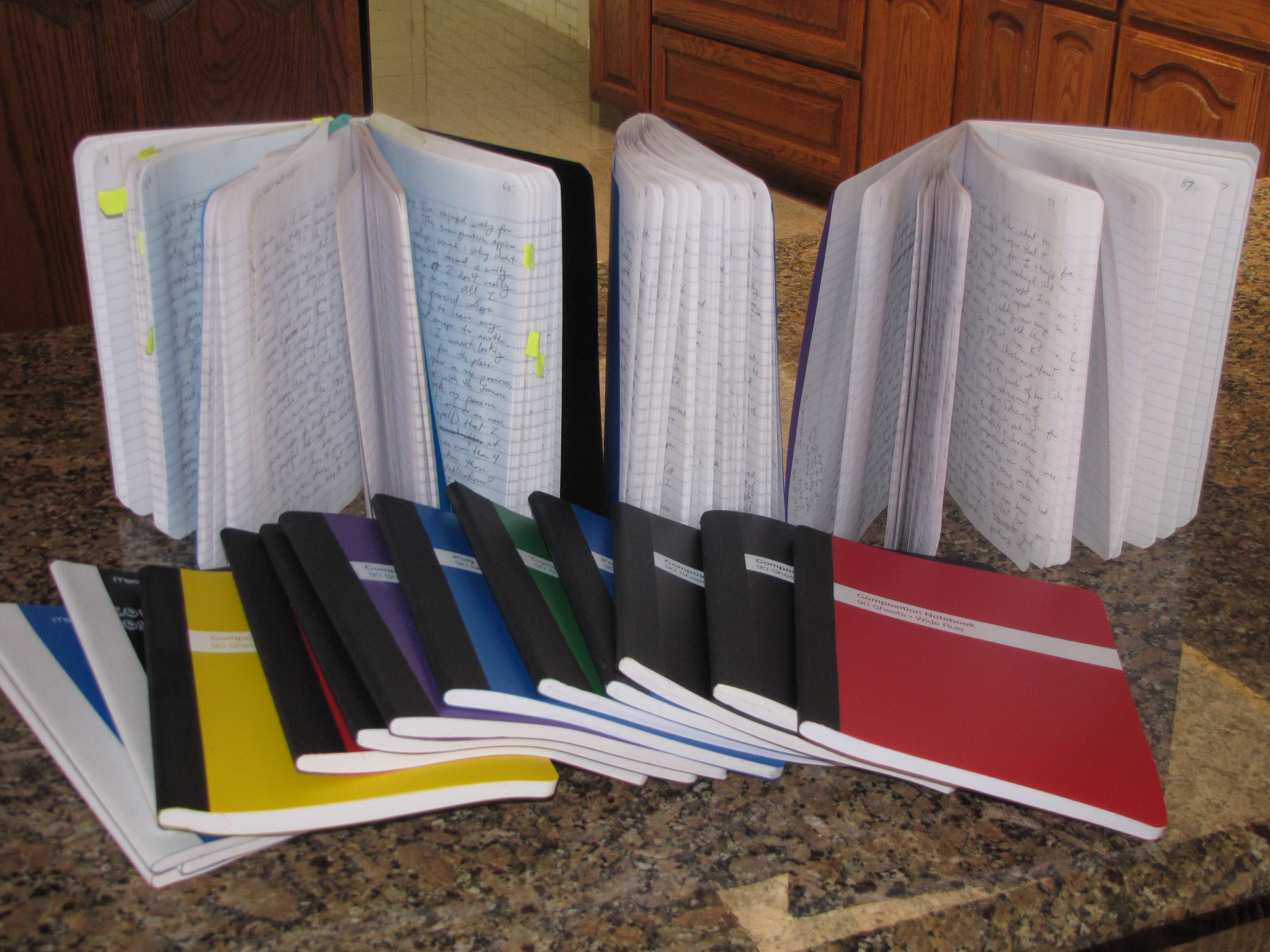
2013-01-09 23.52.05

With the help of a generous sister-in-law, I have returned to writing my book. One day a week until the end of the school year, she babysits Sam so I can write.

How has it been, reentering this manuscript I put aside three months ago?

There is the feeling of visiting a foreign country, as well as the feeling of returning to terrain I know very well. Above all, there is a clarity about the message of my book—and with that clarity, knowledge of what to cut and what to add. I surprised myself by spending most of my recent writing time cutting unnecessary chapters or scenes. Whereas several months ago I couldn’t have imagined cutting these scenes, now, there was no doubt about it: they had to go.

These cutting decisions signal so much: not only a writer’s process, but also a woman’s healing. Let me explain.

One of the standout tips I received from my professional book consultant last fall was: After the first few pages/chapters, cut the crying! (She elaborated: instead of describing your crying, describe for readers what made you cry). And related to that: Add in scenes with other key characters so we are not left alone with you and your brain for 300 pages.

In recent months I’ve thought a lot about how this advice relates to my memoir, which means I really have been working—thinking, planning, pondering—if not actually writing. I realized I had lots of crying in my book—in lots of solitary scenes, and my consultant helped me realize that this was not the best approach for a general audience. The types of books most people want to read are built around action, not a person sitting and thinking (and crying).

As I thought about why my first draft was sopping wet, I realized I wrote it for myself, and perhaps for the handful of friends and family members who read it last fall. Writing all those solitary crying scenes was a way for me to acknowledge how alone I felt in my pain. Having several loved ones read that manuscript allowed me to share that part of myself—and it felt good. Now I feel vindicated: that part of myself has not been shoved into a closet. However, that part of me (though present in the book) will not be the book’s focus.

What I am working on now is describing more of my healing, less of my hurting. To set the stage for why I became so broken (as requested by my consultant), I had to write over 100 new pages for the book’s beginning, just so readers could understand what led to my suicide attempt, eating disorder, sudden move to Texas, and shotgun wedding. But I am trying not to draw out the personal anguish after that (plenty of other memoirs excel in that area). As suggested, I am trying to show myself in contact with others—how I began to relate in more healthy ways to my family, and how I eventually extended my healing insights to others: my high school students, and then women in my church.

The new theme of the book, and maybe the new title, is “breaking silence.” I want to encourage readers who have suffered not to stuff their pain, but to get it out and deal with it—in the proper venues, of course. I believe I could have healed much faster had I not learned to hide my issues from friends, close family, and church family. What good are friends and family if we can’t tell them what’s going on? What good is religion and faith if we can’t get healing for our brokenness at church, and/or among our Christian friends? With my revised memoir, I hope to paint a picture of how honesty with ourselves, with God, and with certain loved ones is the right thing, the healthy thing, and the healing thing to do. Readers can take my advice or leave it, but for my book and my own health, I’ve learned honesty is a must.


How Lovely Is Good News

got a letter
Photo Credit: “Got a Letter” by Lusi

It’s a lesson I’ve been hearing and trying to apply for years: Don’t underestimate the power of good words. Today I’m not talking about skillful writing (per se), but uplifting words, written or spoken. I hear this advice as a wife, when my husband entreats me to stop nagging him for his shortcomings. “Positive reinforcement,” he says, “Is what will get me to change.”

I heard this advice at graduate school when learning best practices for teaching writing: “If you only criticize students, you will freeze their writing process. You must encourage what they are doing well so they can gain confidence to keep writing.” And, “Wait until later to correct their grammar and punctuation. If they only see red marks on the page, they will be so scared of screwing up, they won’t take any risks.”

The Bible says, “The soothing tongue is a tree of life, but a perverse tongue crushes the spirit” (Prov. 15:4), and, “Gracious words are a honeycomb, sweet to the soul and healing to the bones (Prov. 16:24).

Putting Wisdom into Practice

I’ve tried to put this advice in practice this semester as a college writing instructor. This doesn’t mean I never comment on what’s bad in an essay, but I give as many compliments, if not more, as criticisms. And I waited until about halfway through the semester to significantly address punctuation or grammar. I’m not sure if it was this approach, or my sequence of assignments, or the natural improvement that comes over time, but by essay four, all my students were writing their best papers yet. I think it has something to do with all of the above, plus the fact that the fourth assignment, modeled on a magazine article submission, was a true story of their choosing written for teens. They seemed to care more about this task, given the topic and the clear audience, and it showed in their writing.

I think older, more experienced writers, can handle criticism without letting it derail them. Same goes for older people in any context, if they are well adjusted adults who have learned to let adversity lead to growth. Still, “How beautiful on the mountains are the feet of those who bring good news, who proclaim peace, who bring good tidings…” (Isa. 52:7). As one who has just received some good news, I am reminded just how life giving good news can be.

My Own Good News

This weekend I received the edit letter on the second (partial) draft of my memoir. I sent Trish 130 new pages thinking, “These suck,” but I sent them anyway, because I had done what she suggested. As I awaited her letter, I expected to read, “You were right; I see why you didn’t put these things in the book originally; they don’t work, they aren’t well written.” I thought she would confirm my self-diagnosis, and I would be stuck at square one, trying to figure out a book structure that’s been problematic from the beginning.

Guess what? I was wrong. Her letter positively glowed. Here are some of the good words she gave me:

  • Fabulous

  • Good stuff

  • I am so, so proud of you for digging deep.

  • It was a vivid, powerful reading experience.

  • I didn’t do much line editing, mostly because I was really caught up in the story.

  • These are great scenes. There are lots of pages where I don’t note anything because the story was carrying me along. That means you’ve done it right.

  • Fantastic job!

  • Overall, you have raised your writing level so much with these new pages. I know this is taking longer than you thought it would. But you will be glad you took this time and wrestled out these scenes. The end result will be a book that you will be really proud of, and will entertain and bless your readers.

  • You’re a fun, talented writer to work with.

The Results of Good News

After the second time I read through the six-page letter, I felt light, like a weight had been lifted. A week ago when I sent in my pages, I felt heavy, lost in my writing process, and unsure what I was going to do after she told me to try again. I resisted working on my memoir for the entire week, figuring it would do no good until I knew what she would say.

Now I am re-energized. Last night around bedtime, I even felt compelled to sit down and outline some new scenes that will finish the book. The outline poured out and suddenly clarified the structure of my book. I saw how the new pages would circle back to and unify this new, as yet unwritten, ending. I realized I could not have conceived of this ending until now, because the events have just happened within the last month.

One lesson for me to learn was, again, God’s timing. Though I tried to set a date on this book project from my very first blog post, I couldn’t, because I didn’t know what all needed to be in the book.

The other lesson was good news. How lovely was this good news to me! Would I have seen the vision for completing my memoir without Trish’s good words? God used her words to revitalize my writing, and now I can’t wait to get back to work!

First Things First in Writing

notepad
Photo Credit: “Notepad” by Crisderaud

“Pause for a minute…that word order is confusing. Instead of ‘my spiritual life post thirteen,’ how about ‘my post-thirteen spiritual life’?”

I was reading chapter 2 of my memoir to my writers’ group, which, this week, was only one other person. She was stopping me every couple of paragraphs to suggest a syntax change or a modifier deletion.

“The action ‘I put my head in my hands’ makes pretty clear that you dreaded what was coming next. I know you’ve heard it before, but this is a case where you show and tell. You don’t need the telling.”

Putting It into Practice

Two days later as I sit at my keyboard trying to jump back into my memoir, I’m glad for the prose tightening advice. It will be really helpful later…but it’s not what I need right now. Since adding more than ten new chapters, I’m just trying to figure out if the scenes I’ve extracted from my reluctant psyche even belong in my book.

Show, Don’t Tell

“And tell us what you were wearing. I can’t see you as an eleven-year-old. Show the makeup or lack thereof. How did you know it was snowing outside? Show us how you are seeing this. Are you looking out a picture window?”

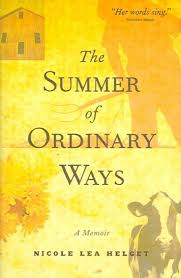
This writer, an excellent writer, by the way, is a visual person. Her prose overflows with color, texture, and shape. She lent me a memoir, The Summer of Ordinary Ways, by another fellow Minnesotan (my critique-er and I are both Minnesota girls who ended up in Texas), and I wonder if she modeled her writing on Nicole Lea Helget’s style. Helget writes with beautiful imagery that places readers right in the scene.

For example, here’s an excerpt where she’s describing watching/hearing her father “pitchfork” a cow:

A sound snapped the thick air.summer of ordinary ways

Like eggs dropped on the wooden floor of the chicken coop. Or metal bats whacking leather-covered baseballs. There was something of a wooden ruler slapping naughty palms. Something of thunder breaking against the sky. Only more primal, more rooted. I recognized it immediately… It was the sound of girls splitting wish-bones, of Mom dividing chicken breasts, and of shovels crushing black rats breeding in the granary… It was the sound of field stones hitting the loader bucket or hay wagon or rock box….It was bone.

I don’t write like this. At least, I don’t write like this about my early years. These years feel like a cold case. I can’t remember. Or is it that I don’t want to?

The first draft of the memoir I sent off for editing begins with me at age twenty—and I believe that draft was more descriptive than the chapters my writing group has seen in the last month. I can deal with those more recent scenes.

The early scenes? I’ve been writing them, but they kind of suck right now. I feel something about my early life is important, but I’m not sure if I’m capturing it.

Another Book?

I always had the idea I’d save my early life for another book. It deserves a whole book, and, in fact, was going to be my first book. I prepared the manuscript as a series of journal entries, and to this day, the scenes are preserved in my memory as the journal entries. I fear I’ve forgotten the actual scenes—I just remember the journal entries. The scenes I’ve written for draft 2 of my memoir feel fabricated—or at least really detached from my feelings and memories.

Moving Forward, Nonetheless

This week I’m going to send off my new part 1 to Trish. Because I’ve had more time to talk to Trish, and because she’s seen the rest of the manuscript (or where I am going with it all), she will understand that, more than prose tightening, I need help deciding what to include about my early years. Maybe I even need help unlocking memory.

I doubt memory will come back in full color like it seems to for Helget and my fellow Minnesotan, and maybe that’s okay. In my daily life, I don’t often notice what’s around me (I know, I know—as a writer, I should work on this). I don’t think I’m going for a full-color memoir, though. I’m not sure. This is a style question I can work out later. But first things first: figuring out content, order of events, and narrative thread.

Wait a Minute…

Right before I hit “post,” a thought occurs: is writing in “full color” a way to actually unlock memory? What do you think, readers? Have I got the process wrong?

A Memoir for Disillusioned Christians: Addie Zierman’s When We Were on Fire

when we were on fireSometimes when you have grown up in a certain discourse community, or a group of people who share a common “language,” you learn to spout off sayings without even thinking about them. In the Christian world, some of these sayings include “born again,” “saved,” “lost.” You forget that outsiders don’t really know what these things mean. You yourself become desensitized to their real meaning. You can lose your faith when you realize that fellow church goers aren’t interested in probing for deeper meaning, or for deep relationships. Such was the case with Addie Zierman, who has recorded her experiences for curious readers.

Summary

Addie’s memoir, When We Were on Fire, shares the experience of someone who was steeped in evangelical culture from birth, thought she was on fire for God…and then fizzled out, realizing that what she’d always believed in was a lot of clichés that didn’t personally ring true.

Addie goes through a period of disillusionment, in which she starts to see that many of the Christians she knows don’t really care to get to know her and her problems; they want to gloss over the messiness of life with quick fixes, like “You will never be lonely with Jesus.”

“Yeah, but that thing about never being lonely? Sometimes I am,” Addie tells her Bible study group, and the leader responds, “Thanks for the feedback, Addie, we’re not really going there today. Now, let’s move on to question five” (a paraphrase).

Never being “heard” in Christian circles leads Addie to her rebellious-slash-depressed period, in which she tries to drown her sorrows in alcohol and an “almost” affair.

A turning point, if there is one, comes when Addie finds out she is pregnant. She decides she doesn’t want to be bitter for her son’s sake; plus, it feels like time to get over the past.

It’s sad to me that she’s still sort of cynical at the end; although the place she leaves the book might be just right for making her point that faith isn’t simple. A testimony can’t be broken into before and after, black and white, dark and light (and this is a point I’ve made on my blog, too).

Analysis

I really appreciate Zierman’s honest look at how her faith hurt her. Particularly well done were her scenes dealing with her ex boyfriends, paragons of virtue she aspired to imitate. She makes the point that a heart can be broken even if one “saves herself for marriage”; this happened to her by her boyfriend Chris, who, in trying to be a model missionary, exploited Addie’s innocence and broke her heart.

I also was affected by the theme of Christian clichés throughout the book—or Addie’s point that certain “evangelical-words-turned-weapons” “have grown so heavy; they groan, now, under the weight of all their baggage.” Some of her examples:

Like when you say, Sorry, I’m dating Jesus right now in order to terminate the possibility of a relationship with all its messiness, all of its complexity, all of its potential for breaking your heart.

You say, I’m saving myself for marriage, as if the heart can only be broken by the act of sex…

You tell the Church People you are lonely, and they say, Let God be your friend or they say, What a friend we have in Jesus! And what you hear is that you don’t have the right to be lonely, that if your faith was stronger than this, bigger than this, you would be happy.

And then, the main point of her book (to me):

And it occurs to you that the real work of faith has nothing to do with saying the right words. It has to do with redefining them, chipping away at the calcified outer crust until you find the simple truth at the heart of it all. Jesus.

I read through this book ravenously, because it spoke to some of the same issues I am lately unearthing by writing to my roots. I feel Addie’s rage at being fed cliché after cliché without equally experiencing practical demonstrations of Christ’s love. The thing is, as she writes in her author’s interview, people like her ex, Chris, are so steeped in the language, the clichés of Christianity, that they don’t even realize that, in following a God-appointed “mission,” they are hurting others directly in their path—doing “what Jesus would never do.”

It’s not entirely fair to blame other Christians. As Addie admitted, and as I will admit, we are guilty of also being the “Super Christian, bowling over others’ feelings with [our] passion. [We] have been unkind and careless more times than [we] care to admit. [We’ve] missed the loneliness of others simply because [we weren’t] really looking.” Yes. I know I’ve done that. And I repent of it, and after reading someone else’s experience of being on the other end, I pray God helps me to stop it!

Dislikes 

The F-bomb (along with lots of alcohol) starts showing up in the latter parts, when Addie enters her “rebellious” stage (warning, for you sensitive souls). Though it hurt my sensibilities, too, I did have to chuckle when she wrote, post-rebellion: “Though I’m trying to watch my language, sometimes fuck is just the right word” (paraphrased again). I see in Addie aspects of myself that I’m not proud of, but that are nonetheless there. She’s right; sometimes it is (the right word). Though I don’t condone swearing, I have to admit I do it sometimes; moreover, I think Addie’s done an important work  in being real on the page so we imperfect Christians can finally relate.

I would have liked to see Addie delve deeper into why she fell so low. As my book consultant wrote in her review of this same work, it seems Addie didn’t quite reach as deeply as she could have to describe what plummeted her into depression. It seemed to come too quickly, without enough explanation. Maybe the excellent foregoing chapters of her childhood/adolescence were the explanation, though. I can testify that a long build-up of factors can suddenly mushroom into catastrophe; after a lot of disappointment in life, you don’t need a cataclysmic rainstorm to wash you out—maybe just a little sprinkle.

Recommendation

I highly recommend this book if you have issues with your faith or want to understand evangelical culture better. For me, the book has been inspiring on multiple levels: I feel both validated as a disillusioned Christian, and energized to write about my similar, yet different, experience. My memoir (currently in revision stages) ends in a better place than hers: that is, I don’t leave my church, and I discover a real answer for the clichés, which is The Hidden Half of the Gospel, or the message of my first co-written book, expected to come out in January. Maybe when the book comes out, I’ll send Addie a copy. I feel we could be good friends.

Knowing When to Quit

exhausted
Photo Credit: “Exhausted,” posted on Thayer Memorial Library’s Website

I can talk a good game about living proactively, being productive, and striving for new heights; however, I’ve also found there’s a time to back off. The time is when you’ve made commitments that are not needful, helpful, or healthy for you to keep.

For a few weeks I’d been feeling stressed because I wasn’t finding enough time in my day to work on my memoir. I entered the fall planning to work on my book at least twenty-five hours per week. As I looked at my records for the past month, I saw that I was logging closer to ten. And because my baby’s due date was approaching, this was making me nervous. Could I still get my manuscript done by the time Baby Sam came?

My hubby has often said I tend to keep my plate full to the brim; he’s always known me to be stressed over what I’m not getting done. But since my unexpected breakdown, I had been trying to pare down the helpings on my plate. What had gone wrong?

As I’ve been learning to do when I get in a pickle, I prayed. But this time as I started to pray, my brain felt too scattered to even stay on track (this is a good sign you’ve got too much on your plate, or you’re pregnant, or both). So in my prayer journal, I began with a list of my current commitments, hoping to see a pattern or pick out something I was unnecessarily stressing over.


Let me fill in the background for you about the housecleaning item. In the past two months, thinking I needed to become a better homemaker for the baby, I picked up two books on housecleaning (three, if you count The Happiness Project), and started to try to drastically change my habits, per the books’ suggestions. I had started to feel positively weighted down by the thought of keeping my kitchen sink clean, de-cluttering a little bit every day, and deep-cleaning my kitchen.

When I made the list in my prayer journal and saw the housecleaning item mixed in with everything else, though, I realized something: Cleaning/organizaing my home doesn’t have to be a top priority right now. Especially since I’m not a dangerously messy person (i.e., my dust bunnies are not causing us physical health problems or my clutter creating safety hazards, like some people referenced in my cleaning books).

I asked the Lord to help me set some goals for what I actually needed to do for the time being. He told me, “You can stop reading the housecleaning books right now. If you want to focus on your own book [and I do], read stuff that inspires you to write [books on writing, or memoirs].

“Continue the habits of keeping your sink clean and purging your clutter when you can. But you don’t need to add anything else.”

This was making me feel lighter already. I was next able to list out some new, more manageable goals for my writing each week; although I had to admit it wouldn’t amount to twenty-five hours. This was because my unexpected teaching job had come up at the last minute, and it takes time to create curriculum when you’re teaching a brand new class. This was an item that was not negotiable.

The baby registry and choir cantata were pretty easy to resolve: I’d let them become overwhelming when I saw I couldn’t get the registry done in three sittings (but one more should do it), and the cantata piano music learned in two weeks (hopefully four more will do it—but if not, I have the out of purchasing the performance CD).

While my hubby had told me I shouldn’t feel bad about cutting back on my memoir work, I did feel bad, because this was the single most important thing I’d identified to get done before the baby came. I knew I wouldn’t cut back anymore than I had to, but God did help me see that I was worrying too much about getting the book done in my projected time frame. He helped me resolve this by reminding me that if I got the first section revised and a proposal written, I could start shopping the manuscript to agents/editors even if it was unfinished. This is how non-fiction publishing works, anyway.

Then, God gave me this list of do’s for my guilt:

  • Lighten up
  • Lessen your expectations
  • Give yourself a break. Unpredictable things (like the class and the puppies) have happened lately.

Finally, I realized that God would accomplish his work in his time. I didn’t need to worry about what wasn’t getting done, because he was seeing to it that everything that needed to get done was getting done.

When we are walking in God’s will, or doing our very best according to the light we have (based on reading his word and listening to his voice), we can “quit” certain good things with a clear conscience—and sometimes, to continue walking in his will, we must.

Writing Towards Honesty

2013-06-03 23.52.41

At first I thought I was writing a book about recovery from depression, the love story that brought my husband and me together, and finding a relationship with the Lord. Now that I am revising for my book consultant, Christian memoirist Trish Ryan, I feel the topics expanding. She wanted me to set a greater context for why I ever got to the point of suicide and bulimia and all the other struggles I write about in the first place. She wanted to know more about my faith in God as a child and my family. In short, she asked me to venture into places I realized I didn’t want to go (which is why I originally did not go there).

Now that I’ve been trying to write scenes from childhood for the last several weeks (and they are coming out messy and muddled and badly), I’m finding that my story might be bigger than I thought, and it all has to do with being honest about how the church has failed me.

The more I write, the greater anger I uncover at a church culture that would not let me speak up and share what kind of help I needed. This theme also shows up when it comes to my relationships with friends and relatives—people you’d think it should be okay to share with! The revisions I am working on now are slowly bringing me to new conclusions about why I became suicidal in the first place. Maybe I will never totally understand why or how it happened, and maybe it’s not a problem that is specific to me or my family or my church. But through the messy, ugly, painful writing coming out in the last few weeks, I know it has something to do with speaking up, and the fact that I felt I couldn’t for so many years.

Sometimes it’s discouraging to think that after a year of working on this memoir, I’m only just keying in to the real point of it all—and maybe I’ll decide next month that I need to backtrack yet again. But maybe it all goes back to this blog and why I started writing it: I needed to share with people.

I’m working on a series of blog posts about my ugly, messy rebirth experience, and these posts, more than anything I’ve yet written on Writing to my Roots, have given me pause: Do I want to publish them? Do I want to share how I feel my church failed me, how it failed my parents, and how that resulted in a family’s demise and a girl’s death wish?

I feel a need for Christians to be honest about their struggles; it’s just hard to be one of the leaders in this “genre” of witnessing. I told Trish I felt like there were very few memoirs on the market like the one I’m trying write: that is, Christians seem to write really simplified accounts of how they found Christ (and what a difference he made to the before and after of their lives), which leave me hungry for the real details. Show me a life story I can relate to! Conversely, the writers who are willing to divulge the messy details of their lives are, for the most part, those who haven’t really emerged from the mess—so the story is real and raw and often literarily well executed, but not uplifting. I want my story to be all of the above.

Trish agreed with my assessment of the market, saying that when we writers undertake a project like she’s done and like I’m trying to do, we put ourselves out there as screwed up Christians, saying, “Okay, I’ll go first.” Not easy, but necessary if we hope to change the climate of things.

So if I publish some things that put my church or my religion in a bad light, it’s not that I’m denouncing my faith. It’s that I want us to take an honest look at where we’ve gone wrong, so we can fix it! Jesus came to heal the brokenhearted and set the captives free, and I just want to help the church see how we can help fulfill his mission. Sometimes, that means being brutally honest with where we’ve failed.

If you feel the same way, please pray for this writing project as it moves forward—that it would tell a story the world (and maybe just the Christian world) needs to hear, and that God would give me the wisdom and discernment to tell it.


Book Review: The Glass Castle

Glass_Castle

Here’s a little memoir writing inspiration for you today, or just a great read (if you’re looking for either): Jeannette Walls’s The Glass Castle. After skipping past it several times in Half Price Books, I had to finally read it when both a comrade in my writers’ group and my editor suggested it.

Here are three reasons why you should read it:

1)    The story. The story of two genius, yet crazy parents and how their eccentricities drag their four kids down, it’s wacky enough to the point of being unbelievable; but I’m taking Walls at her word that this is what she remembers of her childhood. Imagine an engineer dad and an artist mom who are too freethinking to be shackled to regular jobs, who do the “skedaddle” whenever they get in trouble with the law. Imagine parents who would rather have their family live in shacks, ditches, or inside their van than have air conditioning and heating and plumbing and food—all in the name of chasing their dreams. It’s particularly fascinating watching young Jeannette and her siblings come of age amidst the chaos of their parents’ childishness (mental illness? I still can’t decide what would possess parents to act like this) and note the strength they muster because, well, they must. A fascinating psychological portrait of a dysfunctional family, as well as an amusing, and at times, heartbreaking, read.

2)    The writing. Vivid, fast-moving, and clear, Walls sucks the reader in on the first page and doesn’t let go until the end. As my editor put it, note the detachment with which Walls describes the “wacky and terrible things her parents did to her.” Walls writes details that a child would notice with the diction of a well-trained writer—and she doesn’t get overly analytical. Instead, she lets the reader point to her family in horror and amusement and disbelief and disgust. As my editor also said, children aren’t able to process what certain things mean; all they know is, “Here’s what happened.” Reading about the horrors of living in such a dysfunctional family from the perspective of a speaker who can only report, not analyze, is fascinating. Just fascinating.

3)    The reassurance that your own family isn’t that bad. After reading about Walls’s family, I felt a lot better about my own. If you can’t say the same, I am truly sorry for you, but at least you have the makings of a great memoir in your head!

glass-castle
The book’s title comes from Jeannette’s dad’s grand plan to build the family a “glass castle” in which to live someday. This image becomes increasingly ironic and heartbreaking as the book progresses and the family slides deeper into a squalor from which, the children slowly realize (and readers much sooner understand), they will never emerge.

The one criticism I would levy at the book is this: I feel there is no way an adult could remember in such clear detail (as Walls seems to) what happened in childhood. Though I ate up every scene with each painstakingly stinky or ugly detail, I found myself disbelieving that she could really remember what she said at three years of age, or what her home looked like at four, or the fight her parents had when she was five, etc.

I voiced this to my editor, saying, “I could never write about my childhood so vividly,” to which she replied, “It’s amazing what children with dysfunctional backgrounds can remember.” I’ll have to research that, but for the sake of a great story, I was willing to suspend my disbelief and grant that Walls reported to the best of her ability (without needlessly embellishing) a story that was real and true, as far as she could remember. In the end I have to grant that, for a memoir writer, memories, however we filter them, are truth. So hats off to Jeannette Walls for letting us in on the horrors of her memory. Today I go back to my own memories feeling strengthened to report.

Why I “Took Out” My Ex-Boyfriends

scissors
Photo Credit: “Cutting” by Lusi

This title’s a little misleading. I’m not talking about violence here, or the raging emotions of a woman scorned; rather, I mean making cuts to my memoir. You see, last week I inadvertently axed my ex-boyfriends from my manuscript when I deleted a chapter by mistake. Oops. While I was initially ticked, turns out this was one of the best things that could’ve happened.

You see, I was falling into that writer’s trap of wanting to put every “interesting” detail about my life into my story—but not every “interesting” detail belongs there.

At first it’s a hard reality to swallow. You’ve heard that analogy that likens cutting one’s writing to severing a limb. It’s true. But I’ve got good news: the more time and distance you put between yourself and your writing, the easier it gets. After awhile it becomes easier to see what really stinks and what doesn’t, or what actually fits and what are merely rabbit trails.

Accidentally cutting out my boyfriends, whom I’d slapped into a “junk” chapter that wasn’t quite fitting anywhere, freed me up to clarify the real players in my story: that’d be myself (obviously), my hubby, my family, and my immediate in-laws (I’m not sure they know this yet!). The story I’m telling is far advanced beyond the twenty-year-old version I imagined, when I was still hurting from love gone wrong with those unsuspecting exes. It picks up with my wedding day and the violent emotions that ceremony stirred up, and follows me through my twenties to unravel just what was so traumatizing about entering marriage.

The story’s not about my past dating failures; it’s about finding peace within myself, with, God, and with family. The only relevance the exes have to this story is that they became unfortunate pitfalls on my way to searching for the right kind of love, which I eventually found in my hubby, then in God, and finally, with other loved ones around me. Now I realize, thankfully, that a couple paragraphs is more than sufficient to treat those unfortunate detours in this journey.

However, that doesn’t mean I’m not saving those memories for a future story, or maybe even a piece of fiction! As I explained these manuscript developments to my hubby last night, along with how a memoirist sometimes must rearrange or compress events for narrative efficacy, we had fun laughing over what a composite of my past lovers would look like. Ready for this? I think I can protect identities here by squeezing them all into one. Macho, yet effeminate, hunter under house arrest for drug possession and Dad of three who likes to collage…who ultimately turns out to be gay. See? Interesting. But way too distracting for the story I’m trying to tell!

If you’re working on your memoirs, remember: focus, focus, focus! Keep the main story the main story, and don’t let yourself get distracted by every “interesting” detail. And now I’m back to work, excited to see what today’s writing session reveals!


How to Make Your Dream a Reality

Rule number 1: You have to DO something.

surfing
Photo credit: felipedan

It sounds really obvious, but so is most of the advice in any self-help book you can read. I complained for a lot of years that my dream of publishing a book was not coming true, but, um, it was no wonder. For a lot of years, I wasn’t doing anything about it. So then, one day, I sat down and started to write. And promptly ran into a problem.


Rule number 2: Push through roadblocks, however slowly

road sign
Photo credit: Jazza

It could be a lack of time, a mental block, or a naysayer. For me, my roadblock was not the oft-cited “writer’s block”; rather, every time I tried to sit down and write that book I had in my head, I’d be reduced to tears for the memories the work brought. And then there was the naysayer. Someone told me my book idea wasn’t respectful of my family…and I should reconsider what publishing it would do to them.

No matter which roadblocks you’re facing, there is always a way to keep going. For aspiring writers (or aspiring whatevers) with little time, the best advice I know of is to set a realistic goal for yourself, whether a daily or weekly goal, and stick to it. Maybe you’ve only got fifteen minutes a day. Maybe you’ve only got one hour a week. Whatever you have, build that time into your schedule, and then guard it with your dream.

When I started having those toxic emotional reactions to my work, which literally could incapacitate me from living the rest of my life, well, I shut down for awhile. But in hindsight, I realize that I eventually found other ways to keep moving in the direction of my dream. I came at it from another angle. Although I wasn’t yet ready to write that book in my head, I started reading up on the publishing industry, and I started reading about honing my craft. As I did this, I put the naysayer out of mind, and hoped for a better day to write and publish my book. And this leads to rule number 3.


Rule number 3: Learn from the masters

apprentice
Photo credit: krayker

So, how did you first develop that precious little dream of yours? I’d just bet it was from watching someone else who was doing that very thing, and saying to yourself, “I want to do that someday, too!”

So here’s the deal: the same place you go for inspiration—be it a bookshelf, a rodeo, or a runway—is the same place you should go to apprentice for your craft. Once I identified memoir as my medium, I became a student of the genre. Not only did I read books about how to write memoir, but I read memoirs. These days I have become a sponge for these things, keeping them by my nightstand, on the coffee table, and in my CD player in the car (audio books). Where I once read only for entertainment, now I read for craft and technique, story development and organization. I read with a critical eye, judging a book’s execution and effectiveness, asking myself, is this a technique I could use? Is it one I’d want to use? Whether a memoir is well done or not, I learn from it.


Rule number 4: Work through personal problems to clear room for your dreams

thinking
Photo credit: brainloc

Okay, this is probably the hardest rule to follow, and I can’t tell you how to do it; I can only point you to a blog post describing what worked for me. But if you do have some kind of mental or emotional block impeding your work, there must be something you’ll eventually have to deal with before getting on with your dream. If you have to “take time off” from your project to get your life or emotions in order, by all means, do it! This is not wasted time, because when you come back to your project free from the impediment, you will find that you have a vigor for your dream that you never had before.


Rule number 5: Set a deadline with measurable goals

list
Photo credit: mimwickett

This rule will vary from person to person, and obviously your timelines and deadlines can change. But the thing here is to write down steps, measurable goals, that will move you closer to your dream, bit by bit. If you can give yourself a deadline and stick to it, you will be much helped, as most people operate best with a deadline.

For myself, after I started doing something and I learned how to keep plugging away at it in some form, even when it was hard; after I had started bathing my mind in masterful examples, and after I had worked through my poisonous personal problems…I came up with a schedule for completing my dream that I’m hoping will carry me through to completion. For now, I am trying every day to “move in the direction of my dreams,” even if it means only fifteen minutes of work. I hope you will do the same, and good luck!

The Playground Kiss (A Rare, Funny Memory)

LITTLE-GIRL-KISSES-BOY
Source: drpinna.com. Apparently, these days a little girl can get the police called for pulling a stunt like this!

What do you find when rooting around in your memory? And do you do this often, or only when together with family or friends?

As a memoir writer, it is my job to sift through memories, but sadly, that’s not always a fun task. On the other hand, when my husband’s family gets together to excavate their collective consciousness, there’s no end to the laughs.

I can only hope my family will get to that point someday, too, but for now, I take hope from a recent realization: Namely, my memory seems to have these gaps—huge gaps—from my childhood.

Anyway, we were at my nephew’s Kindergarten graduation recently, and that jogged my memory back to my own early elementary life. Sitting there pregnant, I started to have memories of me around that age, and I wondered if I really wanted my kid to go to school.

Because suddenly, I was remembering how I’d been scarred by school—specifically, my rejection by many of the girls in my class.

Sad-Little-Girl1
Source: stopbullying.myupsite.com

“Honey, I don’t want our kid to go through that,” I worried to my hubby later that night, explaining how recess used to strike terror in me like class time never did.

“Oh, you’re just assuming it will be the same for our child as it was for you. But you’ve never been comfortable in social situations.”

“Oh really?” I prickled.

“I mean, you’ve gotten somewhat better…” he amended. “But that’s just your personality. Most kids like recess.”

Hmmm. I can’t sort this all out now, meaning I don’t know where our kid will go to school. But I went to bed disappointed that my most prominent memory from early elementary was that painful sting of rejection. I also realized I hadn’t spent much time writing or thinking about my early years, and I hoped doing so would turn up some forgotten gems—and some laughs, like my in-laws enjoy.

So, as I lay in bed, I kept rooting around in my memory. There must be something funny in there, somewhere. Then, I found it.

A Rare, Funny Memory

On that same playground where I remember so often standing on the outside of the circle, I also remembered becoming bold, empowered. I remembered first grade, or the only time I have ever openly pursued a man (well, in this case, a boy).

I don’t remember when it started, or why I thought it a good idea, but for a week or two that school year, before the teacher told me to stop, I became a man-hunter. I spotted a boy I wanted—let’s call him Aaron—and every day at recess I commenced chasing him…past the monkey bars, around the sandbox, under the swings…all in hot pursuit of a kiss.

Poor guy. He was terrified of me, and one day the race, or the stress, gave him a nosebleed. Kindly, that day I desisted.

But one day I finally caught him, cornered him, and bent over his cowering figure. I remember thinking, as I went in for the kill, that it didn’t feel as satisfying as I thought it would, kissing my victim. I suppose it’s that I would have liked the object of my affection to reciprocate, just a little.

girl-kissing-boy-17751309

Anyway, later that day later in class, my teacher, an overweight Trunchbull type, called me out in front of everyone else—in her stern voice and with her lightning eyebrows, she told me to stop chasing Aaron. And I, now terrified, could only stutter, “Y-y-y-y-yes, Ma’am.” It was enough for me, the embarrassment of being publicly chastised.

Aaron didn’t talk to me for the rest of first grade. And then I switched schools for second grade, and when I came back to third grade, he’d also transferred schools. And I’ve never spoken to him since. I wonder how he remembers those moments? If he comes to my ten-year class reunion this summer, I just might ask him. (After I apologize for my appalling behavior, that is.)

In case you didn’t catch it, this story is funny because of my personality now. Docile and quiet, everyone says. What got into that little girl to become a playground terror for a time? Or should I really be asking: What went out of me after that day?

Ever after that, I was never bold enough to send so much as a signed note to a crush—not before he first showed interest in me. So a lot of my crushes—actually most of them—sprouted, withered, and died, all within the confines of my heart, with no one else to witness the damage. I learned to keep it in. Maybe I learned that openness about love was embarrassing?

Coda

girl at pool

There is a coda to my playground story that makes it even funnier, at least in an ironic sort of way.

The summer after first grade, I was swimming with my brother at the community pool, with lots of other elementary kids there. And unbeknownst to me, I was about to get my just deserts for attacking Aaron.

There was another boy in my class—let’s call him James—who had a crush on me, but I thought he was about the grossest boy on the planet. Before that day, I’d never paid him any attention, and may not have known his true feelings for me. He, too, was a quiet child. But after that day at the pool, I would know without a doubt. He, too, got the devil in him, at least for a day.

Suddenly, he started chasing me. Around the perimeter of the pool, in the shallow end, in the deep end, and back again. I couldn’t turn my back for a moment because there he’d be—that big nasty boy—and he wanted more than a kiss!

Though it seems like this went on for hours, it could’ve lasted only minutes. All I knew was I felt trapped, and desperate. I couldn’t get away from this boy, and no one would help me! All they did was laugh!

In the middle of the afternoon, he caught me in the shallow end, cornered me, and caved in on me. His arms and legs wrapped around me like tentacles, and slowly I felt my breath escaping, as if the life were being sucked out of me.

I was thrashing my arms and legs, trying desperately to escape my attacker—and then, suddenly, he released me, and swam away. And that was the end of that. We hardly ever spoke again.

What is the lesson to be learned here? I’ll leave that for you to decide—and comment on. My job was just to turn up a funny memory. Do you think I succeeded?