My Ugly, Messy Rebirth Story, Part 1

When I was a little girl, going to church on Saturday (because we were Seventh-day Adventist Christians), was a disaster. I was apparently in my feminist phase, and I refused to wear dresses. I used to throw tantrums. Yes, the same woman who is quiet and reserved today—the one whom many dub phlegmatic and calm—was a stomping, screaming terror.

Temper Tantrum
Photo Credit: http://no-maam.blogspot.com/2012/06/woman-most-responsible-teenager-in.html

Why were the worst days on Sabbath? And not just for me, but for my whole family? We all yelled at each other, piled into the car with frowns on our faces, and crinkled brows. We drove to church seething at one another. My parents usually still made me wear a dress…after up to an hour of screaming at me and me screaming back.

Oh my.

Then we got to church and acted happy—I think. Truth is, my memory has left a lot of gaps, especially of the early years, which makes it hard to write a memoir sometimes. So here’s a digression…because this is a messy testimony…

Blanking Out the Past…Because It Hurts

I’ve been writing to my roots (writing this blog and writing my memoir) for about a year, and memories of my childhood are just starting to surface. It was only in the second draft of my memoir, after my editor pushed me to go there, that I delved into my formative years. Why is this?

I think it’s because I needed time to get back there. After my parents’ divorce and my depression, my suicide attempts and my hospitalizations, the present moment—the struggle to just maintain life and just be—became all consuming. I plumb forgot about my past, bad and good.

I used my parents’ divorce and the mess surrounding it to justify my depression and my eating disorder, among other self-sabotaging behaviors. I discounted the fact that—hello—I had depressive tendencies long before my home blew up. And now we go back to the story.

Bad Beginnings

Sad Tears
Photo Credit: “Sad Tears” by Lusi

In writing to my roots, I’ve uncovered the ugly truth that I was always a melancholy child. Facing the fact that the problem has always been inside me—and it didn’t come from any externals (although it was certainly exacerbated by them)—has been hard. It means I can’t totally blame the dysfunction of my early adulthood on my parents or my church or anyone else—except the enemy of my soul.

It’s hit me hard lately that he was attacking me from very early on. I always had the tendencies to stress and despondency and impossible perfection that I still blog about. I remember freaking out about doing my fifth grade Science worksheets “just right.” I remember that my sixth grade Minnesota portfolio had to excel everyone else’s. Every year of elementary, I had to beat out the other kids in the reading program.

At home, I used to rant and rave about how stressed I was, making entire days a living hell for my parents. I learned there was some power in airing all my negative thoughts—“Life sucks,” “I wish I could die”—because they got me some attention. Even when I was shut away in my room, I wallowed for hours, yelling, weeping, complaining. Everyone knew when I was in a bad mood, because it clouded the whole house.

It’s amazing to me that these messages found their way into my brain so early, and that life was sometimes too heavy to handle, even at age ten. (Satan’s that good—I mean, that bad—isn’t he?)

Okay, let me pause again. These admissions are really embarrassing, but I make them in hopes of showing how our negative roots (negative thoughts) must lead to more and more negative fruits (negative behaviors) later in life. In my case, though my outward tantrums stopped around teenage-hood, I found other ways, inward ways, to sulk. The biggest way was keeping a very negative journal from age fourteen until age twenty-five—which, though less visible to the world, still reinforced my poisonous thoughts every bit as much as my childhood tantrums.

Tantrums Change…Temperaments Don’t…or Do They?
melancholy
Photo Credit: “Melancholy” by Lusi

For most of my life, I’ve classed myself as a Christian. However, after I married and entered my adult phase (which events, I think, happened in that order), it always struck me as problematic that I still lived with my negative, “please let me die” thoughts. Was this the kind of fruit a truly “born-again” Christian should be producing?

Writing on the new life in Christ we are promised when we accept Jesus as our Savior, Paul said, “The mind of sinful man is death, but the mind controlled by the Spirit is life and peace” (Rom. 8:6). Romans 8:1-17 is all about living life through the Spirit, in fact, and it’s all about inward renewal, or thoughts. It tells me Jesus conquered “sin in sinful man” so that I could live not according to the sinful nature, but according to the Spirit (vss. 3 and 4).

The true, spirit-filled life doesn’t sound like it includes wanting to die. The “born-again” experience doesn’t seem like it has room for thoughts like, “Life sucks.” When I think back now to my life before rebirth, I see what Paul meant by his statement, “The mind of sinful man is death, but the mind controlled by the Spirit is life and peace.”

Before I accepted Jesus as my Savior on the inside, my mind was centered on death…which tells me that, although I was “in the church,” I wasn’t really “born-again.”

In part 2, I will explore why some Christians are depressed, and why my “Christian” family eventually imploded.


Read Part 2

I am Weak (and Hormonal), but God Is Strong

DSC_7694
Making time for family photos is one of my weaknesses. In almost nine years of marriage, we have never had professional pictures made. Not even for our wedding.

This week has been a roller coaster. Imagine me moping because friends and family finally pushed me to choose a baby bedding set; yelling at my husband because he “can’t do anything right”; panicking because we have less than two months to paint the room; sobbing because I can’t get Target’s baby registry website to work; and generally freaking out because “I don’t know how I’m going to handle this all!”

Yeah. It’s finally sunk in. I’m gonna be a mom. And suddenly, all my shortcomings are hitting me, smack dab, in the face. The necessity of dealing with the baby room, especially, has slammed me with bad memories from my childhood, where I never knew how to decorate my bedroom and was always dissatisfied with my pathetic attempts. My mom tried her best to make our shabby houses nice, with inexpensive touch-ups like a coat of paint and tablecloths, but decorating wasn’t her strong point, either. To this day, she and I both freeze at the prospect of even hanging pictures.

I knew this would happen. I knew having a baby would call on me to face my weaknesses: decorating a room, learning to be a better homemaker, learning to depend on others, and setting aside my own goals in favor of the family. In short, Baby Sam is calling on me to be less selfish.

DSC_7710
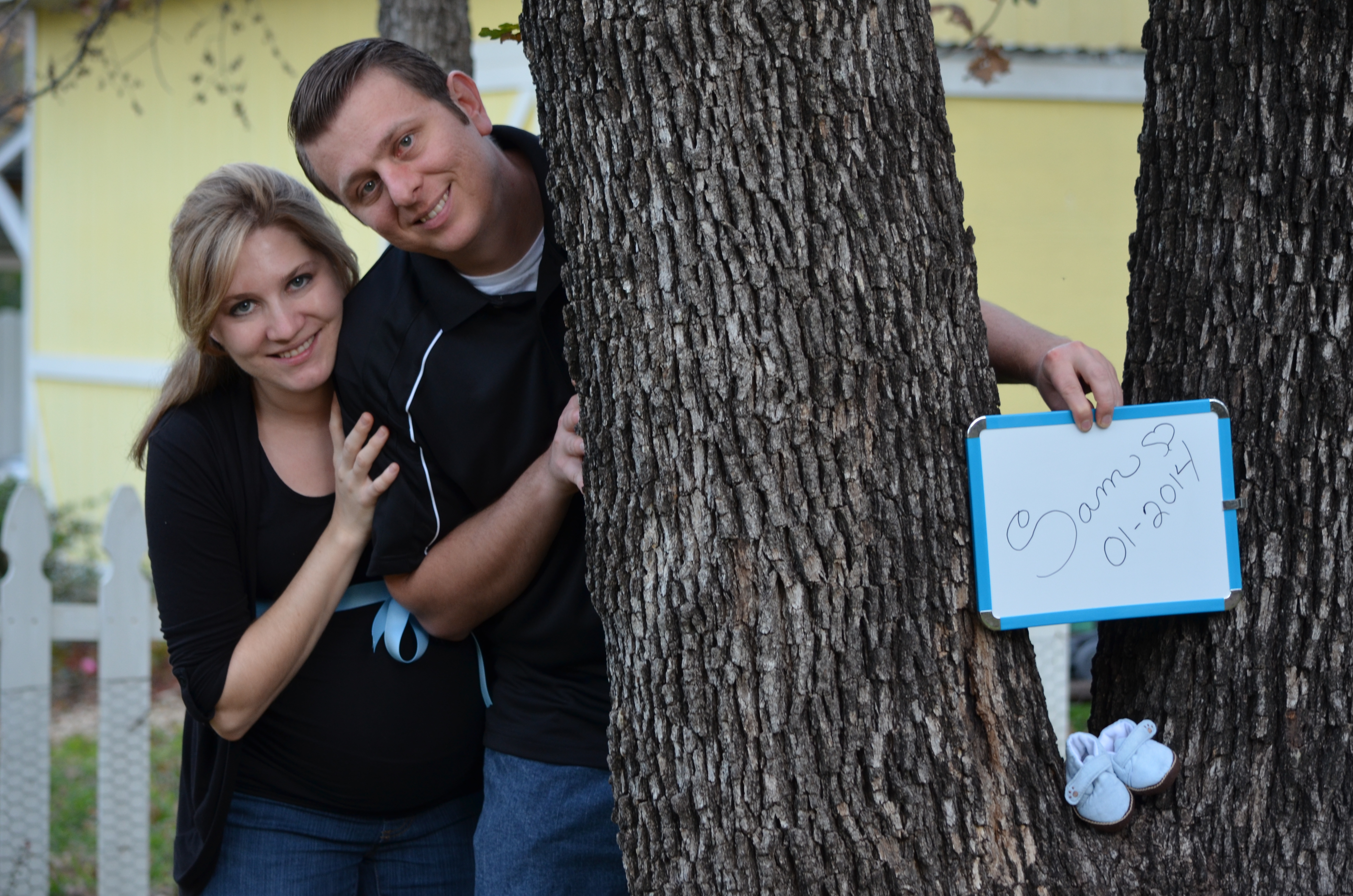
David and Tasha, some of our good friends, offered to take semi-professional pictures of my husband and me about two years ago for Christmas. This last weekend, we finally took them up on the offer. Baby Sam made the difference.

But everyone knows that. It’s obvious that parents have to be less selfish. It’s also common knowledge that parenting calls forth people’s weaknesses. I knew this all along, and that’s why I put off children for my first eight years of marriage. I knew kids would test me, and until now, I wasn’t ready for that test. Instead, I subjected myself to lots of other tests, earning bachelor’s and master’s degrees, where all the questions were safely embedded in a two-dimensional world. There wasn’t much to mess up—at least, it would be hard to mess up someone else’s life. Now, the game has changed. Now, my decisions can make or break someone’s life.

Ironically, I know I’ve done some messing with my husband’s life by keeping too busy and being self- and career-absorbed over the years. It wasn’t really possible for me to live a self-contained life: our decisions always impact others. I just wasn’t ready for the mega impact of a parent-to-child relationship.

Good news, though. God is stepping in, like he always does. The verse I keep hearing this week is 2 Cor. 12:9-10. “My grace is sufficient for you, for my power is made perfect in your weakness.” Thank God for that!

DSC_7731
We were tempted to cancel our photo shoot, because it came after a long day of grocery shopping for me and outdoor work for hubby: my feet were swelling, and his whole body ached from putting up a greenhouse.

One practical demonstration of God’s sufficiency (“my God shall supply all your needs,” Paul writes) has been a new friend, who enthusiastically agreed to help me with the baby room. She came over on Tuesday and helped me order a bedding set. She talked me through using the breast pump my other friend gave me. She went shopping with me to choose paint and other baby supplies. And she’s coming again today to help make some decorations for the baby room. Maybe these things seem trite to you homemaker women out there, but to me, they have been a godsend.

I don’t think my new friend realizes why this stuff is so hard for me—it’s fun for her. But that’s because she’s a hands-on woman; I’m a hands-off type (read: I like to work with words, ideas—basically stuff I can’t break). Amidst my wallowing that “I suck” this week, God has turned my sorrow (and raging hormones) into joy.

The beginning of the week was hard, but the end is getting better. So I know that homemaking is not one of my strong points. So what? God’s power is made perfect through my weakness, and through friends and loved ones he sends to make up for what I lack. I feel so blessed this week to be surrounded by friends and family who can help me. Generally I don’t like to ask for help, but this lack of dependency is just another weakness God is helping me through. It’s a weakness I intend to ditch, because I know if I hope to get through parenthood, I’ll need some help. It sounds corny, but that old adage is really true: the first step to change is admitting we need help.

Thank you so much, Lord, for sending help just when I needed it.

DSC_7783
But we went to take pictures anyway, tired and grumpy. In the end we had a lot of fun, and now we will always have the memory of this moment. Thanks to Deborah, Tasha’s mom, for the great pictures!

A Joy Restored

girl 2
Photo Credit: “Jump” by Jana_Koll

I’ve said my dream was to be a writer. I developed this dream in childhood—I don’t know exactly when, but it was early. I read profusely from age eight on, and I’m guessing my writing dreams developed as my reading list grew.

At that age it was enough to have a foggy notion, a sort of affinity, a general inclination or tendency to writing. Writing was fun! I did it without overly thinking about it. I jotted silly stories and poems, and when I started playing the piano at age eight, also penning song lyrics. Back then I never thought about the practicalities of getting published, the imminent necessity of earning a living, the eventuality of needing a schedule to keep oneself on track to produce enough, often enough, to survive. No, back then my dream was a hobby, a thing I did at whimsy with no outside provocation. I did it because I enjoyed it. It brought me joy. It was fun.

How wonderful to be a child, to be innocent of worldly and societal expectations, or implications of adulthood. How I wish, as I write this, that I could go back.

Is that impossible?

It seemed impossible when life threw me its first really traumatic curveball at fourteen, when tragedy struck so quickly it seemed childhood was snatched away overnight. Then it was, I have to think, that Satan really went in for the kill on my identity. And with it, my dreams.

Suddenly I was no longer a capable, positive, promising child. I was an incapacitated, negative, doomed child. My world as far as I could see had collapsed around me. I couldn’t see beyond the walls of my home, now torn apart by dissension and hatred and despair.

Though a family breakup may not be our fault, it has everything to do with us. It has everything to do with how we see and understand our place in the world, everything to do with how we define ourselves. I’m not saying this is how it should be, or even that it’s logical, just that this is how it is.

This family event affected everything about me. It redefined me in negative, defeated ways. I became, in my eyes, a pitiable child, one who couldn’t speak up or have needs, either at home or at school.

Instead of being an empowered writer, I became a closet writer. That dream of writing got shoved in a closet, shoved under cover—literally, under the covers of journals—as I took to writing about my family plight and my own plight for no one’s eyes but my own. I guarded my writing, and with it, my pain, like I guarded the family secret. This was not healthy. And yet, by God’s grace, he even used that period of writing to myself for good. Even though the subject matter was bad, it kept me growing at least as far as a writer.  The writing kept my joints oiled, kept me in practice. The practice was being perverted, but it was leading to something only God could see.

happy life
Photo Credit: “Happy Life” by Lusi

Today I feel I have regained the joy of writing–maybe I’m even embarking on my second childhood! Gone are the dark days and the need to hide who I am, because God has restored to me my value and my worth. I rejoice because my identity is not defined by what was done TO me, but by what God has done FOR me. He saved me. He restored me. And He has returned me to the joy of my youth. Thanks for sharing my journey!

Of Bibs, Cribs, and Big Kid Things

Photo Credit: “Pregnancy Portrait” by MeiTeng

(Or “Why I Hate Baby Shopping”)

I am four months pregnant, and when asked questions like “How are you going to decorate your nursery?” I have no answer. When my friend sent me her daughter’s birth story, I felt guilty that so much of the terminology she used was Greek to me. When another friend offered to go maternity shopping over a month ago, I brushed her off. When my other friend loaned me a tub of maternity clothes, I was relieved that this was one detail I wouldn’t have to worry about. When my lovely sister-in-law pumped me for my preferences on a baby shower, I also thanked God that she would be taking the burden of planning that off me.

See, when people comment on how excited they are for me to be a parent, I glow with pride. But when it comes to planning the details of actually having a baby—both the birthing and care of—I find myself resisting at every turn.

What gives? Aren’t new mothers supposed to be able to think of nothing else? Shouldn’t they be excited to decorate, and shouldn’t they be drooling over bibs, cribs, and everything baby related?

Whether or not that’s the case—though I think it’s silly to lump all new mothers into one category as I’ve just flippantly done to make a rhetorical point—I’m not. You see, I feel it’s better to focus on the intangibles, rather than the tangibles, and I guess this comes from my personality (and maybe some academic training), as well as my Christian beliefs.

While I realize I will eventually have to deal with a nursery and birthing options and formula and diapers and spit-up and poo, I don’t see the point in getting all worked up over that now. Soon enough my life will be turned upside down, filled with feedings and changings and all kinds of extra housework that doesn’t excite me. Does this make me a bad mother? I don’t think so. Unrealistic, maybe, but not bad.

husband-and-wife
Photo Credit: Church Leader Gazette

Like some in the academic community, I sometimes find myself wanting to pretend that the material world doesn’t exist—that the best life is had by sitting in a room somewhere discussing ideas, or writing them down. I have idealistic notions about just communing with my husband over ideas and discussion without the daily intrusion of dishes and dirty floors. Can’t we just eat out every meal? Why do we have to waste our precious energy on preparing food and cleaning up and making messes that also need cleaning? I want to ask (but I don’t because he already thinks I’m too pampered—and I am).

This isn’t productive, this train of thought I’m on. It’s me fighting reality, is what it is, and maybe me thumbing my nose at people who only seem to live for the here and now. I’m talking about the people who are always preoccupied with the current fashions, or the next vacation they can take, or what new movies they’ve seen or the most recent Facebook statuses or their last (most recent, I mean) meal.

When people only bring up to me the material details of my baby’s life, I feel annoyed, wishing they would instead engage me in a discussion of how I plan to raise the child—what values I plan to instill, how I will instruct him or her as to God’s word.

I know kids and teens who have every material need they could ever dream of—a vehicle, a new dress to wear to church each week, money to burn at the theater for each new release—and yet these kids struggle with depression, anger (usually at their parents), and belief in God. And I find myself wanting to ask the parents: “When do you make time to really listen to these precious kids of yours?” “How have you ensured that they are learning to rely on God’s word, and not the world’s?” Aren’t these more important questions than: “Where did you find that cute outfit?” “What changes are you planning to make to your child’s room?” “What kind of car will your teen get?”

gifts
Photo Credit: “Go Shopping 2” by Lusi

I have to be careful here. I don’t want to belittle parents or other who show their love through gifts or acts of service. I have fond memories of one aunt who, in the midst of some of my toughest teen years, brightened my life with some special outward touches, such as a manicure and a set of highlights (at age seventeen, I had never had either). Let me not discount the good we can do unto others by gifts or acts of service. In fact, without these, it would be really hard to know we were loved. I am also writing from a privileged position; if I had to worry where my next meal was coming from or whether the bills would get paid, I’d probably have a different take on this topic.

I guess what I’m saying, then, is that while we don’t need to totally give up attention to material things, we should strive to keep our priorities straight. Sure, go ahead and give your kids good gifts. Have fun shopping for a crib for your baby and clothes for your teen girls and vehicles for your teen boys. But don’t do those things without also taking care of the more important matters. For me, these are a relationship with God, relationship with my spouse, and fulfillment at the work of my hands. (I guess if your work is in making material products, my argument falls somewhat apart.) I find meaning in quality time and good conversation, Bible study and prayer, good music and good books (yes, I mark my own hypocrisy).

Because I know there’s no point in trying to totally write off the realities of material living, my suggestion to myself is this: as much as I can, I’m going to make my daily, material activities meaningful through doing them with others. I want to view my upcoming life changes (like feeding and changing) not as detestable tasks, but as opportunities to bond. Housework, when my child gets older, can become an opportunity to teach him or her about responsibility. Clothes shopping? A chance to teach about thrift (oh, what a fuddy duddy I am! I can just see the eyes rolling!). Decorating projects (how I hate decorating my house!) I can choose to see as chances to collaborate creatively with my family.

I’m going to work at not being so opposed to (or snooty towards) the daily activities of life, 1) because I know I can’t avoid them, and 2) because if I don’t, I will have no common ground upon which to connect with most of the people in my life. The caveat is this: I don’t want to forget that these things are just means to the end of creating real meaning in life–real relationships and real purpose. If you have a suggestion for my baby’s nursery, or clothing, or belongings, I merely ask you to keep the same thing in mind.

baby bottle
Photo Credit: “Mother and Child” by Lusi


Birthday Blessings

flowers
Photo Credit: Flowers by Just4You

Today is my 29th birthday, and I can’t think of a better way to spend it than sitting here at my favorite breakfast place writing, reflecting, and thanking God for the blessings of the past year. Here’s a recap of how my personal and professional lives have converged (and diverged) over the past twelve months—showing me how God takes a very personal interest in the mundane details of my life.

Last Summer

I was fretting over what I saw as conflicting desires, including the desire to write, teach, and (though I didn’t much tell anyone), have a baby. God started to drop things into place when Paul Coneff of Straight 2 the Heart ministries asked me to help him write his first book, The Hidden Half of the Gospel. During July of last year, I was also starting to write my master’s thesis (eventually 100 pages), which was a perfect warm-up for the book-length project I was taking on. Now busy with writing, I tabled my internal baby discussion for the time being.

2012-11-08 22.27.41

Last Fall

I was still working fervently on my two writing projects, but there came pausing points in both works, during which time I was left with nothing to do but finally start writing what was in my heart. Four notebooks and one month later, I had the rough draft of my memoir and the beginnings of this blog down on paper—both would wait for January for further development.

I looked around one day on campus and asked myself if this student life was what I wanted for five to eight more years. I didn’t see how that life would allow me to be the parent I knew I’d want to be—if we decided to have kids.

One day in October, while writing a paper for my last graduate class, I broke down at my computer and finally faced the truth: I was tired of this solitary student life; I wanted something more. I called my husband in tears and he came home early that day to take me on a walk-and-talk through the local state park. As I unknowingly acquired poison ivy, it was a relief to hear myself finally saying words I had been repressing for a long time: I want to have kids (this was a fun scene to write for my memoir).

In December I completed my master’s program and sent out two graduate applications—one MFA, and one PhD—just in case we didn’t conceive, and just in case God still wanted me in graduate school.

girl on bench

Last Winter

I did not get into either of the grad programs I applied to, which told me that was not God’s plan for me right now. I went off birth control in January, began this blog, and started officially calling myself a writer.

I spent the early months of the year feeling lonely and a bit depressed—now I was alone in our big house all day long, getting to write, yes, but without the promise of much people time during my days. I started really missing my family in Minnesota, whom I hadn’t seen since the previous June. I also realized I had been taking my husband for granted for most of our eight years of marriage—putting him on the back burner as I worked on emotional issues, self-improvement, and career development. I decided to be more family oriented.

Around the same time, God also brought many friends into my life to help alleviate my loneliness. This told me that God could meet my need for people contact with or without a baby.

Amanda and me

Last Spring

In May, when I wasn’t expecting it, I found out I was five weeks pregnant. Yay! We had a fun time surprising our family with the announcement, as most hadn’t been reading this blog and didn’t know we were trying. I rededicated my efforts to finishing my memoir “before thirty,” and now I also vowed to try to finish before baby.

2013-01-09 23.52.05

Currently

I have just returned from two weeks in Minnesota—probably my last trip to see my family before baby comes in January (I am four months along today). While in Minnesota I attended my ten-year class reunion and felt additional closure about God’s plans for my life. Though visiting Minnesota always makes me wistful, I clearly saw God’s wisdom in moving me away almost nine years ago. Visits back home used to be hard—brought painful memories—but more and more they bring happiness. Now, my husband and I are talking about getting a summer house in MN in a few years—which prospect fills my heart with joy.

My memoir is going well, and I have made contact with a favorite author of mine, Trish Ryan, who has agreed to consult on my book in late August to help me prepare it for publication (my hubby is giving me a “loan” because I told him it would be a good investment!). This fall I will be searching for an agent and/or publisher as I prepare for this baby’s arrival—and hopefully this winter I will have both a healthy baby and a manuscript headed for publication. The healthy baby is more important, of course—the book would just be a bonus. Regardless of how long it takes to get the memoir published, The Hidden Half of the Gospel will be published long before my next birthday—showing me that God heard my “before thirty” prayer six months ago.

It is 10:10 as I finish writing this, and my dentist’s office just texted, “Happy Birthday, I hope you have many reasons to smile today!” I am happy to say, “Yes, I do!” Today, I am smiling about my immediate future that will consist largely of family time, writing time, and more Minnesota time—and that doesn’t even compare to my eternal future!

Thank you, Lord, for taking such a personal interest in the mundane details of my life. Today I praise you for how you care about my heart’s desires and how you’ve led, not just for the past year, but for the past twenty-nine years.

The Writing Life, Pregnancy Edition

Yawning_Woman
Photo Credit: AsToldByLisa.com

Seeing as how pregnancy has reduced my life to mainly eating and sleeping these days, my new writing strategy is to divert all remaining energy to my memoir (which means, sadly, fewer, shorter blog posts). Nothing like a taskmaster baby to put a deadline on your project!

Now that I have T minus seven months until D-Day (delivery!), I feel a new urgency to finish what I’ve started. But this is good. I know how demoralizing working on a never-ending book can be, because that process describes my last literary effort. I don’t want to drag out the current project indefinitely, because the feeling that it could go on forever is deadly to my motivation.

If I seem callous toward the new life growing inside me (because I don’t seem to be thinking much about it), please excuse me. It’s just that

  1. I have a hard time yet believing there’s really a baby in there, and
  2. I think I’m doing us all a favor—baby, hubby, and me—by getting this book out of my bones before baby comes.

Not everyone will understand that, but some of you will. I’ve had the dream of book-making for over fifteen years, but the dream of baby-making? Not more than a year. No kidding. The idea of a baby is a brand new concept to me, almost as new as the actual baby (embryo?) inside me. So I am slowly, let me stress slowly, getting used to it all.

Meanwhile, I am doing all I can manage per day–from 2 to 7 hours so far–to clear room for baby in my brain—by getting out all the ideas and emotions I’ve been trying to deliver for half my life. It’s an exciting, blessed time.

The one thing I can say with certainty about this baby-making thing is that it’s giving me less stress than have most other monumental events in my lifetime. You know…marriage, beginning a career, moving, starting up a ministry. What is the difference? To me, one is a spontaneous process, one that nature guides with or without my efforts (ahem, well, after the initial ball is rolling). But the other events all depended on my active, ongoing involvement to keep moving forward.

This baby? It’s growing whether or not I’m thinking about it, whether or not I’m working on a nursery (not even started), or whether or not I’m buying baby clothes (not even a stitch). I realize that once baby is here, he or she will require my undivided attention. Then it will really depend on me to keep it alive. Then my life will change dramatically. Obviously.

For now, though? I am enjoying God’s gifts to me—time to sit back and marvel at how His miracles don’t require any work on my part (there’s a peace in realizing that)—and time to work on creating my other (brain) child. What a blessed mom-to-be I am!

Reviving Relationships—Rethinking Goals

Image


 “The hopes of the godly result in happiness, but the expectations of the wicked are all in vain.” (Proverbs 10:28, NLT)

When I read this verse today, two questions immediately sprang to mind.

1) First, am I godly?

2) Secondly, what are my hopes—in other words, my goals? I have the sense that they have changed in just a few short years—and I’m not sure I’ve really defined them.

You should understand something about me. A few years ago, after my older brother recommended the book The Seven Habits of Highly Effective People, I got a little obsessive about my life’s goals. Looking for ways to improve my abysmally ineffective first year of teaching, I lapped up those seven habits, even making my second-year students endure a three-week unit on said habits.

During my third year of teaching, on my own I completed some exercises found in the back of my new 2011 Covey planner. These entailed writing out my roles and goals, my values, and my bucket list. You can find that list here.

On paper, my goals look good, but in retrospect, I think I’ve done badly—at least on the relationship points.

A Few of My Failures

“Conscious steps toward building or maintaining my relationships.” Maybe a few. We did start a weekly small group Bible study after I left teaching. But it took my new Bible-study-buddy, Tasha, to get me out of my comfort zone for social outings–sporadic spa days.

“Avoid overcommitting myself in areas that do not desperately require my attention.” My hubby’s feedback heavily suggests otherwise. In fact, just now I am kicking myself for getting too involved at church, yet again, this year.

“Don’t forget to make and take time for friends.” I’ve forgotten often. I have plenty of relationships that have fallen by the wayside, a topic for another time, but the biggest relationship I’ve neglected by far is my marriage.

This is hard to admit. Suddenly I see that all these years I’ve tried to blame him for our shortcomings as a couple. I’ve deluded myself into thinking I was the one doing most of the giving…he most of the taking…but now I’ll put the question to myself: What have I really done for our marriage?

As I think back on the eight years we’ve been in this union, all I see is a panorama of achievements I’ve chased—degrees and jobs and dreams—that were all selfishly motivated. To this day, I can list lots of things I’ve done for myself, but it’s hard to say what I’ve done for our marriage.

The Undefined Emptiness

Lately, with plenty of quiet time on my hands, I can’t help but reexamine my life, and what keeps coming up is that I have an emptiness inside. None of the degrees or achievements have filled it. God and my husband have done much to soothe it, but after much time on my knees, I feel it will not be enough to keep to myself—just me and my God and my husband and my writing.

There is something else I’m supposed to be doing. I know I need to be less selfish in my marriage, yes–and I’m working on it–but to deal with this maddening quiet when he’s not here—when it’s just me and my writing and my restlessness—is there something else?

So this morning I prayed: “Lord, please: I’d like a breakthrough of some sort. A pregnancy. A job. An acceptance letter [from my MFA program]. Some other place to belong, some other place to get my mind off myself.”

And you know what I heard?

“Lindsey, you are troubled about many things. But only one thing is needful.”

In his sequel to The Seven Habits, entitled First Things First, Stephen Covey uses an illustration involving a ladder and a wall, saying it will do no good to climb a ladder if it is leaning against the wrong wall. He’s right, of course, but only because it was God’s principle, first.

So says God and Stephen Covey: Lindsey, you better focus on question 1) Am I godly? Before you (re)tackle 2) What are my goals (and Where should I go, What should I do)? Because without getting number 1 right, number 2 is a moot point.

“Seek ye first the kingdom of God, and His righteousness, and all these things [whatever they are] shall be added unto you.”

Well, okay then. Back to my knees it is.

My Mission and Goals from 2011

Values Clarification

God: God is my Redeemer; he is the reason for my existence and my ultimate destination

  • I put God first every day
  • I use God’s word as my compass for all my life’s decisions
  • I strive to be Christlike and to be a witness to others in the way I conduct myself and live my life
  • I do what is right even in the face of opposition

Family and Friends: My family members and friends are the most precious gifts from God I have on this earth, therefore:

  • I take conscious steps toward building or maintaining my relationships with family members, such as family Bible study or spending quality time with them
  • I avoid doing things that would harm my family relationships, especially with my husband, such as over-committing myself in areas that do not desperately require my attention
  • I don’t forget to make and take time for friends; I keep my friendships in good standing; I do not “hoard” or limit my friendship; I am open to making new friends

Workmanship/Artistry: I have been endowed with specific gifts from my creator which I strive to develop to his glory

  • I write to share the story of what God’s done for me and to bring others to Christ
  • I play to be a service to others (such as in church, at funerals, etc.)
  • I use my talents not to uplift myself but to uplift God

Education: God has given me a wonderful mind to be filled with all that is lovely, pure, and true

  • I continue to learn constructive new things everyday that will benefit my own or others’ quality of life
  • I share what I learn with others
  • I obtain greater education for the purpose of  bettering my life or the lives of others
  • I avoid that which is emotionally harmful, mentally dwarfing, depressing or vulgar

Health and Fitness: My body is the temple of God, to be cared for accordingly

  • I choose to eat as healthily as is possible and realistic in my current lifestyle
  • I learn and implement new healthy recipes as often as I can
  • I exercise regularly to keep my body in good physical shape and to keep my mind clear
  • I choose to be happy with the body God has given me and my own personal “best”
  • I do not measure myself by unrealistic, worldly standards of beauty

Stewardship: I use all that I have to the best of my knowledge and ability to glorify God

  • I use my time constructively
  • I spend my money wisely
  • I treat my body as a vehicle of service for God and input accordingly

Roles

Christian

See Item 1 above

I read and learn what the Bible says, first, to prepare myself to witness, then, to know what and how to share with others

Wife

  • I am supportive
  • I think before speaking
  • I choose my battles wisely
  • I use my energy to encourage rather than nag
  • I find meaningful ways to show and reinforce my love for him everyday

Daughter/Sister

  • I am learning to have normal relationships with my parents and brothers
  • I call on a more regular basis

Teacher

  • To the best of my abilities, I teach the kids what will be most necessary, useful and uplifting to them
  • I am a positive role model
  • I maintain an active interest in their wellbeing and salvation
  • I discipline them when needed, even if it is hard for me to do so

Artist

  • I spend a significant amount of time (or that which is feasible) each week developing or practicing my talents, especially writing
  • I use my writing for a healthy emotional outlet
  • I use my talents to benefit others

What one thing could you accomplish in your professional life that would have the most positive impact?

Get my doctorate

What one thing could you accomplish in your personal life that would have the most positive impact?

I don’t know…

  • Start a small-group Bible study?
  • Have a child and learn how to have a normal, healthy family life?

The kind of person I want to be:

  • Self-confident
  • Loving
  • Wise/Discerning
  • Spiritual

All the things I would like to do (Bucket List):

  • Read through the entire Bible
  • Get my masters
  • Get my doctorate
  • Be an English Professor
  • Publish my writing for significant pay and in the venue that will impact as many people as possible
  • Take aerobics or Pilates classes for fun!
  • Be an aerobics instructor
  • Live in MN again, even if just in the summers
  • Lead a group Bible study for young adults
  • Find and participate in a ministry or service activity that both my husband and I are interested in and can do together
  • Compose music in a preserve-able form (learn how to use a music program to write electronic sheet music)
  • Achieve financial freedom so that money is never an obstacle, say, in taking trips to visit my family
  • Maybe adopt kids or do some kind of foster care or service for children
  • Get over my issues with technology; embrace that technology which is good
  • Become a Women’s Ministries Leader after my children have grown or I decide I’m not having children
  • Learn to see the best in people; never facilitate or further gossip

All the things I would like to have during my lifetime

  • Continual assurance of salvation; every day an open connection with God
  • A healthy, happy marriage every day
  • Maybe kids; don’t know yet
  • A lake house in Minnesota
  • My own study or writing room
  • A grand piano
  • A maid

Note: These prompts and questions come from my Stephen Covey planner from 2011. They spring from the principles of The Seven Habits of Highly Effective People, and I include my responses from 2011 here to help readers make sense of my next blog post, Reviving Relationships–Rethinking Goals.

I’d love to read any goals or bucket list items my readers would like to share! I look forward to your comments!

Playing the Stranger

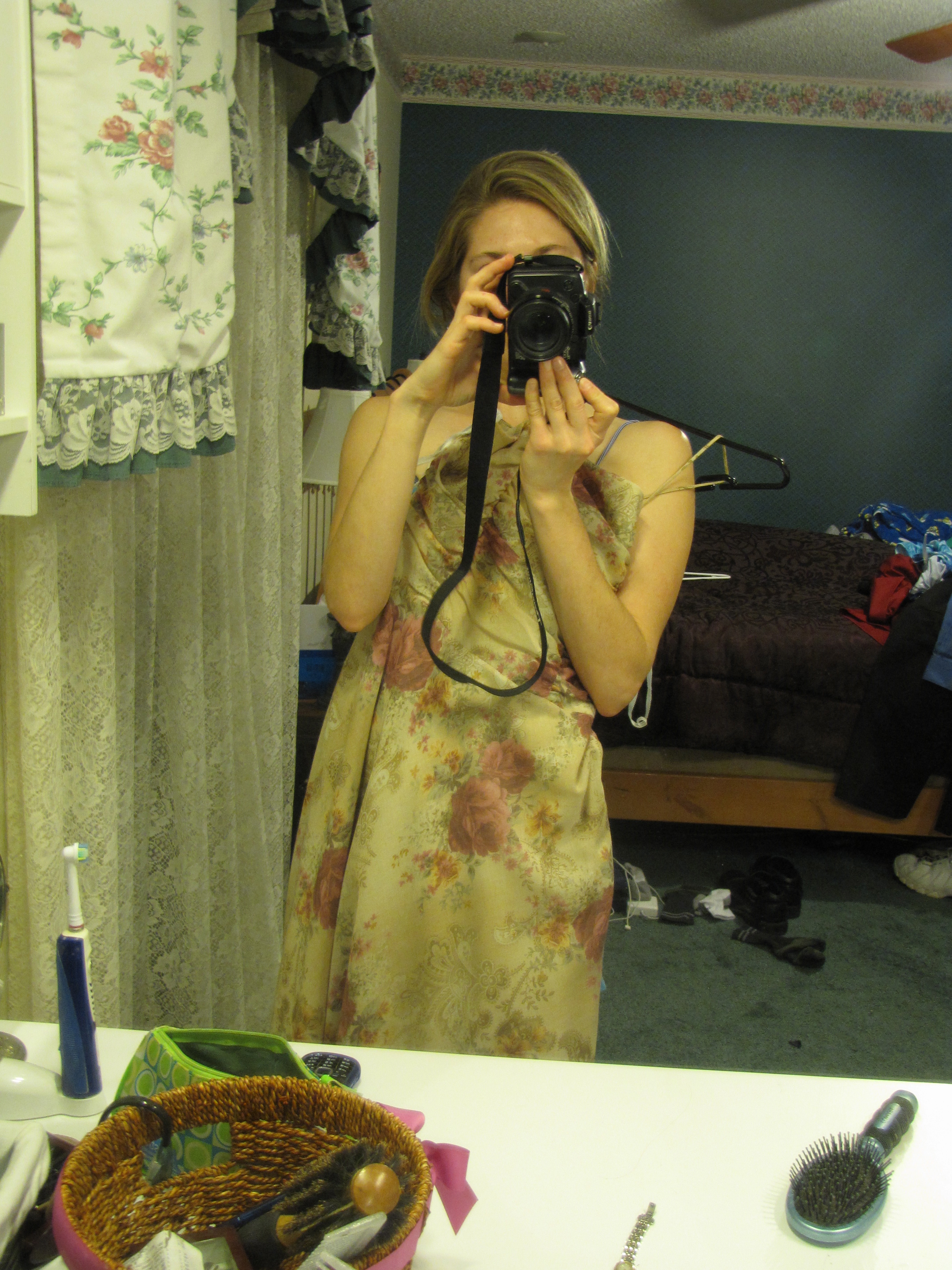
I found this old dress, a relic from high school senior pics, a few days before traveling to Minnesota for my cousin's wedding. Though more than ten years old, it seemed appropriate to wear. The posture of this photo is one I took at the wedding: background.
I found this old dress, a relic from high school senior pics, a few days before traveling to Minnesota for my cousin’s wedding. Though more than ten years old, it seemed appropriate to wear. The posture of this photo is one I feel I took at the wedding: a faceless photographer–capable of participating only as outside observer.

I should have brought Kleenex. I always cry at weddings; I knew this. But I was not prepared for the emotions unleashed at my cousin’s wedding Saturday.

Not only the customary tears for a budding union, but I cried regretful tears for all that I had missed over the years. You see, I moved 1,000 miles away from all of this, and all of them, eight years ago.

Faces from my past swarming around me, coming at me in waves, breaking through some icy barrier I’d built. There were old classmates, old classmates’ parents, and even a former teacher. I wanted to cry just for seeing them. I did.

In the past, what had I imagined of such a reunion? In my teen years I was very conscious of at first having to hide things. Later on, when it would have been okay to share, I still mostly hid, out of habit. To the point that I disappeared from people’s lives.

Standing with two former friends at the wedding and hearing them banter like they were not just past, but present, friends, hit me in the gut.

“Yeah, next time on the fishing trip you’ll have to come with–and bring your brother, too.”

“Billy* couldn’t come to the wedding—we’ll have to see him next weekend.”

“So, there’s no alcohol at this wedding? You must have a flask stashed in your tux, huh?”

Soon I wasn’t even standing there. And I realized I had done it. I had erased myself from memory.

I excused myself for the bathroom. But then, selfishly, wondered if maybe, just maybe, they were talking about me.

Sad to say, I’m just beginning to realize how self-centered I’ve been all these years. Always thinking about my feelings—protecting myself.

The fewer people I’m close to, the fewer who can hurt me—was my unwritten, unspoken motto.

What have I done?

As I see faces from my past swimming at me, I now feel it was all a lie.

The face of an old teacher’s aide—from my first grade classroom, nonetheless—exclaiming, “Is this Lindsey?! She’s turned into such a beautiful young woman!” A mother of a classmate, gasping, exclaiming my name, and enfolding me in a hug.

My sixth grade teacher’s face lighting up as she asks, “Are you writing?” Yes. “Oh good; I always thought you should!” An ex-boyfriend’s mom even engaging in friendly talk as she never did while I dated her son.

My cousin’s, the groom’s, exclamation: “Lindsey, what an awesome surprise!” My old friends, C and T, who married each other, taking time to talk with me over an hour as if they had nothing better to do. “It’s so good to see you!” they say (and mean it, I think). It has been about eight years.

Another old friend looking in my eyes and, to my small talk, saying, “Being away from home must be the hardest part.” Understanding for the words I could not speak.

What have I done?

Desperately I snap pictures of my young cousins and their spouses and children, laughing and talking at neighboring reception tables. They too are familiar, comfortable, with one another. And like my classmates, they have passed through many of the same coming-of-age events as I, only together.

There’s something comforting about a shared heritage.

But I have refused to be comforted.

This visit has once again touched me where it hurts…still, thankfully, it has been different. Like the Minnesota snow I left behind last night, something in me is thawing.

As much as is possible from 1,000 miles away, in the future I’ll try to be less of a stranger.

Is My Writer Seeping Through?

Image

Since deciding to be a “real” writer, I’ve kept a low profile. Not wanting people to know I’ve embarked on a low-paying (sometimes no-paying) job, I’ve hidden my true profession behind a façade of graduate student and teacher.

I haven’t been a teacher since May 2011, but until last December, I really was a graduate student, putting the finishing touches on my one-hundred-page master’s thesis. Mostly I was done by October, but I still let my classmates offer condolences for “how hard” the writing must be.

It wasn’t hard, really, because my advisor let me write the way I wanted to write: creatively and personally (with a little academic jargon sprinkled in). I guess this “practical” approach worked because the topic was practical: best practices for teaching writing.

When a few of my fellow students heard about my personal [slash] creative [slash] academic project, they seemed intrigued.

“I’d never have thought of that,” some said.

As they scrambled to turn up sources on the databases, scouring search engines and library shelves, giving themselves ulcers looking for an original angle, I just sat back and wrote. I started from the inside—I knew what I wanted to say, and I didn’t much care about citing the scholarly conversation that had come before me, or that would come after.

I know this sounds sort of pompous, and it wouldn’t work in some of the disciplines where original voice is not prized. But thankfully, English departments operate on this truth: If a voice is engaging enough it doesn’t really matter what it’s saying—people will read it for the good writing.

And that’s the truth in the real world, isn’t it?

People who don’t care a lick about golf will watch Tiger Woods because he excels in his sport. Same for most Olympians and Olympic sports. Who watches bobsledding or curling on a regular basis?

But millions watch the Olympics because it’s fun to watch pros do what they do best.

Funny, then, that I feel I’m still hiding in the wings, waiting for permission to “come out” to do what I do best.

Well, not so funny, I guess. I have no doubt that the hiding is due to the overwhelming personal content of my writing. (It’s not really about the money.)

In order for me to write about the things I write about (mental illness, family dysfunction, deepest fears) and be respected, I feel I have to be either a mental health professional or a pastor, or some other authority who can talk on these things at a close, yet safe, distance. That, or I have to make the writing itself attractive. Because the topics just aren’t.

Still, I am convinced that these topics are worth discussion. Worth a master’s thesis, a doctoral dissertation, and many book series. I am convinced that all this painful self-reflection is what more people ought to be doing, but aren’t. But if it’s so worthwhile, why aren’t more people doing it?

Because: Like graduate students fumbling for research topics, we are afraid of ourselves, and we are afraid of what self-examination might reveal. So we look for other voices to latch onto. Let someone else be the guinea pig—or the “straw man,” to use an academic term. Then, if our life thesis fails, we can partially blame the voices on whom we’ve built our own.

Well, I’ll stand behind my own work. To the thesis examiner who said my work got uncomfortably personal at times, I would remind her that everyone else who read it said it was the most memorable thesis they’d ever seen. She was more comfortable in the theoretical realm, and that’s where she encouraged me to return. Toward the end of the defense, we had a more informal discussion about how we felt about publishing—how we felt about others reading our work—and this professor said she felt terrified thinking others would read her academic writing (not to mention any personal stuff).

Just like she couldn’t understand me being so personal in writing, I couldn’t understand her being so guarded (about dry academic prose). Perhaps she is worried that others will smell a rat—that of inauthenticity. And I guess if I were not being true to myself, I might worry about the same thing.

But after denying myself public expression for so long, I think having to live in hiding is far worse than living exposed. After spending time in a theoretically constipated English department, I think living vulnerable is better than living jealous of writers whose real-world topics you only dare poke with a critical stick.

Perhaps my guarded professor would even agree. At the end of the day, she passed my thesis unconditionally. Call my writing what she will, that day she called me a master.