The Pregnant Post

photo-1
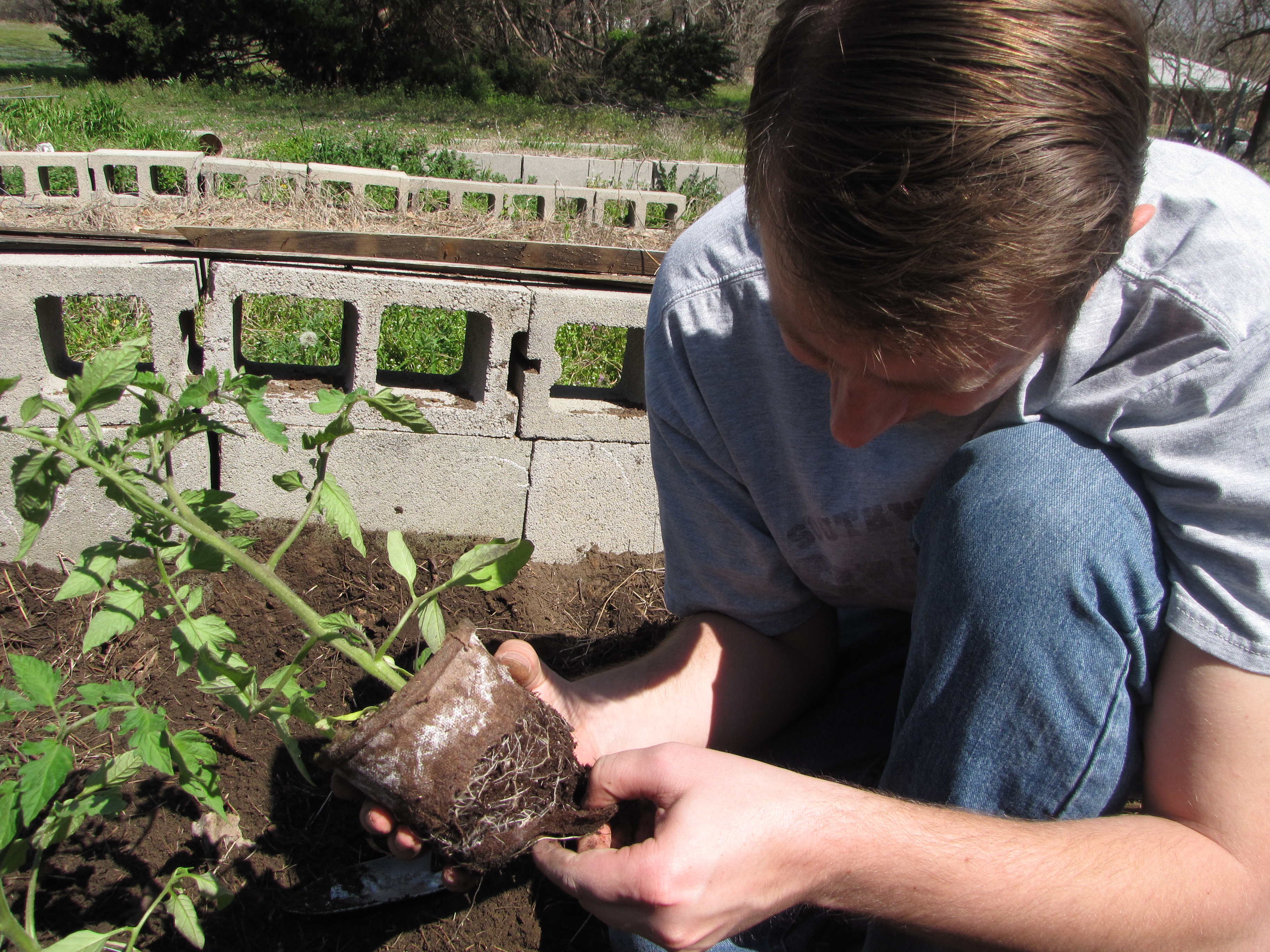
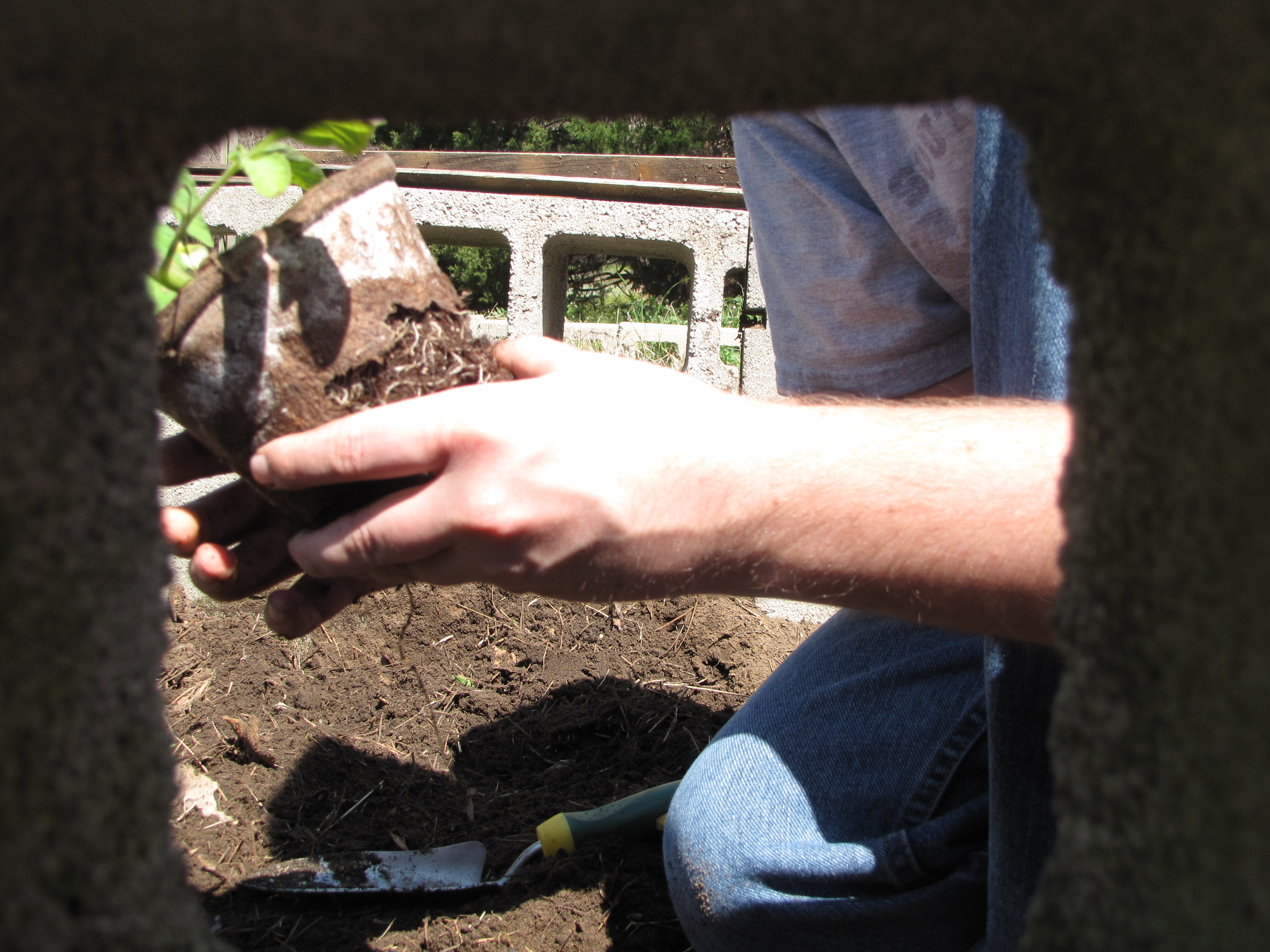
This is the picture we sent to our family members to break the news, but it took our seventeen-year-old niece to get it. Everyone else thought we were making a statement about what we were cooking that night!

I myself don’t like pregnant posts—which is why I won’t keep you in suspense. Yes. I am. A post about pregnancy is okay, as long as it doesn’t resort to clichés, so I’ll opt away from discussing the obvious facts of my developing condition.

I do like irony, so I’ll point out that just a few weeks ago when I posted I May Be Childless (At Least my House is Messy), I really wasn’t. But best of all, I love answered prayers, so I’ll give you these lines from my prayer journal on March 31st:

“I know I should be happy in whatever circumstance I’m in—but I guess I’d like to ask for a breakthrough of some sort: a pregnancy, a job, an acceptance letter. I feel like you work through breakthroughs, and events. You also work through hard times and drought. So any of the above could happen, or not.”

When I wrote that, I was just getting back from my Minnesota visit, and my mother-in-law had asked me if I was glad to be back, and I had lied and said yes.

Truth was, I wasn’t excited about coming back to a house that was empty most hours of the day.

I also wrote that I’d figured out why I was having such an aversion to doing housework lately: It was added “alone time” to my “already lone occupation of writing.” It used to be “alone time after people time.” Now it was “more alone time after alone time.”

At the end of that entry, I recorded that I’d gotten on my knees and heard God say, “You are worried and troubled about many things, but only one thing is needful.” So I decided to rededicate myself to the Lord, again (you’ll notice I have to do that a lot—like, daily), trusting that He’d work out the rest of the details.

Over the next few weeks, I recorded hearing God direct me to write…to write about some frustrations I’d been having in certain relationships…write to be an agent of change…use my swirling emotions as fuel…and I did…until I discovered I had a solid draft of that book I’ve been wanting to publish before thirty.

As to my hatred of housework, I heard God telling me I needed an attitude adjustment. He told me I needed to “plan to stay,” as in Jeremiah 23. I needed to trust that God had put me here, to nest, with or without children. Needed to get over my looking backwards to my past. If there wasn’t going to be children, I still needed to get my house ready…for friends and others we can minister to in our home.

Next to family time, the best memories I have in my home are those times when we held our small group Bible study and our Straight 2 the Heart prayer group. God reminded me that my ministry to others (and the growing of relationships) wasn’t done. I’d been blessed with a beautiful home, and no matter the status of our fertility, the house would be used, if I didn’t get in the way.

In a nutshell, God told me, “Write, and be at home. Get comfortable at home.”

That was also the period when He opened my eyes to see all the Friends in High Places I’ve had all along.

When I realized, on May 4, that I was guilty of the sin of ungratefulness (and a bad attitude), I prayed this verse I found in Micah 7:9—“I will be patient as the Lord punishes me, for I have sinned against Him. [My punishment, I felt, was extreme feelings of guilt and uncertainty that were literally upsetting my stomach—maybe it had something to do with pregnancy, too.] But after that He will take up my case and punish my enemies for all the evil they have done to me. The Lord will bring me out of my darkness into the light, and I will see His righteousness.”

I did write. I did get more comfortable at home during those weeks. I decided, “I can do this.” And then, when I wasn’t even looking for it, last week I got the unexpected news: “You’re pregnant.”

Yes, God works both through breakthroughs, and through wilderness experiences. And even though it’s easy to say when things are going well, I’d still like to quote the Apostle Paul to say this: “I have learned in whatever situation I am to be content” (Phil. 4:11). If you’re going through a dark situation today, remember it’s temporary—and the morning light may be just about to break!

I May Be Childless—At Least my House is Messy

Image
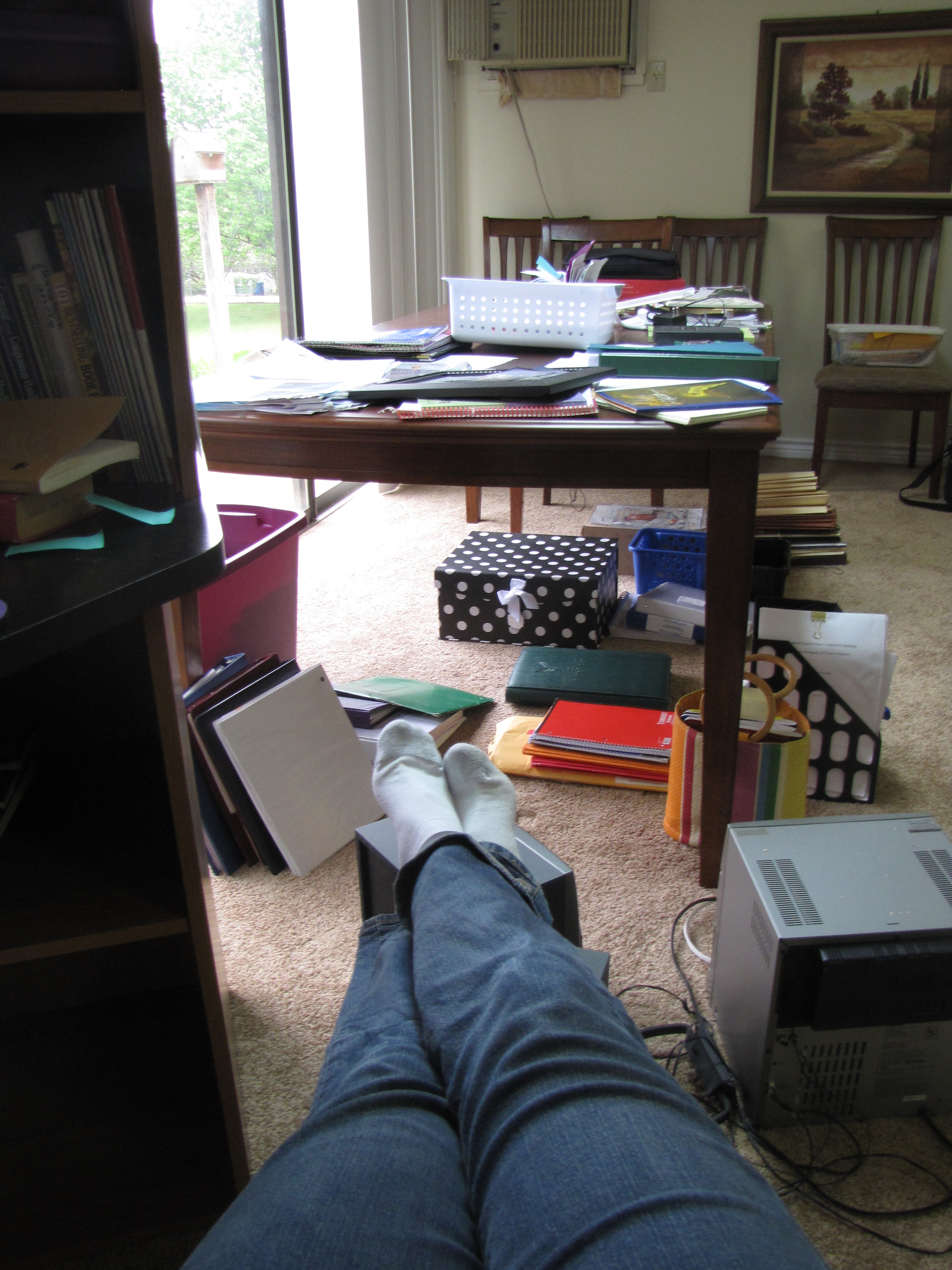
Please don’t think my house always looks this bad! This is just what it looks like when I reorganize my office.

Last weekend I again felt like a failure as a woman. How did this happen, you ask?

Scene: I’m standing in a pasture talking to two girlfriends. The first one is twenty-eight like me, and married, but unlike me, has a kid. Same with friend number two, only add a couple years and a couple kids.

Can you guess what we are talking about?

The pasture belongs to number-two. Number-one and I have come for a visit and are walking number-two’s property. Inevitably, the talk turns to houses and the jobs we work to afford them and the bodies we are housing with those jobs.

What are our livelihoods? How are we getting by day to day and affording these homes in which we live and raise our families?

Basic questions. They deal with basic necessities that we all have.

Yet when I find myself in these conversations, I see an un-level playing field.

Number-one has started cleaning houses to supplement income. Number-two has started selling Mary Kay. Number-one makes her own cleaning products from baking soda. Number-two plants and cans an impressive garden. Both plan to homeschool, and number-two is positively beaming just talking about what fun it will be to write lesson plans again (she was once a teacher).

Then there’s me. They don’t turn the conversation my way, but I take care of that in my head.

“So, what are you doing to supplement income? What financial struggles have you had? What sacrifices have you made for your family?”

“Uh, well, currently my life is pretty easy,” I’m embarrassed to say (in my head). “Financially easy, anyway. My hubby is making good money at the moment. And we don’t have kids. Yet.”

“Wow. That must be nice. So what do you do all day?”

Image

“Uh…” here I panic a little. My mind wants to go blank. What is it that I do again? It’s not gardening. It’s not concocting creative cleaning supplies, chasing rug rats, or drawing up lesson plans. When I did write lesson plans two years ago, I don’t remember relishing the act.

Truth is, I’m struggling just to keep my house clean at the moment. And I don’t even have kids, mind you.

Wow.

What a loser I must be.

Standing with these two very industrious ladies, I am suddenly struck with the weight of my failure as a woman.

Image
Yet another view of my office under construction. Note the headless bookshelf in the corner; my hubby made that for me, and I am waiting for him to finish it off before I put it back to use.

 Am I a Woman, or a Worm? (Perhaps a Writer…?)

A few days removed from my moments out to pasture, the Holy Spirit has helped me realize something I was missing while feeling so guilty for my perceived failings: There’s a good reason why I’m not out cleaning houses or selling Mary Kay or planning a garden or writing lesson plans, and it’s not because I’m a failure. It’s because that’s not who I am.

If you want to get financially pragmatic about it, sure—I’m also not doing those things because we don’t need the money (I might be if we did)—but there’s this point as well: We planned not to be put in that situation. All my waffling about motherhood aside, we also always wanted to be financially stable before we brought kids into the world.

As I prayed about my feelings of failure and my worthlessness as a woman, the Lord brought these words, like balm, to my soul: Don’t compare yourself to others. Just compare yourself to Jesus.

Sometimes when I pray I hear whole paragraphs and Bible verses rising out of the slime of my soul to comfort and guide me. Note that my slime wouldn’t do any good had I not already  planted God’s word in it (Psalm 119:10). Yet this message was annoyingly concise. So I thought about those words some more. How could I compare myself to Jesus in my struggle about womanly duties?

Then it came to me: Jesus had a mission and He followed it. He let others plant the gardens and tend the kids—let them do their missions. But as for Him, He wandered from place to place with “nowhere to lay his head.” He obviously had no house to clean.

Again, I was reminded, it’s not a gender issue.

Not to say I’m going to abandon cleaning altogether. Since I do have a place to lay my head, I will try to keep it reasonably clean. And if we have kids, I’m sure my mothering instincts will kick in. But the truth is, I’m just not by default a homemaker.

Image
Okay, I’ll admit it: I’d rather my table be full of literary rather than culinary masterpieces!

Like a blessed dew this memory came to me: As a girl, I hated gardening. When my mom tried to get us to help her, I tried anything I could to get out of it–unlike my girlfriends who have always enjoyed the activity.

I love and appreciate my girlfriends and their stellar skills at motherhood, gardening, cleaning, and other things I dislike doing. And I am thankful that they feel called to do them—for without women like these, I really think society would fall apart.

But as for me, well, I just didn’t come into the world wanting to work with my hands as much as dabbling in words and ideas.

So what is it that I do all day?

Well, until we really hit the jackpot and can afford a maid, regrettably, I clean when I have to. I cook a bit, too. But on the perfect days—on the days when Satan is not winning and I’m not worrying what the world thinks—I write.

Image
Just a few of my journals.

Hi there! If you liked this post, you might enjoy some of my other posts about women’s issues and family-related topics, such as:

Role Confusion and the Modern Woman

Celebrating 8 Years: Roots of a Love Story

A Career is Not Enough

The Question Every Young Couple Must Answer

On Teenage Suicide

Image

I was sitting in Mcdonald’s typing up one of my typically self-centered posts when the news hit: “Rehtaeh Parsons, a 17-year-old high school student…[and that victim of gang rape a year and a half ago], was taken off life support on Sunday, three days after she tried to hang herself.”

I tried to go through with my post, my selfish, solipsistic post about the insecurities of this past teenage girl (myself), but I just couldn’t. Not without acknowledging the tragedy.

Suddenly, my “Confessions of a 28-Year-Old Pimple-Face” couldn’t hold a candle to what I was imagining this poor girl had gone through: being gang-raped, then “blamed, shunned, and harassed by everyone,” to the point of death.

What were my puny pimples, compared to this?

And yet, once upon a teenage time, I, too, tried to commit suicide.

Though it seems almost vulgar to compare my story to hers, I’d like to…if only to throw into relief how little it takes for a girl to doubt her worth, to doubt her life, to consider ending it. And so, despite myself, I give you [a modified version of]…

Confessions of a 28-Year-Old Pimple-Face

No matter how much older and wiser I get, it seems I can’t quite move past certain childhood insecurities. These days especially, the fact that I’m a twenty-eight-year-old with recurring acne much disheartens me.

Thankfully, I don’t go through life with this “ugly complex” always on my mind—not like I used to. But as a teenager, I remember living with perpetual horror at the thought that I was un-pretty, and unworthy.

I remember it really starting at age fourteen. Somehow I got the idea that my stomach was just gross—incidentally, that was right around the time I had to start undressing in public. You know what I’m talking about. It’s that age-old trope about the locker room.

Kids historically have feigned all manner of sickness, inventing a bevy of excuses, to escape that locker room reckoning.

But I never wasted my excuses on a mere class period. I saved those for entire days when the insecurity, or the depression got too bad. Plus, I was in sports all school year, so I had to get used to it. I mean, I got used to dressing in the locker room with the other girls. But I never got used to how bad it made me feel about myself.

That year, as a fourteen-year-old eighth grader, I had my mom order a book for me, Karen Amen’s The Crunch. And every night I would close my bedroom door, don a sports bra sans shirt, and do those crunches—in hopes, I guess, of watching my stomach shrink before my very eyes. I even kept a log to track my progress. But I remember being very guarded about it.

No one but my mom knew that I had embarked on this program toward self-improvement. I didn’t let my dad or brother see me doing it, didn’t tell my friends. Only let my mom come into my room sometimes and see me in the sports bra, as I pointed in disgust at my stomach and lamented how freakish I was in comparison to other girls. I remember mom looking at me with sad eyes, just listening. Soon after, Mom left us. And I started taking antidepressants. (But I’m greatly compressing, of course.)

The thing is, adolescence is confusing enough without having to undress in front of others. Without having to contend with a parent’s abandonment. Or without having a boy shame you (much less four). All these things, which partly account for my first suicide attempt, are terrifying to a teen.

But having to go through what Rehtaeh did? Having my pain and my shame and my body and my insecurity swirled onto the World Wide Web for all to see? Unthinkable.

The Mirage of Hollywood

I can’t say for certain that the teenage years are worse for girls than for boys, but I feel I could make a strong case for the former. What do I know, though?

I do know there’s this extreme cultural pressure imposed on girls to be pretty, sexy, skinny. And while being all of this, girls are also supposed to be chaste—to be better sexually behaved than boys. And even though I’ve gained considerable perspective on all the media’s BS about what constitutes true beauty for a woman—and even though I don’t base my self-worth on my looks or my bra size like I used to—sometimes I still get taken in. Sometimes, when surrounded by bikini clad beauties whose clear skin and shapely bodies I will never rival, sometimes, for a little while, I feel like I hate my body, hate my face, hate  myself.

Even well past adolescence, I don’t need anyone else’s voice but my own to tell me I am unworthy, I am ugly, I am disgusting.

Rehtaeh, although a victim of gang rape, was called a whore by her classmates, by her friends, (by the media?).

Fortunately for me, because I have twelve years on Rehtaeh, and the benefit of no viral pictures or videos to condemn me, I can take a step back and re-see the whole picture. I can remember that this isn’t reality—this is a mirage of advertising and Hollywood and Satanic lies about what I have to do and how I have to look and how I have to be—to be worth anything. And as I make this reflective, redeeming remove, I can see clearly again.

But Rehtaeh never will.

A Devilish Game

Ladies, why are we continuously taken in?

Why do some girls get up at the crack of dawn to make themselves up? (One of my high school students proudly flaunted this fact.)

Why do others spend every spare moment in front of the mirror? (This describes many other students I had.)

Why do yet others become bulimic, depressed, and suicidal? (Yep, that was me.)

And why do innocent girls like Rehtaeh so easily become martyrs to rapists, to the media, to the devil?

We may not think we are playing the devil’s game, but all of us—whether we find ourselves fretting over pimples or starring in child porn—are.

It can’t be God’s will for women to worry and strive, to be attacked with lies, and to never feel pretty enough, never feel good enough.

It might be different if we felt it were a matter of choice not to go to all the trouble, not to spend an hour on the makeup, not to log our ridiculous repertoire of crunches, not to go along with any old man or boy, just because he’s offered—or if we just elected to do these things once in awhile. But I know ladies who won’t leave home without an hour’s prepping. I know women who can’t escape abusive relationships no matter what they say. And I know of a teen girl who will never, ever be able to get back her life—because the rumors, the bullying, the façade that life was over, was just too real.

Nearing the age of thirty, it’s funny to me that I’ve overcome, or am near overcoming, so many childhood demons—depression, fear of having children—but what still gets me on a regular basis is that little-girl insecurity about my looks, whether my adult acne; my below average bra size; my frizzy hair; or my thunder thighs.

After today’s news, these insecurities seemed almost too mundane to mention. But they’re not, of course, because they are outward fruits of the same hidden roots, lies, that so many women and teenage girls struggle with. And though it’s not the worst root some of us will contend with, I don’t want to leave it unchecked so that it continues to degrade us, to degrade me—and younger versions of me—forever. It has done destruction enough.

Rest in peace, Rehtaeh.

Role Confusion and the Modern Woman

Image

My friend looked at me with a puzzled expression on her face.

“What do you mean, ‘work’ on your marriage?”

We were sitting over two rabbit plates at a home-style restaurant, and I was telling her about my current aspirations. They are the same ones I initially listed on my “about” page: write my memoir and become a better wife.

My friend was confused at the pledge to work on the marriage because, in her eyes, she didn’t see a point.

“I mean, I told *Bill what you said about working on your marriage, and we wondered what that meant. We’re both happy with the way things are, and putting ‘work’ into the marriage just seems like too much, well, work.”

It was my turn to be surprised. Who wouldn’t want to work on their marriage? Isn’t that a societal value?

Not necessarily. But I thought it was one of mine. Why, then, do I find myself annoyed at having to cook and clean? Perturbed when 6 a.m. comes and it’s time to make breakfast? Indignant that he should expect me to help with the garden? Angry when he says I’m too caught up in my writing, not attentive enough to him?

Why do I resent all these duties so much?

At first I was going to blame it on the role confusion that modern women have faced ever since the woman’s movement. And perhaps it does have something to do with what the feminist journalist Anne Taylor Fleming called “the two out of three rule”—where “a woman can have only two out of three big pieces of life: love, work, children” (from her book Motherhood Deferred, p. 84). (For my perfectionist personality, though, some days it seems I’m running more at a one in three rule.)

Probably due to feminist conditioning, I’ve said before that it’s just not enough for a woman to stay at home and be a housewife. She needs a career, too, doesn’t she?

But even though I’m not immune to it, this line of thought bugs me. Along with Anne Taylor Fleming, I agree with Doctor Laura (in her book Parenthood by Proxy) that much of the modern family breakdown is due to women working—who’s standing ready at the door to smooth the rough edges of everyone’s day? And let me just say that I think either man or woman could do it—the thing is, simply, someone needs to. And I think this is noble work. For other women.

So why not for myself?

 The Real Problem Isn’t Feminism

When I step back to observe my excuses to hubby about why I hate housework, here’s what I hear myself saying, over and over again.

  • I’m afraid to put time into our home, because what if something happens to us? What if you die on me? (He says I’m always trying to “kill him off”—I say I’m just being a realist.)
  • If you died, I’d be left with a big house I’d want to sell, a garden I wouldn’t want to tend—all stuff that would have amounted to nothing.
  • If you die, I need to have skills to fall back on. I need to be able to get a job to support myself. That’s why I needed to get a BA and an MA, and boy I’m glad I got some teaching experience, too.
  • I’m afraid I’ll put all this time into our home, and then it will crumble. And then I’ll have nothing to show for it.
  • The only investment I feel safe making is an investment in myself—because people die and leave and let you down, but you always have yourself. I need to have a plan if things go south.
  • I’m just afraid, okay?

Wow. Those are some deep roots. It came to me as a huge revelation the day I wrote down “trust issues” in my prayer journal. The days I connected all my over-planning and uptightness and performance to trust issues. Fear issues. Self-protection issues.

I know what it feels like to be helpless. Alone. Out of options. And I don’t want to go there again.

That’s why, after so many gains, I still find myself hoarding my time, my energy, my resources (which could otherwise be spent housecleaning), for self-improvement. Apparently I anticipate being left to fend for myself again someday.

I find it sad that after walking with the Lord for several years, I still don’t trust Him enough to give of myself fully to others. I wish I were more open and loving and warm. But honestly, most of the time, that feels too vulnerable of a position to be in.

I wonder if my girlfriend has some of these same roots, too. Is fear the reason why she resists “working” on her marriage? Fear that it will divert precious energy from building a fortress of self-sufficiency to sustain her when (she must unconsciously think) one day, she will be left out in the cold?

Stepping back for the bigger picture, I wonder, is this the reason that women in our society collectively have renounced housewifery, and largely motherhood, as their sole profession and duty in life?

Have we all been so hurt that we feel this need to gird ourselves about with skills and experience and knowledge for the impersonal workplace, where we don’t have to lay our hearts on the line, only our time—and though the workplace may not fulfill our deepest longings for companionship and family, they at least recompense our time with money—the means by which to sustain our physical necessities and our plastic smiles?

Readers, do you think I’m on to something, or is it just me I’m describing? Or, if you’re not excited to analyze this trend, what do you see yourself (or the women in your life) working toward: family, or career? Please leave me a comment and let me know!

On Pulling Weeds and Planting Seeds (My Life as a Metaphor)

Image
My husband planting our garden in 2011 (the same time I was working on photography techniques for the journalism class I taught). Of the family, he’s always been the gardener. But this year I seem to be coming around.

I like writing to my roots, or the metaphor I’ve chosen to guide my blog, because it suggests a narrative that deepens as I go. It means that I don’t have to start with all the deep stuff first, but that I can move more gently to the sources of pain, and the sources of me.

Who says I have to go deep, you may ask? Well, definitely not pop culture or social media, which is oh so surface level.

It’s me (“It is I,” for my fellow English majors) who has chosen to go deep, because I write to heal myself and to help others. I choose to work gradually to my roots of pain and self-protection, because that’s how healing has to happen, and after healing, recovery. Recovery of our dreams, goals, and our true identities. We must take gradual steps.

As we do, we can unmask lies we’ve had about ourselves to finally embrace who we are meant to be. And that’s the point of the blog.

But before I chose Writing to my Roots, I planned to call this endeavor The Before Thirty Project, because that’s how it started. Originally this “project” included two goals in the last months before I turned thirty. Little did I know that these goals would expand as my writing took me deeper, little by little, to my roots—both pleasant and painful. Today I finish a series of three posts on a topic that I used to shun like the unwanted appendage I imagined it to be. Then, back to other topics I’m more comfortable with. I promise.

Image

When I first vaguely conceived of my project at age twenty-five, I had two goals in mind: earning my master’s degree and publishing a book. It was probably my incessant talking about these grandiose goals, in fact, that had my high school students so frequently asking, “Are you ever going to have kids?”

The junior and senior girls would look at me in disbelief when I shrugged, “Probably not.”

For some of them, having kids was the goal of life.

But when they said things like this, I was the one fighting back disbelief.

Really girls? I thought. What was so glamorous and good about having babies?

Of course, being in a high school environment where numerous girls got pregnant each year, it was easy to disparage their dreamy looks and words. Terrible! We teachers said. Teenage girls getting pregnant! What a waste! What unnecessary hardship!

For a teenage mom, of course, it is an unnecessary hardship. To this day I would never advocate teen girls—or any female who is not married—getting pregnant.

But once a girl finishes high school…once she gets married…

Until recently, I still couldn’t advocate it. Not for myself. And honestly, not for anyone else. As my twenty-something girlfriends got pregnant one by one, it felt as if they were betraying me, one by one. How selfish, I know.

Because I couldn’t have this happiness (rather, couldn’t understand it as happiness), they shouldn’t either. Really, I would be doing us all a favor to save us from the inevitable heartache that must come with kids.

For seven years I told myself I didn’t want kids. Too much risk. Too much time that could be better spent elsewhere. Why risk such a hefty investment when you didn’t know what you were going to get? Never mind potential birth defects. What about angry children who decided to write you off because you screwed up their lives?

Today I can look back at sentiments like these more objectively. They don’t seem normal, or rational, or healthy, like I once stubbornly insisted they were. (My husband would just give me that same look I got from my girl students: You’re messed up.)

Image

Maybe it was a problem with the kind of kid I had become over the years. Bitter. Angry. Sad. Detached.

I was not bringing any particular blessings to my parents’ lives. I had moved so far away from them that it was not strange to go almost a year between visits. At various points, I had barricaded myself from contact. Didn’t want a lot of contact, because contact hurt. It just all hurt so much—family visits, photo albums, phantom memories—that why would I ever want to perpetuate it?

Through writing and other miracles, God has taken me to a place where I’ve realized none of my self-protections can keep me safe or healthy. More than indicating a kind of logic, all my excuses, denials, and exercises in becoming numb indicate a sad existence. The guardedness (to the degree that I’ve had it) is not laudable; it’s lamentable. Would that we women could be smart about our choices—with healthy boundaries that keep us from getting pregnant when we shouldn’t (right, Kim Kardashian?)—but that allow us to be open to any possibility, should God suggest it to us.

Image

After eight years of marriage, He has suggested it. And now I’m open. At this point, a baby could definitely be part of the “before thirty project,” if God wants it to be. That is to say, I’ve removed the barriers. I can conceive of getting pregnant. It’s up to God if I really will conceive. But if not, I’m okay with that, too. My being open to the possibility is the real growth—more meaningful than a baby bump could ever be.

Whew. Now that I’ve made some real progress with this root, I’m putting it to rest for awhile. (I’ll let you know if anything develops.)

Image


The Question Every Young Couple Must Answer

Image

“When are you having kids?” my high school students always used to ask. Why they were so interested in this detail of my life I never understood—much like I didn’t understand when family members or anyone else asked. The question used to come frequently when we were first married, and then, as year after year slid by with no child, but only new feats such as a bachelor’s degree, teaching job, and master’s degree, the question all but went away, and with it, my child consciousness.

But when I got to my first semester of grad school in 2010, I had an epiphany. Sitting in class at that time as both student and teacher, I was to finally understand why students and so many others wonder that question.           

It happened one night in literary theory class, when my professor, trying to explain the infant stages of Freudian development admitted, “Well, the research says this [insert windy explanation of anal and oral stages]; but I don’t have kids, so I don’t really know firsthand.” That’s all. One comment. Then he continued his lecture on Freud. But I was stopped.

Before that night, he’d been Mr. Know-It-All.

Now, he was just a man out of touch with reality…who, perhaps, had never changed a diaper.

Image


(Photo from giftsfordadtobe.com)

What did my professor have? He had his books and his scholarly journals and his research (and with those, late night library visits while bedecked in baseball caps [to blend with students, he’d told us]), but what, beyond that? He didn’t have a wife. Or kids. Or religion. (Lots of grad students and professors end up losing their religion, I was also to find out.) The closest relationships he had seemed to be with us, his students. And he was great with us, very gentle and caring, and genuinely concerned for our welfare.

But in general…in general, I had to ask myself that night: Is this really the life? And more importantly, is this the life I want for myself? Do I want to be like this professor someday, standing before a class of adults (or high school kids, for that matter), in my forties or above, with no life experience to share with them, besides what I had read in books?

Image

This was a profound moment for me. I journaled at length about it the very next day. And I talked to my husband. Was I missing something here? Was I about to embark on the wrong path, this path to the PhD? What did it mean that I was having all of these questions?

Mind you, I was hardly ready to toss the birth control, quit teaching, and/or withdraw from my graduate classes. Just then I wouldn’t admit that I wanted kids. Because I wasn’t actually sure I wanted them.

But one thing I now understood: If I had kids, I would become a more interesting professor…and a more interesting person. I would become more credible. More human. And that alone was something worth considering.


A Career Is Not Enough

Image


A few months ago I sat on a park bench amidst the buzz of a college campus, realizing for the first time in two years that maybe I was out of place. I was twenty-eight years old. I was about to finish a graduate degree. And I was thinking of starting another.

I had also been married for almost eight years to a husband I rarely saw.

As I watched college freshmen skipping past, carelessly slinging their backpacks as if all burdens were so light, I pulled out a notebook and began to write.

It’s a lonely life right now. I am too old to be running around with a pack of friends like these kids—and yet, I don’t really have a family life. Not one that buzzes like this, creating its own nucleus of self-contained activity, a destination and end in itself.

Both still striving for career goals, my husband and I have talked about how these disparate strands will one day converge—we will have enough money to take jobs side by side at a university, or we will have enough money saved to travel together around the country, or we will one day have so satisfied our roles in society that there’s nothing left to do but sit on a park bench like this. We have talked about this meeting of our lives…but we have not yet arrived.

What is it that gives meaning to our lives as a couple? As individuals, we find meaning in work. I find it in writing. But what is the meaning with another person? There has to be common ground. A place where we reap and sow together. Where we both put in time, and dwell together.

Right now we have a house. And technically we both put in time there. He works on the yard (and usually does our laundry), and I work within the walls, doing dishes, cleaning, painting, arranging. Most of our time together we are asleep.

Our house seems oddly empty.

How do two people, young and building separate careers, find common ground, apart from the passing patches at home? Aside from those moments of rushing out the door in the mornings, or flopping down exhausted in the evenings?

Where is that common ground on which we can meet to slowly, deliberately, live life together? Not merely rushing to the next thing or recovering from the last? Is this an ideal that no longer exists in the twenty-first century?

Or is this where kids come in?

Really, Kim? It ‘Couldn’t Be Planned for?’ A Challenge to Kim Kardashian to Take Responsibility

Image

You can view this photo here.

I’ve been trying this morning to figure out why Kim Kardashian would make the brainless remark I heard from her today on NBC: Regarding her unexpected pregnancy with Kanye West during her pending divorce with another man, she said: “It couldn’t be planned for.”

Notice her use of the passive voice to avoid placing herself in the subject position—or the position where she must logically be the one planning things. The only reason I can come up  with for her saying this is that her sense of shame is equal to her sense of responsibility: absolutely none.

And the only reason I am giving her space on my blog is to speak out against the insidious, (I think Satanic) lies she is clearly living by:

1)    The lie that she doesn’t have to take responsibility for her actions.

2)    The lie that her actions don’t matter to others.

From a Christian perspective (but mostly just that of a logical human being), I’d like to correct her erroneous beliefs by asking:

  • In response to #1: Before getting pregnant, was she aware of the biological implications of having sex? Nuff said.
  • In response to #2: Has she ever been affected by her own parents’ decisions?

Note on #2: I’ve resisted getting too cozy with the Kardashian family, so I don’t know much about her background. I seem to have heard, however, that it is only because of family connections that she is even famous (what does she do, anyway?)

But I digress. I don’t really want to talk about Kim Kardashian; I’m actually using her to speak to a societal problem at large, and finally, to talk about myself.

What Happens When Parents Don’t Plan (or Satan Screws Things Up)

I’m sure it’s only because I have personally seen the damage of irresponsible parental planning (or lack thereof) like Kim’s that I care so much about this topic—that I was positively incensed to hear such flippancy about the parental role.

I’m sure it’s for the same reason that, in a class discussion with my seniors while I was still teaching, I was similarly incensed. That day, a “free” discussion day, we were talking about sex, and one of the boys, when asked why he had it (it was a very open class), simply said, “Because it feels good.”

Oh really? I asked him, proceeding to launch into a tirade that went something like this:

Have you thought about the long-term implications of “feeling good”? Have you thought that “feeling good” could result in a baby? And what about that baby? Will he be glad his dad enjoyed some “good sex” when he gets old enough to wonder why mom and dad don’t love each other, why they aren’t together?  When he is old enough to wonder who he is, if not a child that was planned for by a mommy and daddy that cared enough to provide a solid foundation for his well-being and self-understanding?

In class that day I didn’t reveal the roots underlying this outburst, but I will allude to some of them here.

Though I know that my parents made a much better effort to plan than it seems Kim has done, well, Satan intervened and screwed things up (that’s how all bad roots start).

Family life was good until age fourteen, when it all fell apart. And then came the displacement that grows out of broken homes. Then came the emptiness that sprouts from seeing your parents weren’t meant to be together—and that I was a product of a failed relationship (did that make my existence a failure?). Then, there was the anger that results from realizing that someone didn’t care enough to plan for me, to think about what I would need, not just as an infant, but as a child, a teenager, and a young adult.

And these bad roots sprang up even from a Christian home where the parents never planned for divorce. Heaven help those homes (and hearts) where it is no secret that the parents were never even trying to build a home, or a family.

What Is the Takeaway?

So, after all that, where is the nugget of hope that you should expect from a Christian blogger like me? Where is the hope for a society ravaged by divorce, broken families, and brokenness? Where is the hope when bad things can happen that we didn’t plan for?

I’ll be answering all of those questions over time. However, for today, I would just offer two lessons sparked by Kim Kardashian (oddly enough):

1)    Know what you can plan for, and take responsibility for it. Do you know that sex produces babies? Okay then. Did Kim know it? Uh oh…there’s the loophole.

Lot’s of people knowingly plan for babies out of wedlock, or at least are not bothered by the thought of it. That’s because, I suppose, in Kim’s world (our world?), this is normal—we have been so brainwashed by Hollywood as to feel no sense of obligation to the family unit and its societal implications—instead, we tend to put ourselves first. Which brings up my second lesson of the day, this one from Scripture:

2)    By beholding we become changed. I think this verse immediately sprang to mind today because, as I watched Kim speak, and speak none too intelligently, I felt a fascinated outrage (you know, that kind when you just can’t look away?) that these are the types of celebrities our young people are beholding on a regular basis.

These are the poster people whom “reputable” stations like NBC are only too happy to beam to the world, disguising the poster people’s brainlessness, brokenness, and immorality by makeup, glamour, and glitz. Newscasters who seem responsible are trained to treat yet another illegitimate baby, and with it, a home-wrecking legal battle, as fun, lighthearted news. She, the newscaster, smiles and nods as Kim bats her eyelashes and explains that, in light of her fertility issues, this pregnancy was just a “happy surprise.” (Conversely, neither Kim nor the newscaster makes any mention of the devastation to follow as the child grows up out of these unfavorable beginnings). The clip ends with the newscaster plugging Kim’s new show and wishing her well. Kim is praised for her infidelity, immorality, and promiscuity. America applauds.

By beholding, we are becoming changed.

Readers, what do you think? Have I got it right? And are you frightened, too, by our society’s our children’s, fascination with role models like Kim Kardashian? Do we actually buy it, or am I just a wounded, overgrown child overreacting? Will Kim’s kid someday be able to laugh and dismiss an absent dad (or mom) and his sense of rootlessness when Kim, flashing her winning smile, explains, “Honey, it just couldn’t be planned for”? [Will the kid also ask, What do you mean by ‘it,’ anyway?]