Choosing the Write Path


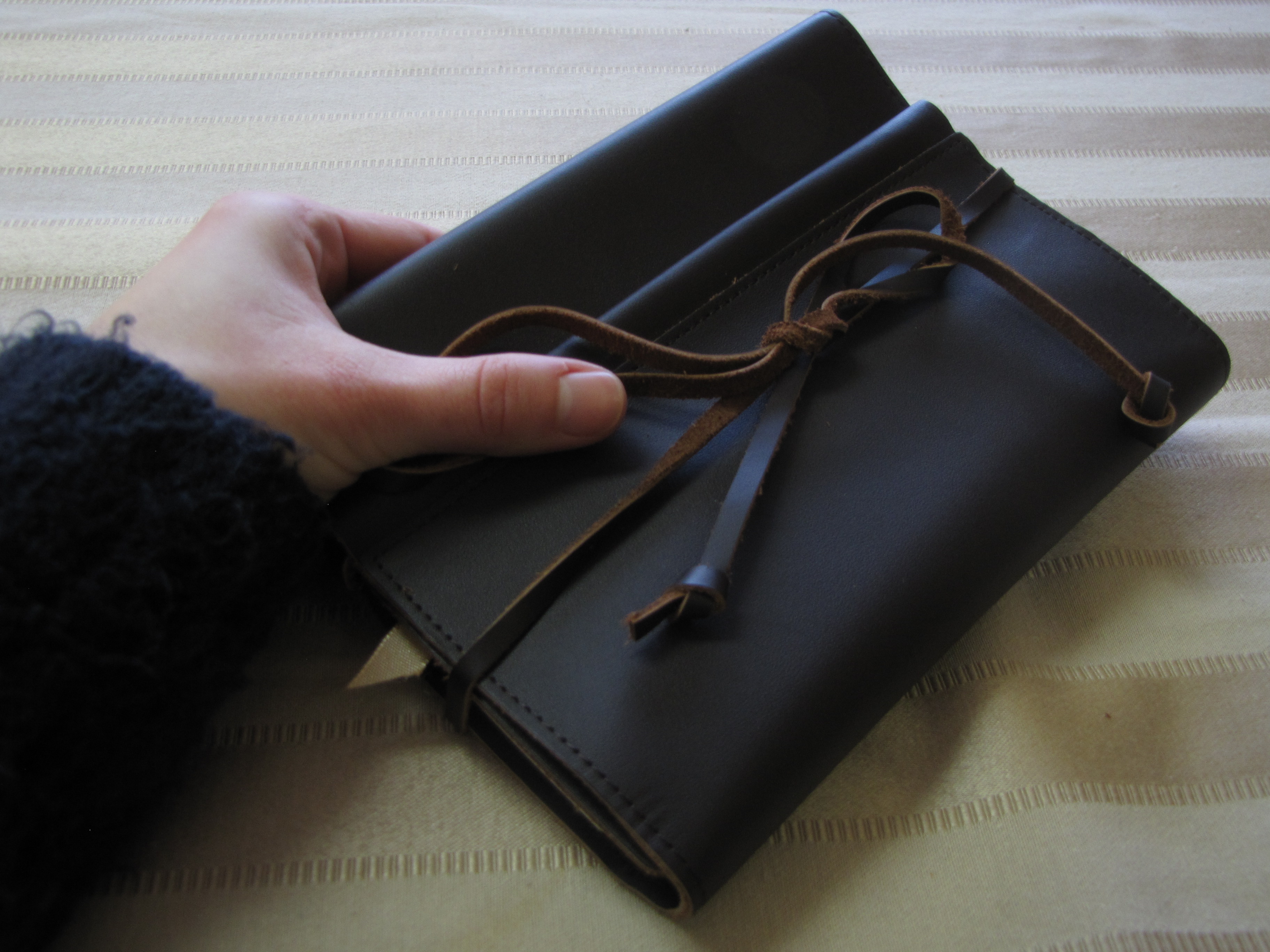
2013-03-13 02.48.54

After breaking down from ministry overload, I started really questioning my priorities, and over the past few months I’ve had some definite impressions: Maybe God wants to fulfill me in ways I never dreamed, not only by making my love my life’s work, but also my mode of ministry. I’m talking about writing, of course.

You see, something I’ve been struggling with since I’ve been staying home to write is balancing my “work” life with my ministry life. I’ve tried setting goals for myself, such as writing twenty-five hours a week…and I can’t explain why accomplishing this has been so hard when I don’t technically hold another “job.”

As I’ve been praying about this, God has suggested some reasons for the difficulty: I’ve been too controlling of others, I’ve taken it upon myself to provide for others, and I’ve allowed myself to get pulled from my writing to do jobs that I really shouldn’t be doing. This ranges from using my daily writing time for ministry emails or phone calls to saying yes every time friends suggest an outing. Lately I’ve also recognized a danger of losing all focus on my work because I get too involved with other people.

I have struggled to place my work time above “people” time—it’s become hard to sort out when to say no and when to say yes. My hubby always encourages me to go for the people time: “Take a break!” he says to his chronically busy wife. But after several months of frequent “breaks,” I feel I’m too often setting aside work. I’ve been documenting my writing hours each week, and sometimes I’m struggling to even reach ten or fifteen. Lately I have the added challenge of being short on energy due to pregnancy—so my “usable” hours have shrunk. I literally don’t have energy to do as much as I used to.

So, I am forced to choose.

The things I do are all “good” things. Building ministries, building relationships, writing an inspirational book. But I can’t do it all. What should I do?

I have some other impressions, I think, telling me I have to focus on my work right now. Because it might be my calling. It might be the single most significant way I’m meant to minister to others. If this is true, therein lies the answer to my work/ministry balance. My work is my ministry.

Right now while I’m still unpublished (bookwise) it’s hard to see it. The fruits of my labor are not yet tangible, as they are in my prayer ministry, church choir, and former Bible study. I see no immediate return. This is where faith comes in. What if Noah had given up on building the ark during the 120 years before its use?

For now, I am praying for God to give me more faith. I need clarity and insight, too, in case I am misguided about what God really wants me to do. I need to know for certain if these impressions about writing are my true calling—and then, if they are, I need to resolve to walk in the path God has placed in front of me. That is, if God has appointed me to write for my life’s work and my ministry, I need to stop being distracted by other “good” things, and let him bring forth fruit where I’m most fertile.

“Look straight ahead, and fix your eyes on what lies before you. Mark out a straight path for your feet; stay on the safe path. Don’t get sidetracked; keep your feet from following evil.”

(Proverbs 4:25-27, NLT)

Some Keys to Being Freshly Pressed

key
Photo credit: “Key” by debsch

After achieving the feat of being Freshly Pressed, a sort of fear can set in, along with  negative thoughts like these: “I’m going to screw up!” “My next effort won’t be as good!” “I’ll disappoint all these new readers!” Happily, I’ve only had these feelings mildly, and they’re not sticking around. Instead of fear, I mostly feel hope. Rather than daunting me, the Freshly Pressed Status has buoyed my confidence as a writer (a writer whose work people want to read!), and it has encouraged me.

The Surface Answer

So, you want to know how to get Freshly Pressed? (Before last Tuesday, I wondered that, too.) The easy answer is that you just have to keep writing and hope one of your posts gets picked. On the day produced my “pressed” post, I was just doing my regular thing. I was praying and reading the Bible like I do every morning, then I started scribbling about the issues my prayer time had revealed to me. I let the writing sit for a weekend, and then on a busy Tuesday when I almost didn’t think I’d post, I tweaked a bit, paired it with a picture, and posted. It was one of the easiest pieces I’ve published, in fact, because I didn’t expect much out of it—not like some past posts I’d edited into mincemeat (hoping to be “pressed”).

It was a complete and total surprise when, three hours later, my inbox greeted me with: “Congratulations! You’ve been Freshly Pressed!” For the next few days I soaked up the extra comments, likes, and follows—and thanked God for blessing me when I wasn’t even asking.

The Deep Answer

Maybe that’s a key to receiving blessings: to stop trying to force them.

I think back to the small string of writing successes I’ve had so far. (You can liken my writing to whatever dream you’ve carried for most of your life.) In all honesty, when I’ve succeeded in writing, I wasn’t much expecting it. Conversely, when I’ve most expected to succeed, often I’ve actually flopped.

I know I’ve talked to God a lot over the years about my dreams. Heck, he was aware of these goals even before my birth. But when I started chasing them in the beginning, it was like I wanted God on call, ready to answer at the moment I asked. I was selfish (not that I’m a saint today, but I’m slowly learning patience). I wanted to be published, and I wanted it when I wanted it, in the way I wanted it.

Some Instructive “Flops”

In 2010 I prepared a manuscript based on my “oh-so-interesting” teenage journals and figured this just had to be my first book. After a pause in the project, during which time I encountered some pushback from one of the main “characters” in the memoir, I realized maybe this sensitive material wasn’t yet “book-ready.”

In 2011, when I was re-entering graduate school with the dual goals of professing and writing, I identified a PhD in Creative Writing program one hour away from me that I thought would be “so much better” than the bland rhetoric program I was currently in. So I fretted my way through months of manuscript and application preparation, then lay awake at night with knots, willing and wanting so badly for this to work out—only to be rejected a few months later.

In 2012 I tried again, this time a distance MFA program that specifically catered to writers of faith. This, I was sure, was the vehicle through which I would make my plans—my plans—happen. Only, I didn’t get in.

Today I’m not sorry I attempted that now-dead manuscript and those fruitless applications. I think it was good for me to try, especially since I felt God nudging me toward writing and I didn’t sense him expressly forbidding those things. Where I went wrong was becoming too bull-headed to recognize that God had other, better ways to make my dreams come true besides those few paths I could see.

Doing Our Part, Letting God Do His

So it is with any endeavor. Maybe we don’t exactly know if the thing we want is the same thing God wants, but we feel it might be. In that case, I believe our part is to work faithfully—do our homework, hone our craft, practice it, and perform it to the best of our ability (so we are not presuming on God)—but after we’ve done that, we should let go and let God.

When we live our lives like that, quietly and diligently doing those things that (to the best of our knowledge) God has appointed us to do, we might just be pleasantly surprised one day when our faithful efforts pay off. Since I’ve made writing a part of my daily routine (and dropped those arbitrary, self-imposed expectations, such as “the writing has to result in X”), I’ve had a few of those pleasant surprises, including three published (and paying!) magazine articles, a co-book project, and most recently a Freshly Pressed blog post.

It’s fun to get good news when you’re not expecting it. That’s not to say we shouldn’t expect good things from the hand of God. We should.  But we shouldn’t try to dictate what those things will be. As I’ve learned, God has a vast storehouse of blessings for me that I’m not able to see—and it’s bigger and better than anything I could ever come up with.

Today my prayer is that I will faithfully do the task God has given me while letting God be God, trusting that he will reward me according to his promises and for the purpose of his glory. If you need to get re-centered on what really matters today, I recommend reading Psalm 119 in its entirety, as I did this morning.

Dear Lord, “Turn my heart toward your statutes and not toward selfish gain. Turn my eyes away from worthless things; preserve my life according to your word. Fulfill your promise to your servant, that you may be feared.” (Psalm 119: 36-38)

My Unexpected Breakdown

Cry for Help by gesinek
Photo Credit: “Cry for Help” by gesinek

There have been times in my life when a breakdown seemed imminent, and lo and behold, I had one. After those incidents, people in my life—like parents, counselors, and doctors—looked back on the circumstances surrounding the breakdown and agreed, “Yeah, it’s no wonder.” I, too, understood where those meltdowns came from.

But about six months ago when I short-circuited (not to the point of self-harm or anything, just had an incapacitating freak-out for a few days), it didn’t seem imminent. It was unexpected. And people around me would have said the same thing. Today I’m writing to try figure out: What was up with that? And is there a bigger issue (a hidden root) I need to deal with?

Most people when they look at my life wouldn’t say I’ve got a problem: They’d probably say I’m really organized and driven—not breakdown material. I’m a leader in my church and have labored for the past two years to bring others to Christ, because I was so excited when I finally found him. So, in 2011, I started a small group Bible study with the intent of providing a place for my “Christian” friends to talk about Christ. Prior to that, I noticed we didn’t really talk about him together. Go figure.

Then, I got involved with a prayer ministry called Straight 2 the Heart. I took a three-month training, co-wrote a book with the program’s mastermind, and several months later my prayer partner and I started praying with two other friends to help them experience the freedom and joy we had found.

Concurrent with my prayer training, I took on the position of music leader at church and drummed up all kinds of “great” ideas to bring our fragmented church back together. One of them was starting a choir, and another was putting song leaders into teams to create community.

Last fall, 2012, I was on a roll, doing just everything in my little power to “revive” my church, which, I thought, had grown stale. I was proud when my older brother, now a missionary, visited us and observed that our home, with its two Bible study/prayer meetings a week had become an outreach center. I basked in the glow of his approval: if you haven’t guessed, I thrive on such accolades.

Breaking Point

Then, December came, and I had ten musical programs to line up, including the music all that month for church, and five vespers programs. Halfway through the month an out-of-state choir was to come perform, and I thought I had it all under control. I arrived at the church a safe thirty-five minutes early, or so I thought, only to be met by a disgruntled choir director who informed me I was supposed to have opened the church for them an hour in advance for set-up. She swore we’d discussed this detail on the phone, but I had absolutely no recall of it. Between setting up meetings, making phone calls, sending group emails to my Bible study and prayer groups, and coordinating choir things, my mind was too full to accommodate the memory.

It was then that I excused myself for the bathroom and broke down. In the farthest stall from the entrance, I sat and I cried and cried and cried. I started hyperventilating and couldn’t catch my breath. I called my hubby to ask what I should do. I was supposed to go out and introduce the choir in a few minutes, and I couldn’t stop crying.

Someone else ended up introducing them for me. Meanwhile, I missed almost all of Handel’s Messiah while I huddled in that bathroom stall trying to compose myself.

After December was done and I’d met my immediate commitments, I stayed home from church most of January, and I cancelled our home Bible study. People didn’t understand why I’d just quit cold turkey, and I couldn’t explain.

Making Sense of Things

Six months later, I know I had taken on too much. Not only did I take on too many jobs, but I took on the burden of other people’s salvation, and the burden of our church’s brokenness. Under the guise of “doing the Lord’s work,” I committed the sin of trying to play God himself, as if I could “save” my friends’ souls and fix my church’s issues.

I know I had the best of intentions, but now I also know I had a big problem. You see, after you’ve had a mountaintop spiritual experience, as I’d had during the prayer ministry, Satan swoops in with new wiles to trap you. After receiving so much healing, I felt on top of the world. And that’s when Satan must’ve suggested that I could make this healing happen for others. And do it in my own strength.

This week I’ve been praying about the same problem. After a bit of a ministry hiatus, I’ve been dipping back into outreach. As the church’s newly elected prayer coordinator, I’ve initiated a new prayer group at church, and as the communications secretary, I’m already dreaming big dreams for connecting our church in some new ways.

If I don’t watch out, I’ll end up barreling headfirst into another breakdown. How do I counter this good, yet bad, tendency?

Avoiding Future Breakdowns

Not long after said breakdown, I heard a sermon on Elijah’s “mountaintop” experience, after which he promptly sank into a despondent state (sounded familiar; see 1 Kings 18 and 19). The speaker said it’s common to fall low after experiencing a high, because we are worn out, and we let our guard down. Then he talked about how God actually commanded Elijah to rest for awhile, take care of himself, and then delegate work to someone else (shortly thereafter, he passed his prophetic mantle to Elisha).

This idea about resting after a strenuous effort was advice I needed to hear. So was the part about delegating. And it also reminded me of some other Bible passages I’d already read on this subject.

As I pondered this topic, God brought to mind the story in Exodus where he actually commanded Moses to dole out his work to seventy elders. I also remembered how the early apostles doled out food preparation duties when their numbers were growing rapidly so they could devote themselves to prayer and ministry of the word (Acts 6:3, 4). I also stumbled on other verses that encouraged me, such as Matthew 9:38 and Ephesians 4:11-13, which tell me God has a specific, special work for me—and it doesn’t include doing everything I theoretically and possibly could do for the Lord, or the church.

So how do I avoid future breakdowns?

Now I know that answer has something to do with delegating, taking some pressure off myself. And I know it also entails homing in on my specific appointed work from God and not getting sidetracked by any and every possible thing I could do for God, because then I’d never get a break (except when I break down!).

I also need to keep praying, to uproot the false beliefs that keep telling me I have to do it all. And I have to keep praying for God to reveal why I feel the need to control things—and I have to let him release me. Like every growing and healing experience, this one will take time.


The Pregnant Post

photo-1
This is the picture we sent to our family members to break the news, but it took our seventeen-year-old niece to get it. Everyone else thought we were making a statement about what we were cooking that night!

I myself don’t like pregnant posts—which is why I won’t keep you in suspense. Yes. I am. A post about pregnancy is okay, as long as it doesn’t resort to clichés, so I’ll opt away from discussing the obvious facts of my developing condition.

I do like irony, so I’ll point out that just a few weeks ago when I posted I May Be Childless (At Least my House is Messy), I really wasn’t. But best of all, I love answered prayers, so I’ll give you these lines from my prayer journal on March 31st:

“I know I should be happy in whatever circumstance I’m in—but I guess I’d like to ask for a breakthrough of some sort: a pregnancy, a job, an acceptance letter. I feel like you work through breakthroughs, and events. You also work through hard times and drought. So any of the above could happen, or not.”

When I wrote that, I was just getting back from my Minnesota visit, and my mother-in-law had asked me if I was glad to be back, and I had lied and said yes.

Truth was, I wasn’t excited about coming back to a house that was empty most hours of the day.

I also wrote that I’d figured out why I was having such an aversion to doing housework lately: It was added “alone time” to my “already lone occupation of writing.” It used to be “alone time after people time.” Now it was “more alone time after alone time.”

At the end of that entry, I recorded that I’d gotten on my knees and heard God say, “You are worried and troubled about many things, but only one thing is needful.” So I decided to rededicate myself to the Lord, again (you’ll notice I have to do that a lot—like, daily), trusting that He’d work out the rest of the details.

Over the next few weeks, I recorded hearing God direct me to write…to write about some frustrations I’d been having in certain relationships…write to be an agent of change…use my swirling emotions as fuel…and I did…until I discovered I had a solid draft of that book I’ve been wanting to publish before thirty.

As to my hatred of housework, I heard God telling me I needed an attitude adjustment. He told me I needed to “plan to stay,” as in Jeremiah 23. I needed to trust that God had put me here, to nest, with or without children. Needed to get over my looking backwards to my past. If there wasn’t going to be children, I still needed to get my house ready…for friends and others we can minister to in our home.

Next to family time, the best memories I have in my home are those times when we held our small group Bible study and our Straight 2 the Heart prayer group. God reminded me that my ministry to others (and the growing of relationships) wasn’t done. I’d been blessed with a beautiful home, and no matter the status of our fertility, the house would be used, if I didn’t get in the way.

In a nutshell, God told me, “Write, and be at home. Get comfortable at home.”

That was also the period when He opened my eyes to see all the Friends in High Places I’ve had all along.

When I realized, on May 4, that I was guilty of the sin of ungratefulness (and a bad attitude), I prayed this verse I found in Micah 7:9—“I will be patient as the Lord punishes me, for I have sinned against Him. [My punishment, I felt, was extreme feelings of guilt and uncertainty that were literally upsetting my stomach—maybe it had something to do with pregnancy, too.] But after that He will take up my case and punish my enemies for all the evil they have done to me. The Lord will bring me out of my darkness into the light, and I will see His righteousness.”

I did write. I did get more comfortable at home during those weeks. I decided, “I can do this.” And then, when I wasn’t even looking for it, last week I got the unexpected news: “You’re pregnant.”

Yes, God works both through breakthroughs, and through wilderness experiences. And even though it’s easy to say when things are going well, I’d still like to quote the Apostle Paul to say this: “I have learned in whatever situation I am to be content” (Phil. 4:11). If you’re going through a dark situation today, remember it’s temporary—and the morning light may be just about to break!

The Dark and Light in a Writer’s Life

Why do literary writers so often languish in the dark? And why do I, a Christian writer, find myself tending there, too?
Image

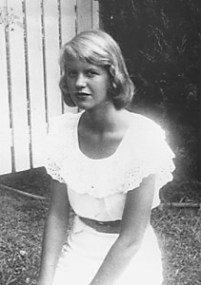
I think of Sylvia Plath who longed to succeed at writing so badly that it drove her entire life, and who eventually found success–only to kill herself. Her journal is full of amazing writing, by the way—lilting, lyrical writing that wowed me—but by the end, when I had to face the reality of a journal, and a life, prematurely cut short, I had to conclude: It wasn’t worth it.

That said, let me make a confession: I started out in the dark, too. (Oh, that word darkness is so fraught with metaphor, but let me hold off for a moment.)

I merely mean I wrote dark things—when I really started writing (age 14)—because my life had gone dark. There were certain things happening at home that I couldn’t talk about. Dark things. Embarrassing things.

I wrote in the dark, too (again, resisting the full metaphorical connotations). I mean, I wrote at night. Not only did my student schedule make nighttime the best time, but it just seemed fitting. Until after I got married, I remained a night writer, letting the day’s darkness inspire that in me to come out.

From my background in literature, it seems to me that a lot of great writers drew their inspiration from suffering. Some tragedy from childhood—or some shocking turn in adulthood. Why would a person, and how could they, write of darkness without living it? Why would they want to?

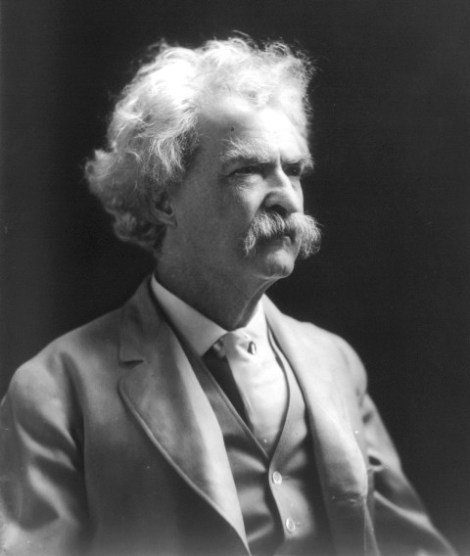
ImageMark Twain, commonly dubbed a humor writer, actually turned darkly pessimistic in his later years after losing his daughter.

You remember that highly anthologized story “The Yellow Wallpaper” with the unreliable (read: crazy) narrator? The author, Charlotte Perkins Gilman ended up killing herself, as did the popular Virginia Woolf.

Alcoholism ran in William Faulkner’s family, and Eugene O’Neil’s mother was addicted to morphine (this is depicted in his play Long Day’s Journey into Night).

T.S. Eliot had a nervous breakdown, and Ezra Pound died in an insane asylum.

From my American Literature class, I can remember a slew of writers whose fathers died in their youth or abandoned them, including Mark Twain, Stephen Crane, and Tennessee Williams.

And Sylvia. Poor Sylvia lost her father before the tender age of ten. She obviously never recovered, but for a period of years she was able to cover her pain with a slew of academic and literary achievements.

I see a lot of myself in Sylvia. Correction. A lot of my old self.

Poor Sylvia never found light. I did. I recovered a will to live as well as developed a prayer life. I decided my still forthcoming memoirs would not be all doom and gloom and “poor me, pity me,” but rather, “Look what God can bring forth from doom and gloom” and “Learn from me.”

And yet…

And yet…

I just had a conversation with a good friend in which I confessed: “I still find myself wanting to write mainly melancholy—I have to work to write positively. I worry that this blog gets too dark sometimes.”

She reassured me that, although, yes, I get a bit dark sometimes, there’s always hope inherent. “It’s a good mix,” she says. “And maybe it will help someone going through similar things.”

Can I make a spiritual/biblical application here?

My Characteristic Glimmer of Hope

In the past year, I’ve started marking metaphors I find in my Bible. I have a dream of teaching a college literature class that explores the figurative language in the Bible—it is so rich!

One of the recurring metaphors I find is that of light and dark.

This is so meaningful to me because of the darkness I’ve felt in my life—and more so just in me. The Bible tells me that Jesus came to shed light on my darkness. He is the Light of life. But the world did not recognize Him because they loved darkness (See Luke 1:78-79; John 1:3-5, 10; 8:12; 1 John 1:5).

I love the image of my Lord and Savior shining light on me—illuminating my narrow and closed mind, drawing me out of the night’s blackness into the morning light, warming my frigid insides.

Oh, He knows me so well! He knew what I would need—His light! Oh, Lord, more of your light!

But these remaining shadows! What of these mixed blog posts of light and dark? It’s like a struggle is going on in my soul.

The sobering reality is: There is a struggle going on in my soul. The enemy is clearly still fighting for me—he wants me back, that jerk. But I have no intention of going back.

And yet…those shadows.

Sometimes I wonder if going back on depression meds could help brighten my discouragingly-default-like pessimism. And then I remember that over six years, they never helped me as much as inviting Jesus into my heart. And I go back to my Bible to read that no pill could change the real problem (my fallen human nature), not unless it were God-sent manna-Prozac.

So—here’s my real gem of hope for today—maybe my mixed blog posts are churning out of my insides in the way they do to serve as a reminder, to me, to you, that there is a battle going on every day in our souls—and it won’t be over until God comes. 

“Therefore, we do not lose heart. Though outwardly we are wasting away, yet inwardly we are being renewed day by day. For our light and momentary troubles are achieving for us an eternal glory that far outweighs them all. So we fix our eyes not on what is seen, but on what is unseen, since what is seen is temporary, but what is unseen is eternal” (2 Cor. 4:16-18).

Reviving Relationships—Rethinking Goals

Image


 “The hopes of the godly result in happiness, but the expectations of the wicked are all in vain.” (Proverbs 10:28, NLT)

When I read this verse today, two questions immediately sprang to mind.

1) First, am I godly?

2) Secondly, what are my hopes—in other words, my goals? I have the sense that they have changed in just a few short years—and I’m not sure I’ve really defined them.

You should understand something about me. A few years ago, after my older brother recommended the book The Seven Habits of Highly Effective People, I got a little obsessive about my life’s goals. Looking for ways to improve my abysmally ineffective first year of teaching, I lapped up those seven habits, even making my second-year students endure a three-week unit on said habits.

During my third year of teaching, on my own I completed some exercises found in the back of my new 2011 Covey planner. These entailed writing out my roles and goals, my values, and my bucket list. You can find that list here.

On paper, my goals look good, but in retrospect, I think I’ve done badly—at least on the relationship points.

A Few of My Failures

“Conscious steps toward building or maintaining my relationships.” Maybe a few. We did start a weekly small group Bible study after I left teaching. But it took my new Bible-study-buddy, Tasha, to get me out of my comfort zone for social outings–sporadic spa days.

“Avoid overcommitting myself in areas that do not desperately require my attention.” My hubby’s feedback heavily suggests otherwise. In fact, just now I am kicking myself for getting too involved at church, yet again, this year.

“Don’t forget to make and take time for friends.” I’ve forgotten often. I have plenty of relationships that have fallen by the wayside, a topic for another time, but the biggest relationship I’ve neglected by far is my marriage.

This is hard to admit. Suddenly I see that all these years I’ve tried to blame him for our shortcomings as a couple. I’ve deluded myself into thinking I was the one doing most of the giving…he most of the taking…but now I’ll put the question to myself: What have I really done for our marriage?

As I think back on the eight years we’ve been in this union, all I see is a panorama of achievements I’ve chased—degrees and jobs and dreams—that were all selfishly motivated. To this day, I can list lots of things I’ve done for myself, but it’s hard to say what I’ve done for our marriage.

The Undefined Emptiness

Lately, with plenty of quiet time on my hands, I can’t help but reexamine my life, and what keeps coming up is that I have an emptiness inside. None of the degrees or achievements have filled it. God and my husband have done much to soothe it, but after much time on my knees, I feel it will not be enough to keep to myself—just me and my God and my husband and my writing.

There is something else I’m supposed to be doing. I know I need to be less selfish in my marriage, yes–and I’m working on it–but to deal with this maddening quiet when he’s not here—when it’s just me and my writing and my restlessness—is there something else?

So this morning I prayed: “Lord, please: I’d like a breakthrough of some sort. A pregnancy. A job. An acceptance letter [from my MFA program]. Some other place to belong, some other place to get my mind off myself.”

And you know what I heard?

“Lindsey, you are troubled about many things. But only one thing is needful.”

In his sequel to The Seven Habits, entitled First Things First, Stephen Covey uses an illustration involving a ladder and a wall, saying it will do no good to climb a ladder if it is leaning against the wrong wall. He’s right, of course, but only because it was God’s principle, first.

So says God and Stephen Covey: Lindsey, you better focus on question 1) Am I godly? Before you (re)tackle 2) What are my goals (and Where should I go, What should I do)? Because without getting number 1 right, number 2 is a moot point.

“Seek ye first the kingdom of God, and His righteousness, and all these things [whatever they are] shall be added unto you.”

Well, okay then. Back to my knees it is.

My Mission and Goals from 2011

Values Clarification

God: God is my Redeemer; he is the reason for my existence and my ultimate destination

  • I put God first every day
  • I use God’s word as my compass for all my life’s decisions
  • I strive to be Christlike and to be a witness to others in the way I conduct myself and live my life
  • I do what is right even in the face of opposition

Family and Friends: My family members and friends are the most precious gifts from God I have on this earth, therefore:

  • I take conscious steps toward building or maintaining my relationships with family members, such as family Bible study or spending quality time with them
  • I avoid doing things that would harm my family relationships, especially with my husband, such as over-committing myself in areas that do not desperately require my attention
  • I don’t forget to make and take time for friends; I keep my friendships in good standing; I do not “hoard” or limit my friendship; I am open to making new friends

Workmanship/Artistry: I have been endowed with specific gifts from my creator which I strive to develop to his glory

  • I write to share the story of what God’s done for me and to bring others to Christ
  • I play to be a service to others (such as in church, at funerals, etc.)
  • I use my talents not to uplift myself but to uplift God

Education: God has given me a wonderful mind to be filled with all that is lovely, pure, and true

  • I continue to learn constructive new things everyday that will benefit my own or others’ quality of life
  • I share what I learn with others
  • I obtain greater education for the purpose of  bettering my life or the lives of others
  • I avoid that which is emotionally harmful, mentally dwarfing, depressing or vulgar

Health and Fitness: My body is the temple of God, to be cared for accordingly

  • I choose to eat as healthily as is possible and realistic in my current lifestyle
  • I learn and implement new healthy recipes as often as I can
  • I exercise regularly to keep my body in good physical shape and to keep my mind clear
  • I choose to be happy with the body God has given me and my own personal “best”
  • I do not measure myself by unrealistic, worldly standards of beauty

Stewardship: I use all that I have to the best of my knowledge and ability to glorify God

  • I use my time constructively
  • I spend my money wisely
  • I treat my body as a vehicle of service for God and input accordingly

Roles

Christian

See Item 1 above

I read and learn what the Bible says, first, to prepare myself to witness, then, to know what and how to share with others

Wife

  • I am supportive
  • I think before speaking
  • I choose my battles wisely
  • I use my energy to encourage rather than nag
  • I find meaningful ways to show and reinforce my love for him everyday

Daughter/Sister

  • I am learning to have normal relationships with my parents and brothers
  • I call on a more regular basis

Teacher

  • To the best of my abilities, I teach the kids what will be most necessary, useful and uplifting to them
  • I am a positive role model
  • I maintain an active interest in their wellbeing and salvation
  • I discipline them when needed, even if it is hard for me to do so

Artist

  • I spend a significant amount of time (or that which is feasible) each week developing or practicing my talents, especially writing
  • I use my writing for a healthy emotional outlet
  • I use my talents to benefit others

What one thing could you accomplish in your professional life that would have the most positive impact?

Get my doctorate

What one thing could you accomplish in your personal life that would have the most positive impact?

I don’t know…

  • Start a small-group Bible study?
  • Have a child and learn how to have a normal, healthy family life?

The kind of person I want to be:

  • Self-confident
  • Loving
  • Wise/Discerning
  • Spiritual

All the things I would like to do (Bucket List):

  • Read through the entire Bible
  • Get my masters
  • Get my doctorate
  • Be an English Professor
  • Publish my writing for significant pay and in the venue that will impact as many people as possible
  • Take aerobics or Pilates classes for fun!
  • Be an aerobics instructor
  • Live in MN again, even if just in the summers
  • Lead a group Bible study for young adults
  • Find and participate in a ministry or service activity that both my husband and I are interested in and can do together
  • Compose music in a preserve-able form (learn how to use a music program to write electronic sheet music)
  • Achieve financial freedom so that money is never an obstacle, say, in taking trips to visit my family
  • Maybe adopt kids or do some kind of foster care or service for children
  • Get over my issues with technology; embrace that technology which is good
  • Become a Women’s Ministries Leader after my children have grown or I decide I’m not having children
  • Learn to see the best in people; never facilitate or further gossip

All the things I would like to have during my lifetime

  • Continual assurance of salvation; every day an open connection with God
  • A healthy, happy marriage every day
  • Maybe kids; don’t know yet
  • A lake house in Minnesota
  • My own study or writing room
  • A grand piano
  • A maid

Note: These prompts and questions come from my Stephen Covey planner from 2011. They spring from the principles of The Seven Habits of Highly Effective People, and I include my responses from 2011 here to help readers make sense of my next blog post, Reviving Relationships–Rethinking Goals.

I’d love to read any goals or bucket list items my readers would like to share! I look forward to your comments!

How God Led Me Back to Writing

I think sometimes when a person has a conversion experience, all the old habits become suspect. And if not suspect, they remind you of old times when you lived in darkness. Is it okay to do this? A person wonders. I wondered this about my writing.

Writing—and I mean that personal writing I had done for over a decade with glorious abandon as ink, and often tears, flew across the page—used to bring such relief to me. But sometimes, now, it brought guilt. Maybe I hadn’t realized it before, but I was writing to wallow. Writing in the wrong.

That describes some of my writing history. But not all of it. My reasons were not always wrong, I have to believe. At first, they were just survival reasons, like at age fourteen, when I couldn’t talk to anyone. Or at age nineteen, when the ink substituted for blood. But after that I healed a little. And healed a little more each year, until, in my early twenties, writing was part wallowing, part revenge. By the time I had my conversion in 2010, around age twenty-six, I didn’t know exactly what my writing was. All I knew was that it felt uncomfortable now, didn’t seem to fit the new me, and the thought occurred to me: what if I’m sinning?

For a time I had tried to just forget about it, but early in 2012, I felt the old urge creeping up again. Despite the newly instituted seminar papers and thesis writing for a master’s degree, now it was starting to flow out into magazine articles and opinion pieces for the church newsletter and, of course, as always, my journal. I’m on journal number twenty-five since 1998.

But none of it was enough. None of these outlets was fully satisfying my urge. . . .

Nearing thirty, a realization was starting to sink in: I didn’t have forever to get a PhD, or to have kids, or to finally publish that book I’d always wanted to publish, much less do all three! What was I to make of these conflicting messages, and the confusion in my own heart?

*******************

I was definitely willing to consider that God had planted this recurring dream in me, like a seed that wanted to grow, but I still didn’t know what to do with it. So, God wanted me to write. But what?

As the summer wore on, I desperately wanted to apply to an MFA program [I am choosing not to reveal which one unless I get in!]. But I still felt I needed permission, somehow. I needed some validation that this was what I was supposed to do. I needed to know that writing could be different than it was before, because I was different.

And then, I met Paul Coneff.

To make a long story short, Paul came to my church to facilitate a week of prayer in March, around the time I was feeling desperate [about my career plans]. In five nights, he unfolded a message he calls The Hidden Half of the Gospel, or the message that Christ died not only for our sin—to give us a “happy ever after” in eternity—but that he also died for our suffering—to give us a happy life while on earth. An indispensible part of the message revolves around individuals finding their true, God-intended identities—restoring the identities that Satan strives to pervert, often through traumatic childhood experiences like mine.

Using a plethora of scriptures, Paul unfolded the story of the Suffering Messiah; Jesus had to suffer, die, and rise for our sins to free us. Because he was “tempted in all points like as we are, yet was without sin,” he is able to help us when we are being tempted. Because he has suffered like us—he was mentally, verbally, physically abused, plus he suffered depression and struggled to surrender his will—he can offer us healing for our pain (Heb. 2:17, 18; 4:15, 16). Because he was attacked at the very core of his identity, he is able to restore us to our true identities, replacing lies from Satan, the Father of Lies (John 8:44), with his truth.

When I heard this message, I was being attacked with lies. I was hearing messages like I’m trapped; I will never be able to write; I’m not good enough to write; I don’t deserve to get to follow my dreams. I have to be stuck in a graduate program that I hate for five years, and then it will be too late for me.

But when I heard Paul explain how Jesus had died not only for our sins, but our suffering, to restore us to our God-given identities, to enable us to follow and fulfill our God-given dreams, I began to feel hope.

At the end of the week, Paul announced that he would be holding discipleship and prayer training in our church for three men and three women. This three-month-long training would prepare participants to embrace their God-given identities, enabling them to become disciples who could, through personally testifying to God’s restoration, lead others to Christ.

This sounded hopeful to me. At least, I thought, How could it hurt?

After I began discipleship training with Paul, he mentioned he was writing a book. He said it with a grimace. The writing was coming hard; he was no writer. But he had to get this book done. As a prolific public speaker,[1] he needed a resource to offer listeners.

At hearing this, I felt another glimmer of hope. But I waited, taking this home with me, too. Now it was June, and I was struggling more than ever over my future, my graduate school plans, my teaching plans, my parenthood plans. I couldn’t find peace. Where was there room for the desires of my heart? More importantly, were those desires even valid?

Later in June when I received prayer for the first time—in this ministry, a prerequisite to discipling others is receiving prayer and healing in one’s own life, first—the prayer time revealed that I had not fully surrendered my will. Paul sent me home with a sample prayer and scriptures to pray day after day to further unfold this issue.

And so, in June, July, and August, I prayed. I cried. I read my Bible with fresh eyes. And like Jesus in the Garden of Gethsemane, I learned to pray “Lord, not my will, but yours.” I didn’t know exactly where all this praying, crying, and reading was leading, but I did know that, slowly, layers of remaining hurt were melting off. And within months, I had not only experienced peace to the point of deciding, conclusively, that I wanted kids, but also that I could trust God to make clear my career path in his good time.

By receiving Jesus’ victory over his carnal will, in July I was able lay my burdens at the cross, trusting God to work on my behalf, while I, meanwhile, composed my master’s thesis. Later that month, I had an article accepted by Insight Magazine—a piece I’d sent in over two years ago and had all but kissed goodbye. Because the article was embarrassingly autobiographical (it was actually a Guideposts reject from high school, chronicling my first suicide attempt), I kept it from most friends and family. But since I had five review copies, and since Paul deals with this type of thing all the time and was, moreover, still grimacing over the writing of his book, I figured, What the heck. I would give him one.

The day after he received the article, he called me, excited, saying, “This was really great; this really flowed. I want my book to flow like this.” Would I consider helping him write his book, which tells the stories of other wounded, yet healing, adolescents-turned-adults like myself?

The rest is history. As you read this, The Hidden Half of the Gospel: How His Suffering Can Heal Yours, should be going to press, to be published sometime in 2013. And it’s not about me.

Well, it is a little bit. Paul actually asked me to share part of my testimony in one of the chapters. I was a bit leery at first, wondering the same old question: Would I be writing this for the wrong reasons? But the more time I spent in prayer, both on my own and with our small group, the more peace I found about my career plans, my family plans, and my writing.

A few months ago I picked up one of those Bible verse cards with my name and my name’s meaning on it. This one says “Lindsey—Peaceful Isle,” and it has Psalm 37:4 printed below: “Delight thyself in the Lord, and He shall give you the desires of your heart.” This verse, among others I’ve studied recently, has led me to believe that the more I surrender my will to God, the more I actually can “listen to my heart.”

Image

Anyway, after finding the card, I set it on my desk at home, where I was writing my master’s thesis, and then Paul’s book, for most of the summer. As the weeks went by, as I continued to look at that card and ponder its message, I could only marvel at what God had done for me. Several years ago I had not been a “peaceful isle.” I had been a suicidal basket case with control and intimacy issues. But as I continued to delight myself in the Lord, he was slowly giving me the desires of my heart: chief most being the published book that would soon bear my name.


[1] You can find more information about Paul’s ministry at www.straight2theheart.com.

Chasing and Embracing Dreams

Dear Readers:

What gets in the way of you chasing your dreams? Crummy life circumstances? Fear of failure, perhaps? Or maybe failed past attempts? (Feel free to let me know in a comment!)

For me, it used to be all of the above, plus one:

I worried that following my dream was a sin.

You know how I wrote about treating tough subjects (both topics and people) appropriately in writing? Well, that’s because I used to not. See, I have this passive aggressive bone that metastasizes sometimes (see my previous post), and for a lot of years that’s mostly what happened in my writing.

Long story short, a few years ago, I was convicted that my motives for writing were all wrong. And I was confused. I didn’t know what to do. So I just quit.

But the writing dream wouldn’t go away.

My “writer’s bug,” as I called it in my MFA application essay, followed me everywhere—from college to career and back to college again, where I finally threw up my hands last spring and cried, “Lord, what am I supposed to do?” This was the same question I put to a campus counselor whom I sought out of sheer career desperation.

Then, after all my agonizing over the possible sinfulness of my writing, would you believe that counselor looked me straight in the eye and asked, “Why do you think you keep having this desire to write? Who do you think put it there?”

Whoa. Bull’s eye. Since that session in April, I’ve had to ask the same question about that providential counselor whose name I can’t even remember.

So God wanted me to write. But how? I still felt I needed permission somehow. For that matter, I needed some new material! If I was a “new creature,” a born-again Christian, but my writing record was stained with blood, ink, and tears (with a passive aggression that not a few times became active) what was I supposed to write about?

In my next post, using part of my MFA application essay, I’ll tell you about the answer/affirmation I got from God last summer.

Although the writing project He dropped in my lap is not the same one I am documenting on this blog, it is what has led me back to my writing roots—definitively, decisively, and defiantly.

It is also the same project I am struggling to finish up this week and, by extension, is keeping this blog painfully short and colloquial. And so, with that cliff-hanger (or choppy ending?), come back on Thursday for the rest of the story—or to read why I’m finally embracing my dreams.


What Would Jesus Write? On Writing the Truth with Compassion


Image

Speaking of entanglements, when writing memoir, there’s always that issue of how to talk about your parents. Your ex-boyfriends. Your husband. Or your in-laws. Now your words don’t just affect you and your impersonal readers: family and friends could be hurt or offended. And so, what is a writer, especially a Christian writer, to do?

Two Views on Writing about Real People

When it comes to writing about real people, immediately two options spring to mind.

First, my beloved Professor L used to like quoting an eighteenth-century writer (and I can’t remember whom) as saying something like: People better not tick off writers because they never know what he or she might write later. In other words, writers can and should write whatever they want about whomever they want.

While somewhat humorous to me, this view also seems selfish and inhumane, not to mention utterly unchristian. Even though I may have joked about wielding ammunition in my pen, seriously, this troubles me. “Revenge is mine [not Lindsey’s], says the Lord.” Needless to say, I don’t find much help here.

The second option comes from writer and teacher Peter Brickleback and, although not perfect, seems much more humane. In a nutshell, P.B. says that certain truths and experiences belong to us as writers, and so we should write about them. Those people we’re writing about? They “can write their own” version of the story.

I know this sounds somewhat callous, and even smacks of the other writer I paraphrased. However, here are some caveats P.B. tacks on that begin to win me over (see The Portable MFA, pp. 128-30). In writing “happily” about your “unhappy family [or whoever],” P.B. says the following:

  1. “Do not write as if you are Mr. or Mrs. Perfect.” He’s saying be honest about your flaws, too; don’t write as if you are the only victim in the world (your “oppressor” might be a victim, too).
  2. “Strive for compassion and empathy” in order to “[treat] the subject fairly.”
  3. Writing about difficult, universal experiences “contributes to our mutual benefit, to a wider social, human good.”
  4. Avoiding certain characters or topics can leave a “black hole of an absence” in the story, resulting in a “warped” version. In other words, sometimes we need to address these hard subjects to complete our stories.
  5. Writing using pain and anger as fuel helps us face pain more honestly.
  6. Writing in spite of pain can result in healing for both writer and writee—as in the case of a daughter who wrote a less-than-flattering memoir about her mother. In the end, P.B. reports, the mother and daughter came to have more understanding and compassion for each other: “[T]hey’ve straightened out some things that have gotten twisted through being buried. Also, being part of an attempt to put words to things, they’ve come to appreciate a lot more about the past and each other.”

Now, P.B.’s comments could easily be refuted, especially by Christians who are striving to “do unto others as you’d have them do to you.” Still, I’ve decided that Christians need to be open-minded to consider underlying assumptions and motives behind what might seem to be questionable opinions. In this case, P.B.’s very humane assumption is that writing should not (entirely) be selfish; rather, it should ultimately function for the greater good.

For Christians I think this means writing should, first and foremost, give glory to God—which is to say it must benefit others. But I am also coming to understand that that does not preclude writing about fallen humanity, including ours or others’. What is the Bible but the story of fallen humanity, anyway? That said, a Christian who is going to write on said topic might consider a few more caveats.

Some Christian Caveats for Writing about Other People and/or Pain

[Note: this section is really for me—but you can look, too!]

If I am a born-again Christian writing about a painful past that involves other people, I must be especially careful in how I shape the story. Does it end in redemption? Is there resolution available for all at the cross (even though some may not choose to accept it)? Because if I believe the Bible (and I do), Christ is the solution for all problems: by His stripes, we are healed (see Isaiah 53).

And so, after the happy (or at least hopeful) conclusion is settled, the remaining question for Christian writers might still be how to treat the bad roots, especially as they relate to or involve others. For myself, I’ve decided I want to include only the parts of their stories absolutely necessary to the telling of mine, but I also want to include enough so as to avoid leaving a “gaping hole.” Meanwhile, what I include should never needlessly hurt others.

While it may take awhile to figure out all of the above, I’m heartened by the same advice I’ve both given and gotten in English classrooms: Sometimes you have to write the body and conclusion before you figure out the beginning. Such is my story right now; but one day I’m confident I’ll get down to those roots I’m searching for.

You can view the photo from this post here.