In Debt $20,000—In Love Forever

Yesterday was a dark day in the Gendke household. The unexpected surprise of a $20,000 student loan bill all but put my husband into a depression. Understand: he’s not like me—he doesn’t get depressed easily. But if there’s one subject he’s touchy about, it’s money. Especially since we found out we’re having a baby, he’s been extra vigilant about cutting costs, paying off debt, and restructuring our finances.

2013-05-30 21.49.34
This is the bill for my bachelor’s degree. Since we’d had it deferred until after I finished my master’s, we didn’t realize that when it started up again, it did NOT include both loans.

For two heady weeks, before we got the $20,000 note yesterday, he had it all planned out: pay off my $24,000 student loan (the old one—for my bachelor’s—but we made the mistake of thinking this included my master’s, too), then pay off his car, and finally, our home. By his calculations, he could have all this paid off by December, right before baby came.

Now, that won’t happen.

2013-05-30 21.48.37
This is the bill for my master’s degree. Needless to say, we were not excited to see this amount piled atop my already prodigious bachelor’s debt.

Don’t get me wrong. We’re hardly destitute or living month to month. My hubby’s investing skills and financial expertise have ensured abundance in eight years of marriage—still, we were so close to being out of debt.

For him, achieving financial freedom is about his number-one professional goal. And I love that about him—it makes me feel more secure—but sometimes that goal overshadows other areas of life. He’s not a worrier, but by golly, he does get so preoccupied about finances that he can be hard to talk to about anything else (to be fair, he’s often said the same about me and my writing).

His own family criticizes him for being “cheap”—for not always upgrading to the newest gadgets even though he could—and for giving our niece and nephew ten-year investment accounts, rather than cheap baubles for every birthday. However, what they don’t see is that these money-saving practices are what have allowed him to offer needy friends, family, and church members thousands and thousands (and thousands) of dollars of financial assistance over the years. They are also what will soon, perhaps within a few years, allow him to retire early and spend more than just nights and weekends with his family.

Call me cheap, too, but if you ask me, living frugally is just living smart. And for the comfortable, worry-free lifestyle my husband’s habits have offered me—a lifestyle better than I ever enjoyed before him—I am eternally grateful.

I just wish he didn’t worry so much.

I hate to see him, like I did yesterday, slumped over in his seat, head in hands, seeming bereft, as if all his dreams had been shattered. Worst of all, I hate feeling like I caused this.

Yesterday, seeing him like that I started to feel bad for getting my master’s degree, especially since now I’m not exactly “using” it. Of course, I feel I have used it in writing The Hidden Half of the Gospel—but when we’re talking about paying off a $20,000 bill, that book will only cover one-fourth to one-third of the cost.

I felt so bad I even apologized for being such an expensive wife (even if I don’t fit the usual profile of excessive shopper). All I could do to reassure him was to say, “Honey, look at all the good in our lives. Think of our wonderful marriage, and our baby coming. And even if you don’t see it right now, I do see benefit in the master’s because it gives me more and better job security if something should ever happen.”

He didn’t look convinced.

“Do you want me to look for a job now?” I tried next, clutching at straws.

He looked at me as if I were crazy.

“You’re pregnant. No.” Sigh. “Just keep doing what you’re doing. And write a bestseller.”

When I saw a wry smile playing at the corners of his lips, I sighed, too. With relief. I don’t want to take a typical job, not right now. But I think I would be willing to look if he wanted me to. At least, I hope I love him that much—as much as he obviously loves me.

Now, because of his pristine financial habits—and because he makes things sound worse than they are—I get to travel a mere ten feet to my work desk, and write about how we first met for my memoir—AKA my gestating bestseller:) Today, I’m sort of thankful, actually, that this little $20,000 “setback” has provided the perfect moment for me to remember exactly why I love this man.


Role Confusion and the Modern Woman

Image

My friend looked at me with a puzzled expression on her face.

“What do you mean, ‘work’ on your marriage?”

We were sitting over two rabbit plates at a home-style restaurant, and I was telling her about my current aspirations. They are the same ones I initially listed on my “about” page: write my memoir and become a better wife.

My friend was confused at the pledge to work on the marriage because, in her eyes, she didn’t see a point.

“I mean, I told *Bill what you said about working on your marriage, and we wondered what that meant. We’re both happy with the way things are, and putting ‘work’ into the marriage just seems like too much, well, work.”

It was my turn to be surprised. Who wouldn’t want to work on their marriage? Isn’t that a societal value?

Not necessarily. But I thought it was one of mine. Why, then, do I find myself annoyed at having to cook and clean? Perturbed when 6 a.m. comes and it’s time to make breakfast? Indignant that he should expect me to help with the garden? Angry when he says I’m too caught up in my writing, not attentive enough to him?

Why do I resent all these duties so much?

At first I was going to blame it on the role confusion that modern women have faced ever since the woman’s movement. And perhaps it does have something to do with what the feminist journalist Anne Taylor Fleming called “the two out of three rule”—where “a woman can have only two out of three big pieces of life: love, work, children” (from her book Motherhood Deferred, p. 84). (For my perfectionist personality, though, some days it seems I’m running more at a one in three rule.)

Probably due to feminist conditioning, I’ve said before that it’s just not enough for a woman to stay at home and be a housewife. She needs a career, too, doesn’t she?

But even though I’m not immune to it, this line of thought bugs me. Along with Anne Taylor Fleming, I agree with Doctor Laura (in her book Parenthood by Proxy) that much of the modern family breakdown is due to women working—who’s standing ready at the door to smooth the rough edges of everyone’s day? And let me just say that I think either man or woman could do it—the thing is, simply, someone needs to. And I think this is noble work. For other women.

So why not for myself?

 The Real Problem Isn’t Feminism

When I step back to observe my excuses to hubby about why I hate housework, here’s what I hear myself saying, over and over again.

  • I’m afraid to put time into our home, because what if something happens to us? What if you die on me? (He says I’m always trying to “kill him off”—I say I’m just being a realist.)
  • If you died, I’d be left with a big house I’d want to sell, a garden I wouldn’t want to tend—all stuff that would have amounted to nothing.
  • If you die, I need to have skills to fall back on. I need to be able to get a job to support myself. That’s why I needed to get a BA and an MA, and boy I’m glad I got some teaching experience, too.
  • I’m afraid I’ll put all this time into our home, and then it will crumble. And then I’ll have nothing to show for it.
  • The only investment I feel safe making is an investment in myself—because people die and leave and let you down, but you always have yourself. I need to have a plan if things go south.
  • I’m just afraid, okay?

Wow. Those are some deep roots. It came to me as a huge revelation the day I wrote down “trust issues” in my prayer journal. The days I connected all my over-planning and uptightness and performance to trust issues. Fear issues. Self-protection issues.

I know what it feels like to be helpless. Alone. Out of options. And I don’t want to go there again.

That’s why, after so many gains, I still find myself hoarding my time, my energy, my resources (which could otherwise be spent housecleaning), for self-improvement. Apparently I anticipate being left to fend for myself again someday.

I find it sad that after walking with the Lord for several years, I still don’t trust Him enough to give of myself fully to others. I wish I were more open and loving and warm. But honestly, most of the time, that feels too vulnerable of a position to be in.

I wonder if my girlfriend has some of these same roots, too. Is fear the reason why she resists “working” on her marriage? Fear that it will divert precious energy from building a fortress of self-sufficiency to sustain her when (she must unconsciously think) one day, she will be left out in the cold?

Stepping back for the bigger picture, I wonder, is this the reason that women in our society collectively have renounced housewifery, and largely motherhood, as their sole profession and duty in life?

Have we all been so hurt that we feel this need to gird ourselves about with skills and experience and knowledge for the impersonal workplace, where we don’t have to lay our hearts on the line, only our time—and though the workplace may not fulfill our deepest longings for companionship and family, they at least recompense our time with money—the means by which to sustain our physical necessities and our plastic smiles?

Readers, do you think I’m on to something, or is it just me I’m describing? Or, if you’re not excited to analyze this trend, what do you see yourself (or the women in your life) working toward: family, or career? Please leave me a comment and let me know!

On Pulling Weeds and Planting Seeds (My Life as a Metaphor)

Image
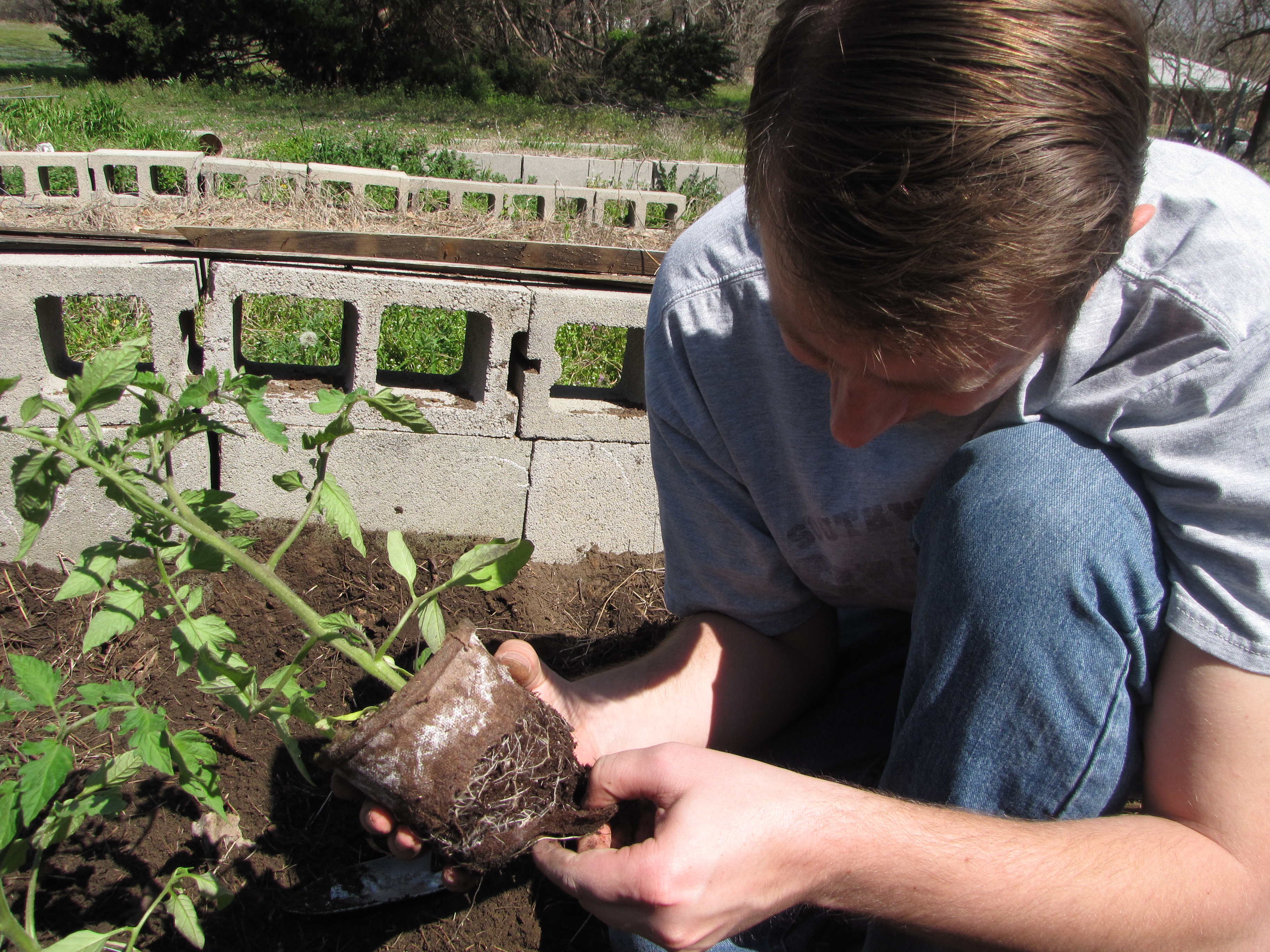
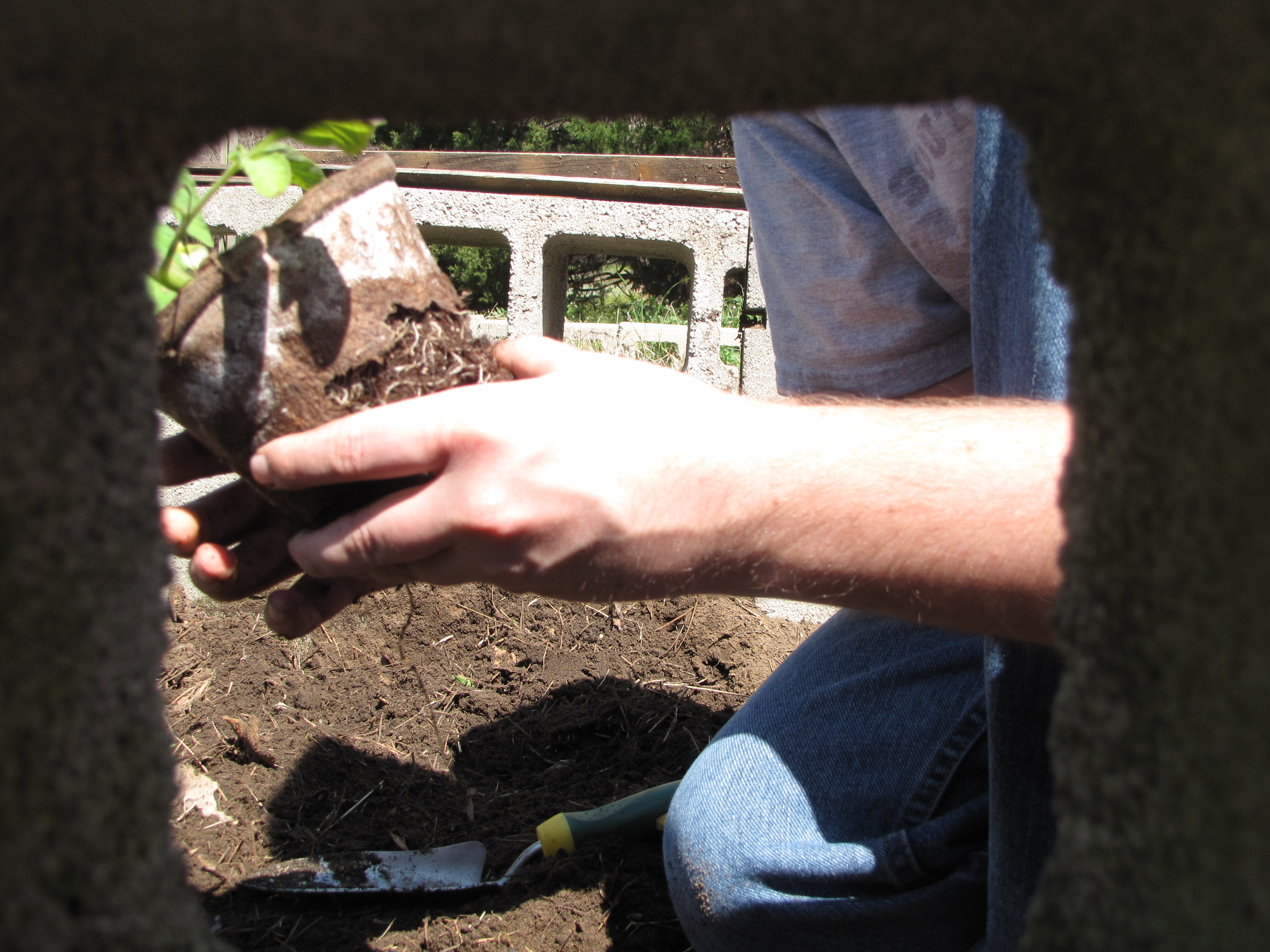
My husband planting our garden in 2011 (the same time I was working on photography techniques for the journalism class I taught). Of the family, he’s always been the gardener. But this year I seem to be coming around.

I like writing to my roots, or the metaphor I’ve chosen to guide my blog, because it suggests a narrative that deepens as I go. It means that I don’t have to start with all the deep stuff first, but that I can move more gently to the sources of pain, and the sources of me.

Who says I have to go deep, you may ask? Well, definitely not pop culture or social media, which is oh so surface level.

It’s me (“It is I,” for my fellow English majors) who has chosen to go deep, because I write to heal myself and to help others. I choose to work gradually to my roots of pain and self-protection, because that’s how healing has to happen, and after healing, recovery. Recovery of our dreams, goals, and our true identities. We must take gradual steps.

As we do, we can unmask lies we’ve had about ourselves to finally embrace who we are meant to be. And that’s the point of the blog.

But before I chose Writing to my Roots, I planned to call this endeavor The Before Thirty Project, because that’s how it started. Originally this “project” included two goals in the last months before I turned thirty. Little did I know that these goals would expand as my writing took me deeper, little by little, to my roots—both pleasant and painful. Today I finish a series of three posts on a topic that I used to shun like the unwanted appendage I imagined it to be. Then, back to other topics I’m more comfortable with. I promise.

Image

When I first vaguely conceived of my project at age twenty-five, I had two goals in mind: earning my master’s degree and publishing a book. It was probably my incessant talking about these grandiose goals, in fact, that had my high school students so frequently asking, “Are you ever going to have kids?”

The junior and senior girls would look at me in disbelief when I shrugged, “Probably not.”

For some of them, having kids was the goal of life.

But when they said things like this, I was the one fighting back disbelief.

Really girls? I thought. What was so glamorous and good about having babies?

Of course, being in a high school environment where numerous girls got pregnant each year, it was easy to disparage their dreamy looks and words. Terrible! We teachers said. Teenage girls getting pregnant! What a waste! What unnecessary hardship!

For a teenage mom, of course, it is an unnecessary hardship. To this day I would never advocate teen girls—or any female who is not married—getting pregnant.

But once a girl finishes high school…once she gets married…

Until recently, I still couldn’t advocate it. Not for myself. And honestly, not for anyone else. As my twenty-something girlfriends got pregnant one by one, it felt as if they were betraying me, one by one. How selfish, I know.

Because I couldn’t have this happiness (rather, couldn’t understand it as happiness), they shouldn’t either. Really, I would be doing us all a favor to save us from the inevitable heartache that must come with kids.

For seven years I told myself I didn’t want kids. Too much risk. Too much time that could be better spent elsewhere. Why risk such a hefty investment when you didn’t know what you were going to get? Never mind potential birth defects. What about angry children who decided to write you off because you screwed up their lives?

Today I can look back at sentiments like these more objectively. They don’t seem normal, or rational, or healthy, like I once stubbornly insisted they were. (My husband would just give me that same look I got from my girl students: You’re messed up.)

Image

Maybe it was a problem with the kind of kid I had become over the years. Bitter. Angry. Sad. Detached.

I was not bringing any particular blessings to my parents’ lives. I had moved so far away from them that it was not strange to go almost a year between visits. At various points, I had barricaded myself from contact. Didn’t want a lot of contact, because contact hurt. It just all hurt so much—family visits, photo albums, phantom memories—that why would I ever want to perpetuate it?

Through writing and other miracles, God has taken me to a place where I’ve realized none of my self-protections can keep me safe or healthy. More than indicating a kind of logic, all my excuses, denials, and exercises in becoming numb indicate a sad existence. The guardedness (to the degree that I’ve had it) is not laudable; it’s lamentable. Would that we women could be smart about our choices—with healthy boundaries that keep us from getting pregnant when we shouldn’t (right, Kim Kardashian?)—but that allow us to be open to any possibility, should God suggest it to us.

Image

After eight years of marriage, He has suggested it. And now I’m open. At this point, a baby could definitely be part of the “before thirty project,” if God wants it to be. That is to say, I’ve removed the barriers. I can conceive of getting pregnant. It’s up to God if I really will conceive. But if not, I’m okay with that, too. My being open to the possibility is the real growth—more meaningful than a baby bump could ever be.

Whew. Now that I’ve made some real progress with this root, I’m putting it to rest for awhile. (I’ll let you know if anything develops.)

Image


Celebrating 8 Years: Roots of a Love Story

Image

“Do you want to talk again, maybe tomorrow?” he asked from his bachelor pad in balmy Texas.

“Sure, if neither one of us dies before then,” I responded through huffs and puffs of cold Minnesota air.

I was walking briskly up College Street, autumn leaves crunching underfoot.

He thought it strange the way I ended that third phone call. But you have to understand it had been no more than six months since the previous winter when I’d found myself sitting in that mental ward.

I was making a slow recovery from depression, trying my luck at a few random classes in community college after having dropped out of a pricey private institution.

With a BBA, he was in his second year of a new job in the finance industry.

We were both living single and lonely in small apartments. Both dejected from recent life failures, we had recently both shut ourselves away from family and friends.

Apparently he found something intriguing in my dark humor and brooding ways. As well, he’d liked the pictures my bff, and our matchmaker, Samantha, had shown him. It was before the days of Facebook, so I would wait until our first live meeting about a month later to see him. No matter. His voice, smooth and soothing, already gave me goosebumps.

“What are you doing tonight?” he would start our phone conversations, which quickly became daily affairs, usually no less than four hours at a pop.

I couldn’t believe how attentive he was. He actually wanted me to read my journals out loud to him, which I did.

“I’m taking a walk/organizing my closet/doing dishes [pick one—these were all true over the months of phone dating…and all due to that nervous, post-depression energy I suffered in those days]. What are you up to?”

“I’m just lying here, thinking about you.”

Each night on his primitive, 2004-model cell phone, he gave me his full attention, something I was not used to with males. The previous two men in my life I had met at my workplace, a restaurant, and the relationships had always been about what I could do for them. The boy I had loved in high school (a much nicer guy than these two) ended up having precious little time for me after going gay.

I wish I could say that I unreservedly returned Buc’s affection in the beginning. But every true love story must have a complication, mustn’t it?

Sigh. After dropping out of college, I’d struck up a conversation with my most recent ex (he’d since been fired from his dishwashing job at the restaurant). This happened a couple months before I met Buc.

The first contact I’d had in about six months with this dude (who shall remain nameless) started with him telling me he’d love to get together—but I’d have to go to him, because he was under house arrest at the moment.

Instead of running the other way like I should have, guess what I did?

Yep.

I got physically and emotionally involved. Again. Apparently I was attracted to his brooding ways. I identified with his suicidal tendencies, and as lonely as I was, well, any guy was better than none.

Lord forgive me. And Buc forgive me too. How stupid I was.

It should have been an easy choice. Let me put it this way:

  • One had three kids, the other had none.
  • One was unemployed, the other a successful broker.
  • One had a criminal record, and the other? Nary a traffic ticket.
  • One had a history of drug and alcohol use, the other, a history of jalapeno abuse.
  • One was a broken deadbeat who needed me to rescue him, while the other was a broken believer who wanted to rescue me.

Gee. I wonder who I should choose?

You might say I could have chosen neither. I could have accepted the newspaper editor job I’d been offered–but that didn’t pay anything (college newspaper, you see), and I was already out of money—plus, that restaurant where I’d picked up the last two losers had just gone bankrupt.

No, as the months went on that fall of 2004, it became clear that God was propelling me to make a choice. A drastic choice. Doors were closing all around me, and I literally didn’t feel strong enough to go it alone. I knew somewhere in the back of my mind that God was with me—but sometimes we are so low (or so delusional) that we need God’s hands to reach out, take hold of us, and give us a good shake through the hands of another.

“Think about what you’re doing!” Buc would cry in frustration as I lamented to him that I loved both of them. “Why is it even a choice?”

One night he almost gave up on me. I had waffled again, saying I needed to take a break from both to sort myself out. Meanwhile, he prayed for a sign.

“God,” he prayed several days into this separation, “if she calls tonight, then I know you want us together. If she doesn’t, then we’re not meant to be.”

That night when I called, I don’t remember what I said. I know I was not totally convinced one way or the other, but God didn’t need me to be ready just yet.

Buc took this as his sign, and I’m so glad he did. After this, I waffled another time or two, but he didn’t give up on me. He trusted God, even though my utterly stupid behavior baffled and hurt him.

I think I owe our eight years of marriage to my husband’s faith, a faith I have seen again and again over the years when his job was uncertain, or I was uncertain, and he prayed for a sign, received his answer, and made up his mind not to worry because, as he simply and calmly explained, “It’s God’s plan.”

It’s a faith I’m still hoping to develop.

I saw it again just this week, as he faced a job-threatening audit at his branch. Yep, my hubby has become the manager at a top-notch financial branch, and earned plenty of top-performer awards and trips along the way. (Just for kicks, I googled my ex last year and saw his gnarled face and tattoos pop up in a mug shot for a domestic dispute. Gulp! To think I could have married that!)

“I could get fired,” Buc announced coming home a few days ago. “But if I do, I know it’s God’s plan.”

Since I’ve been staying home, I’ve told him many times I wish he could stay home with me. I get so lonely.

“Well, maybe getting fired would be a blessing—we could spend all day together,” I quipped.

Seems all this alone time is not good for the logic—it’s his awesome job that’s currently allowing me to “write to my roots.” But no matter how I’ve spent my time in the past few years, home or not, my desire to be by my hubby’s side continues to grow.

As I awaken to the beauty and possibility around me little by little (because rediscovering family, God, and dreams after deep depression happens gradually), I realize more and more what a jewel I have right beside me. What do I need a wedding ring for? He is my rock, always returning to me at the end of the day.

Today, our phone calls are shorter, because they only last as long as it takes for him to drive the thirty to forty minutes home. (By the way, he’s still employed at that job that is too far away for my liking. “God’s will,” Buc said.) Still, he calls me every day. Kisses me every morning. The calls are a little less exciting than they used to be, more often filled with dinner plans or daily headlines than deep confessions of past sins or heated professions of love. After eight years, there’s not much we don’t know about each other. But though the conversation may have leveled off, the love never has. To the contrary, it has only grown.

Over eight years, as he’s helped “nurse me back” to mental health; talked me down from countless emotional cliffs; and worked day after day to clothe me, feed me, and shelter me, I am starting to “get it.”

His love for me is like God’s love–hoping all things, bearing all things, believing all things. I only hope that I will learn to love other human beings as much someday. Ever since moving to Texas, I’ve had a slow thaw in my heart. But I hope he knows that right now he’s got all the love I’ve got—with these melting icicles creating more room for him every day.

Honey, I thank God that you chose me, and even more, that I chose you! (Oh, how thankful I am that I made the right choice!)

Image

(Blast from the past)

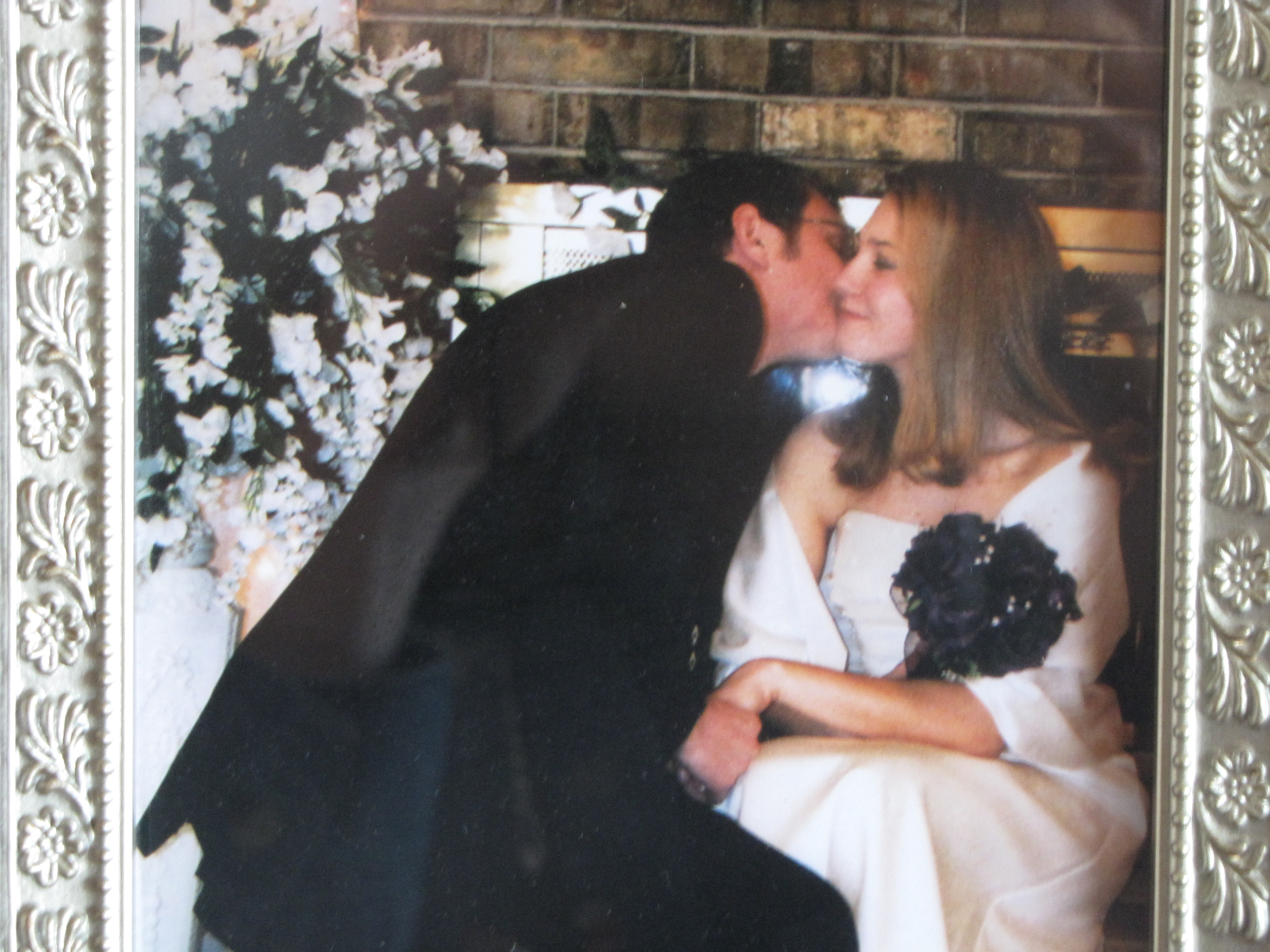
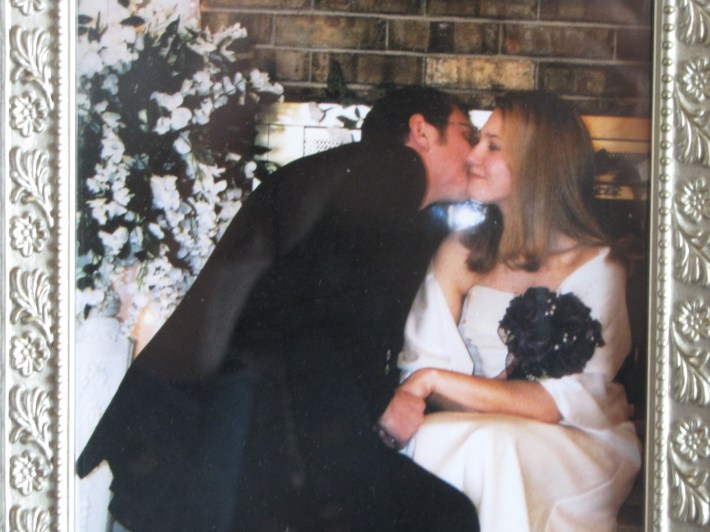
February 7, 2005, 8:14 a.m. (about a month before we got married)

When I imagine our life together I feel unspeakable joy. Especially today after setting our wedding date.

Last night—remember my tears of joy?—I felt, finally that I have something to hope for (on this earth), for you are my representation of Christ as the husband of humanity.

A place to belong, somewhere to fit—the knowledge that someone thinks I am special enough to invest in for a lifetime…darling, you don’t know what you have given me by asking me to share your life with you.

I am so blessed to have someone who loves and cares for me as a prized possession, yet at the same time respects me as a person. I can’t wait to be your family (even if it means making lunches and suppers and breakfasts sixty more years). To be with you every day will be a privilege and a joy. I hope you feel the same way.


buc and Lindsey

The Question Every Young Couple Must Answer

Image

“When are you having kids?” my high school students always used to ask. Why they were so interested in this detail of my life I never understood—much like I didn’t understand when family members or anyone else asked. The question used to come frequently when we were first married, and then, as year after year slid by with no child, but only new feats such as a bachelor’s degree, teaching job, and master’s degree, the question all but went away, and with it, my child consciousness.

But when I got to my first semester of grad school in 2010, I had an epiphany. Sitting in class at that time as both student and teacher, I was to finally understand why students and so many others wonder that question.           

It happened one night in literary theory class, when my professor, trying to explain the infant stages of Freudian development admitted, “Well, the research says this [insert windy explanation of anal and oral stages]; but I don’t have kids, so I don’t really know firsthand.” That’s all. One comment. Then he continued his lecture on Freud. But I was stopped.

Before that night, he’d been Mr. Know-It-All.

Now, he was just a man out of touch with reality…who, perhaps, had never changed a diaper.

Image


(Photo from giftsfordadtobe.com)

What did my professor have? He had his books and his scholarly journals and his research (and with those, late night library visits while bedecked in baseball caps [to blend with students, he’d told us]), but what, beyond that? He didn’t have a wife. Or kids. Or religion. (Lots of grad students and professors end up losing their religion, I was also to find out.) The closest relationships he had seemed to be with us, his students. And he was great with us, very gentle and caring, and genuinely concerned for our welfare.

But in general…in general, I had to ask myself that night: Is this really the life? And more importantly, is this the life I want for myself? Do I want to be like this professor someday, standing before a class of adults (or high school kids, for that matter), in my forties or above, with no life experience to share with them, besides what I had read in books?

Image

This was a profound moment for me. I journaled at length about it the very next day. And I talked to my husband. Was I missing something here? Was I about to embark on the wrong path, this path to the PhD? What did it mean that I was having all of these questions?

Mind you, I was hardly ready to toss the birth control, quit teaching, and/or withdraw from my graduate classes. Just then I wouldn’t admit that I wanted kids. Because I wasn’t actually sure I wanted them.

But one thing I now understood: If I had kids, I would become a more interesting professor…and a more interesting person. I would become more credible. More human. And that alone was something worth considering.


A Career Is Not Enough

Image


A few months ago I sat on a park bench amidst the buzz of a college campus, realizing for the first time in two years that maybe I was out of place. I was twenty-eight years old. I was about to finish a graduate degree. And I was thinking of starting another.

I had also been married for almost eight years to a husband I rarely saw.

As I watched college freshmen skipping past, carelessly slinging their backpacks as if all burdens were so light, I pulled out a notebook and began to write.

It’s a lonely life right now. I am too old to be running around with a pack of friends like these kids—and yet, I don’t really have a family life. Not one that buzzes like this, creating its own nucleus of self-contained activity, a destination and end in itself.

Both still striving for career goals, my husband and I have talked about how these disparate strands will one day converge—we will have enough money to take jobs side by side at a university, or we will have enough money saved to travel together around the country, or we will one day have so satisfied our roles in society that there’s nothing left to do but sit on a park bench like this. We have talked about this meeting of our lives…but we have not yet arrived.

What is it that gives meaning to our lives as a couple? As individuals, we find meaning in work. I find it in writing. But what is the meaning with another person? There has to be common ground. A place where we reap and sow together. Where we both put in time, and dwell together.

Right now we have a house. And technically we both put in time there. He works on the yard (and usually does our laundry), and I work within the walls, doing dishes, cleaning, painting, arranging. Most of our time together we are asleep.

Our house seems oddly empty.

How do two people, young and building separate careers, find common ground, apart from the passing patches at home? Aside from those moments of rushing out the door in the mornings, or flopping down exhausted in the evenings?

Where is that common ground on which we can meet to slowly, deliberately, live life together? Not merely rushing to the next thing or recovering from the last? Is this an ideal that no longer exists in the twenty-first century?

Or is this where kids come in?

What Christians and Mental Patients Have in Common

I can never tell, I thought, sitting in a mental ward in Minnesota. I was nineteen.

When I get out I can’t tell friends that I dropped out of college. That I attempted suicide. I can’t tell them how messed up I am. I can’t let them see me like this.

When I got out after forty days, there was only one option (besides suicide, of course). I had to hide.

This year of my life, 2004 to be exact, is the darkest one I can remember. Almost a decade has passed, and there’s hardly anyone I’ve told.

After the mental ward, my social worker set me up in an efficiency apartment that was fully furnished, yet covered in grime. The walls were spotted with grease stains, the floors covered in dirt. Kind of like me.

Only, instead of dirt, I was filthy with lies—and they were rooted deep.

And unlike the dirt that disappeared after one afternoon’s scrubbing, it would take me many, many years to recover from the lies that had saturated my mind for so long.

I can never tell, I thought just today, before finally deciding that maybe someone besides me needed this post.

Image

It’s funny how those lies stay with us. You see, in 2013 my depression and suicidal tendencies are for the most part gone; but today I almost didn’t post this, for fear of looking “crazy” when friends or family read the opening lines.

The good news is, by this point in my twenty-eight years, I know I’m not alone. After repeatedly opening my heart to the Source that “lays bare our innermost thoughts” (Heb. 4:12-13) through prayer, and after training other women to do the same, I’m starting to feel less territorial about the pain I’ve guarded for so many years.

I can never tell. What about all the women and men who have been sexually abused? In The Hidden Half of the Gospel, the book I’m co-writing, we cite a “1 in 3” statistic about girls who have been sexually abused, which blows me away! (Since starting prayer ministry, I’ve also prayed with two women who have admitted to being sexually abused.)

I can never tell. What about the teenage boys and girls struggling with their sexuality—thinking they may be gay but afraid of rejection if they “come out”? I’m reading a memoir right now about a girl, stuck in a mental hospital for three years by her abusive, incompetent parents, who admitted to lying, stealing, cheating, and who lied about having a drug problem, plus an eating disorder, before she would ever admit she had gender confusion. (Still waiting to see how it ends, but the title, The Last Time I Wore a Dress, gives me a good idea.)

I can never tell. What about all the Christians struggling with pornography, drinking, or other “sins”? (In The Hidden Half, Paul and I share the stories of some such Christians.)

I can never tell. What’s the issue for you?

For me currently, this lie is complicating my various writing projects. Just as I did today, just as I did when I published my first magazine article about a suicide attempt . . .

I still sometimes battle that lie, I can never tell.

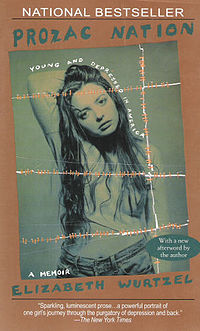
200px-ProzacNationBook

Maybe that’s why I like to read memoirs like Prozac Nation and other riveting romps through mental illness.

My husband thinks reading these kinds of things is unhealthy. Wonders if I am vicariously milking old, bad feelings through reading these books.

I used to wonder that, too. But these days, I don’t think so.

You see, more and more as I’ve dealt with my bad roots through prayer, I’m uncovering a holy rage about how humans (and Christians especially) cover up their bad roots. As if denying them is dealing with them. Who do we think we’re kidding? Certainly we’re not fooling God.

No, I like to read these memoirs not because they inspire my faith (I read the Bible and Stormie Omartian for that!), but because they inspire my honesty. I read them because they take me to a level of intimacy far below what I get with pretty much everyone else in my life.

Now for those Christians who may disagree with my “uninspiring” reading selections, that’s fine. But if you’re going to knock them, then at least tell me where else I can find such honesty. Sadly, I don’t find it in church, or from my family members, or even from most friends.

But as for me and my writing, we will be honest.

Not because I think we all need to be sharing and airing our garbage. If we did, just think what a stinky world it would be. But come to think of it, this world already stinks quite a bit…so maybe we don’t have much to lose. And if Christians would speak up more, maybe more people would join us, as they see that we’re not too out of touch to deal with the ugly realities that blot all human stories.

In any case, I’ve decided to be honest, in the name of not being fake…or distasteful to others because I can’t relate in any human way…or disgusting to myself because I’ve built my perceived flaws so big that I’ll never get over them. But the most important reason to be honest? Well, gosh darn, if so many people are writing the depressing stories, don’t we need someone to write the un-depressing ones? (This is the plan for the memoir I’m writing—to share how I got un-depressed.)

car

And so, to conclude my very abridged tale of woe (for today, anyway), at the end of that worst year of my life, I’m happy to tell you, God intervened, introducing me to my husband (in Texas of all places!) and moving me 1,000 miles from that dirty apartment and my broken past. He moved me away physically. Mentally, on the other hand, I had a long way to go! But that’s the subject of many more blogs.

So, though it’s sometimes hard for me to write, and might sometimes be hard for you to read (but I’m sure you can find lots of “fake” blogs to read, if this one makes you uncomfortable), I choose to tell. No matter how often Satan tries to tell me I can’t, with God’s help, I will ever tell.


Really, Kim? It ‘Couldn’t Be Planned for?’ A Challenge to Kim Kardashian to Take Responsibility

Image

You can view this photo here.

I’ve been trying this morning to figure out why Kim Kardashian would make the brainless remark I heard from her today on NBC: Regarding her unexpected pregnancy with Kanye West during her pending divorce with another man, she said: “It couldn’t be planned for.”

Notice her use of the passive voice to avoid placing herself in the subject position—or the position where she must logically be the one planning things. The only reason I can come up  with for her saying this is that her sense of shame is equal to her sense of responsibility: absolutely none.

And the only reason I am giving her space on my blog is to speak out against the insidious, (I think Satanic) lies she is clearly living by:

1)    The lie that she doesn’t have to take responsibility for her actions.

2)    The lie that her actions don’t matter to others.

From a Christian perspective (but mostly just that of a logical human being), I’d like to correct her erroneous beliefs by asking:

  • In response to #1: Before getting pregnant, was she aware of the biological implications of having sex? Nuff said.
  • In response to #2: Has she ever been affected by her own parents’ decisions?

Note on #2: I’ve resisted getting too cozy with the Kardashian family, so I don’t know much about her background. I seem to have heard, however, that it is only because of family connections that she is even famous (what does she do, anyway?)

But I digress. I don’t really want to talk about Kim Kardashian; I’m actually using her to speak to a societal problem at large, and finally, to talk about myself.

What Happens When Parents Don’t Plan (or Satan Screws Things Up)

I’m sure it’s only because I have personally seen the damage of irresponsible parental planning (or lack thereof) like Kim’s that I care so much about this topic—that I was positively incensed to hear such flippancy about the parental role.

I’m sure it’s for the same reason that, in a class discussion with my seniors while I was still teaching, I was similarly incensed. That day, a “free” discussion day, we were talking about sex, and one of the boys, when asked why he had it (it was a very open class), simply said, “Because it feels good.”

Oh really? I asked him, proceeding to launch into a tirade that went something like this:

Have you thought about the long-term implications of “feeling good”? Have you thought that “feeling good” could result in a baby? And what about that baby? Will he be glad his dad enjoyed some “good sex” when he gets old enough to wonder why mom and dad don’t love each other, why they aren’t together?  When he is old enough to wonder who he is, if not a child that was planned for by a mommy and daddy that cared enough to provide a solid foundation for his well-being and self-understanding?

In class that day I didn’t reveal the roots underlying this outburst, but I will allude to some of them here.

Though I know that my parents made a much better effort to plan than it seems Kim has done, well, Satan intervened and screwed things up (that’s how all bad roots start).

Family life was good until age fourteen, when it all fell apart. And then came the displacement that grows out of broken homes. Then came the emptiness that sprouts from seeing your parents weren’t meant to be together—and that I was a product of a failed relationship (did that make my existence a failure?). Then, there was the anger that results from realizing that someone didn’t care enough to plan for me, to think about what I would need, not just as an infant, but as a child, a teenager, and a young adult.

And these bad roots sprang up even from a Christian home where the parents never planned for divorce. Heaven help those homes (and hearts) where it is no secret that the parents were never even trying to build a home, or a family.

What Is the Takeaway?

So, after all that, where is the nugget of hope that you should expect from a Christian blogger like me? Where is the hope for a society ravaged by divorce, broken families, and brokenness? Where is the hope when bad things can happen that we didn’t plan for?

I’ll be answering all of those questions over time. However, for today, I would just offer two lessons sparked by Kim Kardashian (oddly enough):

1)    Know what you can plan for, and take responsibility for it. Do you know that sex produces babies? Okay then. Did Kim know it? Uh oh…there’s the loophole.

Lot’s of people knowingly plan for babies out of wedlock, or at least are not bothered by the thought of it. That’s because, I suppose, in Kim’s world (our world?), this is normal—we have been so brainwashed by Hollywood as to feel no sense of obligation to the family unit and its societal implications—instead, we tend to put ourselves first. Which brings up my second lesson of the day, this one from Scripture:

2)    By beholding we become changed. I think this verse immediately sprang to mind today because, as I watched Kim speak, and speak none too intelligently, I felt a fascinated outrage (you know, that kind when you just can’t look away?) that these are the types of celebrities our young people are beholding on a regular basis.

These are the poster people whom “reputable” stations like NBC are only too happy to beam to the world, disguising the poster people’s brainlessness, brokenness, and immorality by makeup, glamour, and glitz. Newscasters who seem responsible are trained to treat yet another illegitimate baby, and with it, a home-wrecking legal battle, as fun, lighthearted news. She, the newscaster, smiles and nods as Kim bats her eyelashes and explains that, in light of her fertility issues, this pregnancy was just a “happy surprise.” (Conversely, neither Kim nor the newscaster makes any mention of the devastation to follow as the child grows up out of these unfavorable beginnings). The clip ends with the newscaster plugging Kim’s new show and wishing her well. Kim is praised for her infidelity, immorality, and promiscuity. America applauds.

By beholding, we are becoming changed.

Readers, what do you think? Have I got it right? And are you frightened, too, by our society’s our children’s, fascination with role models like Kim Kardashian? Do we actually buy it, or am I just a wounded, overgrown child overreacting? Will Kim’s kid someday be able to laugh and dismiss an absent dad (or mom) and his sense of rootlessness when Kim, flashing her winning smile, explains, “Honey, it just couldn’t be planned for”? [Will the kid also ask, What do you mean by ‘it,’ anyway?]