In Debt $20,000—In Love Forever

Yesterday was a dark day in the Gendke household. The unexpected surprise of a $20,000 student loan bill all but put my husband into a depression. Understand: he’s not like me—he doesn’t get depressed easily. But if there’s one subject he’s touchy about, it’s money. Especially since we found out we’re having a baby, he’s been extra vigilant about cutting costs, paying off debt, and restructuring our finances.

2013-05-30 21.49.34
This is the bill for my bachelor’s degree. Since we’d had it deferred until after I finished my master’s, we didn’t realize that when it started up again, it did NOT include both loans.

For two heady weeks, before we got the $20,000 note yesterday, he had it all planned out: pay off my $24,000 student loan (the old one—for my bachelor’s—but we made the mistake of thinking this included my master’s, too), then pay off his car, and finally, our home. By his calculations, he could have all this paid off by December, right before baby came.

Now, that won’t happen.

2013-05-30 21.48.37
This is the bill for my master’s degree. Needless to say, we were not excited to see this amount piled atop my already prodigious bachelor’s debt.

Don’t get me wrong. We’re hardly destitute or living month to month. My hubby’s investing skills and financial expertise have ensured abundance in eight years of marriage—still, we were so close to being out of debt.

For him, achieving financial freedom is about his number-one professional goal. And I love that about him—it makes me feel more secure—but sometimes that goal overshadows other areas of life. He’s not a worrier, but by golly, he does get so preoccupied about finances that he can be hard to talk to about anything else (to be fair, he’s often said the same about me and my writing).

His own family criticizes him for being “cheap”—for not always upgrading to the newest gadgets even though he could—and for giving our niece and nephew ten-year investment accounts, rather than cheap baubles for every birthday. However, what they don’t see is that these money-saving practices are what have allowed him to offer needy friends, family, and church members thousands and thousands (and thousands) of dollars of financial assistance over the years. They are also what will soon, perhaps within a few years, allow him to retire early and spend more than just nights and weekends with his family.

Call me cheap, too, but if you ask me, living frugally is just living smart. And for the comfortable, worry-free lifestyle my husband’s habits have offered me—a lifestyle better than I ever enjoyed before him—I am eternally grateful.

I just wish he didn’t worry so much.

I hate to see him, like I did yesterday, slumped over in his seat, head in hands, seeming bereft, as if all his dreams had been shattered. Worst of all, I hate feeling like I caused this.

Yesterday, seeing him like that I started to feel bad for getting my master’s degree, especially since now I’m not exactly “using” it. Of course, I feel I have used it in writing The Hidden Half of the Gospel—but when we’re talking about paying off a $20,000 bill, that book will only cover one-fourth to one-third of the cost.

I felt so bad I even apologized for being such an expensive wife (even if I don’t fit the usual profile of excessive shopper). All I could do to reassure him was to say, “Honey, look at all the good in our lives. Think of our wonderful marriage, and our baby coming. And even if you don’t see it right now, I do see benefit in the master’s because it gives me more and better job security if something should ever happen.”

He didn’t look convinced.

“Do you want me to look for a job now?” I tried next, clutching at straws.

He looked at me as if I were crazy.

“You’re pregnant. No.” Sigh. “Just keep doing what you’re doing. And write a bestseller.”

When I saw a wry smile playing at the corners of his lips, I sighed, too. With relief. I don’t want to take a typical job, not right now. But I think I would be willing to look if he wanted me to. At least, I hope I love him that much—as much as he obviously loves me.

Now, because of his pristine financial habits—and because he makes things sound worse than they are—I get to travel a mere ten feet to my work desk, and write about how we first met for my memoir—AKA my gestating bestseller:) Today, I’m sort of thankful, actually, that this little $20,000 “setback” has provided the perfect moment for me to remember exactly why I love this man.

 

On Pulling Weeds and Planting Seeds (My Life as a Metaphor)

Image
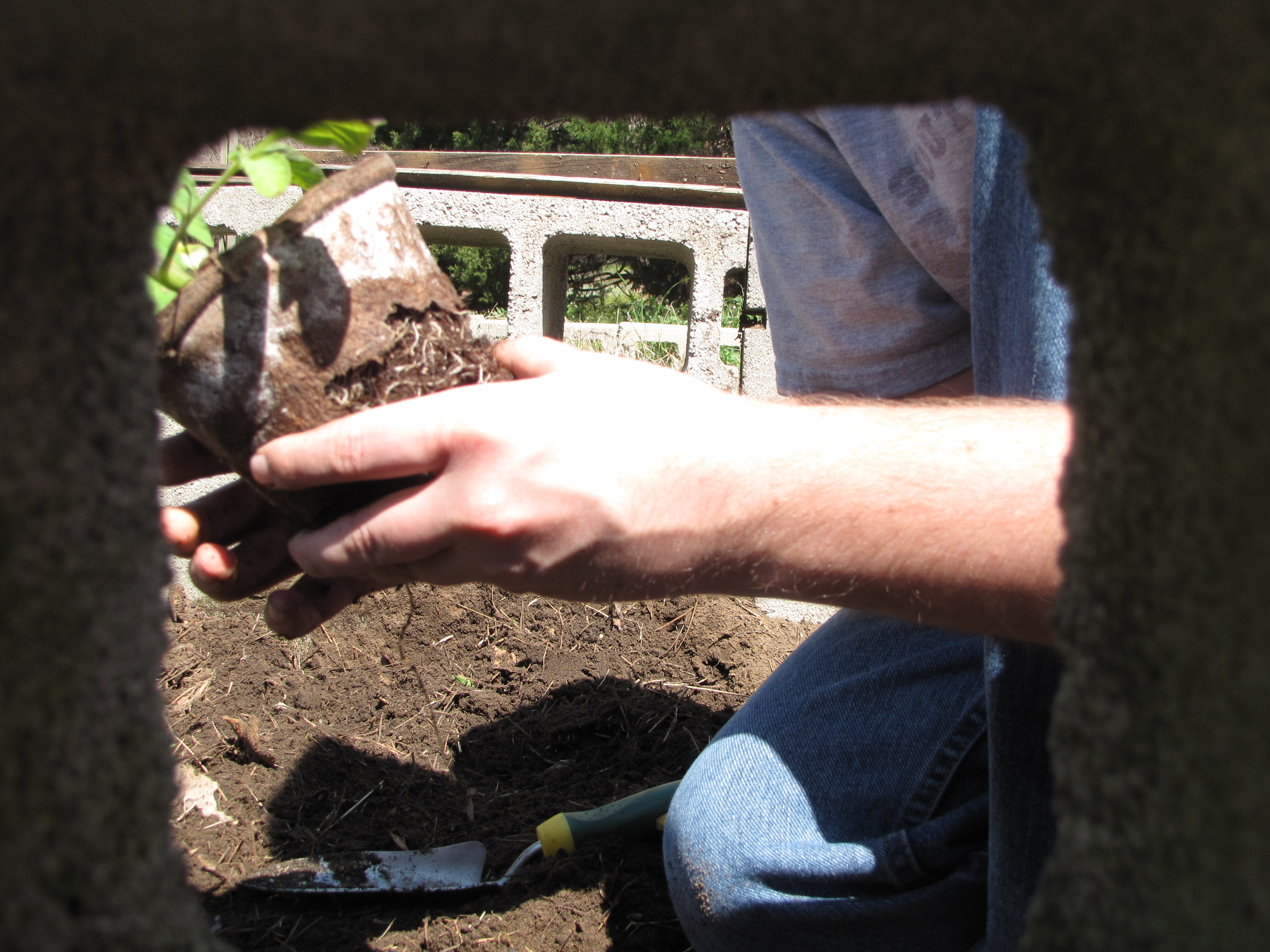
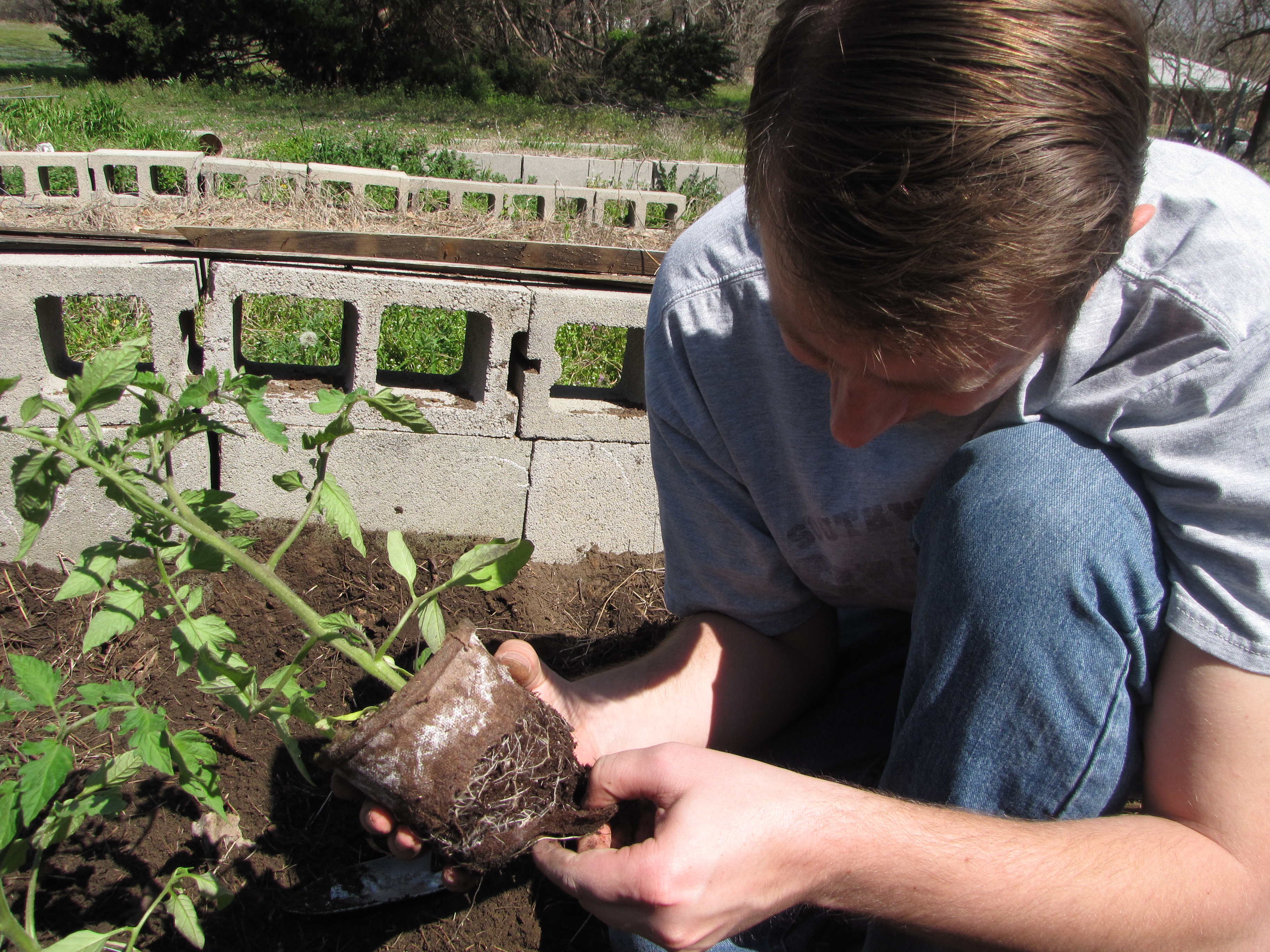
My husband planting our garden in 2011 (the same time I was working on photography techniques for the journalism class I taught). Of the family, he’s always been the gardener. But this year I seem to be coming around.

I like writing to my roots, or the metaphor I’ve chosen to guide my blog, because it suggests a narrative that deepens as I go. It means that I don’t have to start with all the deep stuff first, but that I can move more gently to the sources of pain, and the sources of me.

Who says I have to go deep, you may ask? Well, definitely not pop culture or social media, which is oh so surface level.

It’s me (“It is I,” for my fellow English majors) who has chosen to go deep, because I write to heal myself and to help others. I choose to work gradually to my roots of pain and self-protection, because that’s how healing has to happen, and after healing, recovery. Recovery of our dreams, goals, and our true identities. We must take gradual steps.

As we do, we can unmask lies we’ve had about ourselves to finally embrace who we are meant to be. And that’s the point of the blog.

But before I chose Writing to my Roots, I planned to call this endeavor The Before Thirty Project, because that’s how it started. Originally this “project” included two goals in the last months before I turned thirty. Little did I know that these goals would expand as my writing took me deeper, little by little, to my roots—both pleasant and painful. Today I finish a series of three posts on a topic that I used to shun like the unwanted appendage I imagined it to be. Then, back to other topics I’m more comfortable with. I promise.

Image

When I first vaguely conceived of my project at age twenty-five, I had two goals in mind: earning my master’s degree and publishing a book. It was probably my incessant talking about these grandiose goals, in fact, that had my high school students so frequently asking, “Are you ever going to have kids?”

The junior and senior girls would look at me in disbelief when I shrugged, “Probably not.”

For some of them, having kids was the goal of life.

But when they said things like this, I was the one fighting back disbelief.

Really girls? I thought. What was so glamorous and good about having babies?

Of course, being in a high school environment where numerous girls got pregnant each year, it was easy to disparage their dreamy looks and words. Terrible! We teachers said. Teenage girls getting pregnant! What a waste! What unnecessary hardship!

For a teenage mom, of course, it is an unnecessary hardship. To this day I would never advocate teen girls—or any female who is not married—getting pregnant.

But once a girl finishes high school…once she gets married…

Until recently, I still couldn’t advocate it. Not for myself. And honestly, not for anyone else. As my twenty-something girlfriends got pregnant one by one, it felt as if they were betraying me, one by one. How selfish, I know.

Because I couldn’t have this happiness (rather, couldn’t understand it as happiness), they shouldn’t either. Really, I would be doing us all a favor to save us from the inevitable heartache that must come with kids.

For seven years I told myself I didn’t want kids. Too much risk. Too much time that could be better spent elsewhere. Why risk such a hefty investment when you didn’t know what you were going to get? Never mind potential birth defects. What about angry children who decided to write you off because you screwed up their lives?

Today I can look back at sentiments like these more objectively. They don’t seem normal, or rational, or healthy, like I once stubbornly insisted they were. (My husband would just give me that same look I got from my girl students: You’re messed up.)

Image

Maybe it was a problem with the kind of kid I had become over the years. Bitter. Angry. Sad. Detached.

I was not bringing any particular blessings to my parents’ lives. I had moved so far away from them that it was not strange to go almost a year between visits. At various points, I had barricaded myself from contact. Didn’t want a lot of contact, because contact hurt. It just all hurt so much—family visits, photo albums, phantom memories—that why would I ever want to perpetuate it?

Through writing and other miracles, God has taken me to a place where I’ve realized none of my self-protections can keep me safe or healthy. More than indicating a kind of logic, all my excuses, denials, and exercises in becoming numb indicate a sad existence. The guardedness (to the degree that I’ve had it) is not laudable; it’s lamentable. Would that we women could be smart about our choices—with healthy boundaries that keep us from getting pregnant when we shouldn’t (right, Kim Kardashian?)—but that allow us to be open to any possibility, should God suggest it to us.

Image

After eight years of marriage, He has suggested it. And now I’m open. At this point, a baby could definitely be part of the “before thirty project,” if God wants it to be. That is to say, I’ve removed the barriers. I can conceive of getting pregnant. It’s up to God if I really will conceive. But if not, I’m okay with that, too. My being open to the possibility is the real growth—more meaningful than a baby bump could ever be.

Whew. Now that I’ve made some real progress with this root, I’m putting it to rest for awhile. (I’ll let you know if anything develops.)

Image


The Question Every Young Couple Must Answer

Image

“When are you having kids?” my high school students always used to ask. Why they were so interested in this detail of my life I never understood—much like I didn’t understand when family members or anyone else asked. The question used to come frequently when we were first married, and then, as year after year slid by with no child, but only new feats such as a bachelor’s degree, teaching job, and master’s degree, the question all but went away, and with it, my child consciousness.

But when I got to my first semester of grad school in 2010, I had an epiphany. Sitting in class at that time as both student and teacher, I was to finally understand why students and so many others wonder that question.           

It happened one night in literary theory class, when my professor, trying to explain the infant stages of Freudian development admitted, “Well, the research says this [insert windy explanation of anal and oral stages]; but I don’t have kids, so I don’t really know firsthand.” That’s all. One comment. Then he continued his lecture on Freud. But I was stopped.

Before that night, he’d been Mr. Know-It-All.

Now, he was just a man out of touch with reality…who, perhaps, had never changed a diaper.

Image


(Photo from giftsfordadtobe.com)

What did my professor have? He had his books and his scholarly journals and his research (and with those, late night library visits while bedecked in baseball caps [to blend with students, he’d told us]), but what, beyond that? He didn’t have a wife. Or kids. Or religion. (Lots of grad students and professors end up losing their religion, I was also to find out.) The closest relationships he had seemed to be with us, his students. And he was great with us, very gentle and caring, and genuinely concerned for our welfare.

But in general…in general, I had to ask myself that night: Is this really the life? And more importantly, is this the life I want for myself? Do I want to be like this professor someday, standing before a class of adults (or high school kids, for that matter), in my forties or above, with no life experience to share with them, besides what I had read in books?

Image

This was a profound moment for me. I journaled at length about it the very next day. And I talked to my husband. Was I missing something here? Was I about to embark on the wrong path, this path to the PhD? What did it mean that I was having all of these questions?

Mind you, I was hardly ready to toss the birth control, quit teaching, and/or withdraw from my graduate classes. Just then I wouldn’t admit that I wanted kids. Because I wasn’t actually sure I wanted them.

But one thing I now understood: If I had kids, I would become a more interesting professor…and a more interesting person. I would become more credible. More human. And that alone was something worth considering.