How Lovely Is Good News

got a letter
Photo Credit: “Got a Letter” by Lusi

It’s a lesson I’ve been hearing and trying to apply for years: Don’t underestimate the power of good words. Today I’m not talking about skillful writing (per se), but uplifting words, written or spoken. I hear this advice as a wife, when my husband entreats me to stop nagging him for his shortcomings. “Positive reinforcement,” he says, “Is what will get me to change.”

I heard this advice at graduate school when learning best practices for teaching writing: “If you only criticize students, you will freeze their writing process. You must encourage what they are doing well so they can gain confidence to keep writing.” And, “Wait until later to correct their grammar and punctuation. If they only see red marks on the page, they will be so scared of screwing up, they won’t take any risks.”

The Bible says, “The soothing tongue is a tree of life, but a perverse tongue crushes the spirit” (Prov. 15:4), and, “Gracious words are a honeycomb, sweet to the soul and healing to the bones (Prov. 16:24).

Putting Wisdom into Practice

I’ve tried to put this advice in practice this semester as a college writing instructor. This doesn’t mean I never comment on what’s bad in an essay, but I give as many compliments, if not more, as criticisms. And I waited until about halfway through the semester to significantly address punctuation or grammar. I’m not sure if it was this approach, or my sequence of assignments, or the natural improvement that comes over time, but by essay four, all my students were writing their best papers yet. I think it has something to do with all of the above, plus the fact that the fourth assignment, modeled on a magazine article submission, was a true story of their choosing written for teens. They seemed to care more about this task, given the topic and the clear audience, and it showed in their writing.

I think older, more experienced writers, can handle criticism without letting it derail them. Same goes for older people in any context, if they are well adjusted adults who have learned to let adversity lead to growth. Still, “How beautiful on the mountains are the feet of those who bring good news, who proclaim peace, who bring good tidings…” (Isa. 52:7). As one who has just received some good news, I am reminded just how life giving good news can be.

My Own Good News

This weekend I received the edit letter on the second (partial) draft of my memoir. I sent Trish 130 new pages thinking, “These suck,” but I sent them anyway, because I had done what she suggested. As I awaited her letter, I expected to read, “You were right; I see why you didn’t put these things in the book originally; they don’t work, they aren’t well written.” I thought she would confirm my self-diagnosis, and I would be stuck at square one, trying to figure out a book structure that’s been problematic from the beginning.

Guess what? I was wrong. Her letter positively glowed. Here are some of the good words she gave me:

  • Fabulous

  • Good stuff

  • I am so, so proud of you for digging deep.

  • It was a vivid, powerful reading experience.

  • I didn’t do much line editing, mostly because I was really caught up in the story.

  • These are great scenes. There are lots of pages where I don’t note anything because the story was carrying me along. That means you’ve done it right.

  • Fantastic job!

  • Overall, you have raised your writing level so much with these new pages. I know this is taking longer than you thought it would. But you will be glad you took this time and wrestled out these scenes. The end result will be a book that you will be really proud of, and will entertain and bless your readers.

  • You’re a fun, talented writer to work with.

The Results of Good News

After the second time I read through the six-page letter, I felt light, like a weight had been lifted. A week ago when I sent in my pages, I felt heavy, lost in my writing process, and unsure what I was going to do after she told me to try again. I resisted working on my memoir for the entire week, figuring it would do no good until I knew what she would say.

Now I am re-energized. Last night around bedtime, I even felt compelled to sit down and outline some new scenes that will finish the book. The outline poured out and suddenly clarified the structure of my book. I saw how the new pages would circle back to and unify this new, as yet unwritten, ending. I realized I could not have conceived of this ending until now, because the events have just happened within the last month.

One lesson for me to learn was, again, God’s timing. Though I tried to set a date on this book project from my very first blog post, I couldn’t, because I didn’t know what all needed to be in the book.

The other lesson was good news. How lovely was this good news to me! Would I have seen the vision for completing my memoir without Trish’s good words? God used her words to revitalize my writing, and now I can’t wait to get back to work!


I am Weak (and Hormonal), but God Is Strong

DSC_7694
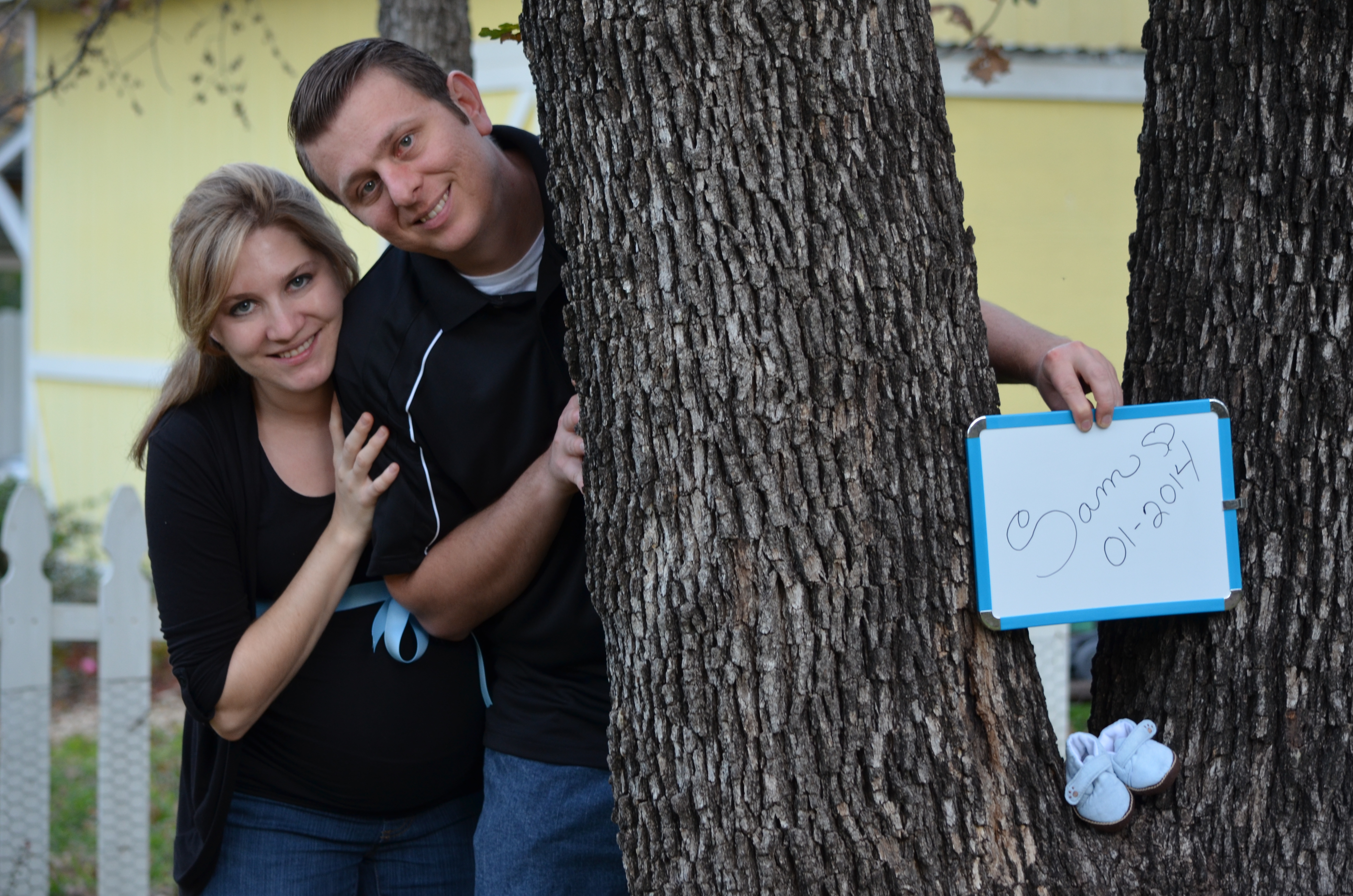
Making time for family photos is one of my weaknesses. In almost nine years of marriage, we have never had professional pictures made. Not even for our wedding.

This week has been a roller coaster. Imagine me moping because friends and family finally pushed me to choose a baby bedding set; yelling at my husband because he “can’t do anything right”; panicking because we have less than two months to paint the room; sobbing because I can’t get Target’s baby registry website to work; and generally freaking out because “I don’t know how I’m going to handle this all!”

Yeah. It’s finally sunk in. I’m gonna be a mom. And suddenly, all my shortcomings are hitting me, smack dab, in the face. The necessity of dealing with the baby room, especially, has slammed me with bad memories from my childhood, where I never knew how to decorate my bedroom and was always dissatisfied with my pathetic attempts. My mom tried her best to make our shabby houses nice, with inexpensive touch-ups like a coat of paint and tablecloths, but decorating wasn’t her strong point, either. To this day, she and I both freeze at the prospect of even hanging pictures.

I knew this would happen. I knew having a baby would call on me to face my weaknesses: decorating a room, learning to be a better homemaker, learning to depend on others, and setting aside my own goals in favor of the family. In short, Baby Sam is calling on me to be less selfish.

DSC_7710
David and Tasha, some of our good friends, offered to take semi-professional pictures of my husband and me about two years ago for Christmas. This last weekend, we finally took them up on the offer. Baby Sam made the difference.

But everyone knows that. It’s obvious that parents have to be less selfish. It’s also common knowledge that parenting calls forth people’s weaknesses. I knew this all along, and that’s why I put off children for my first eight years of marriage. I knew kids would test me, and until now, I wasn’t ready for that test. Instead, I subjected myself to lots of other tests, earning bachelor’s and master’s degrees, where all the questions were safely embedded in a two-dimensional world. There wasn’t much to mess up—at least, it would be hard to mess up someone else’s life. Now, the game has changed. Now, my decisions can make or break someone’s life.

Ironically, I know I’ve done some messing with my husband’s life by keeping too busy and being self- and career-absorbed over the years. It wasn’t really possible for me to live a self-contained life: our decisions always impact others. I just wasn’t ready for the mega impact of a parent-to-child relationship.

Good news, though. God is stepping in, like he always does. The verse I keep hearing this week is 2 Cor. 12:9-10. “My grace is sufficient for you, for my power is made perfect in your weakness.” Thank God for that!

DSC_7731
We were tempted to cancel our photo shoot, because it came after a long day of grocery shopping for me and outdoor work for hubby: my feet were swelling, and his whole body ached from putting up a greenhouse.

One practical demonstration of God’s sufficiency (“my God shall supply all your needs,” Paul writes) has been a new friend, who enthusiastically agreed to help me with the baby room. She came over on Tuesday and helped me order a bedding set. She talked me through using the breast pump my other friend gave me. She went shopping with me to choose paint and other baby supplies. And she’s coming again today to help make some decorations for the baby room. Maybe these things seem trite to you homemaker women out there, but to me, they have been a godsend.

I don’t think my new friend realizes why this stuff is so hard for me—it’s fun for her. But that’s because she’s a hands-on woman; I’m a hands-off type (read: I like to work with words, ideas—basically stuff I can’t break). Amidst my wallowing that “I suck” this week, God has turned my sorrow (and raging hormones) into joy.

The beginning of the week was hard, but the end is getting better. So I know that homemaking is not one of my strong points. So what? God’s power is made perfect through my weakness, and through friends and loved ones he sends to make up for what I lack. I feel so blessed this week to be surrounded by friends and family who can help me. Generally I don’t like to ask for help, but this lack of dependency is just another weakness God is helping me through. It’s a weakness I intend to ditch, because I know if I hope to get through parenthood, I’ll need some help. It sounds corny, but that old adage is really true: the first step to change is admitting we need help.

Thank you so much, Lord, for sending help just when I needed it.

DSC_7783
But we went to take pictures anyway, tired and grumpy. In the end we had a lot of fun, and now we will always have the memory of this moment. Thanks to Deborah, Tasha’s mom, for the great pictures!

First Things First in Writing

notepad
Photo Credit: “Notepad” by Crisderaud

“Pause for a minute…that word order is confusing. Instead of ‘my spiritual life post thirteen,’ how about ‘my post-thirteen spiritual life’?”

I was reading chapter 2 of my memoir to my writers’ group, which, this week, was only one other person. She was stopping me every couple of paragraphs to suggest a syntax change or a modifier deletion.

“The action ‘I put my head in my hands’ makes pretty clear that you dreaded what was coming next. I know you’ve heard it before, but this is a case where you show and tell. You don’t need the telling.”

Putting It into Practice

Two days later as I sit at my keyboard trying to jump back into my memoir, I’m glad for the prose tightening advice. It will be really helpful later…but it’s not what I need right now. Since adding more than ten new chapters, I’m just trying to figure out if the scenes I’ve extracted from my reluctant psyche even belong in my book.

Show, Don’t Tell

“And tell us what you were wearing. I can’t see you as an eleven-year-old. Show the makeup or lack thereof. How did you know it was snowing outside? Show us how you are seeing this. Are you looking out a picture window?”

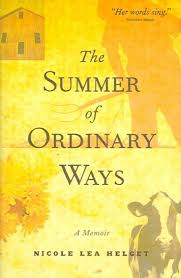
This writer, an excellent writer, by the way, is a visual person. Her prose overflows with color, texture, and shape. She lent me a memoir, The Summer of Ordinary Ways, by another fellow Minnesotan (my critique-er and I are both Minnesota girls who ended up in Texas), and I wonder if she modeled her writing on Nicole Lea Helget’s style. Helget writes with beautiful imagery that places readers right in the scene.

For example, here’s an excerpt where she’s describing watching/hearing her father “pitchfork” a cow:

A sound snapped the thick air.summer of ordinary ways

Like eggs dropped on the wooden floor of the chicken coop. Or metal bats whacking leather-covered baseballs. There was something of a wooden ruler slapping naughty palms. Something of thunder breaking against the sky. Only more primal, more rooted. I recognized it immediately… It was the sound of girls splitting wish-bones, of Mom dividing chicken breasts, and of shovels crushing black rats breeding in the granary… It was the sound of field stones hitting the loader bucket or hay wagon or rock box….It was bone.

I don’t write like this. At least, I don’t write like this about my early years. These years feel like a cold case. I can’t remember. Or is it that I don’t want to?

The first draft of the memoir I sent off for editing begins with me at age twenty—and I believe that draft was more descriptive than the chapters my writing group has seen in the last month. I can deal with those more recent scenes.

The early scenes? I’ve been writing them, but they kind of suck right now. I feel something about my early life is important, but I’m not sure if I’m capturing it.

Another Book?

I always had the idea I’d save my early life for another book. It deserves a whole book, and, in fact, was going to be my first book. I prepared the manuscript as a series of journal entries, and to this day, the scenes are preserved in my memory as the journal entries. I fear I’ve forgotten the actual scenes—I just remember the journal entries. The scenes I’ve written for draft 2 of my memoir feel fabricated—or at least really detached from my feelings and memories.

Moving Forward, Nonetheless

This week I’m going to send off my new part 1 to Trish. Because I’ve had more time to talk to Trish, and because she’s seen the rest of the manuscript (or where I am going with it all), she will understand that, more than prose tightening, I need help deciding what to include about my early years. Maybe I even need help unlocking memory.

I doubt memory will come back in full color like it seems to for Helget and my fellow Minnesotan, and maybe that’s okay. In my daily life, I don’t often notice what’s around me (I know, I know—as a writer, I should work on this). I don’t think I’m going for a full-color memoir, though. I’m not sure. This is a style question I can work out later. But first things first: figuring out content, order of events, and narrative thread.

Wait a Minute…

Right before I hit “post,” a thought occurs: is writing in “full color” a way to actually unlock memory? What do you think, readers? Have I got the process wrong?

A Memoir for Disillusioned Christians: Addie Zierman’s When We Were on Fire

when we were on fireSometimes when you have grown up in a certain discourse community, or a group of people who share a common “language,” you learn to spout off sayings without even thinking about them. In the Christian world, some of these sayings include “born again,” “saved,” “lost.” You forget that outsiders don’t really know what these things mean. You yourself become desensitized to their real meaning. You can lose your faith when you realize that fellow church goers aren’t interested in probing for deeper meaning, or for deep relationships. Such was the case with Addie Zierman, who has recorded her experiences for curious readers.

Summary

Addie’s memoir, When We Were on Fire, shares the experience of someone who was steeped in evangelical culture from birth, thought she was on fire for God…and then fizzled out, realizing that what she’d always believed in was a lot of clichés that didn’t personally ring true.

Addie goes through a period of disillusionment, in which she starts to see that many of the Christians she knows don’t really care to get to know her and her problems; they want to gloss over the messiness of life with quick fixes, like “You will never be lonely with Jesus.”

“Yeah, but that thing about never being lonely? Sometimes I am,” Addie tells her Bible study group, and the leader responds, “Thanks for the feedback, Addie, we’re not really going there today. Now, let’s move on to question five” (a paraphrase).

Never being “heard” in Christian circles leads Addie to her rebellious-slash-depressed period, in which she tries to drown her sorrows in alcohol and an “almost” affair.

A turning point, if there is one, comes when Addie finds out she is pregnant. She decides she doesn’t want to be bitter for her son’s sake; plus, it feels like time to get over the past.

It’s sad to me that she’s still sort of cynical at the end; although the place she leaves the book might be just right for making her point that faith isn’t simple. A testimony can’t be broken into before and after, black and white, dark and light (and this is a point I’ve made on my blog, too).

Analysis

I really appreciate Zierman’s honest look at how her faith hurt her. Particularly well done were her scenes dealing with her ex boyfriends, paragons of virtue she aspired to imitate. She makes the point that a heart can be broken even if one “saves herself for marriage”; this happened to her by her boyfriend Chris, who, in trying to be a model missionary, exploited Addie’s innocence and broke her heart.

I also was affected by the theme of Christian clichés throughout the book—or Addie’s point that certain “evangelical-words-turned-weapons” “have grown so heavy; they groan, now, under the weight of all their baggage.” Some of her examples:

Like when you say, Sorry, I’m dating Jesus right now in order to terminate the possibility of a relationship with all its messiness, all of its complexity, all of its potential for breaking your heart.

You say, I’m saving myself for marriage, as if the heart can only be broken by the act of sex…

You tell the Church People you are lonely, and they say, Let God be your friend or they say, What a friend we have in Jesus! And what you hear is that you don’t have the right to be lonely, that if your faith was stronger than this, bigger than this, you would be happy.

And then, the main point of her book (to me):

And it occurs to you that the real work of faith has nothing to do with saying the right words. It has to do with redefining them, chipping away at the calcified outer crust until you find the simple truth at the heart of it all. Jesus.

I read through this book ravenously, because it spoke to some of the same issues I am lately unearthing by writing to my roots. I feel Addie’s rage at being fed cliché after cliché without equally experiencing practical demonstrations of Christ’s love. The thing is, as she writes in her author’s interview, people like her ex, Chris, are so steeped in the language, the clichés of Christianity, that they don’t even realize that, in following a God-appointed “mission,” they are hurting others directly in their path—doing “what Jesus would never do.”

It’s not entirely fair to blame other Christians. As Addie admitted, and as I will admit, we are guilty of also being the “Super Christian, bowling over others’ feelings with [our] passion. [We] have been unkind and careless more times than [we] care to admit. [We’ve] missed the loneliness of others simply because [we weren’t] really looking.” Yes. I know I’ve done that. And I repent of it, and after reading someone else’s experience of being on the other end, I pray God helps me to stop it!

Dislikes 

The F-bomb (along with lots of alcohol) starts showing up in the latter parts, when Addie enters her “rebellious” stage (warning, for you sensitive souls). Though it hurt my sensibilities, too, I did have to chuckle when she wrote, post-rebellion: “Though I’m trying to watch my language, sometimes fuck is just the right word” (paraphrased again). I see in Addie aspects of myself that I’m not proud of, but that are nonetheless there. She’s right; sometimes it is (the right word). Though I don’t condone swearing, I have to admit I do it sometimes; moreover, I think Addie’s done an important work  in being real on the page so we imperfect Christians can finally relate.

I would have liked to see Addie delve deeper into why she fell so low. As my book consultant wrote in her review of this same work, it seems Addie didn’t quite reach as deeply as she could have to describe what plummeted her into depression. It seemed to come too quickly, without enough explanation. Maybe the excellent foregoing chapters of her childhood/adolescence were the explanation, though. I can testify that a long build-up of factors can suddenly mushroom into catastrophe; after a lot of disappointment in life, you don’t need a cataclysmic rainstorm to wash you out—maybe just a little sprinkle.

Recommendation

I highly recommend this book if you have issues with your faith or want to understand evangelical culture better. For me, the book has been inspiring on multiple levels: I feel both validated as a disillusioned Christian, and energized to write about my similar, yet different, experience. My memoir (currently in revision stages) ends in a better place than hers: that is, I don’t leave my church, and I discover a real answer for the clichés, which is The Hidden Half of the Gospel, or the message of my first co-written book, expected to come out in January. Maybe when the book comes out, I’ll send Addie a copy. I feel we could be good friends.

Knowing When to Quit

exhausted
Photo Credit: “Exhausted,” posted on Thayer Memorial Library’s Website

I can talk a good game about living proactively, being productive, and striving for new heights; however, I’ve also found there’s a time to back off. The time is when you’ve made commitments that are not needful, helpful, or healthy for you to keep.

For a few weeks I’d been feeling stressed because I wasn’t finding enough time in my day to work on my memoir. I entered the fall planning to work on my book at least twenty-five hours per week. As I looked at my records for the past month, I saw that I was logging closer to ten. And because my baby’s due date was approaching, this was making me nervous. Could I still get my manuscript done by the time Baby Sam came?

My hubby has often said I tend to keep my plate full to the brim; he’s always known me to be stressed over what I’m not getting done. But since my unexpected breakdown, I had been trying to pare down the helpings on my plate. What had gone wrong?

As I’ve been learning to do when I get in a pickle, I prayed. But this time as I started to pray, my brain felt too scattered to even stay on track (this is a good sign you’ve got too much on your plate, or you’re pregnant, or both). So in my prayer journal, I began with a list of my current commitments, hoping to see a pattern or pick out something I was unnecessarily stressing over.


Let me fill in the background for you about the housecleaning item. In the past two months, thinking I needed to become a better homemaker for the baby, I picked up two books on housecleaning (three, if you count The Happiness Project), and started to try to drastically change my habits, per the books’ suggestions. I had started to feel positively weighted down by the thought of keeping my kitchen sink clean, de-cluttering a little bit every day, and deep-cleaning my kitchen.

When I made the list in my prayer journal and saw the housecleaning item mixed in with everything else, though, I realized something: Cleaning/organizaing my home doesn’t have to be a top priority right now. Especially since I’m not a dangerously messy person (i.e., my dust bunnies are not causing us physical health problems or my clutter creating safety hazards, like some people referenced in my cleaning books).

I asked the Lord to help me set some goals for what I actually needed to do for the time being. He told me, “You can stop reading the housecleaning books right now. If you want to focus on your own book [and I do], read stuff that inspires you to write [books on writing, or memoirs].

“Continue the habits of keeping your sink clean and purging your clutter when you can. But you don’t need to add anything else.”

This was making me feel lighter already. I was next able to list out some new, more manageable goals for my writing each week; although I had to admit it wouldn’t amount to twenty-five hours. This was because my unexpected teaching job had come up at the last minute, and it takes time to create curriculum when you’re teaching a brand new class. This was an item that was not negotiable.

The baby registry and choir cantata were pretty easy to resolve: I’d let them become overwhelming when I saw I couldn’t get the registry done in three sittings (but one more should do it), and the cantata piano music learned in two weeks (hopefully four more will do it—but if not, I have the out of purchasing the performance CD).

While my hubby had told me I shouldn’t feel bad about cutting back on my memoir work, I did feel bad, because this was the single most important thing I’d identified to get done before the baby came. I knew I wouldn’t cut back anymore than I had to, but God did help me see that I was worrying too much about getting the book done in my projected time frame. He helped me resolve this by reminding me that if I got the first section revised and a proposal written, I could start shopping the manuscript to agents/editors even if it was unfinished. This is how non-fiction publishing works, anyway.

Then, God gave me this list of do’s for my guilt:

  • Lighten up
  • Lessen your expectations
  • Give yourself a break. Unpredictable things (like the class and the puppies) have happened lately.

Finally, I realized that God would accomplish his work in his time. I didn’t need to worry about what wasn’t getting done, because he was seeing to it that everything that needed to get done was getting done.

When we are walking in God’s will, or doing our very best according to the light we have (based on reading his word and listening to his voice), we can “quit” certain good things with a clear conscience—and sometimes, to continue walking in his will, we must.

Leaders, Followers, and The Mob Mentality, Part 2

Read Part 1

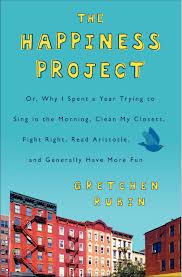
While I hold to my convictions (and sometimes snobbery) on certain movements (I will never understand waiting in line for hours to see any movie at midnight), I find an abundance of examples proving that mobs can sometimes follow exceedingly good and worthwhile things. For instance, I’ve been simultaneously reading Marla Cilley’s Sink Reflections and Gretchen Rubin’s Happiness Project, both of which are enormously popular, but also, I think, pretty valuable: they offer advice, support, and coaching for improving one’s life.

flylady

Thanks to the “FlyLady,” Marla Cilley, I’m learning more effective ways to de-clutter my house, and because of Gretchen Rubin’s chapter on aiming higher in one’s work (chapter 3), I woke up this morning with ambitions (which I promptly wrote down) to start an actual author website in 2014.happiness project

The Downside of “Good” Mobs, from a Leader Perspective 

There is something funny that happens when I find a guru I admire, though, and maybe this is because I am a leader-type, not a follower: I get jealous of him or her. Rather than just taking the advice for what it is, I wish I had been the one to give said advice. Rather than just browsing Gretchen Rubin’s website and rejoicing over all the great tips she’s giving me, I start to feel pressured to match the greatness of her website. This is a particularly insidious part of being a leader (or the type of leader that I am) because I feel this insecurity not only when I observe “greats” in my lines of work (writing, teaching, blogging), but I feel it when I see almost anyone doing any job well.

This tendency to lust after other people’s talents hurts me more than I’m sure I want to know: Chiefmost, and rather ironically, it derails me from carrying out any task well. When I start admiring someone else’s work too much in the context of wishing I had done that—or thinking, “Maybe I should go get training for that”—I get distracted from what I’m really supposed to do.

For Example…

When I was newly married and trying to decide on a career path, my older brother came to visit us. I hadn’t seen him for almost a year, but when I saw him that time, I was struck with how “religious” he had gotten, and a what a great life path he had taken—he had attended a Bible college that trained him to lead Bible studies and prepare the way for evangelistic series—and I started to feel guilty that I needed to be doing the same thing. The problem was, I was a married woman now, rooted to a definite geographical location: I wasn’t a single person who could just up and just go anywhere for college, or, for that matter, be an itinerant traveler for my work after college (like he had become). As confused as I was about my career options at the time, my brother’s path should have been a clear “no” for me. But because of my personality, as soon as I saw what a good effect taking Bible training had had on my brother, I felt guilty that I wasn’t doing the same thing, and I carried that guilt for years.

Doing The One Thing We’re Meant to Do

The fact is (and what I’m learning as I read “follow-worthy” authors such as Cilley and Rubin and others, such as Bible writers who urge us to find our unique spiritual gifts), we can’t do everything—and we shouldn’t try to do everything. Rather, we must figure out what it is God has called us to do, and then do it. But how do we figure out what we’re supposed to do?

The answer came to my mind almost immediately (God is funny this way):

If you would be a leader in anything, first of all, you must submit. It’s there, all over the Bible: “Humble thyself in the sight of the Lord, and He will lift you up.” “The last shall be first, and the first shall be last.” “  (James 4:10; 2 Pet. 5:6; Luke 14:11; Matt. 23:12, just to name a few references). And let’s not forget that those of us claiming to be Christians are, by virtue of taking that title, also claiming to followers: We are followers of Christ.

So for those of us with leader personalities, we must first learn to submit to the Greatest Leader who ever lived—Jesus Christ. After that, I believe, is when we really start to find our path. As Isaiah chapter 30 puts it (and this is a great chapter to read if you’re struggling to submit or find some direction), only after we have submitted to God and allowed Him to direct us, will we hear “a voice behind [us], saying, ‘This is the way; walk in it’” (v. 21).

I can’t tell you what you’re meant to do; sometimes I can’t even tell myself. But I know this: when I take my eyes off Jesus and start looking to the world for my example (as in, I start thinking I need to become Gretchen Rubin, and not just glean some advice from her book and blog), I become frustrated, dissatisfied, and unfulfilled. I believe God has a specific calling for me that only I can do, and while others may give me some useful tips along the way, I must always, ultimately, go back to the one who can not only lead me, but live in me to help me carry out what I’m meant to do. “For it is God who works in you to will and to act in order to fulfill his good purpose” (Phil. 2:13).


Writing Towards Honesty

2013-06-03 23.52.41

At first I thought I was writing a book about recovery from depression, the love story that brought my husband and me together, and finding a relationship with the Lord. Now that I am revising for my book consultant, Christian memoirist Trish Ryan, I feel the topics expanding. She wanted me to set a greater context for why I ever got to the point of suicide and bulimia and all the other struggles I write about in the first place. She wanted to know more about my faith in God as a child and my family. In short, she asked me to venture into places I realized I didn’t want to go (which is why I originally did not go there).

Now that I’ve been trying to write scenes from childhood for the last several weeks (and they are coming out messy and muddled and badly), I’m finding that my story might be bigger than I thought, and it all has to do with being honest about how the church has failed me.

The more I write, the greater anger I uncover at a church culture that would not let me speak up and share what kind of help I needed. This theme also shows up when it comes to my relationships with friends and relatives—people you’d think it should be okay to share with! The revisions I am working on now are slowly bringing me to new conclusions about why I became suicidal in the first place. Maybe I will never totally understand why or how it happened, and maybe it’s not a problem that is specific to me or my family or my church. But through the messy, ugly, painful writing coming out in the last few weeks, I know it has something to do with speaking up, and the fact that I felt I couldn’t for so many years.

Sometimes it’s discouraging to think that after a year of working on this memoir, I’m only just keying in to the real point of it all—and maybe I’ll decide next month that I need to backtrack yet again. But maybe it all goes back to this blog and why I started writing it: I needed to share with people.

I’m working on a series of blog posts about my ugly, messy rebirth experience, and these posts, more than anything I’ve yet written on Writing to my Roots, have given me pause: Do I want to publish them? Do I want to share how I feel my church failed me, how it failed my parents, and how that resulted in a family’s demise and a girl’s death wish?

I feel a need for Christians to be honest about their struggles; it’s just hard to be one of the leaders in this “genre” of witnessing. I told Trish I felt like there were very few memoirs on the market like the one I’m trying write: that is, Christians seem to write really simplified accounts of how they found Christ (and what a difference he made to the before and after of their lives), which leave me hungry for the real details. Show me a life story I can relate to! Conversely, the writers who are willing to divulge the messy details of their lives are, for the most part, those who haven’t really emerged from the mess—so the story is real and raw and often literarily well executed, but not uplifting. I want my story to be all of the above.

Trish agreed with my assessment of the market, saying that when we writers undertake a project like she’s done and like I’m trying to do, we put ourselves out there as screwed up Christians, saying, “Okay, I’ll go first.” Not easy, but necessary if we hope to change the climate of things.

So if I publish some things that put my church or my religion in a bad light, it’s not that I’m denouncing my faith. It’s that I want us to take an honest look at where we’ve gone wrong, so we can fix it! Jesus came to heal the brokenhearted and set the captives free, and I just want to help the church see how we can help fulfill his mission. Sometimes, that means being brutally honest with where we’ve failed.

If you feel the same way, please pray for this writing project as it moves forward—that it would tell a story the world (and maybe just the Christian world) needs to hear, and that God would give me the wisdom and discernment to tell it.


Leaders, Followers, and The Mob Mentality: Part 1

mob
Photo Credi: “Crowds 2” by 2heads_Advertising

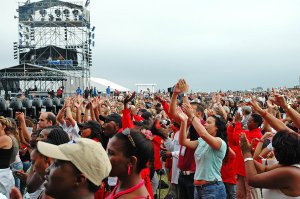
Mobs form for all kinds of purposes and on all kinds of platforms—a group of “Twerds” (Twilight Nerds) standing in line to see the new release of the movie, some gamers getting together to join a virtual world, a group of Christians gathering to worship—but the two things they all have in common are leaders and followers. So, I’ll put two questions to you:

Are you a leader or a follower?

As a teacher and church officer, I’ve observed that most people are followers—and even though I’ve always preferred to see myself as a leader, I’m undoubtedly a follower of certain things/people/movements, too. In my next post I will talk more about leadership, but let’s camp on the follower aspect for now, since everyone can claim to be a follower of something. To get to my second question:

Who (or What) is it that you follow?

To my (at times) chagrin, I often find myself scoffing at popular movements that create mob followings: the Twilight series, Duck Dynasty, Facebook, iphones and whatever else everyone seems to be doing. I’ve gotten into this bad habit of automatically rejecting certain things just because they’re popular, because, I figure, “If everyone’s doing it, it must be wrong.” I think this approach stems equally from my being as Christian (you know, “The path to hell is wide” and all that), as well as from my desire to be a leader (if I want to lead others, I can’t be just like them).

But is that the right attitude to have? After all, as a self-professed Christian, I have to admit I have a lot of fellow “Christ followers” sitting in the same boat. And obviously I don’t think I’m wrong.

A better approach as a Christian and prospective leader, I’ve decided, is not to automatically reject something because “everyone is doing it.” Rather, I must go back to my source of truth and test whatever is being followed, to see if it is noble, worthy, true, and worthwhile (Phil. 4:4). Isaiah says, “To the law and to the testimony; if they speak not according to this word, it is because there is no light in them” (8:20).

I’m not going to get onto my anti-technology platform (especially since I just got my first iphone) or my anti-Twilight platform, or my anti-whatever-else platform right now, except to say it saddens me to see so many people (and I’ll pick on Christians especially), flinging away their self-control, their dignity, their morals, to “follow” people, things, or movements that counter their so-called “convictions” or, at the very least, add little benefit to their lives. I know fellow believers who will wait for hours in line to see a midnight opening of a movie, but who can’t get out of bed to go to church. I know fellow believers who will whoop and yell at sporting events and listen with rapture at concerts, but who will barely look up from their iphones (sorry, that slipped in) during a sermon. I ask you: Who or what is it that you follow—truly follow?

Feel free to follow who or what you want, but please, call it what it is. Jesus said you can’t have two masters. You will love one and hate the other. He also said He’d rather a person be hot or cold than lukewarm.

Who do you follow?

I’d like to think I’m in the Jesus camp—that the one thing that would excite me enough to stand in line for hours, to go hungry for hours, to wake up ravenous (metaphorically speaking), is God and God’s word. I’d like to picture myself as one of the disciples sitting on the hillside at Jesus’ feet, unable to wait for his next “new release”—the next words He wants to speak to me. Right now I know I’m not always there. But that’s my desire: to be a “Jerd” (Jesus Nerd). That’s one mob I definitely approve of.

So, who or what are you waiting in line for? And does the person/thing/group at the front of the line confirm you are who you say you are?

Lest I sound too high and mighty for my britches here, in Part 2, I talk about some of my personal challenges in trying to be a Christian leader.


I Had an Eating Disorder

girl_looking_in_mirror
Photo Credit: HealthMadeEasy.com

My topic for this post is one I’ve never before offered to an audience—because it always felt too embarrassing. However, it is a topic that affects too many females (a couple whom I know and care about very much) for me to keep it buried.

I once heard a pastor say that every addiction is an attempt to numb pain. In my case, bulimia was just that. I wanted to bury the pain of depression and a life that had turned sour. It all began one night in 2004 while I was “convalescing” in my first-ever single apartment.

At age nineteen, I had just been released from a mental hospital for depression and a suicide attempt. If not trying to kill myself anymore was any indication of healing, then I guess I was. However, I still thought about killing myself plenty. When not otherwise occupied, I dwelled on death constantly, even looking up quotes about the benefits of suicide and writing them down. This obsession was so great that I had to either find something to numb the pain, or act on the obsession. I found a painkiller. Food. But then, because I also had dangerously low self-esteem that hinged on how closely I measured up to pop culture’s standard of beauty, I needed a way to undo the calories my binging sessions wracked up. I began to purge.

How could someone who is not miserable at the core of her being engage in a behavior as messed up as deliberately overeating and then throwing up? And doing this repeatedly, and with a measure of enjoyment, as if it added benefit to life?

I never planned to start binging and purging, but when life brought me to the breaking point, calling forth all my hidden insecurities, it became easy to do. I had seen some television movies on anorexia and bulimia before; I had even read some novels on the topic in high school, and I remember a lot of other girls in my class reading them, too. You see, even girls who don’t engage in one of these eating disorders are very conscious of them. Most teenage girls, at some point or other, if not throughout their entire teen years, become self-conscious of, or even obsessed with, their bodies. Without even realizing why or how they become so aware of their bodies, teen girls learn to place body in the forefront of their minds; I would dare say they award the body such importance that it becomes powerful enough to either make their lives miserable, if found wanting in some way, or to make life worth living, if they “measure up.”

And the really crappy thing about it is that a lot of teen girls—at least the kind of teen girl I was—don’t feel comfortable talking about this deep pain, so they suffer with it silently. I certainly never made a big thing out of my mammoth feelings of inferiority, but I carried them with me everywhere throughout junior high, high school, and beyond. The times when I did say something about those feelings, I remember being shrugged off or shushed with some simplistic statement like, “You’re not fat,” or, “Oh, you have nothing to worry about.” I don’t remember anyone ever slowing down or taking time to ask me why I felt that way, or what were the deeper issues behind those feelings.

I wonder: Had I mentioned that “I hate myself” or “I think I’m worthless,” would that have gotten more attention? Because these were the real, root issues.

As it was, I couldn’t see the root issues back then–and neither could anyone else. Maybe that’s why being too heavy, or being unattractive, felt like a fate worse than death. When you’ve reduced your expectations for life down to nil, but you’ve agreed to stay alive for other people (but not for yourself), it doesn’t seem such a bad thing to huddle over the toilet seat shoving the handle of your toothbrush at the back of your throat, until you feel the contraction of your throat muscles, the heaving of your stomach, the hot acid of bile as you throw up every last bit of food you enjoyed eating just minutes before.

How can I explain it but to say that since I didn’t have an inner reason to live for myself, life was reduced to outward appearances. If I could get a little joy out of a binge, and then erase the evidence with a purge–that was okay. At least, it was something to do.

Sick as it sounds, this practice was to become a routine for me for the next couple of years. Like my depression, it was to become another dirty little secret. Not until I started getting to the roots—or the underlying negative thoughts—of my behaviors did they start to resolve.

In this post, however, I do not attempt to resolve the problem. I would just ask my readers to think more deeply about what really constitutes an eating disorder. If you are suffering from one, please know that there are issues you need to deal with beyond the behavior. If you are approached by someone with an eating disorder—i.e., they confide in you about an eating disorder or related body insecurities—please don’t shrug them off; the first and greatest service you can do is to listen to her. Try to understand what is going on beneath the behavior. Validate her feelings. And then offer support for getting help.

Note: If you are curious to read why and how I stopped binging and purging, stick around for my series: “My Ugly, Messy Rebirth Story.” For more on the power of thoughts, see my post, “Are Your Roots Showing?”

Meet Bill and Ted, my Premature Furry Babies!

2013-10-05 01.12.55
For “baby” names, we wanted something simple and symbolic–a dynamic duo. I think Bill and Ted was an excellent choice, don’t you?

When we decided to have a baby, I didn’t plan on getting two puppies with the deal. Alas, my house is filling up with testosterone faster than I can keep up!

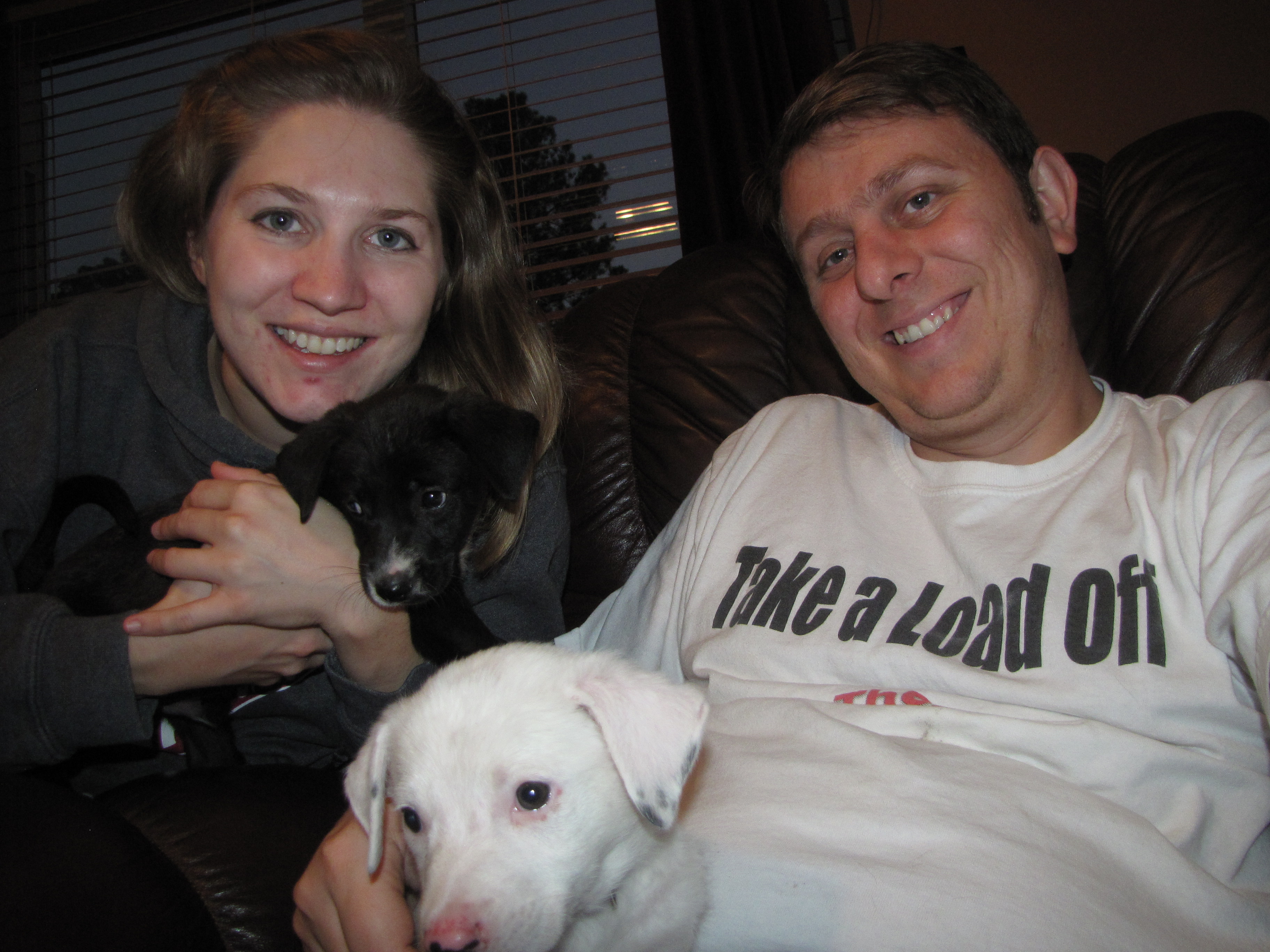
Ever since our dachshund, Hope, died last December, my husband has been bringing up the subject of more dogs…and when my brother-in-law found these two darlings abandoned on the side of the road last week, well, all signs pointed to our house.

2013-10-01 07.46.31
Bill is the white one, Ted, the black one. If you’ve seen the movie, though, you might have guessed that!

I was initially hesitant to get more dogs, because I knew I’d be the primary caregiver. I knew we’d get more dogs at some point, but I wanted to guard my last few months of freedom before baby. However, I’ve discovered my life is not my own anymore (never was, it turns out), and God is preparing me for motherhood by way of these puppies.

Some life changes I’ve had to make are:

  • Getting up in the middle of the night for potty breaks. Of course, I have already been doing this frequently for awhile, but the pups make it a little less easy to just flop back into bed.
  • Getting up earlier for “feedings.”
  • Putting up baby gates.
  • Cleaning up poop and pee.
  • Having to make arrangements every time I leave the house.
  • Worrying all the time what the “babies” are doing; trying to keep them in my sight.

I know there are some larger spiritual applications to all this motherhood training, but today I may be in too much of a hurry to see them. You see, it’s almost noon, and I haven’t even gotten down to the business of working on my memoir yet. As I thought about how my morning had gone so far, I realized I could either get frustrated that I hadn’t gotten any “work” done yet, or I could change my expectations for myself, because—hello—my life is changing pretty drastically.

I could choose to see my day so far as worthless because I haven’t yet  worked on my profession, or I could choose to see what I’d done as worthwhile because I am a wife and mother taking care of her household.

2013-10-04 06.23.16
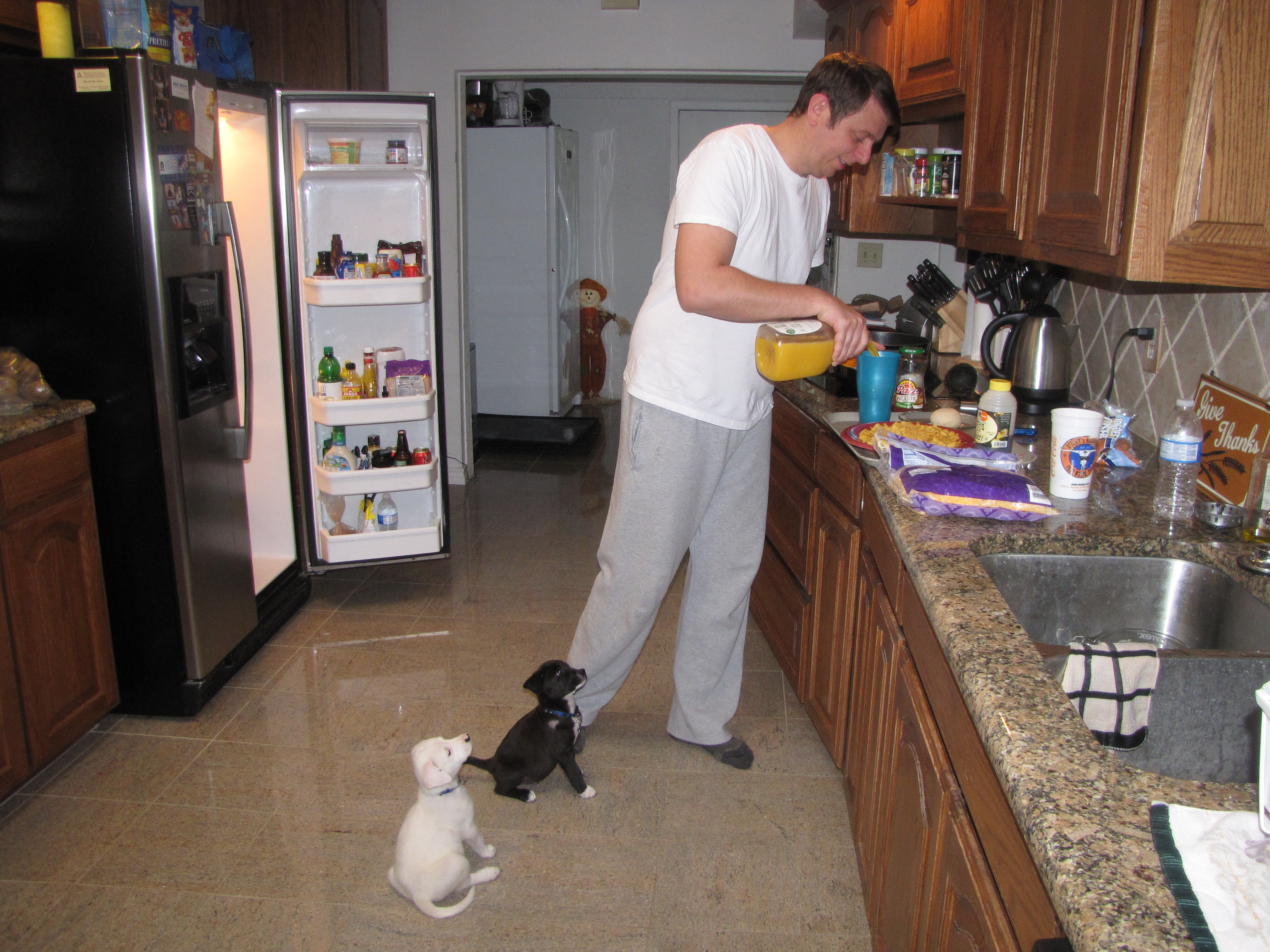
Bill and Ted are interested in whatever we are doing, especially if it involves food!

Since getting up, I have fed the puppies; spent much needed time with the Lord; knocked on the doors of two neighbors trying to get to the bottom of two large (and scary-looking) dogs that wandered into my backyard this morning (protecting both my puppies and the neighborhood); baked a loaf of banana bread for my college-age niece who stays over on Tuesday nights; and I have put ingredients in the bread maker for French bread for my husband, who told me he wanted a spaghetti dinner tonight.

2013-10-03 22.44.22
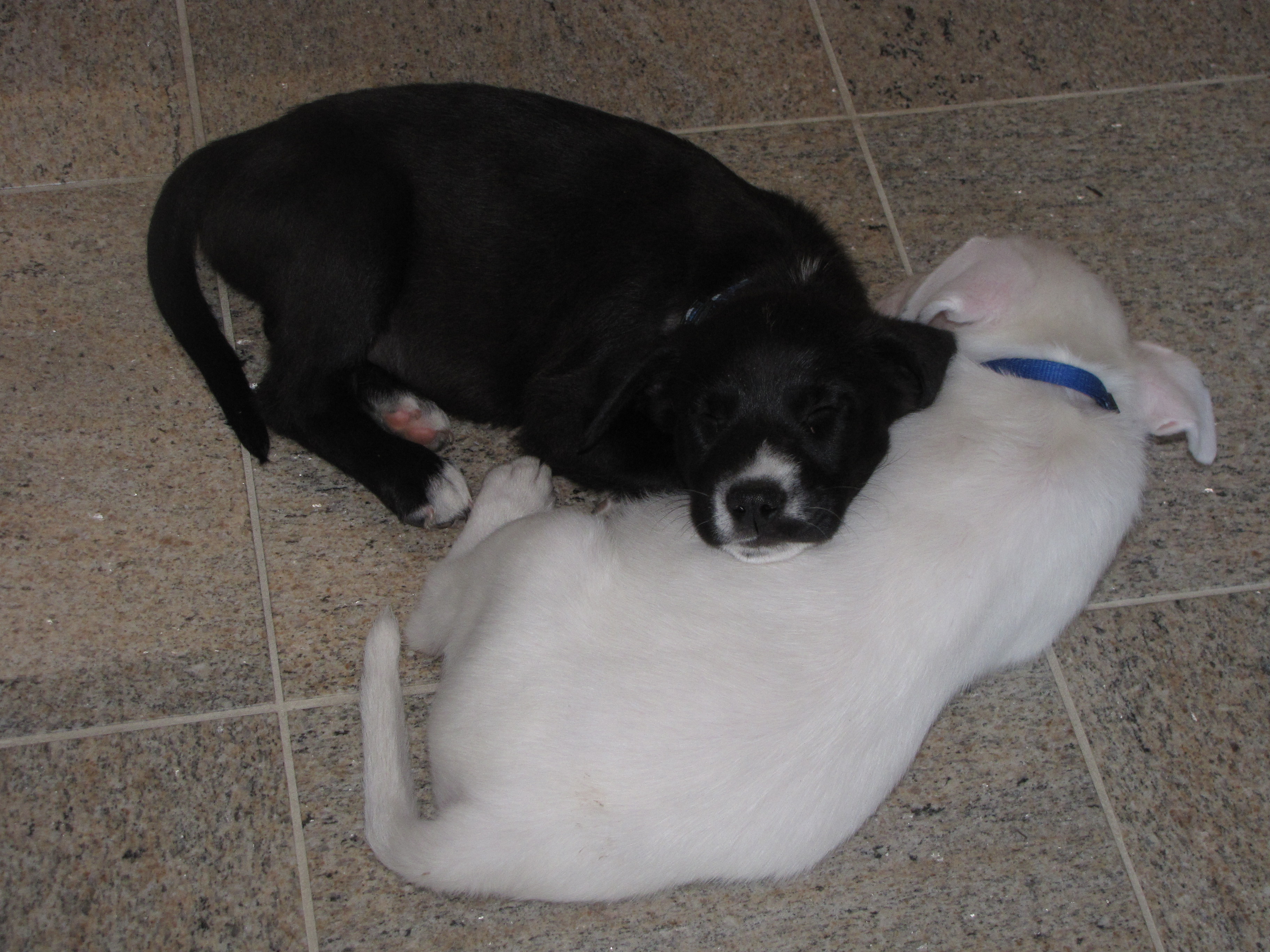
Although they like to fight, Bill and Ted still aren’t too “grown up” to show one another affection. I love it when they sleep like this!

I have never really defined myself as a homemaker—I haven’t wanted to be the one who stays home and sees to it that everyone else is fed and clothed and clean and sane for their careers, because I wanted to have my own career. I still want to. I want to be a writer and a teacher, just like I’m doing (with more or less success, depending on the day). But the Lord is teaching me it’s okay if some of my days are spent doing homemaking things instead of career-building things. In fact, I know that the homemaking is probably ultimately more important. How quickly I forget that if there’s not happiness in the home, life is dismal. My home was unhappy, my life dismal, for too many years growing up, and because of my beautiful marriage today, I sometimes take for granted that a happy home is well worth the investment.

But each day I’m learning to take a little more joy in the simple things: puppies, babies, sunshine, lollipops, and rainbows…you get the picture! I continue to thank the Lord that he is straightening out my priorities, and my roles. Now, if I can just figure out how to balance them all!

2013-10-01 07.47.58
So far Bill seems to be Buc’s dog and Ted, my dog. Bill is more laid back, while Ted has a hard time sitting still (and a temper that flares up sometimes at Bill)…hmmm, yes, the analogy works!