Is There Such Thing as Too Honest?

ID-10033219
freedigitalphotos.net

Most people agree that “Honesty is the best policy.” But as a writer and ministry leader who has made honesty her central message and MO, I wonder if it’s possible to sometimes be “too honest.” Not a few times as I’ve posted unflattering, embarrassing, content, I’ve wondered: am I hurting my influence by being so raw and real? After people read this, will they still look up to me?

I’ve found that honesty, at the level I go, can be hard to find in Christian writers, teachers, and leaders. Many I’ve observed in this group like to use honest illustrations and anecdotes…of other people’s struggles. Or, if the stories are first-person, they tend to remain on a safe, surface level. I once read an article by a Christian who used the analogy of scrubbing her floor to illustrate the filthiness in her heart. But she made no mention of what, exactly, was in her heart. “Scrubbing my dirty floor made me think of how God has to scrub my heart clean of sin. I thought, how much better if I kept it clean daily, instead of letting it all pile up?”

Illustrations of the gospel like this one don’t resonate with me. It’s not that they’re bad or untrue, it’s just that they’re so general, so vague so b-o-o-o-o-ring. Worst of all, illustrations like these are generally unhelpful when it comes to making real changes to behavior.

At the risk of assuming other humans think like I do, I would submit that humans long for authenticity. Especially when we’re talking about faith. If our sources of inspiration don’t hit close to home, addressing real issues we battle daily, they will be perceived as impotent, laughable, and even painful (because they minimize our struggles)—and they will be quickly abandoned.

That’s why I chose to be vulnerable in the memoir I wrote about discovering my new life in Christ.

It’s why I choose to be vulnerable almost every time I post on this blog.

I believe people are hungry for other people to relate to them—to say “I’ve been there, too. Look how screwed up I used to be, and how I still struggle sometimes. And yet, look what God was able to do with that mess!” I believe messages like this bring hope.

But what if I’m wrong? What if messages like this do the opposite? What if brutal honesty breeds distrust in God and disaffection for his “honest, messed-up followers?”

When leaders decide to be honest, this is a very real risk we take—the risk of our followers unsubscribing because we are not perfect.

I am willing to take this risk, not only for the reasons I listed above, but because a genuine Christian faith should not hinge on the words and deeds of any human being. (In other words, no one’s faith should hinge on me.) It should hinge on the person and words of Christ.

When Leaders Disappoint

A few years ago I was deeply disappointed when I learned that one of my spiritual heroes, Leo Schreven, committed suicide. Honestly, I felt betrayed and somewhat deceived by this man who previously appeared to “have it all together.” But I was able to weather this bad news by clinging to the truth that God is not, and never will be, totally represented by those claiming to be his followers. When we see good in Christians, that is from God. But when we see bad, that is from the enemy. We can’t lay every quality at Christ’s doorstep, because not every quality is from him.
IMG_0776
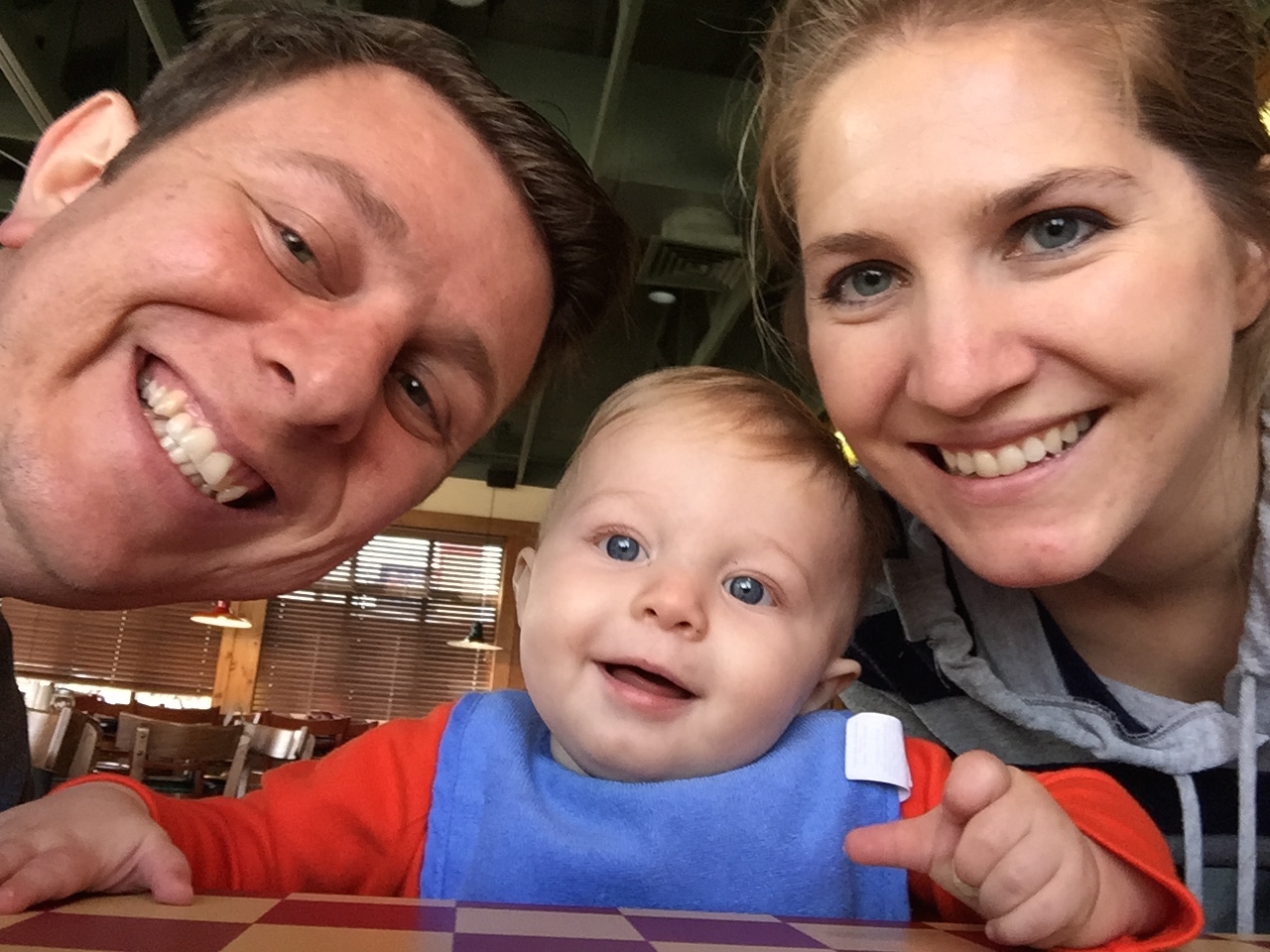
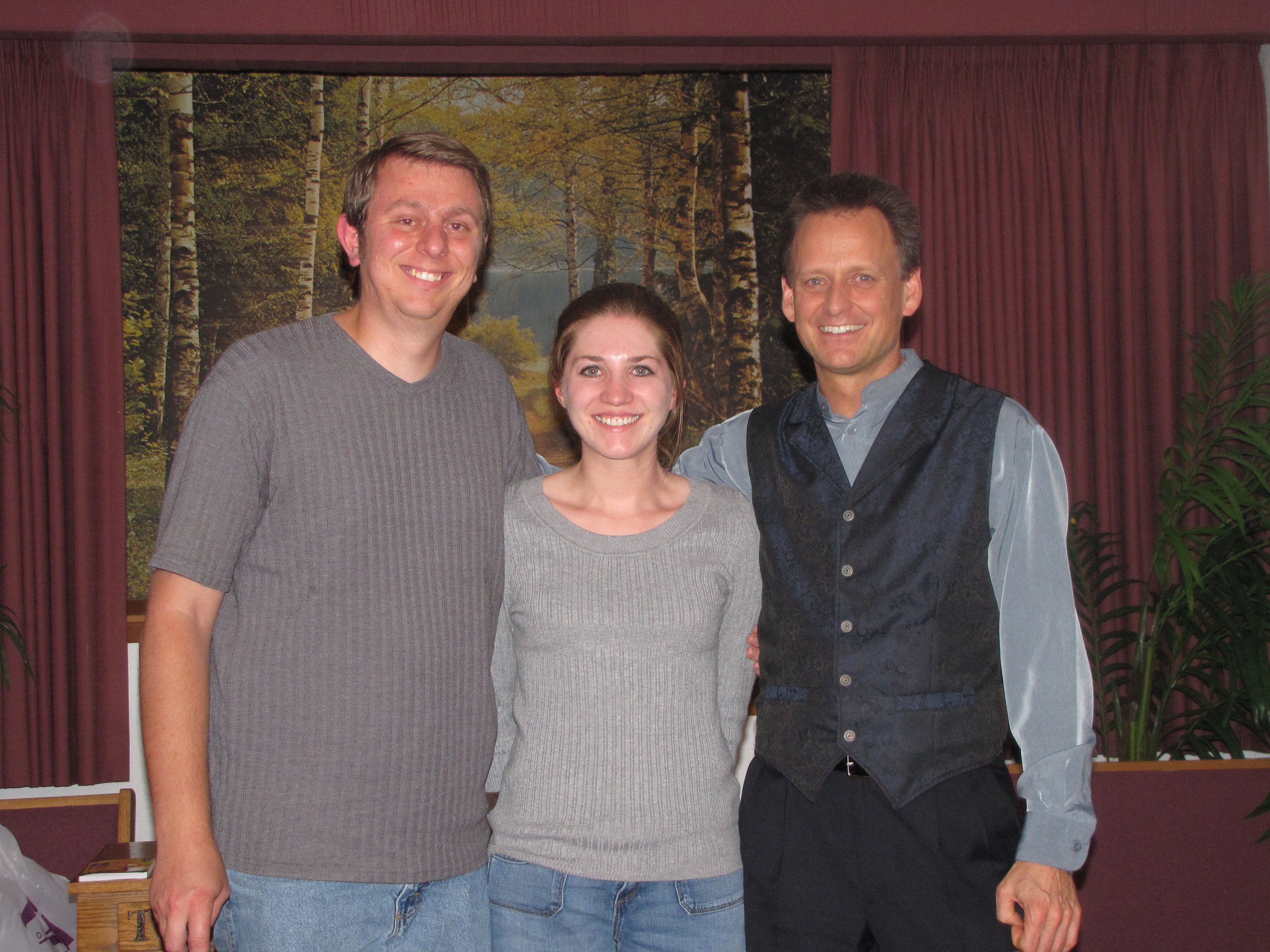
I had the privilege of meeting Leo Schreven in 2010 when he conducted a seminar at my church. My husband (left) had met him many years before and introduced me to Leo’s preaching through a set of seminar tapes that made me eager to meet him.

One quality I do believe is of God is the quality of honestly engaging our struggles as we seek His healing. I think I would have still respected my deceased spiritual hero if, in life, he had openly admitted his struggles. Perhaps I would have respected him even more for choosing bravery, rather than bravado—even though his brave sharing would have painted him as a fallible, sinful, wounded human being.

I have to add something here, to be fair. A family member of Leo Schreven’s contacted me after reading my blog post about Leo’s suicide, to tell me that my “hero” had struggled with psychological problems the public knew nothing about. This family member wanted me to have a fair, truthful view of Leo. The truth included mental illness, and as a former sufferer of mental illness, I empathized with that. I understood that I had put Leo on a pedestal. I also understood that his mental state may have precluded him from the type of honesty to which I am calling spiritual leaders.

Given the state of Leo’s mental health, it’s actually amazing that he enjoyed the long and successful career as evangelist and motivational speaker that he did. I have had similar thoughts, of course, about the late Robin Williams. Leo and Robin show us that there are exceptions to the standard of honesty I am putting forth. The exception applies to those who are not able to help themselves, or not able to let God help them, because of mental illness, or a genuine medical problem. Maybe they keep up the façade for the public for awhile, but in the end, we find out they are not the leaders we wished them to be. But then again, no one in whom we place our trust is immune to struggles, and to sin.

The Bible says that all have sinned and fallen short of the glory of God, so we know every person, Christian or non, ministry leader or not, has a mix of good and bad.

No matter what we know to be true about our leaders, hopefully we can sift the good from the bad, and remember and respect them for their good qualities. Hopefully we can go on learning from them, no matter what their lives reveal. Sometimes we may observe the right course, other times the non-example. As long as we are looking up to human beings, we should expect both. And if we are the ones being looked up to, we must trust Christ to be the one shining example our audiences need; we must be okay with being imperfect representations of him.

That said, I believe that we in positions of trust—ministry leaders, Christian writers, etc.—should do our best to represent Christ, and this includes being honest about how God is working in our lives and transforming our sinful patterns. We should also be honest about “wilderness” times,  times when we struggle with our faith…but we should do it wisely.

Guidelines for Christian Leaders

Here are two guidelines I’ve found helpful in my own writing and ministry that can help Christian leaders determine when, where, and how much to share.

freedigitalphotos.net

1) First, we should consider timing. You can read various sins and struggles of mine on this blog that occurred at various stages in my life. I blog about problems long past and problems of last week.

The safer type of post is the one about problems past. These problems are ones I have likely had victory over. They are problems that have yielded personal lessons I can use to teach others. These types of posts, and this type of sharing, should be an absolute “yes” for all ministry leaders. Why wouldn’t we use our stories of redemption as teaching tools? What better examples of the gospel could we present than the ones that have played out in our own lives?

The murky area is problems of the present. How much should Christian leaders share about present problems? Here, we have to be wise about audience.

2) Audience is the second consideration. Consider who will be reading or hearing your message. If you are a preacher and it is your job to inspire hope, then it may not be the best time to insert a struggle that you do not have victory over, or at least cannot yet talk about in a positive way.

Sure, there are times when you are on the upside of a struggle—you can see the end in sight, and you are pressing through for victory. That might be material for an inspiring message, and if you are comfortable exposing that yet-unresolved pain, go ahead.

But other times, pain and sin is too raw to project to a large, or public, audience. That’s when you need a small, confidential audience. I’m talking a few trusted friends or advisors who can help talk and pray you through your problems. When you have worked through those problems, then they may become appropriate large-group material. But don’t rush it. Getting outside voices mixed up in your current personal problems could hurt the healing process, and you need to get healthy first so you can go back to being your motivational self.

One caveat for leaders working through personal problems: if your challenge handicaps your ability to do ministry, whether because the emotions involved take too much energy, or because a sin you are fighting “disqualifies” you to be a role model at the time, then it’s probably the right time to step out of ministry, at least for awhile. In the case of Leo Schreven, I would have much preferred hearing the news that he had stepped out of leadership for awhile to tackle some personal problems to hearing that he had committed suicide. We are ultimately the most helpful to others when we get the help we need, first.

On This Blog, What You See Is What You Get

To apply my guidelines to myself, I routinely post about my current struggles, but many times I have chosen to remain silent until I have prayed over them and exposed them to Scripture and the wisdom and counsel of a few trusted others. By the time I post on an issue, I want it to be, if not totally resolved, at least on the path to resolution. I want others to look up to me, yes, but I am happy to admit that sometimes the best example I can give is: “Look, I’m broken here, but I’m looking to Christ. And if you feel the same way, you need to do the same.”

By posting my struggles, past or present, I risk losing my readers’ respect, but I also keep myself accountable to Christ for resolution. I put a problem out there (such as my sleep-deprived, desperate, witchy state), and I say, “Okay, this is the mess this sinful world, or sinful me, has created today. But now, how am I going to find Christ in the middle of it?” My mission is to find out how Christ will come through for me, and then to share my victory with my readers.

Indeed, if “Superwoman Christian” is the role model you want, look somewhere else. Because on this blog you’ll just encounter a broken girl trying to depend on Christ, and trying to work out her faith, in all things big and little. After all, as so many examples in the Bible show (Kind David and the 51st Psalm come right to mind), a Christian leader worth listening to is not someone who claims to be above sins and struggles, but someone who fully admits their weaknesses; has learned how to let Christ lead in the hard times; and can discern which, of all their life experiences, will be helpful for lifting others up.

If I Were a Single Mother

_DSC8890

Buc is out of town this week, which has given Sam and me extra bonding time. It has also made me wonder: What would this journey of motherhood look like without the support of a husband?

Pondering this question makes me sad. I have friends who are making this journey, some of them in silence. But I know there must be pain. Any time a baby comes into the world under questionable circumstances, there is the feeling of rejection, non-acceptance, loneliness, abandonment. I grew up in a home where a baby was born under such circumstances.

This event—or more accurately, the negative roots, or bad emotions and feelings (and the misguided marriage), that led up to my baby brother–led to my family members eventually turning against one another and the five of us living far apart, both emotionally and physically. Today we have reconciled to a great extent. Forgiveness, understanding, and grace have been extended, and we have made up for lost time by creating new happy memories. But not all can be restored.

When families come apart, there is un-restorable loss. I have my husband today, and I have Sam, and God has healed much of the childhood wound, but there is still a hole.

Anytime we lose a family member, or a family structure, we have holes. And while God can soothe them, and partially refill them, they will remain until we are restored to our heavenly image and the heavenly blueprint for families. Single parents, and kids with divorced parents, and kids who don’t know their parents, and kids who do not get to see their parents, was not God’s plan for the family. No matter how much family members may bother us at times, we are not complete without them. We miss them when they’re gone.

And yet, sometimes during the daily grind, I have thoughts about my husband like:

  • If he weren’t here, I could actually keep this house clean.
  • If I didn’t have to cook and clean for him, I could have more time to myself.
  • I would eat healthier without him around.

Terrible, right? But it gets worse. I’ve had similar thoughts about my baby. (Oh come on moms, you’ve had them, too.) Christian writer/speaker Lysa Terkuerst admitted to wishing her kids were older so she could finally get something done. A friend of mine has admitted that she often wants her husband out of the house so he will stop messing it up. These are just the kinds of thoughts we have, aren’t they? We are so quick to dismiss the blessings God has given us.

But as I look back at my childhood family, I don’t care about the little inconveniences we caused each other, such as my brother’s pranks on me, Dad’s boring cooking, Mom’s “too helpful” comments on my homework. I don’t much remember them, honestly. I just regret losing the support of a two-parent family, and family unity and harmony. I regret the hurtful words that flew between us and the barriers we erected.

If I were a single mother, I would have cleaner house, sure. I would have a better diet, I think. And I would have more free time to write and do my “own thing.” But these things are poor consolation prizes for what I would lose.

IMG_1945

I would lose the joy of seeing Buc make our baby belly laugh. I would lose a warm body to cuddle with at night. I would miss good conversation over dinner (when we are lucky enough to eat dinner together and in quiet). I would miss feeling loved and needed. I would miss relationship.

God created us to exist within relationships, and no matter how full our lives are in other ways, the lack of close, familial relationships leaves us feeling empty at the end of the day. I know. I’ve lived that way. And living that way left me not wanting to live.

I’m glad I’ve gotten these days away from my husband to remember how much I love and need him. This time alone has reminded me to keep the main thing the main thing. If my home is not in order, then it must get my priority attention. There is nothing else more important.

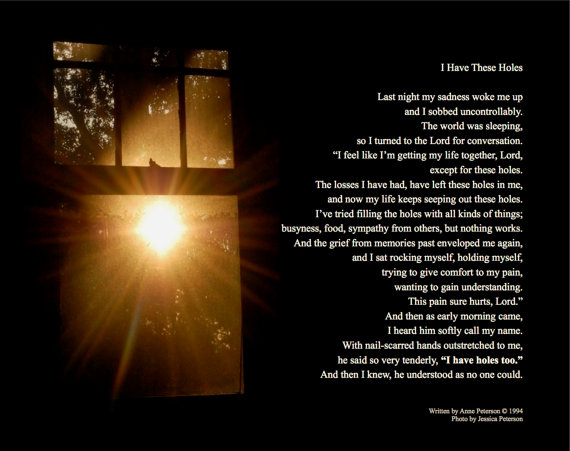
I’m also grateful to remember how Jesus cared so much for me that he addressed my holes…by taking them into his own body and soul. A year ago I was Christmas shopping and came across beautiful poem by Anne Peterson called “I Have These Holes,” framed as wall art. I cried right there in the store as I read it, because it rang so true for me. And I bought two copies. One I gave as a Christmas gift (which I think got forgotten by the owner), but the other hangs just to the left of my writing desk.

Here is the poem.

I have these holes

(Find more from the author at AnnePeterson.com)

This poem still makes me cry because it reminds me how Jesus brought me through the loss of a mother for some of my crucial growing-up years, the loss of a father for a couple more of those years, and the loss of a two-parent family. I can’t say the holes are gone, but they don’t ache like they used to. And they have largely been refilled. And one day they will be completely filled.

If I were a single mother, I would have different holes. But in that case, Jesus would offer different ways to fill me up, to ease the ache, to provide support.

Today, if you are a single mother or dealing with the loss of any family member, Jesus understands. And he has ways to fill you up of which you can’t even dream right now. Just hold on.

Why All New Moms Need a New Wardrobe (and It’s Not Because We’re Fat)

woman shopping
from theguardian.com’s Money Blog

When I signed on for motherhood, I expected a litany of new challenges; I just didn’t expect my wardrobe to be at the top of the list. Yes, as silly (and vain) as it sounds, for these nine months of Sam’s life, dressing myself has been nothing short of traumatic.

Please don’t get the wrong idea. I am not a slave to fashion by any stretch. In fact, I pride myself on not getting sucked into materialism, either by my clothes or anything else I own. After all, as one of my favorite Bible passages says, the Heavenly Father already knows what I need, so I shouldn’t worry about what I’ll eat or what I’ll wear (Matt. 6:25). It’s a really lovely, warm and fuzzy thought…when you have a full tummy and are comfortably outfitted. But when you are either starving or staring at a closetful of clothes that you’d love to wear but, darn it, they just don’t fit, this aphorism becomes kinda mocking .

So what’s a new mom with nothing to wear to do?

In the beginning of Sam’s life when I could only fit into maternity clothes, I felt depressed, but unwilling to invest in new duds. Later, when I got so depressed I decided to go shopping, I became frustrated both at the challenge of clothes shopping with a baby, and also thinking about the money I was wasting because I planned to fit into my old clothes again (it was just taking much longer than I thought).

I also began taking stock of my wardrobe and having somewhat of an identity crisis. I looked at the rack of teaching clothes–slacks, blouses, and skirts that didn’t fit–and wondered if it was time to just throw those out and usher in a new wardrobe. After all, I wasn’t teaching anymore, and I wasn’t sure when I would again. And what if, by that time, these clothes just didn’t “fit” me anymore–as in, didn’t fit my personality and style as an older woman?

As I’ve descended the scale over nine months to within ten pounds of my goal, I’ve figured out that my clothing dilemma is not  vain or materialistic. My need to fit into my old clothes, and my hand-wringing over whether or not to throw out the old and usher in the new is about figuring out who I am, now that I’m a mother.

But some have told me not to worry about getting to my original size. It’s okay if I don’t, they say, because “I’m a mom now.”

For me, who has always been a sporty girl, likes to exercise, and is health conscious, I wonder if motherhood means I can no longer be fit or healthy? Is it to give up the joy of exercise and feeling good and being a healthy weight?

For awhile, as I struggled to find time and energy to exercise, and as the weight lingered and lingered, I thought so.

Some have told me not to worry about fitting into my old clothes again; just get new ones, because “I am a mom now.”

Does this mean I pitch, along with my slacks and blouses and skirts, the professional identity that helped me grow up so much and that I’m so proud of? During my first teaching years, when I felt small and unsure of myself and my authority, I found strength in dressing the part of organized, got-it-together teacher. Maybe my classroom discipline was a mess, but at least I dressed the part. Looking good helped me feel good.

But does becoming a mom mean I should drop all expectations of looking put-together and just flash my “mom” card? Is motherhood a license to be frumpy until my kids leave the nest?

I felt like this is the message I received from at least a few older mothers. Mothers who, by the way, had a little junk in the trunk or, sorry ladies, looked kinda frumpy.

I think some women confuse motherhood and self-sacrifice with sacrificing their own health and/or their looks. It is virtuous, to them, to give all time to their families, and as little time and thought as possible to their looks–including their body as well as what covers it. Once you become a mother, it is selfish to take time to exercise and shop for well-fitting, flattering clothes.

But this is a terrible mistake. I think rooted below a frumpy and/or flabby exterior, are issues of low self-esteem, or perhaps an undeveloped identity that wants to hide behind the identity of a child.

One reason I waited for eight years to have Sam, besides the fact that I was emotionally unstable and emotionally unable to imagine having kids for most of my twenties, was I wanted to have a clear sense of who I was before bringing a child into the world. I’d seen numerous mothers relinquish the work of developing their own personalities, skills, and minds to the task of mothering. Their lives became their children. Without children, I’m not sure they’d know who they were.

I didn’t want to be one of those women.

I am a person, separate from Sam. And much as I love our growing attachment, it’s important for me to remember the parts of myself that existed before Sam, and that go on when he’s not in the room.

Losing weight and deciding on a post-baby wardrobe have not just been vain endeavors. They have been important steps to remembering who I am and who I was before Sam.

So what is the current state of my wardrobe?

Thankfully, I’d swim in maternity clothes at this point. Thankfully, most of my old shirts fit again. Regrettably, most of my jeans don’t. But for now, I am loving the reinstatement of my (mostly) daily workouts and our daily strolls, and to celebrate feeling comfortable in my own stretched-out skin, I have bought more stretchy pants–that is, I’ve invested in new workout clothes. I will make a determination on my teaching and church clothes when I can again fit into all of them, but for this season of life, I am getting skinny again, and I enjoy my “sporty,” not “frumpy,” clothes.

Now, I proudly wear spandex not of necessity, but of choice. I am embracing my new identity as “Sporty Mom.” This is an identity that combines my past and present lives, and anytime the best of those two worlds combine is a beautiful thing. As long as my hair doesn’t get three-days-greasy and I can slap on a little eyeliner, I can rock sneakers and ponytails.

A post-baby wardrobe, then, might not, for all women, be about getting back to their original size, depending on their values and lifestyles (either sporty or sedentary). Whether or not all moms care about blasting those last ten pounds, I think we owe it to ourselves to take stock of our wardrobes and, when needed, make updates. We are playing the biggest, most important role of  our lives as we enter motherhood, and when mama looks and feels good, everyone feels good.

So there you go, new moms. If you’re stressing over clothes you can no longer wear, stop it! If the decision to keep or to cut those clothes is too traumatic now, put them aside until you are in a position (and at a weight) to decide what to do with them. And until then, take this argument to the bank (or to your hubbies), use it to buy a new wardrobe for the new you (Goodwill counts), and feel great about yourself, no matter what the scale says.


Call Me a Desperate Housewife

I’m not gonna lie. Even though I’ve had what I call an “attitude change” about motherhood, I still have days when I feel like a desperate housewife. And not the sexy, Hollywood kind either. See below for the depressing details, but then keep reading…this post ends well!

sleep deprived 1Picture me bedraggled and frumpy as I haul myself out of bed at 1:50 a.m. to change a poopy diaper, administer medication, and give a bottle. At 3 a.m. he cries because he doesn’t want to go back to sleep. At 3:30, I cry because now I can’t go back to sleep. Sometime in the 4 or 5:00 hour I fall into an uneasy snooze, but by 6 a.m., the telltale wakeup cry pierces the monitor again.

I roll out of bed scowling and muttering. Buc, my husband, is in the shower and will be gone by 6:30, and it takes every ounce of self-control I have not to blame him for how I feel like a single mother during the workweek. When he emerges from the bathroom, I break my vow to speak peace and instead pounce, listing all that’s wrong with my world. These are the only words he will get from me for the next twelve hours until he returns again. This is his sweet sendoff. Man, I feel terrible. This is where I realize yet again: I am a desperate housewife. Desperate for sleep, yes, but also desperate for wisdom to handle these days when adequate sleep is but a dream.

About four months ago, or half of Sam’s life ago, I made the remark to a fellow parent, “At least the hardest part is over.” He only laughed at me. Now with Sam’s mobility, I know why. Yes, the sleep is better some nights. But not always. And days have gotten 100% harder. Now during waking hours, Sam needs constant supervision, because he will almost certainly hurt himself if I’m not there to catch him, redirect him, or take something away. When does this phase end?

About two months ago when I noticed my attitude consistently lurking in the pits, I recognized a desperate need to get back to the basics. Hence the attitude change I blogged about a few weeks ago. This change happened as I committed to using my “spare time” to uplift my soul, as I paid attention to everything I fed on, from food to books to music and television. I made sure I put good “fuel” in my brain, such as Christian radio programming, the Bible, and other inspirational books. And it helped. Tremendously.

sleep deprived 3aBut then Sam started having trouble sleeping again. And it didn’t matter what nuggets of wisdom I found time to gobble up (not many, by the way), not as long as my hunger for sleep went unsatisfied. Despite my prayers and good intentions and promises to myself that I would not be unpleasant, I often woke up a witch.

Things came to a head as this weekend hit. By Friday, not only had Sam strung together several bad nights, but my babysitter for that day got sick and canceled, and then I started to feel sick. I fought to get Sam to nap in the afternoon, but my best efforts only resulted in a half hour siesta for both of us. Late Friday afternoon found me, head buried in hands, moaning, “I’m a failure,” texting Buc at work and asking if he could sneak out of the office early to help me. I was tired, I was sick, and I felt like a failure as a mother.

I had read enough books to know that babies can be trained to sleep well, and I knew several moms whose babies slept well every night, but I had obviously failed in that department. “Lord, help me!” I cried. I was, indeed, a desperate housewife. And until I got Sam’s and my sleep sorted out, I knew the desperation would continue.

To make a long story short, Buc stepped in like a champ this weekend to give me a much-needed break, time to regroup, and time to tune in to the wisdom God has placed all around me. While he and Sam went to church Saturday morning and to my in-laws’ for Saturday lunch, I rested, read the wisdom of Proverbs, and refreshed myself on what the sleep experts in my parenting books said.

sleep deprived 2The verse that spoke to me in Proverbs was: “Plans go wrong for lack of advice; many counselors bring success” (15:22, NLT). Proverbs has a lot to say about fools, and I faced the fact that I’d been a fool on the sleep issue, too often going with my feelings instead by wise counsel. Ever since Sam’s separation anxiety (and his “mommy” attachment) manifested, I’d become lax on having him fall asleep by himself and instead often allowed him to fall asleep in the stroller, with a bottle, or in my arms. It was no wonder his sleep had gotten worse. I had been coddling him far too much. But being soft on the sleep issue was not kind to him or to me.
So on my sick Saturday morning off, I spent several hours poring over the wise counsel of the sleep experts (whom I’d silently shut away on my bookshelf), and then I wrote out an action plan for what to do at naptimes and bedtimes. I knew myself: if I didn’t have a plan, and if I didn’t rehearse it in my mind before testing time, I would resort to what “felt right” when Sam cried—and we would go on and on in our desperate, sleep-deprived cycle indefinitely. But I needed still more help. When Buc got home Saturday afternoon, I enlisted him as my assistant. I ran the plan by him, we tweaked it a bit, we prayed, and then we implemented it last night at bedtime and this morning at naptime. And guess what? It’s working!

I don’t believe in “crying-it-out” indefinitely, but Sam can go five minutes, then ten, by himself. (I am relying heavily on the method known as “Ferberizing,” for those interested). So far, we haven’t had to wait more than about fifteen minutes for him to go to sleep. Of course, this morning after he went back down at 5:15, I was wide awake. But that’s okay. I had gone to bed early as a preemptive strike, I felt strangely rested, and I got to write in blissful silence for a whole hour and fifteen minutes!

How I have missed this! Not just the writing, but the quiet morning time. The settling, centering time before the day wakes. This is how days were meant to begin. This is what I need to refresh my soul. Quiet time with God and quiet time with my pen and the blank page.

parenting-quoteI’m glad I can admit when I’m desperate, because that’s when God can help me the most. He helps me by telling me where to go: sometimes to bed early, sometimes to the writing desk. He helps me by telling me who to talk to: this weekend, my husband. He helps me by telling me what to read: down to specific scriptures, and sometimes specific parenting books.

And he also talks by just whispering to me in his still, small voice: “You’re not a failure, my child. You’re just learning the ropes. And as long as you lean on me, you’re never a desperate housewife.”

So maybe I shouldn’t call myself a desperate housewife. But maybe I should. It made for a good blog title; and honestly, I never want to stop being desperate for wisdom. Because when I ask, God answers (James 1:5).