How to Make Your Dream a Reality

Rule number 1: You have to DO something.

surfing
Photo credit: felipedan

It sounds really obvious, but so is most of the advice in any self-help book you can read. I complained for a lot of years that my dream of publishing a book was not coming true, but, um, it was no wonder. For a lot of years, I wasn’t doing anything about it. So then, one day, I sat down and started to write. And promptly ran into a problem.


Rule number 2: Push through roadblocks, however slowly

road sign
Photo credit: Jazza

It could be a lack of time, a mental block, or a naysayer. For me, my roadblock was not the oft-cited “writer’s block”; rather, every time I tried to sit down and write that book I had in my head, I’d be reduced to tears for the memories the work brought. And then there was the naysayer. Someone told me my book idea wasn’t respectful of my family…and I should reconsider what publishing it would do to them.

No matter which roadblocks you’re facing, there is always a way to keep going. For aspiring writers (or aspiring whatevers) with little time, the best advice I know of is to set a realistic goal for yourself, whether a daily or weekly goal, and stick to it. Maybe you’ve only got fifteen minutes a day. Maybe you’ve only got one hour a week. Whatever you have, build that time into your schedule, and then guard it with your dream.

When I started having those toxic emotional reactions to my work, which literally could incapacitate me from living the rest of my life, well, I shut down for awhile. But in hindsight, I realize that I eventually found other ways to keep moving in the direction of my dream. I came at it from another angle. Although I wasn’t yet ready to write that book in my head, I started reading up on the publishing industry, and I started reading about honing my craft. As I did this, I put the naysayer out of mind, and hoped for a better day to write and publish my book. And this leads to rule number 3.


Rule number 3: Learn from the masters

apprentice
Photo credit: krayker

So, how did you first develop that precious little dream of yours? I’d just bet it was from watching someone else who was doing that very thing, and saying to yourself, “I want to do that someday, too!”

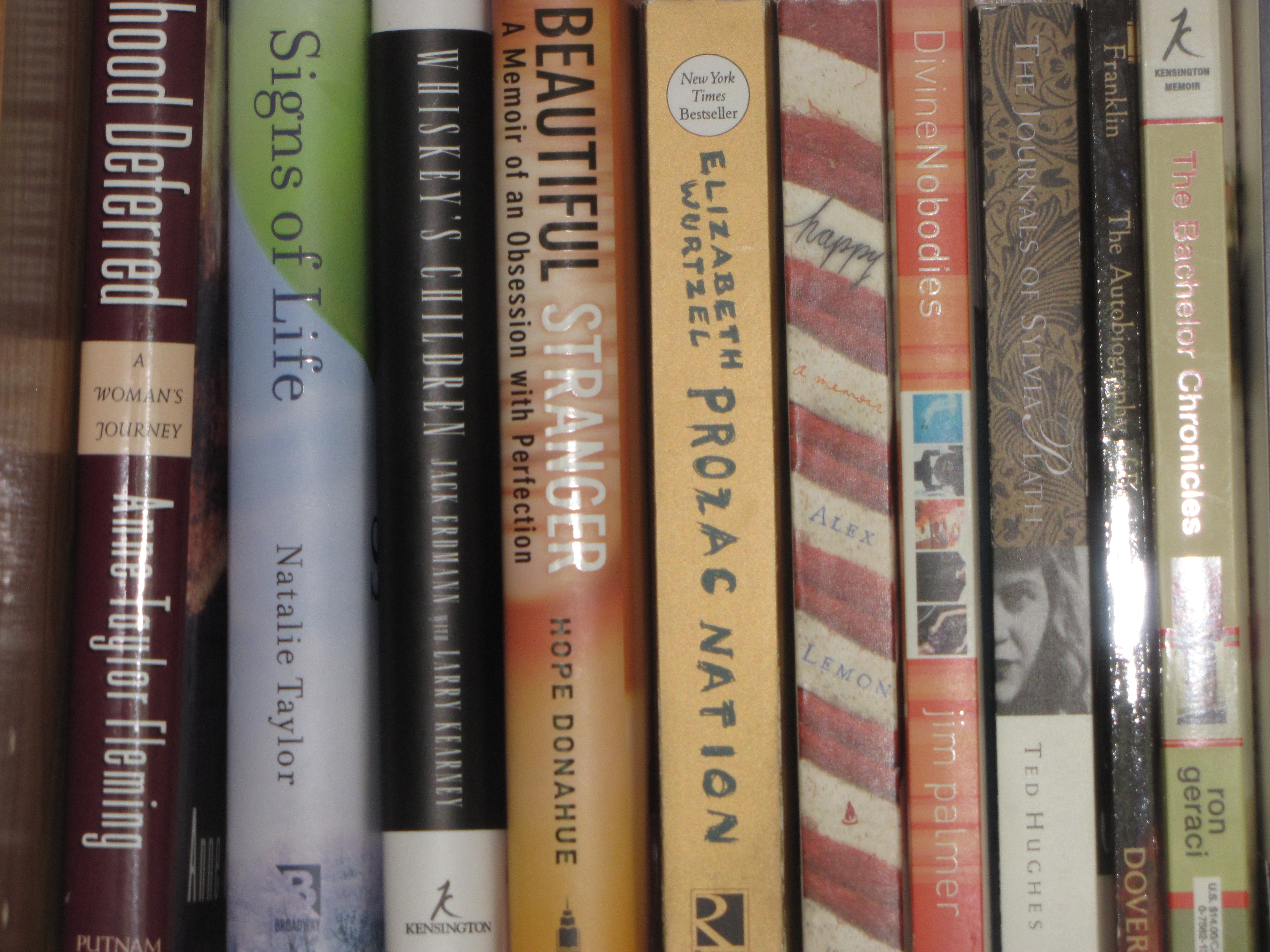
So here’s the deal: the same place you go for inspiration—be it a bookshelf, a rodeo, or a runway—is the same place you should go to apprentice for your craft. Once I identified memoir as my medium, I became a student of the genre. Not only did I read books about how to write memoir, but I read memoirs. These days I have become a sponge for these things, keeping them by my nightstand, on the coffee table, and in my CD player in the car (audio books). Where I once read only for entertainment, now I read for craft and technique, story development and organization. I read with a critical eye, judging a book’s execution and effectiveness, asking myself, is this a technique I could use? Is it one I’d want to use? Whether a memoir is well done or not, I learn from it.


Rule number 4: Work through personal problems to clear room for your dreams

thinking
Photo credit: brainloc

Okay, this is probably the hardest rule to follow, and I can’t tell you how to do it; I can only point you to a blog post describing what worked for me. But if you do have some kind of mental or emotional block impeding your work, there must be something you’ll eventually have to deal with before getting on with your dream. If you have to “take time off” from your project to get your life or emotions in order, by all means, do it! This is not wasted time, because when you come back to your project free from the impediment, you will find that you have a vigor for your dream that you never had before.


Rule number 5: Set a deadline with measurable goals

list
Photo credit: mimwickett

This rule will vary from person to person, and obviously your timelines and deadlines can change. But the thing here is to write down steps, measurable goals, that will move you closer to your dream, bit by bit. If you can give yourself a deadline and stick to it, you will be much helped, as most people operate best with a deadline.

For myself, after I started doing something and I learned how to keep plugging away at it in some form, even when it was hard; after I had started bathing my mind in masterful examples, and after I had worked through my poisonous personal problems…I came up with a schedule for completing my dream that I’m hoping will carry me through to completion. For now, I am trying every day to “move in the direction of my dreams,” even if it means only fifteen minutes of work. I hope you will do the same, and good luck!

A Schedule for Completing My Dream

 The working title of my dream, AKA my memoir, is 1,000 Miles: A Memoir on Recovering Family, God, and Dreams from Depression. Below is the schedule I came up with for myself last week to help me push through to completion.

Note: When I made this schedule, I already had a rough draft of my book, so when I say “finish” a section, that means refining the roughness and filling in the gaps.

2013-01-09 23.52.05

 July 2013

  • Finish sections 3 and 4, and revise sections 1 and 2
  • Locate a professional editor to edit my book (Yes, even though I have a master’s in English, this is a piece of advice I’ve heard too many times to disregard.)

August 2013

  • Finish Sections 5-7
  • Ask 10-15 friends/family members to read my manuscript
  • By Friday, August 30, Send manuscript to editor, and to ten other readers

September 2013

  • Write book proposal/query letter and identify agents/publishers to query
  • Hopefully receive manuscript back by end of month

October 2013

  • Revise Manuscript based on feedback
  • Polish query and book proposal if needed

November 2013

  • Query 10-15 agents and/or publishers beginning of month (first round)

December 2013

  • Query 10-15 more agents/publishers (second round)

January 2014

  • (Baby due!)
  • End of month, follow up with first batch of queries

February 2014

  • Query 10-15 more agents/publishers (third round)
  • End of month, follow up with second batch of queries

You’ll notice I’ve left room for “failure,” by including several rounds of querying agents. Maybe, by God’s grace, I won’t need more than one round. But if I do, I will choose to see it as a learning process, and I will just keep moving forward…until, one day, I either get accepted, or my thirtieth birthday is upon me—at which point I will try another angle, and publish on Amazon (plan B). Blog readers: If you are interested in being one of my manuscript readers after August, please let me know!

The Playground Kiss (A Rare, Funny Memory)

LITTLE-GIRL-KISSES-BOY
Source: drpinna.com. Apparently, these days a little girl can get the police called for pulling a stunt like this!

What do you find when rooting around in your memory? And do you do this often, or only when together with family or friends?

As a memoir writer, it is my job to sift through memories, but sadly, that’s not always a fun task. On the other hand, when my husband’s family gets together to excavate their collective consciousness, there’s no end to the laughs.

I can only hope my family will get to that point someday, too, but for now, I take hope from a recent realization: Namely, my memory seems to have these gaps—huge gaps—from my childhood.

Anyway, we were at my nephew’s Kindergarten graduation recently, and that jogged my memory back to my own early elementary life. Sitting there pregnant, I started to have memories of me around that age, and I wondered if I really wanted my kid to go to school.

Because suddenly, I was remembering how I’d been scarred by school—specifically, my rejection by many of the girls in my class.

Sad-Little-Girl1
Source: stopbullying.myupsite.com

“Honey, I don’t want our kid to go through that,” I worried to my hubby later that night, explaining how recess used to strike terror in me like class time never did.

“Oh, you’re just assuming it will be the same for our child as it was for you. But you’ve never been comfortable in social situations.”

“Oh really?” I prickled.

“I mean, you’ve gotten somewhat better…” he amended. “But that’s just your personality. Most kids like recess.”

Hmmm. I can’t sort this all out now, meaning I don’t know where our kid will go to school. But I went to bed disappointed that my most prominent memory from early elementary was that painful sting of rejection. I also realized I hadn’t spent much time writing or thinking about my early years, and I hoped doing so would turn up some forgotten gems—and some laughs, like my in-laws enjoy.

So, as I lay in bed, I kept rooting around in my memory. There must be something funny in there, somewhere. Then, I found it.

A Rare, Funny Memory

On that same playground where I remember so often standing on the outside of the circle, I also remembered becoming bold, empowered. I remembered first grade, or the only time I have ever openly pursued a man (well, in this case, a boy).

I don’t remember when it started, or why I thought it a good idea, but for a week or two that school year, before the teacher told me to stop, I became a man-hunter. I spotted a boy I wanted—let’s call him Aaron—and every day at recess I commenced chasing him…past the monkey bars, around the sandbox, under the swings…all in hot pursuit of a kiss.

Poor guy. He was terrified of me, and one day the race, or the stress, gave him a nosebleed. Kindly, that day I desisted.

But one day I finally caught him, cornered him, and bent over his cowering figure. I remember thinking, as I went in for the kill, that it didn’t feel as satisfying as I thought it would, kissing my victim. I suppose it’s that I would have liked the object of my affection to reciprocate, just a little.

girl-kissing-boy-17751309

Anyway, later that day later in class, my teacher, an overweight Trunchbull type, called me out in front of everyone else—in her stern voice and with her lightning eyebrows, she told me to stop chasing Aaron. And I, now terrified, could only stutter, “Y-y-y-y-yes, Ma’am.” It was enough for me, the embarrassment of being publicly chastised.

Aaron didn’t talk to me for the rest of first grade. And then I switched schools for second grade, and when I came back to third grade, he’d also transferred schools. And I’ve never spoken to him since. I wonder how he remembers those moments? If he comes to my ten-year class reunion this summer, I just might ask him. (After I apologize for my appalling behavior, that is.)

In case you didn’t catch it, this story is funny because of my personality now. Docile and quiet, everyone says. What got into that little girl to become a playground terror for a time? Or should I really be asking: What went out of me after that day?

Ever after that, I was never bold enough to send so much as a signed note to a crush—not before he first showed interest in me. So a lot of my crushes—actually most of them—sprouted, withered, and died, all within the confines of my heart, with no one else to witness the damage. I learned to keep it in. Maybe I learned that openness about love was embarrassing?

Coda

girl at pool

There is a coda to my playground story that makes it even funnier, at least in an ironic sort of way.

The summer after first grade, I was swimming with my brother at the community pool, with lots of other elementary kids there. And unbeknownst to me, I was about to get my just deserts for attacking Aaron.

There was another boy in my class—let’s call him James—who had a crush on me, but I thought he was about the grossest boy on the planet. Before that day, I’d never paid him any attention, and may not have known his true feelings for me. He, too, was a quiet child. But after that day at the pool, I would know without a doubt. He, too, got the devil in him, at least for a day.

Suddenly, he started chasing me. Around the perimeter of the pool, in the shallow end, in the deep end, and back again. I couldn’t turn my back for a moment because there he’d be—that big nasty boy—and he wanted more than a kiss!

Though it seems like this went on for hours, it could’ve lasted only minutes. All I knew was I felt trapped, and desperate. I couldn’t get away from this boy, and no one would help me! All they did was laugh!

In the middle of the afternoon, he caught me in the shallow end, cornered me, and caved in on me. His arms and legs wrapped around me like tentacles, and slowly I felt my breath escaping, as if the life were being sucked out of me.

I was thrashing my arms and legs, trying desperately to escape my attacker—and then, suddenly, he released me, and swam away. And that was the end of that. We hardly ever spoke again.

What is the lesson to be learned here? I’ll leave that for you to decide—and comment on. My job was just to turn up a funny memory. Do you think I succeeded?

The Writing Life, Pregnancy Edition

Yawning_Woman
Photo Credit: AsToldByLisa.com

Seeing as how pregnancy has reduced my life to mainly eating and sleeping these days, my new writing strategy is to divert all remaining energy to my memoir (which means, sadly, fewer, shorter blog posts). Nothing like a taskmaster baby to put a deadline on your project!

Now that I have T minus seven months until D-Day (delivery!), I feel a new urgency to finish what I’ve started. But this is good. I know how demoralizing working on a never-ending book can be, because that process describes my last literary effort. I don’t want to drag out the current project indefinitely, because the feeling that it could go on forever is deadly to my motivation.

If I seem callous toward the new life growing inside me (because I don’t seem to be thinking much about it), please excuse me. It’s just that

  1. I have a hard time yet believing there’s really a baby in there, and
  2. I think I’m doing us all a favor—baby, hubby, and me—by getting this book out of my bones before baby comes.

Not everyone will understand that, but some of you will. I’ve had the dream of book-making for over fifteen years, but the dream of baby-making? Not more than a year. No kidding. The idea of a baby is a brand new concept to me, almost as new as the actual baby (embryo?) inside me. So I am slowly, let me stress slowly, getting used to it all.

Meanwhile, I am doing all I can manage per day–from 2 to 7 hours so far–to clear room for baby in my brain—by getting out all the ideas and emotions I’ve been trying to deliver for half my life. It’s an exciting, blessed time.

The one thing I can say with certainty about this baby-making thing is that it’s giving me less stress than have most other monumental events in my lifetime. You know…marriage, beginning a career, moving, starting up a ministry. What is the difference? To me, one is a spontaneous process, one that nature guides with or without my efforts (ahem, well, after the initial ball is rolling). But the other events all depended on my active, ongoing involvement to keep moving forward.

This baby? It’s growing whether or not I’m thinking about it, whether or not I’m working on a nursery (not even started), or whether or not I’m buying baby clothes (not even a stitch). I realize that once baby is here, he or she will require my undivided attention. Then it will really depend on me to keep it alive. Then my life will change dramatically. Obviously.

For now, though? I am enjoying God’s gifts to me—time to sit back and marvel at how His miracles don’t require any work on my part (there’s a peace in realizing that)—and time to work on creating my other (brain) child. What a blessed mom-to-be I am!

Writing the Hard Stuff

If you’re currently writing your memoir, maybe you’re having some of the same issues I am, so let’s commiserate for a moment on two key ones.

IMG_2230

Writing the Hard Stuff (Content)

It’s inevitable. If you’re writing a memoir that’s remotely honest, you have to touch some stuff that’s quite icky. One tip I have for dealing with this ickiness is to first decide whether the icky topic is a main idea, or a supporting one. Right now, for instance, I’m trying to figure out how to deal with past boyfriends I’m not proud of—and in the least self- and sin-glorifying ways. Since my story is about recovery and rebirth, I’ve decided these guys are not THE story–but supporting actors who can help create backstory and a setup for the main show. For other memoirists who draw out the ickiness in excruciatingly gory detail (almost as if the authors enjoy remembering their lives in darkness), the descent into hell IS the story. Fair enough, except this doesn’t much help those of us going for a more uplifting effect.

Writing Scene Versus Exposition (Form)

Once we’ve decided what and how much of the gory past to include, we memoirists must also decide how to tell the various parts of our stories. Does that ex-boyfriend get a well-developed scene, complete with sensory details and lots of feeling, or should he get a passing glance, a quick summary, only enough to  get us from point A to B?

In many memoirs I’ve read, authors choose to dwell on their descent into depression, addiction, and despair for most of their memoir…and only at the end do we get a glimpse—a chapter or two and/or an afterword at most, and that usually of drab summary—of the upswing.

2013-06-03 23.50.37

So far, my strategy as a Christian/motivational writer is shaping up somewhat differently: I am leaning away from dwelling too, too much on the icky; and trying to trade chapters and chapters of the macabre for a couple well-placed, representative scenes. As Bill Roorbach says in his excellent book Writing Life Stories, “A good scene replaces pages and pages of explaining, of expositional excess, of telling. Instead of a passage about your family’s socioeconomic status, you show your dad pulling up in the brown Ford wagon, muffler dragging. Or does he pull up in a shiny Mercedes? Or does he walk up the hill with his jacket over his shoulder, car traded for shares in a new invention?” (pp. 35-36).

One caveat for me: I’m finding that there are certain parts of my past that I’m just so disgusted by, I cannot bring myself to honor them with fully-fledged scenes. For these moments, I think some succinct summary is sufficient. In contrast with other, better developed scenes, these sparse selections can make their own statement to the reader: This is a part of my past you have to know about, but I’m not proud of it. At least, that’s the message I’m hoping to send.

A Strategy for Separating Scenes—Writing the Hard Stuff

Not that I’m an expert by any stretch, but here is a suggestion that might be helpful—one that I am testing this very week.

If you kept a journal for those years you are currently memoir-izing, sit down in a good chair, at a sturdy table, and reread those journals, along with any pertinent letters or other artifacts, with a notepad handy. As you read, take notes on what’s there, so you can begin to separate out what is important from what’s not—as well as get an idea of the “arc of your story.”

For my own memoir, I’ve divided the ten years I’m writing about into seven sections—three of those focused mostly on the grime of the past, and four dedicated to climbing out.

I decided that each section needs to have an “arc of story”; and therefore, I need to get reacquainted with the key trajectory, and key moments, for each section. My memory is quite bad, so my journals are helping immensely here.

Yesterday, I sat down and reread the journals that would fall into my first section. I did not try to write any new scenes or develop any exposition during this time; I only took notes on each journal entry—a brief line or two to characterize what was going on in each. I highlighted the entries that seemed particularly important—either as potential scenes, or as “scenes” in and of themselves.

2013-06-03 23.52.41

Note that I already have many pages of writing completed for all sections of my book—perhaps I even have most of the pertinent facts—but now I am going back to try to fill in any gaps I’ve left, and develop that which still needs developing.

Today, I’m going to look over the notes I took yesterday and answer some key questions:

  • Where do I want this section of my memoir to start? On what scene, or using bit of exposition?
  • Where do I want it to end? On what scene, or what bit of exposition?
  • What key questions do I need to answer in this section? Or, what facts does my reader need during this section of the book?
  • How will I do that? Or, which questions and facts should be answered with scene, and which should be answered by exposition?
  • How will I order these scenes and snippets of exposition?

Once I have answered these questions, I can assign myself a list of scenes I still need to write up, and the sections of exposition that I’ve not yet covered. If I get stuck, because section one is turning out to be the grimiest, ickiest section of them all, I may hop over to section two for awhile, but now that I have a plan, I feel confident that I can do this…no matter how dirty the job.

Meanwhile, my writer friends, I’m curious to know: What’s tripping you up in your memoir? And what solutions are you finding?