Writing the Hard Stuff

If you’re currently writing your memoir, maybe you’re having some of the same issues I am, so let’s commiserate for a moment on two key ones.

IMG_2230

Writing the Hard Stuff (Content)

It’s inevitable. If you’re writing a memoir that’s remotely honest, you have to touch some stuff that’s quite icky. One tip I have for dealing with this ickiness is to first decide whether the icky topic is a main idea, or a supporting one. Right now, for instance, I’m trying to figure out how to deal with past boyfriends I’m not proud of—and in the least self- and sin-glorifying ways. Since my story is about recovery and rebirth, I’ve decided these guys are not THE story–but supporting actors who can help create backstory and a setup for the main show. For other memoirists who draw out the ickiness in excruciatingly gory detail (almost as if the authors enjoy remembering their lives in darkness), the descent into hell IS the story. Fair enough, except this doesn’t much help those of us going for a more uplifting effect.

Writing Scene Versus Exposition (Form)

Once we’ve decided what and how much of the gory past to include, we memoirists must also decide how to tell the various parts of our stories. Does that ex-boyfriend get a well-developed scene, complete with sensory details and lots of feeling, or should he get a passing glance, a quick summary, only enough to  get us from point A to B?

In many memoirs I’ve read, authors choose to dwell on their descent into depression, addiction, and despair for most of their memoir…and only at the end do we get a glimpse—a chapter or two and/or an afterword at most, and that usually of drab summary—of the upswing.
2013-06-03 23.50.37

So far, my strategy as a Christian/motivational writer is shaping up somewhat differently: I am leaning away from dwelling too, too much on the icky; and trying to trade chapters and chapters of the macabre for a couple well-placed, representative scenes. As Bill Roorbach says in his excellent book Writing Life Stories, “A good scene replaces pages and pages of explaining, of expositional excess, of telling. Instead of a passage about your family’s socioeconomic status, you show your dad pulling up in the brown Ford wagon, muffler dragging. Or does he pull up in a shiny Mercedes? Or does he walk up the hill with his jacket over his shoulder, car traded for shares in a new invention?” (pp. 35-36).

One caveat for me: I’m finding that there are certain parts of my past that I’m just so disgusted by, I cannot bring myself to honor them with fully-fledged scenes. For these moments, I think some succinct summary is sufficient. In contrast with other, better developed scenes, these sparse selections can make their own statement to the reader: This is a part of my past you have to know about, but I’m not proud of it. At least, that’s the message I’m hoping to send.

A Strategy for Separating Scenes—Writing the Hard Stuff

Not that I’m an expert by any stretch, but here is a suggestion that might be helpful—one that I am testing this very week.

If you kept a journal for those years you are currently memoir-izing, sit down in a good chair, at a sturdy table, and reread those journals, along with any pertinent letters or other artifacts, with a notepad handy. As you read, take notes on what’s there, so you can begin to separate out what is important from what’s not—as well as get an idea of the “arc of your story.”

For my own memoir, I’ve divided the ten years I’m writing about into seven sections—three of those focused mostly on the grime of the past, and four dedicated to climbing out.

I decided that each section needs to have an “arc of story”; and therefore, I need to get reacquainted with the key trajectory, and key moments, for each section. My memory is quite bad, so my journals are helping immensely here.

Yesterday, I sat down and reread the journals that would fall into my first section. I did not try to write any new scenes or develop any exposition during this time; I only took notes on each journal entry—a brief line or two to characterize what was going on in each. I highlighted the entries that seemed particularly important—either as potential scenes, or as “scenes” in and of themselves.

2013-06-03 23.52.41

Note that I already have many pages of writing completed for all sections of my book—perhaps I even have most of the pertinent facts—but now I am going back to try to fill in any gaps I’ve left, and develop that which still needs developing.

Today, I’m going to look over the notes I took yesterday and answer some key questions:

  • Where do I want this section of my memoir to start? On what scene, or using bit of exposition?
  • Where do I want it to end? On what scene, or what bit of exposition?
  • What key questions do I need to answer in this section? Or, what facts does my reader need during this section of the book?
  • How will I do that? Or, which questions and facts should be answered with scene, and which should be answered by exposition?
  • How will I order these scenes and snippets of exposition?

Once I have answered these questions, I can assign myself a list of scenes I still need to write up, and the sections of exposition that I’ve not yet covered. If I get stuck, because section one is turning out to be the grimiest, ickiest section of them all, I may hop over to section two for awhile, but now that I have a plan, I feel confident that I can do this…no matter how dirty the job.

Meanwhile, my writer friends, I’m curious to know: What’s tripping you up in your memoir? And what solutions are you finding?

Finding “My People”

Do you feel like you’ve found “your people?” Once in graduate school, one of my professors took offense to some writer who had bashed Christians, saying, “Hey, those are my people!”

I heard her use this phrase almost two years ago and didn’t think much of it then (Christians gets bashed all the time in graduate school), but it came back to me this past Sunday as I sat in a circle with five other women, all writers, all of whom were sharing fragments of their memoir with the group.

This was my first time meeting with this particular writers’ group—or any writers’ group, for that matter—but soon it became clear to me that the group was about much more than just moving our careers forward. It was about sharing stories we’d been bottling for years, it was about giving one another permission to be real, and it was about being validated for said scary task.

During those two hours, I listened to one woman’s struggle to make sense of the sexual abuse in her family; another’s decision to move forward with her education after years of being squelched by a verbally abusive parent; still another’s first attempt at writing the “good memories” for a wounded daughter; and another’s chronicle of life after leaving her third husband. The piece I brought that day was the (rough) first scene of my memoir: the day I emerged from the mental hospital, numb to joy, resigned to life, yet stripped of all expectation and desire.

Some of the feedback I got: “I can feel your numbness.” “The stripping of humanity that comes from staying in a place like this is clear.” “Your point about emotional pain and invisibility hits home.” “I can identify.”

I liked the last comment best, because it came from every single woman at the table. As, one by one, the women admitted that they, too, had found themselves at this place in life before (either literally or figuratively), I felt a sense of relief washing over me. Although I’d known these women less than two hours, it was a relief that they already knew more about me than so many of my acquaintances. That day I also gained strength to continue with what is sometimes an emotionally difficult project, and validation that my project actually matters. Best of all, by the end of the session, I felt I could finally say, “I’ve found my people.”

Of course, like my graduate professor, I could certainly say the same of my church family. I could also truthfully say it of my family family. But somehow, connecting with people because of shared religious convictions or shared bloodlines isn’t the same as connecting to people emotionally. Because rather than falling by default into a category, this type of writing, and this type of realness, is a choice we make—even a dream we share.

Why did I ever wait to join a writers’ group?


Prozac Nation—Review by a Former Pill Popper

200px-ProzacNationBook
Photo Credit: Wikipedia

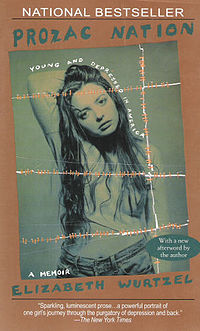
In her memoir on depression, Prozac Nation, Elizabeth Wurtzel paints an annoying picture of herself as a depressive, which includes being desperate and clingy, prone to panic attacks, dependent on boyfriends for her identity, ungrateful for all the good in her life, and selfish.

Reading this book, even I, a sympathetic co-sufferer, became frustrated. When is she going turn a corner? Why is she telling me this? I wondered. And, How can she presume to be the authority on this when her past was not as heartbreaking as mine?

In her afterword, Wurtzel responds to impatient readers like me, saying, basically, “If you got angry at me, good. I wanted you to feel that way.”

The Book’s Bummers

As Wurtzel explains, she wanted to convey what it was actually like to be around a depressive and, more ambitiously, wanted to give the reader the feeling of being trapped in a mental prison similar those in which depressives finds themselves.

Indeed, most of her book grovels in the quagmire of her own circumstances—her parents’ divorce, her father’s abandonment, her failed relationships, her struggle to get adequate medical attention—and this is what gets so  annoying . But at key points she surfaces from her self-obsessed soliloquy to take stock of what her situation reveals about her whole generation—and this is what resonates with me.

The Book’s Brilliance

What Wurtzel does particularly brilliantly is characterize the displacement that she and her whole generation faced as a result of the cultural revolution in the sixties. Her parents divorce is, of course, no very remarkable thing these days, but her brilliance is zooming in on this seemingly “small” detail.

She expresses outrage on behalf of a whole generation whose parents have led them to dismiss marriage like so many other traditions that used to give people roots—she expresses anger at the fact that nothing is held sacred anymore—and that individual whim reigns supreme. She characterizes how such a world–where individuality and mobility, not family ties or roots, are seen as virtues—leaves its children feeling hopeless and depressed. She doesn’t go as far as diagnosing the cause of the explosive use of Prozac in the 90s, and the booming popularity of depressed-obsessed punk rock bands like Kurt Cobain’s, but the suggestion is heavily weighted toward the disintegration of the American family.

Where We Agree—The Family’s Demise Spells Depression

Like Wurtzel, I firmly believe that by our disregard for the family unit we have self-imposed many of our problems. In our quest for self-gratification, we have damned and doomed the next generations. I think this is what the Bible refers to when it speaks of parents’ sins becoming a curse to the third and fourth generations. It’s not that God unfairly punishes children for what their parents did. It’s that children can’t help but be cursed when parents choose to be self- rather than God-centered.

How My Take on Depression Differs

I’m glad Wurtzel wrote this book, because now I  don’t have to. Years ago, a book about my life would have closely resembled hers, as far as the inspiration meter. Low.

Of course, inspiring readers wasn’t the purpose of the book. It wasn’t to make the reader feel warm and fuzzy, but to portray what depression feels like.

Although I used to envision writing such a book, once I had my conversion I no longer felt comfortable writing such a book. But now, having read Wurtzel’s contribution, I see that such literature has its place, even on a Christian’s bookshelf. Jesus didn’t look away from human suffering, and we shouldn’t either. My problem before was I felt I was wallowing. But now I see that the wallowing effect came from my audience and purpose for writing. My audience? Anyone who would listen, preferably those who had failed me earlier in life. My purpose? To get the sympathy now that I never felt I got when at my lowest points.

In all seriousness, maybe I could write a depressing book like Wurtzel’s these days without wallowing, but that’s only because I would no longer be focused on getting sympathy for my past wounds, but offering empathy to fellow sufferers. Yes, these kinds of books have their place. But since by God’s amazing grace I’ve emerged from that black hole, I’m glad that I don’t have to fill that market niche. And now, I can focus on the upward swing, not the downward slope.

Fable of a Freelance Writer

Image

Once upon a time (three months ago, to be exact), a freelance writer developed a blog, some book chapters, and a guilt complex.

You see, this writer started out herself to please—to fulfill a dream, put her heart at ease. No more would she hate herself for putting it off—no longer would her naysayers scoff. 

And so writing a schedule–for she must have a plan–finally, she began:

January

Wake up at 6, breakfast, goodbye.

Then meet with the Lord, at 7 or so.

Eight was for exercise, don’t get flabby!

 Then 9 was for work—let the writing begin!

The plan was to write until 4 or more—

Her memoirs, her art, her triumphant score.

But alas, as soon as she began,

She got the email from the man

Who wanted revisions on his manuscript…

So she said, “Okay, I’ll look at it.”

Then April came…

She’d made no progress

On her own goals…but I digress.


April

As the writer looked back on the past three months, she realized she had not stuck to her guns. Besides some blogs and some personal slime, she had nothing to show for her time. Something had happened, but she was not sure what—had she just wasted time, sitting on her duff?

As she searched the memories of her mind, she discovered it was not that she hadn’t tried—it’s just that some stuff had come up inside.

The joy of Jan was followed by blues…somewhere in Feb, kids came up, too. Then, in March, she thought back to home, a topic deserving a fully-fledged tome. So maybe her story isn’t written yet, but perhaps just now its reaching denouement.

What has she learned, this freelancer babe? In three months of blogging, and burbling, and talk? Maybe she just needs to lay off the clock.

  • Sleep in sometimes, and let the mind rest.
  • Talk to a friend, get things off of her chest.
  • Relax, and take the stick out the rear.
  • Go for a run, the fog will clear.
  • Relax, be a wife, and a friend, and a person.
  • Those bad writing days? Well, you win some, you lose some.

As she thought on these lessons she’d learned over time, she decided her life was really quite fine. The dream was not lost, merely delayed—and even if slow going, it still with her stayed. Maybe, she thought, I’ve been under delusion—thinking my story needs a conclusion. Maybe, in fact, I’ve been all wrong—and I’ve been living the dream all along.


The Day after Disappointment

What do you do after you pour your heart and soul into something—only to fail?

“I’m confused,” I wrote yesterday to Jim, my former thesis advisor. I had promised to let him know the outcome of my applications, both the MFA and the PhD.

Both outcomes were the same.

“I thought I’d be getting a terminal degree and teaching college for my life’s work,” I wrote. But it seems God has other plans.

So, what do you do the day after disappointment?

Well, after a little weeping and gnashing of teeth, I sat at my computer and got down to business. I have an almost-finished magazine article I’ve been putting off for over a year—and I have known where I can get it published—but I just haven’t finished it. Today I will finish and submit it.

This week I am also going to get back to the “before-thirty” manuscript I’ve been putting off. And lying in bed this morning I was hit with the possibilities of e-publishing some even older work.

It was like some barrier had been removed; some permission given to just do it, damn it—stop waiting for someone to wipe my nose and just move on, already!

A cocoon was what I wanted, I think. Just a few more years before I grew up. But even with the benefit of one night’s sleep, now it seems kinda silly.

I’m almost twenty-nine. I’ve been in school for about six of my eight years of marriage. I already have a book forthcoming with a co-author. I’ve been published in three magazines. And already for several years I’ve been learning about creative writing on my own.

Oh, and just one more thing. Time will tell, but was it a coincidence that yesterday, after opening my mail, and after crying my tears, my queasiness didn’t go away? Was it a coincidence that I also woke up feeling nauseated again this morning, and that I’ve felt that way for the past four days?

If it’s what I think it might be…well, that would be just too clear—and it would carry the kind of poetry this writer delights in—an extra special way for God to tell me that, even in the wake of disappointment, He knows the plans He has for me (Jer. 29:11).

Note: On the day after the day after, I find it was just a false alarm. Oh well. God gave me a distraction to numb the blow. In any case, I still believe He knows the plans He has for me!

What Christians and Mental Patients Have in Common

I can never tell, I thought, sitting in a mental ward in Minnesota. I was nineteen.

When I get out I can’t tell friends that I dropped out of college. That I attempted suicide. I can’t tell them how messed up I am. I can’t let them see me like this.

When I got out after forty days, there was only one option (besides suicide, of course). I had to hide.

This year of my life, 2004 to be exact, is the darkest one I can remember. Almost a decade has passed, and there’s hardly anyone I’ve told.

After the mental ward, my social worker set me up in an efficiency apartment that was fully furnished, yet covered in grime. The walls were spotted with grease stains, the floors covered in dirt. Kind of like me.

Only, instead of dirt, I was filthy with lies—and they were rooted deep.

And unlike the dirt that disappeared after one afternoon’s scrubbing, it would take me many, many years to recover from the lies that had saturated my mind for so long.

I can never tell, I thought just today, before finally deciding that maybe someone besides me needed this post.

Image

It’s funny how those lies stay with us. You see, in 2013 my depression and suicidal tendencies are for the most part gone; but today I almost didn’t post this, for fear of looking “crazy” when friends or family read the opening lines.

The good news is, by this point in my twenty-eight years, I know I’m not alone. After repeatedly opening my heart to the Source that “lays bare our innermost thoughts” (Heb. 4:12-13) through prayer, and after training other women to do the same, I’m starting to feel less territorial about the pain I’ve guarded for so many years.

I can never tell. What about all the women and men who have been sexually abused? In The Hidden Half of the Gospel, the book I’m co-writing, we cite a “1 in 3” statistic about girls who have been sexually abused, which blows me away! (Since starting prayer ministry, I’ve also prayed with two women who have admitted to being sexually abused.)

I can never tell. What about the teenage boys and girls struggling with their sexuality—thinking they may be gay but afraid of rejection if they “come out”? I’m reading a memoir right now about a girl, stuck in a mental hospital for three years by her abusive, incompetent parents, who admitted to lying, stealing, cheating, and who lied about having a drug problem, plus an eating disorder, before she would ever admit she had gender confusion. (Still waiting to see how it ends, but the title, The Last Time I Wore a Dress, gives me a good idea.)

I can never tell. What about all the Christians struggling with pornography, drinking, or other “sins”? (In The Hidden Half, Paul and I share the stories of some such Christians.)

I can never tell. What’s the issue for you?

For me currently, this lie is complicating my various writing projects. Just as I did today, just as I did when I published my first magazine article about a suicide attempt . . .

I still sometimes battle that lie, I can never tell.

200px-ProzacNationBook

Maybe that’s why I like to read memoirs like Prozac Nation and other riveting romps through mental illness.

My husband thinks reading these kinds of things is unhealthy. Wonders if I am vicariously milking old, bad feelings through reading these books.

I used to wonder that, too. But these days, I don’t think so.

You see, more and more as I’ve dealt with my bad roots through prayer, I’m uncovering a holy rage about how humans (and Christians especially) cover up their bad roots. As if denying them is dealing with them. Who do we think we’re kidding? Certainly we’re not fooling God.

No, I like to read these memoirs not because they inspire my faith (I read the Bible and Stormie Omartian for that!), but because they inspire my honesty. I read them because they take me to a level of intimacy far below what I get with pretty much everyone else in my life.

Now for those Christians who may disagree with my “uninspiring” reading selections, that’s fine. But if you’re going to knock them, then at least tell me where else I can find such honesty. Sadly, I don’t find it in church, or from my family members, or even from most friends.

But as for me and my writing, we will be honest.

Not because I think we all need to be sharing and airing our garbage. If we did, just think what a stinky world it would be. But come to think of it, this world already stinks quite a bit…so maybe we don’t have much to lose. And if Christians would speak up more, maybe more people would join us, as they see that we’re not too out of touch to deal with the ugly realities that blot all human stories.

In any case, I’ve decided to be honest, in the name of not being fake…or distasteful to others because I can’t relate in any human way…or disgusting to myself because I’ve built my perceived flaws so big that I’ll never get over them. But the most important reason to be honest? Well, gosh darn, if so many people are writing the depressing stories, don’t we need someone to write the un-depressing ones? (This is the plan for the memoir I’m writing—to share how I got un-depressed.)

car

And so, to conclude my very abridged tale of woe (for today, anyway), at the end of that worst year of my life, I’m happy to tell you, God intervened, introducing me to my husband (in Texas of all places!) and moving me 1,000 miles from that dirty apartment and my broken past. He moved me away physically. Mentally, on the other hand, I had a long way to go! But that’s the subject of many more blogs.

So, though it’s sometimes hard for me to write, and might sometimes be hard for you to read (but I’m sure you can find lots of “fake” blogs to read, if this one makes you uncomfortable), I choose to tell. No matter how often Satan tries to tell me I can’t, with God’s help, I will ever tell.


One Big Tangle: Thoughts on Blogging versus Book-writing

As you may know, Writing to my Roots is chronicling the writing and publication of my first memoir—or the progress toward my lifelong goal. In other words, I’m writing about writing, both about how it’s going as a writer, and also about what’s happening in the writing—what roots I’m uncovering. In other words, where is the writing taking my story, book-wise, and me, person-wise?

Trying to untangle all of the above is not an easy task. And tangled is the right word. I feel so tangled up right now with conflicting tasks in storytelling. I’m telling you a story about a story I’m telling—and I find myself worrying about telling both stories right.

Something tells me I’m going about this all wrong. At least the blog. A book should be carefully organized, but a blog is a place to be more free, right? We’ll go with that for today, so I can get on with writing about writing.

Book Progress and Problems Since October, 2012

For starters, I have penned (literally, written with a pen) around 350 pages of my book. This morning I think I may have even written the last scene and decided on my title. So the writing is going well. Indeed, I feel like I have all the component parts of my book recorded in some form or fashion. I’ve got most of the big themes and thoughts I want to include collected into those once-empty notebooks I told you about last week.

But now comes the hard part. Revising and organizing. Shaping this amorphous blob of memories and musings into something pretty. The other night my dad asked me how many chapters I had written, and I had to just shake my head and say, “Dad, it doesn’t work like that.” (He’s a radio-advertising salesman who occasionally writes copy for commercials. How could he understand the complexities of drafting, revising, and organizing a book-length manuscript?)

I told my dad that my first draft was just emerging through the recording of scenes and ideas as they came to me. I’ve just been trying to get it all out of me, and then worry about organizing it. But that’s not so easy to do these days. The organizing, I mean.

Some Concerns Faced by “Real” Writers (especially Memoirists)

If you read contemporary memoir, you know that stories don’t always unfold chronologically. “Real” writers (and I think I have a little pride about being one, even though I probably shouldn’t, being that I have not yet published a book) make difficult literary maneuvers such as

  • flashback
  • flash forward
  • magnification
  • compression

Writers also

  • make use of extended metaphors and symbols, sometimes all throughout the book
  • pay attention to pacing and placement of scenes
  • carefully select and balance important versus unimportant detail.*

(see chapter two of The Portable MFA in Creative Writing for more)

*For memoirists, specifically, this selection and balance of detail is particularly hard, because all the details are personal. Which ones do you share, and which ones do you shelve? Here, we have tangled up literary concerns with personal, and sometimes moral, ones. There is so much to think about!

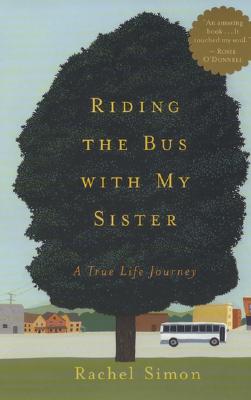
These are just a few of the challenges I’m encountering as I progress through the writing of my book. And I’m nowhere near close to figuring them all out. But yesterday I did find hope for making sense of my thoughts—and bringing order to my writing…through reading the memoir Riding the Bus with my Sister by Rachel Simon.

Riding the Bus with my Sister: Inspiration for the Aspiring Memoirist

In a nutshell, Simon tells the story of what she learned through one year of riding city buses with her mentally handicapped sister, Beth. At the beginning of the book, I expected the story to revolve around this year of bus-riding—I thought that was the core story. But the further I got into the book, I realized that, with carefully chosen, carefully placed flashbacks, Simon was telling the story of her family’s breakup, and her broken heart. Ultimately, it was through riding the buses with Beth, by slowing down to enjoy life again, and by remembering her roots, that Simon found a great deal of healing by book’s end (there’s more to it, of course, but I’m compressing).

Image

Wow, I thought, teary-eyed by the closing scenes. That was a job well done. Not only was her literary execution great, but her story was worth telling. And she didn’t go overboard with her tale of woe. Indeed, I was shocked halfway through to read of the horrific things that happened in her teenage years—so that was why she has all these problems in her adult life…not getting close to people, overworking, lacking hobbies. Suddenly the journey described in the book became much deeper than just a year of bus-riding with her sister. It was a journey of healing for herself.

In both Simon’s writing and her story, I see visions of myself. The personal story is similar to mine, although without the handicapped sister; and the sum total of her book’s organization leaves the effect I want my own book to have. What a great story—and what a great way to tell it, I want my readers to think of my book (just like I thought of Simon’s).

So, for today, I will disentangle myself just a bit with this: at least if my blog is not pretty, I want my book to be. For today, I’m feeling grateful to Rachel Simon for her story—and hoping you’ll ride with me as I untangle the telling of my own.